
Sports
₦500,000 Up for Grabs as Hadison PSA Tournament Serves Off in Abuja

Joel Ajayi
Abuja is set to host one of its biggest squash events in recent years as the inaugural Haniel Hadison and Friends PSA Satellite Tournament gets underway today at the Moshood Abiola National Stadium.
The organisers confirmed that the Professional Squash Association (PSA)-sanctioned competition will feature top local talents competing for substantial prize money, with winners in the men’s and ladies categories set to take home ₦500,000 and ₦400,000 respectively.
Speaking at a pre-tournament briefing, Technical Director of the Nigeria Squash Federation, Jonah Attah, described the event as a strategic intervention aimed at addressing the lack of competitive opportunities for Nigerian players.
He noted that the tournament—spearheaded by former squash star Haniel Hadison—reflects a deep understanding of the challenges athletes face, particularly limited access to ranking events.
“This PSA-sanctioned competition gives players a rare opportunity to earn international ranking points while competing on home soil,”he said.
“ It is also one of the most significant squash tournaments held in Abuja and northern Nigeria in recent times.”
The tournament boasts strong participation, with 57 players confirmed in the men’s draw and 28 in the ladies category after final entries were vetted.
Beyond prize money, organisers have also provided accommodation for all participants, a move widely praised as a major boost for inclusivity and accessibility.
A detailed prize structure ensures broad financial rewards: Men’s category: Winner (₦500,000), runner-up (₦250,000), with earnings extending down to ₦50,000 for round-of-32 players.
Ladies category: Winner (₦400,000), runner-up (₦250,000), with ₦25,000 guaranteed for early-round participants.
Attah emphasized that the initiative is backed by a global network of supporters, including Nigerians in the diaspora, and builds on more than two decades of grassroots sports development.
“This is more than a tournament—it’s a platform for youth development and long-term growth of squash in Nigeria,” he added.
The event has also drawn support from key stakeholders. Representatives from the National Sports Commission called for increased private sector involvement, while players’ representatives expressed confidence in a highly competitive outing.
Organisers have assured participants and spectators of robust arrangements, including security, medical coverage, and live streaming of matches from both indoor and underground courts.
Matches begin daily from 9 a.m., with scheduling adjustments expected in later rounds to optimize player recovery and enhance spectator experience.
The tournament will run from April 8 to April 11, further cementing Abuja’s growing reputation as a hub for elite squash competition in Nigeria.



Sports
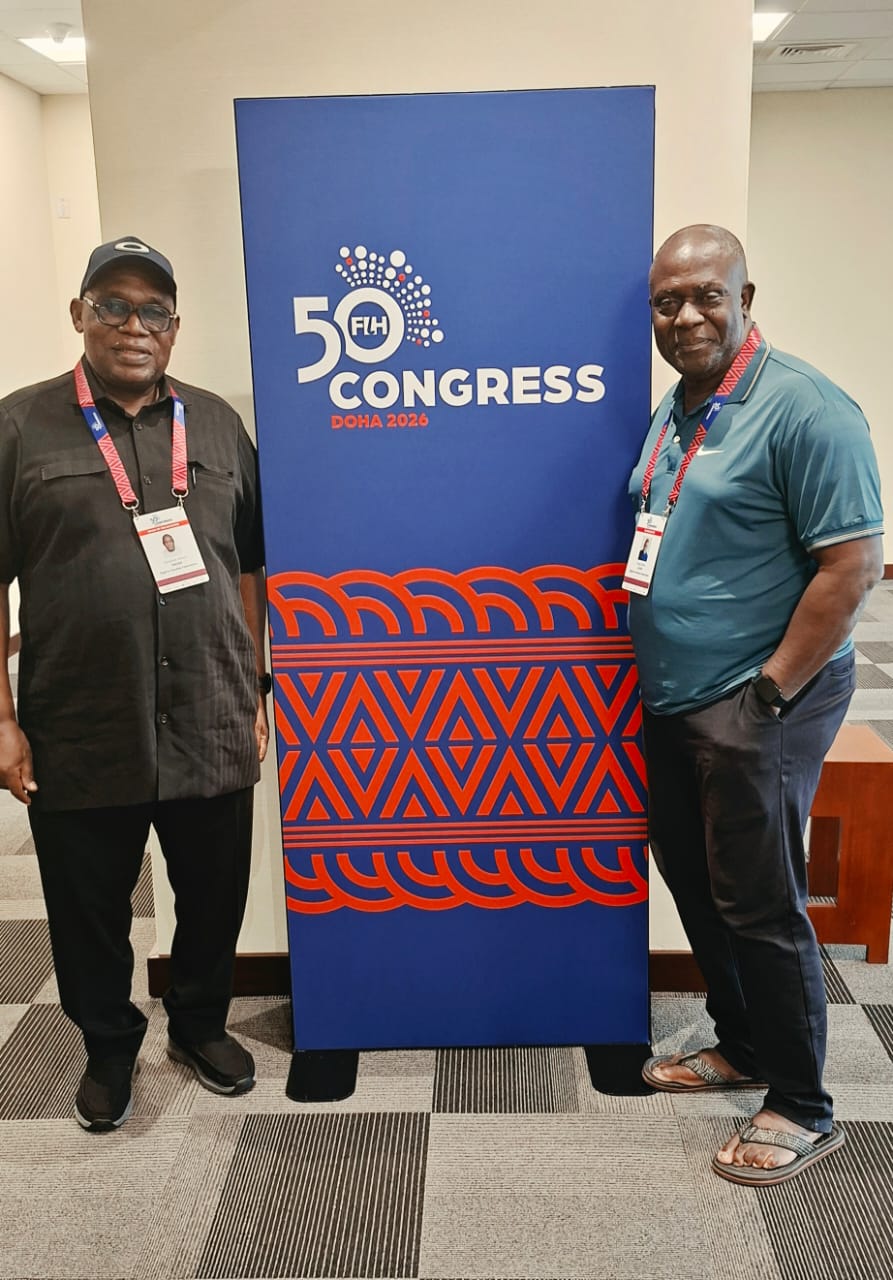
NHF President Nkom, Prof. Agbo Attend 50th FIH Congress in Doha
Cyril Ogar
President of the Nigeria Hockey Federation (NHF), Engineer Simon Nkom, and NHF Board Member, Professor Ediga Agbo, are representing Nigeria at the landmark 50th Congress of the International Hockey Federation (FIH) in Doha, Qatar.
The congress brings together hockey leaders and administrators from across the world to deliberate on governance, policy direction and strategies for the future development of the sport.
Their participation provides Nigeria with an opportunity to engage with international stakeholders, exchange ideas and explore initiatives that can strengthen the growth and administration of hockey in the country.
Speaking on the significance of the gathering, Nkom said, “Our participation in this historic congress is an opportunity to learn from global best practices, build strategic relationships and identify initiatives that can contribute to the sustainable development of hockey in Nigeria.”
Agbo also emphasised the importance of translating international engagements into practical progress at home, saying, “The ultimate goal is to ensure that the knowledge and opportunities gained from this congress contribute meaningfully to the development of hockey in Nigeria, particularly in strengthening our structures and creating more opportunities for growth.”
The 50th FIH Congress marks a significant milestone for the international governing body, providing a platform for discussions and decisions that will shape the future of hockey globally.
For Nigeria, the engagement underscores the importance of international collaboration in advancing the sport, strengthening its administration and creating a sustainable pathway for hockey development across the country.
-
 Featured7 years ago
Lampard Names New Chelsea Manager
-
 Featured7 years ago
FG To Extends Lockdown In FCT, Lagos Ogun states For 7days
-
 Featured7 years ago
Children Custody: Court Adjourns Mike Ezuruonye, Wife’s Case To April 7
-
 Featured7 years ago
NYSC Dismisses Report Of DG’s Plan To Islamize Benue Orientation Camp
-

 Featured5 years ago
Transfer Saga: How Mikel Obi Refused to compensate me After I Linked Him Worth $4m Deal In Kuwait SC – Okafor
-
Featured7 years ago
Board urges FG to establish one-stop rehabilitation centres in 6 geopolitical zones
-
Sports4 years ago
TINUBU LAMBAST DELE MOMODU
-

 News2 years ago
Zulu to Super Eagles B team, President Tinubu is happy with you