
News
11 Years After Arraignment, Suswam’s Alleged N3.1bn Money Laundering Case Nears Conclusion
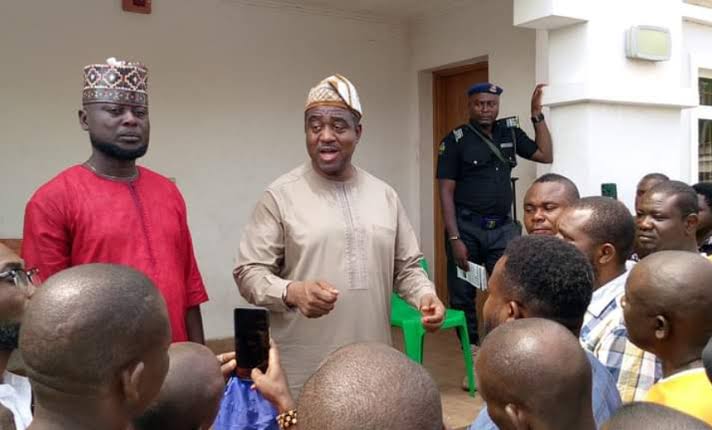
… Court sets Sept 24th for adoption of final written addresses
Joel Ajayi
The long-awaited adoption of final written addresses in the N3.1 billion money laundering case instituted by the Economic and Financial Crimes Commission, EFCC, against former governor of Benue State, Senator Gabriel Suswam will come up on Friday, September 25th, 2026.
Senator Suswam and and his erstwhile Commissioner of Finance, Omadachi Oklobia, are facing ameneded 11-count for allegedly laundering N3.1 billion being proceed from the sale of Benue State Government shares in Dangote Cement Plc, held on it’s behalf by the Benue Investment and Property Company Limited, sold through Elixir Securities Limited and Elixir Investment Partners Limited.
When the matter came up on July 16th, 2026, Suswam, the first defendant, was absent from court, while Okolobia, the second defendant, was present.
Counsel for the defendants applied for an adjournment, relying on a medical report explaining the first defendant’s absence. Counsel for the Economic and Financial Crimes Commission (EFCC) opposed the application, noting that the trial had been pending for more than 11 years.
In his ruling, Justice Lifu granted the application, saying he had exercised his discretion in the interest of justice after considering the circumstances and the submissions of the parties.
“For today, having considered all that has transpired and the prayers of all the parties, I exercised my discretion in acceding to the request. The application appeared to be borne out of concern for the health and well-being of the defendant in the criminal trial.
“Manifestly, I have exercised my discretion in the interest of justice. Justice may grind slowly, but surely it will reach its destination, as the saying goes,” the judge said.
Background
Mr Suswam, who governed Benue State from 2007 to 2015, and his co-defendant, were first arraigned in November 2015 by the EFCC before Justice Ahmed Mohammed over allegations of diverting N3.1 billion, part of the proceeds from the sale of Benue State government shares.
The defendants were subsequently re-arraigned before the court on 2nd November, 2020.
In the amended charge, the EFCC alleged that Mr Okolobia transacted a total of N578 million in four tranches, exceeding the cash transaction limit under the money laundering law, between December 2014 and January 2015.
The case has faced multiple delays over the years. Initially handled by Justice Ahmed Mohammed.
Justice Mohammed withdrew from the case on June 6, 2016, citing a publication by Sahara Reporters which alleged that the judge had been compromised to give Suswam a “soft landing.”
But after the defence and the prosecuting teams pressurised him, through the then Chief Judge of the Federal High Court, Justice Ibrahim Auta (retd.), Justice Mohammed rescinded his decision and took the case file back.
However, following another story published by SaharaReporters levelling similar allegation against him, the judge, in a letter dated July 5, 2019, again withdrew from the case.
The Chief Judge then re-assigned the case to Justice Abang.
Justice Abang had started hearing the case with four witnesses already called when the Court of Appeal, ruling on an appeal by Suswam to challenge Justice Mohammed’s withdrawal, ordered that the Justice Abang should stop hearing and return the case file to Justice Mohammed.
The case twas reassigned to Justice Peter Lifu following Court of Appeal directives after Mr Mohammed’s elevation to the appellate bench in 2023.
In 2024, precisely Thursday, March 21, 2024, Suswam’s N3.1 billion money laundering case started afresh before Justice Peter Lifu,on an amended 11-count money laundering charge filed by by the EFCC.
In other to prove it’s case, the EFCC calleda total of 9 witnesses,ranging from staff of the Ministry of Finance, Benue State, staff of the EFCC, a portfolio manager, a bureau the change dealer, among others.
Abubakar Umar, the Sixth Prosecution Witness, PW6, in the trial of Gabriel
Suswam had narrated before the Federal High Court, how in 2014, he converted the sum of N3.1 billion, wired to him by Suswam as governor and delivered its equivalent of $15.8m in cash to him at his Maitama, Abuja
residence.
During the court’s proceedings, the witness, a bureau de change operator and CEO of Fanffash Resources, who has been testifying on the matter since 2018, first, before Justice A.R Mohammed and later Justice Okon Abang, disclosed that the total sum of N3.1 billion was transferred to him by Suswam, through a proxy in tranches with the first tranche of N413 million hitting his account on August 8, 2014 and the remaining,coming in subsequently to sum up to N3.1billion.
Umar, while being led in evidence by prosecution counsel, Rotimi Jacobs, SAN, affirmed that the proxy who did the
naira transfers to him was a woman.
According to the witness, he had to change a total sum of N3.1billion to dollars, which he said amounted to $15.8 million at the rate of N197 to a dollar and delivered it to Suswam in his Maitama, Abuja residence.
“One day in 2014, when I was in the office, the former governor of Benue State asked me to meet him in his house in Maitama, Abuja. I went and met him in the house together with one fair woman. He asked me to give the woman my account number. I gave the woman my Zenith Bank account number. The woman said she’ll send money into that account.
“On the 8th of August 2014, N413 million was transferred to my account. Based on this, I called the former governor and he told me to change the money to dollars and I asked him to give me time to do that. Three days after I bought the dollar equivalent, I called the former governor and informed him that the money was ready. He now asked me to take the money to his house in Maitama, near Jumat Mosque. I now told him that he should inform the security at the gate that I was coming, if not they’ll not allow me access into the gate. I took a cab to the house, and after I arrived at the house, I knocked at the gate and they opened. I told them my name. They opened the first and second gates and I sat in the waiting room where he came and met me. I now brought out the money which we both confirmed to be the equivalent of the N413 million. The exchange rate then was N197”, he said
Testifying further, he said, “On the 12th of September 2014, N637 million was transferred to my account.
After N637million was transferred to my account, after like 40 minutes N363 million was also transferred into my account. On 13th October 2014, N630, 008,50, (Six Hundred and Thirty Million, Eight Thousand and Fifty Naira) was also transferred to my account. On 17th October 2014 1,0068,000 (One Billion, Sixty-eight Million) was transferred to my account. It is the woman that was directed by the former governor to do the transfers. The total money transferred to my account was N3 billion”.
The witness who stated that he was neither arrested by the EFCC for giving any testimony in favor of the defendant, nor threatened by the Commission to give evidence against the defendant, further disclosed that he did not have receipts for the transactions, so also no record book for them, stating that he buys dollars from his fellow retailers and only records based on discretion.
Mustapha Yusuf Abubakar, a staff of the anti-graft agency who was also part of the EFCC team that investigated the matter was the seventh witness of the EFCC.
Mustapha Abubakar who was led in evidence by counsel to the EFCC, Rotimi Jacobs, SAN, tendered a portfolio agreement notice of appointment as stock brokers with Elixir Securities Limited and Elixir Investment Partners Limited, by the then Board of Benue Investment and Property Company(BIPC).
The portfolio agreement was signed by the second defendant, Omadachi Oklobia as the commissioner for Finance, Benue State.
While under cross examination from counsel to Oklobia, Paul Erokoro(SAN), the witness disclosed that Mr Oklobia collected the sum of N350 million in two trenches of N200 million and N150 million and handed the money to the then Chief Security Officer to the Governor, identified as ‘Manga’, who also signed for the receipts of the money at Benue State Government House in Makurdi, because there was no other government official to sign.
According to him, during interrogation, Oklobia explained that it was the first defendant, Gabriel Suswam, that directed him to collect the money from one James Gara, who cashed the money.
On Wednesday, May 14th, 2025, the EFCC called it’s ninth witness, Mr Ape Sunday(PW9), an investigator with the EFCC,while being led in evidence, informed the court that PW10,Mrs Shiedu Awade, a former cashier and executive officer of Benue Investment and property Ltd., had been hospitalised at the National Hospital, Abuja, making it impossible for her to appear in court.
In response to the prosecution’s conclusion, counsels for the first and second defendants, C.E. Ugbozor and Paul Erokoro, SAN, respectively, informed the court that they would be filing a “no case submission.”
They requested a 14-day period to do so, while the prosecution sought 21 days to file a response to the defence’s submission.
Justice Lifu adjourned the matter until June 24, 2025, for the adoption of the defence’s “no case submission.” On July 23rd, 2025, Justice Lifu while ruling on the no case submission by Senator Suswam and Oklobia dismissed their no-case-submission and said the prosecution agency has established a prime facie case against the defendants that re



News
HOW FATE AND TRAVAIL BROUGHT CHRISTIAN EDOSA AGHEDO TO IRELAND
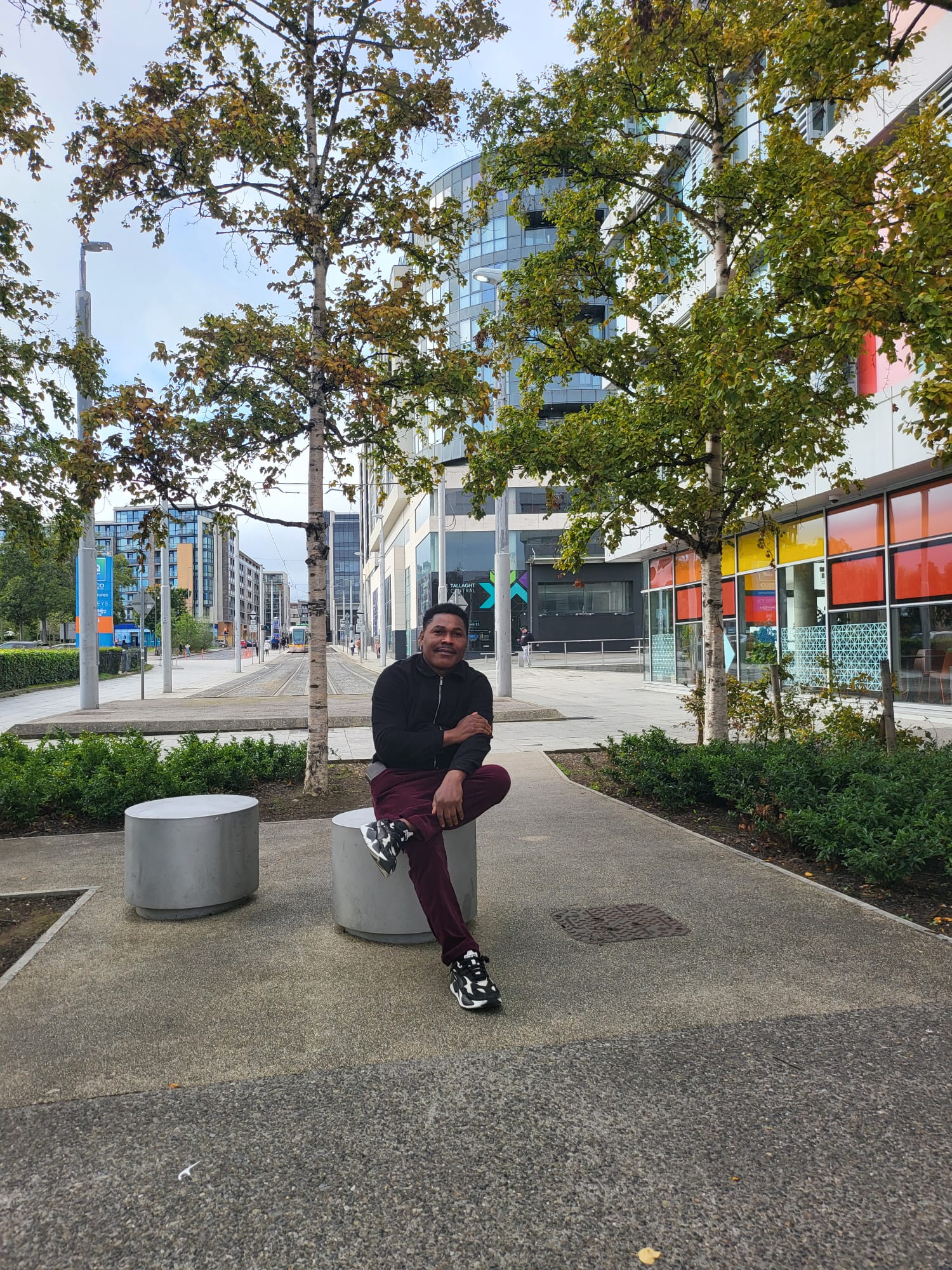
“A Survivor’s Story of Banditry, Family Tragedy, Displacement and the Search for Safety”
The growing insecurity in Nigeria, particularly the increasing incidents of banditry, armed attacks and killings across different parts of the country, has continued to devastate communities, displace innocent citizens and leave countless families homeless. These persistent attacks have created an atmosphere of fear, uncertainty and insecurity among ordinary Nigerians, particularly those living in vulnerable rural communities.
The activities of armed bandits have left painful and lasting scars on the lives of many innocent people. Families have been destroyed, communities have been deserted, and individuals have been forced to abandon their ancestral homes in search of safety. In many cases, victims have suffered killings, abductions, destruction of property and threats to their lives.
One of the families profoundly affected by this violence was the Aghedo family of Jattu, Auchi, in Edo State, Nigeria.
In a conversation with his cousin, Osaze Unuigbe, who narrated his ordeal, Christian Edosa Aghedo recounted the tragic circumstances that forced him to flee his homeland and eventually seek protection in the Republic of Ireland.
THE TRAGIC ATTACK THAT DESTROYED HIS FAMILY
For Christian Edosa Aghedo, 9 June 2026 remains a date permanently etched in his memory. On that day, armed bandits reportedly attacked his community in Jattu, Auchi, Edo State, unleashing violence that changed his life forever.
During the attack, his father, mother and two other relatives were brutally killed. Christian, who was hiding nearby, witnessed the horrifying events and saw his parents being murdered.
The experience left him devastated, traumatised and emotionally shattered. He described the incident as one of the most painful experiences anyone could endure, explaining that witnessing the brutal deaths of his parents has continued to haunt him.
Speaking about the tragedy, Christian said that the memories of that dreadful day remain fresh in his mind. The loss of his entire immediate family and the circumstances surrounding their deaths have left him living with profound emotional pain, constant fear and insecurity.
FEAR AND THE WARNING THAT FORCED HIM TO FLEE
On 10 June 2026, the day after the attack, Christian reportedly approached a nearby police station to report the incident and seek assistance.
Although the police indicated that they would pursue the perpetrators, Christian’s fear increased when an officer allegedly warned him privately to leave the area and run for his life because the attackers might return to eliminate him.
The warning left him frightened and confused. Having already witnessed the brutal murder of his parents and relatives, he became increasingly convinced that remaining in the community would expose him to further danger.
With no immediate family members left to protect or support him, Christian was confronted with the difficult reality of abandoning the home where he had been born and raised.
In the aftermath of the tragedy, he made arrangements to dispose of his deceased parents’ properties to raise money for his departure from Nigeria.
TWO WEEKS IN AN INTERNALLY DISPLACED PERSONS’ CAMP
On 12 June 2026, Christian relocated to an Internally Displaced Persons (IDP) camp in Auchi, Edo State, where he remained for approximately two weeks.
However, finding temporary shelter did not immediately restore his sense of safety. He continued to experience shock, fear and emotional distress, constantly worrying that the bandits could return and attack again.
His stay at the camp was marked by uncertainty and painful memories of the incident that had destroyed his family.
Eventually, after making the necessary arrangements to leave Nigeria, Christian received his visa on 5 July 2026. Five days later, on 10 July 2026, he departed Nigeria for the United Kingdom through Ethiopian Airlines, arriving at Manchester Airport.
A NEW COUNTRY, BUT NO FAMILY OR SUPPORT SYSTEM
Christian arrived in the United Kingdom without relatives, friends or an established support network. Although he had escaped the immediate danger he feared in Nigeria, he found himself facing another difficult chapter of his life.
He had lost his parents and other close relatives, abandoned his ancestral home and left behind the childhood memories associated with the community where he had grown up.
With no stable accommodation or immediate support, his circumstances became increasingly difficult. At different points, he relied on churches and mosques for temporary shelter, sometimes sleeping in their premises because he had nowhere else to go.
Despite the hardships, he remained determined to survive and rebuild his life.
ANOTHER DISTRESSING EXPERIENCE IN THE UNITED KINGDOM
On 16 August 2026, Christian experienced another distressing incident while sleeping in a place where he had been seeking temporary shelter.
According to his account, a group of young men attacked him and stole his international passport and wristwatch.
The incident left him helpless and deeply distressed. While he was crying and struggling to come to terms with what had happened, a woman approached him and asked about his situation.
Christian explained his circumstances as best he could, recounting the tragic loss of his family in Nigeria, his displacement and the difficulties he had encountered since arriving in the United Kingdom.
Touched by his story, the woman and her husband took an interest in his welfare. They subsequently offered him assistance, including food, clothing and shelter.
Their intervention provided him with temporary relief at a time when he was particularly vulnerable and had very limited support.
THE JOURNEY TOWARDS SAFETY IN THE REPUBLIC OF IRELAND
On 20 September 2026, the woman’s husband informed Christian about the possibility of seeking international protection in the Republic of Ireland.
Following their discussions, Christian began considering the option of seeking protection in Ireland, hoping to find a safer environment where he could begin rebuilding his life after the devastating experiences he had endured.
By 28 September 2026, he had arrived in the Republic of Ireland, marking another significant chapter in his search for safety and stability.
THE PAIN OF A SURVIVOR AND THE FEAR OF RETURN
Despite being physically away from the community where the tragedy occurred, Christian maintains that the emotional consequences of the attack have continued to affect him.
The brutal deaths of his father, mother and two other relatives remain painful memories that he struggles to overcome. Having witnessed his parents being murdered, he continues to fear that returning to Nigeria could expose him to the same armed bandits who destroyed his family.
He maintains that the insecurity and threats that forced him to abandon his home have not been resolved from his perspective. He fears that the perpetrators could attack again and that he could become their next victim.
For Christian Edosa Aghedo, leaving Nigeria was never simply a decision to seek a better life abroad. It was a desperate response to the loss of his family, the fear of further attacks and the urgent need to preserve his own life.
His story is one of profound personal tragedy, displacement and survival. From witnessing the destruction of his family in Jattu, Auchi, to enduring homelessness and insecurity in the United Kingdom, his experiences have shaped a painful journey that ultimately brought him to the Republic of Ireland in search of protection and a chance to live without fear.
For a man who lost almost everything in one tragic day, the greatest hope is simply to find a place where he can feel safe, recover from his trauma and rebuild his life.
-
 Featured7 years ago
Lampard Names New Chelsea Manager
-
 Featured7 years ago
FG To Extends Lockdown In FCT, Lagos Ogun states For 7days
-
 Featured7 years ago
Children Custody: Court Adjourns Mike Ezuruonye, Wife’s Case To April 7
-
 Featured7 years ago
NYSC Dismisses Report Of DG’s Plan To Islamize Benue Orientation Camp
-

 Featured5 years ago
Transfer Saga: How Mikel Obi Refused to compensate me After I Linked Him Worth $4m Deal In Kuwait SC – Okafor
-
Featured7 years ago
Board urges FG to establish one-stop rehabilitation centres in 6 geopolitical zones
-
Sports4 years ago
TINUBU LAMBAST DELE MOMODU
-

 News2 years ago
Zulu to Super Eagles B team, President Tinubu is happy with you













