
Featured
16 Teams Battle For Nigeria Challenger Teqball Series

No fewer than 16 teams from 11 States would battle for the ultimate prizes at the maiden edition of the Nigeria Challenger Series
The championship tagged ‘Abuja 2021’ which is organized by the Nigeria Teqball Federation (NIGTEQ) would take centre stage from 26th to 29th August 2021.
In a press released by the Secretary LOC Uche Nwudoh revealed that the first phase of the tournament will take place from 26-27th at the Turf Arena, Central Business District, in Abuja while from 28th to 29th hostilities would continue at the NTIC Abuja Campus, Wuse II, Abuja.
About 13 Referees from the six geo-political zones has been appointed by the NIGTEQ for the 4day tournament.
General Secretary of Nigeria Teqball Federation, Mr Ndudi Edede, while speaking ahead of the games, said preparations are in top gear to host a successful tournament, while calling for the support for the development of the sports in the country. Advice athletes to be serious in the championship as it is a qualifier for Teqball World Championship slated for November this year.
“All hands are on deck to ensure a successful hosting of the tournaments; we want to make sure that visiting teams and officials are well catered for.
“The facilities are in good shape to be used for the tournament. The LOC has done a marvellous job towards the hosting of the championship.
He further urged Abuja residents to come out in their numbers to cheer the teams as it will be fun filled and worth every min.



Featured
Machina: The City That Refuses to Sleep
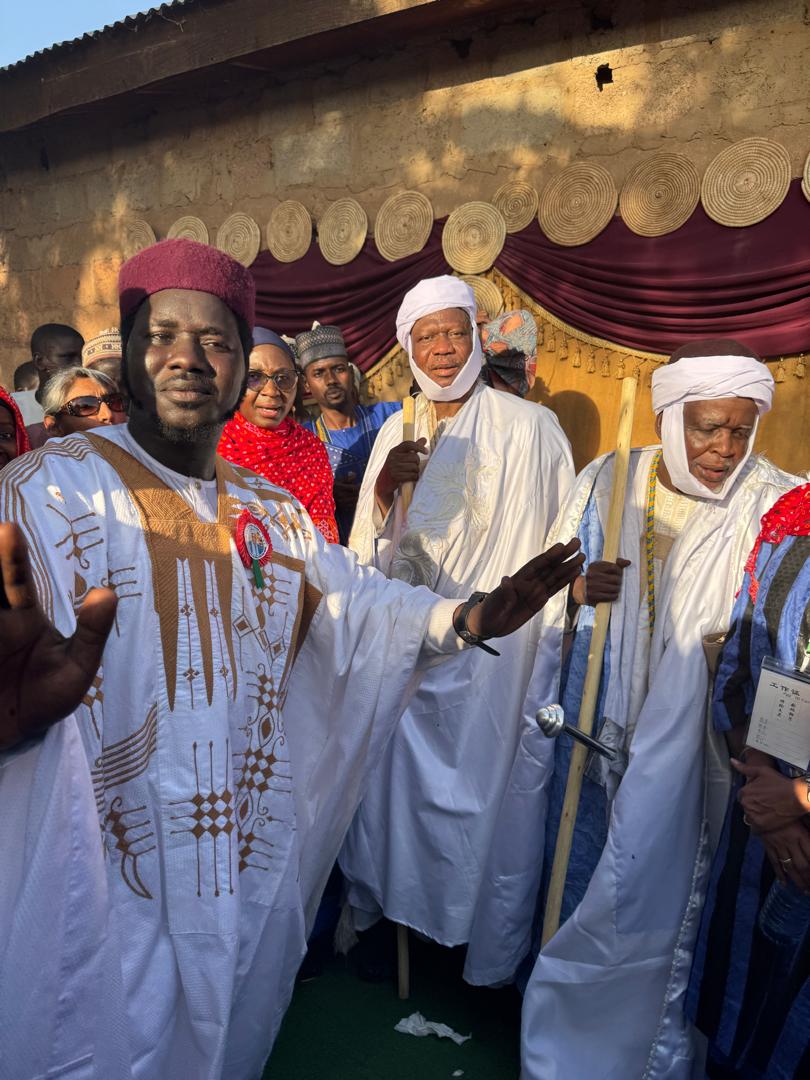
…A Homeland Honouring Its Son
By Mualeem Ibrahim
There are cities that exist on maps, and there are cities that live in the bloodstream of their people. Machina—ancient, resilient, and proud—belongs to the latter. Nestled in the northwestern sands of Yobe State, this Emirate has carried its traditions with a devotion that has outlived empires.
Its formal leadership, historians remind us, stretches back to 980 AD, when Mai Hariyu Bolo Kandira ascended the throne and began a lineage of guardianship that still stands, unbroken, like a desert baobab defying time.
Machina is not merely a place; it is a pulse. A memory that breathes. A heritage that refuses to dim. Chinua Achebe once wrote that “a people are as strong as the stories they tell about themselves.” Machina’s story is one of endurance, dignity, and a cultural splendour that glows like embers in the Sahel night.
Seven Days When Time Stands Still
Each year, Machina calls its sons and daughters home—no matter how far their journeys have taken them. For seven radiant days, the city becomes a living tapestry of colour, rhythm, and ancestral pride.
The Machina Annual Cultural Festival (MACUF) is not merely an event; it is a homecoming of the spirit. It draws dignitaries, scholars, traditional rulers, journalists, activists, and admirers from across Nigeria and beyond.
Like the festivals in Soyinka’s Death and the King’s Horseman, MACUF reminds us that culture is not a relic to be archived—it is a living force, a heartbeat that binds generations.
But the 2026 edition was touched by something deeper. Something historic.
A Festival Crowned by Honour
This year, the desert winds carried whispers of anticipation. Machina was preparing to honour one of its most illustrious sons—Dr. Kole Ahmed Shettima. The city swelled with visitors: activists, civil society leaders, academics, politicians, and cultural custodians converged to witness a moment destined for the Emirate’s chronicles.
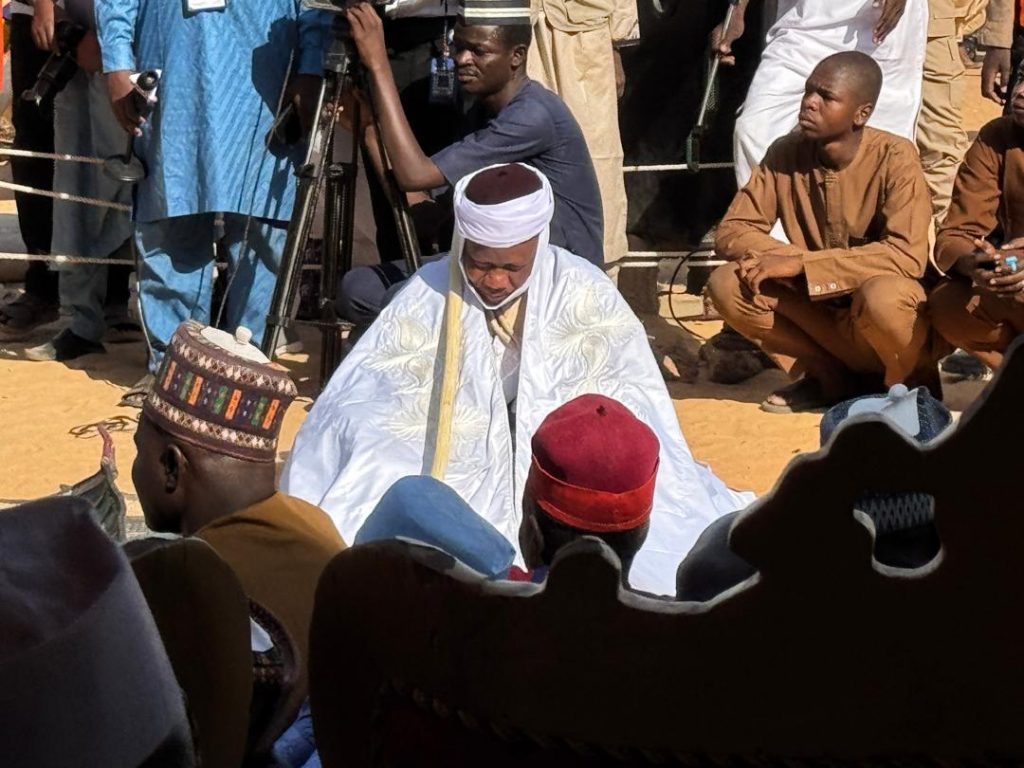
On January 31, beneath the watchful eyes of ancestors and the jubilant gaze of his people, the Emir of Machina, His Royal Majesty Mai Bashir Abishir Bukar, OON, L’ONN, turbaned Dr. Kole as Zanna Yuroma. It was the crowning jewel of MACUF 2026.
The Emir spoke with warmth and conviction. This honour, he said, was not merely a recognition of Dr. Kole’s service to Machina, but a tribute to a man whose compassion radiates far beyond the borders of his birthplace. His love for humanity, the Emir declared, is as expansive as the Sahel sky.And on Sunday, February 1, the festival’s grand finale, Machina seemed to overflow its own boundaries. It felt as though the entire cabinet of Yobe State had migrated to the Emirate. The Executive Governor, His Excellency Hon. (Dr.) Mai Mala Buni, the SSG, former governors, and over 40 Emirs from across northern Nigeria graced the occasion. Security agencies worked tirelessly to guide the sea of humanity—each person eager to witness history.
One lesson stood out like a desert sunrise: though Machina is an Islamic city, it does not silence its women. Draped in radiant traditional attire, they danced with grace, perfumed the air with sweet fragrances, and infused the celebration with a joy reminiscent of Senghor’s immortal tribute— “Naked woman, black woman… your beauty strikes me to the heart.”
A Life of Service, A Legacy of Impact
For more than three decades, Dr. Kole Ahmed Shettima has walked the intertwined paths of scholarship, philanthropy, and public service with the quiet dignity of a man who understands that true leadership is measured not in titles, but in lives touched. His journey has been neither loud nor ostentatious; instead, it has been steady—like the desert wind that shapes dunes over centuries, transforming landscapes with patience and purpose.
From the lecture halls of academia to the frontlines of development work, Dr. Kole has carried with him a philosophy rooted in empathy. He believes, deeply, that knowledge must serve humanity, and that privilege must bend toward justice. His work reflects this conviction.
Through the Kole Shettima Trust Fund and the Machina Emirate Development Association, he has built a legacy that stretches across generations:
Scholarships for hundreds of undergraduates, ensuring that the dreams of young people do not wither for lack of opportunity.Feeding the poor, not as charity, but as an affirmation of dignity.Clothing orphans, wrapping them not only in fabric but in hope.Building places of worship, where communities gather to pray, reflect, and find solace.Constructing water points, bringing life to communities where water is a daily struggle.
Paying medical bills, so that illness does not become a death sentence for the vulnerable.Mentoring youth, guiding them with the wisdom of experience and the tenderness of a father. Settling fines for the imprisoned poor, freeing men and women whose only crime was poverty.Improving learning conditions for secondary school students, because he knows that education is the first step toward liberation.
These are not mere acts of generosity; they are acts of remembrance. They are the gestures of a man who never severed the umbilical cord that ties him to his homeland. “What is probably important,” he often reflects, “is being rooted in my community since my primary school education.” That rootedness is his compass. It is what keeps him grounded even as his influence spans continents.
His leadership has shaped institutions, strengthened governance, and inspired a generation of thinkers, activists, and public servants. His contributions to humanity are not abstract—they are stories. Stories of children who stayed in school because he believed in them. Stories of families who found relief in moments of despair. Stories of communities whose futures were rewritten because one man chose to act.
Ngũgĩ wa Thiong’o reminds us that “writers and scholars are the memory of a nation.” In many ways, Dr. Kole has become part of Machina’s living memory—preserving its values, expanding its possibilities, and embodying its highest ideals.
His life is a testament to a simple truth: service is the most enduring form of greatness.
Machina Rejoices.
When the turban was tied and the title bestowed, Machina did not simply applaud—it exhaled. A collective breath, held for generations, was released into the desert air. The joy that followed was not the fleeting excitement of a festival; it was the deep, resonant pride of a people witnessing one of their finest sons return home in honour.
The city transformed into a living organism—its streets pulsing with movement, its courtyards humming with anticipation, its skies echoing with the sounds of celebration. Men, women, elders, youth, and children poured into the open spaces as though answering an ancestral call. It felt as if the very soil of Machina had awakened to join the festivities.
The celebration unfolded with the splendour of an epic:
Drums thundered, their rhythms rolling across the Emirate like distant storms announcing abundance. The Kakaki trumpet pierced the air, its regal notes slicing through the crowd with the authority of centuries-old tradition.Dancers swirled in vibrant attires, their garments catching the sunlight and scattering it like shards of colour across the sand.Wrestlers stepped forward, their bodies glistening with pride, embodying the strength and honour of the land.Snake charmers mesmerized the crowd, their movements fluid, ancient, and hypnotic—echoes of a time when magic and culture were inseparable.Praise singers chanted genealogies, weaving Dr. Kole’s name into the long tapestry of Machina’s history.Music flowed like a river, winding through alleyways, courtyards, and open fields, binding strangers and kin in a shared rhythm.
It was not merely a festival; it was a rebirth.
The Emirate glowed with a unity rarely seen in modern times. Farmers stood shoulder to shoulder with scholars. Traders danced beside civil servants. Children clapped in delight as elders nodded in approval, their eyes shimmering with memories of festivals past.
The air was thick with incense, dust, perfume, and the unmistakable scent of celebration—a fragrance that only a city deeply in love with its heritage can produce.
Even the desert seemed to pause. The wind softened, as though listening. The sun lingered a little longer on the horizon, reluctant to set on such a moment. And when night finally draped itself over Machina, lanterns and fires lit up the darkness, turning the Emirate into a constellation on earth.
It was a scene reminiscent of the grand communal gatherings in Achebe’s Arrow of God—a people united not by necessity, but by pride, memory, and shared destiny.
Machina did not merely celebrate a title; it celebrated a legacy, a lineage, a reaffirmation of who it is and what it stands for. In honouring Dr. Kole, Machina honoured itself.
A Tribute to a Worthy Son
In honouring Dr. Kole Ahmed Shettima, Machina honoured the values it cherishes most—service, humility, scholarship, and humanity. The title of Zanna Yuroma is not just a recognition; it is a covenant between a son and his homeland.
And so, with pride and admiration, we join millions across Nigeria in celebrating High Chief Dr. Kole Ahmed Shettima. May his reign as Zanna Yuroma bring wisdom, compassion, and progress to Machina and beyond.
Long may he serve.Long may Machina flourish.
-
 Featured7 years ago
Lampard Names New Chelsea Manager
-
 Featured6 years ago
FG To Extends Lockdown In FCT, Lagos Ogun states For 7days
-
 Featured6 years ago
Children Custody: Court Adjourns Mike Ezuruonye, Wife’s Case To April 7
-
 Featured7 years ago
NYSC Dismisses Report Of DG’s Plan To Islamize Benue Orientation Camp
-

 Featured4 years ago
Transfer Saga: How Mikel Obi Refused to compensate me After I Linked Him Worth $4m Deal In Kuwait SC – Okafor
-
Sports3 years ago
TINUBU LAMBAST DELE MOMODU
-

 News1 year ago
Zulu to Super Eagles B team, President Tinubu is happy with you
-
Featured6 years ago
Board urges FG to establish one-stop rehabilitation centres in 6 geopolitical zones













