
FCT news
FCTA Partner High Court On Establishment Of Children, Young Persons’ Court In FCT
JOEL AJAYI
The Federal Capital Territory Administration (FCTA) has pledged to partner with the FCT High Court for the establishment of a Children and Young Persons’ court in the FCT.
Minister of the FCT, Malam Muhammad Musa Bello who made the pledge at the opening ceremony of the 2019/2020 legal year of the FCT High Court, said the FCTA will support the court’s initiatives and innovations designed to ensure that an efficient justice dispensation system is entrenched in the FCT.
Malam Bello also pledged support for the High Court in its desire to make Abuja the Centre of Arbitration for local and international contracts. He said the move would be beneficial to the FCT considering the volume and importance of the transactions that occur in the nation’s capital.
The Minister commended the FCT judiciary for the innovations brought to FCT court system and processes, especially the Alternative Dispute Resolution (ADR) option which, he said, has helped in settling many land and property disputes which usually proved to be expensive and time wasting at litigation.
In his words: “The Alternative Dispute Resolution approach to resolving matters, which you have often advocated, has helped in settling many disputes in the FCT, especially land and property disagreements which have often proven to be costly and time wasting had they gone to litigation.
“The innovations you have brought to the FCT court system and processes have encouraged many litigants to choose to have their cases heard in the FCT courts when such matters are sometimes outside your jurisdiction. This clearly demonstrates the level of confidence the general public has in our court processes here in the FCT”.
The Minister also used the occasion to assure residents and visitors of the FCT of the determination of the FCT Administration to keep the territory safe, free of criminalities, while stressing that random acts of criminality will not be allowed to define the FCT.
In his remarks, the Chief Judge of the FCT High Court, Justice Ishaq Usman Bello, urged lawyers to cultivate the habit of doing pro bono work of providing legal services to those who cannot afford to pay the fees. He said lawyers who engage in pro bono services will be rewarded as he had already introduced a merit award for lawyers who engage in such selfless services in the FCT.
The Chief Judge also assured all residents and visitors of the FCT that all case determinations will be according to merits and supported by the law, adding that no political, social, economic and other consideration will influence the outcome of any case.



FCT news
Beyond Displacement: How Vocational Training Is Empowering Over 100 Women and Girls in Abuja
By Joel Ajayi
For women and girls living at the New Kuchingoro Internally Displaced Persons (IDP) Camp in Abuja, rebuilding their lives requires more than shelter and basic necessities. The opportunity to acquire practical skills, earn an income and provide for their families can also play a crucial role in restoring confidence and creating a pathway towards economic independence.
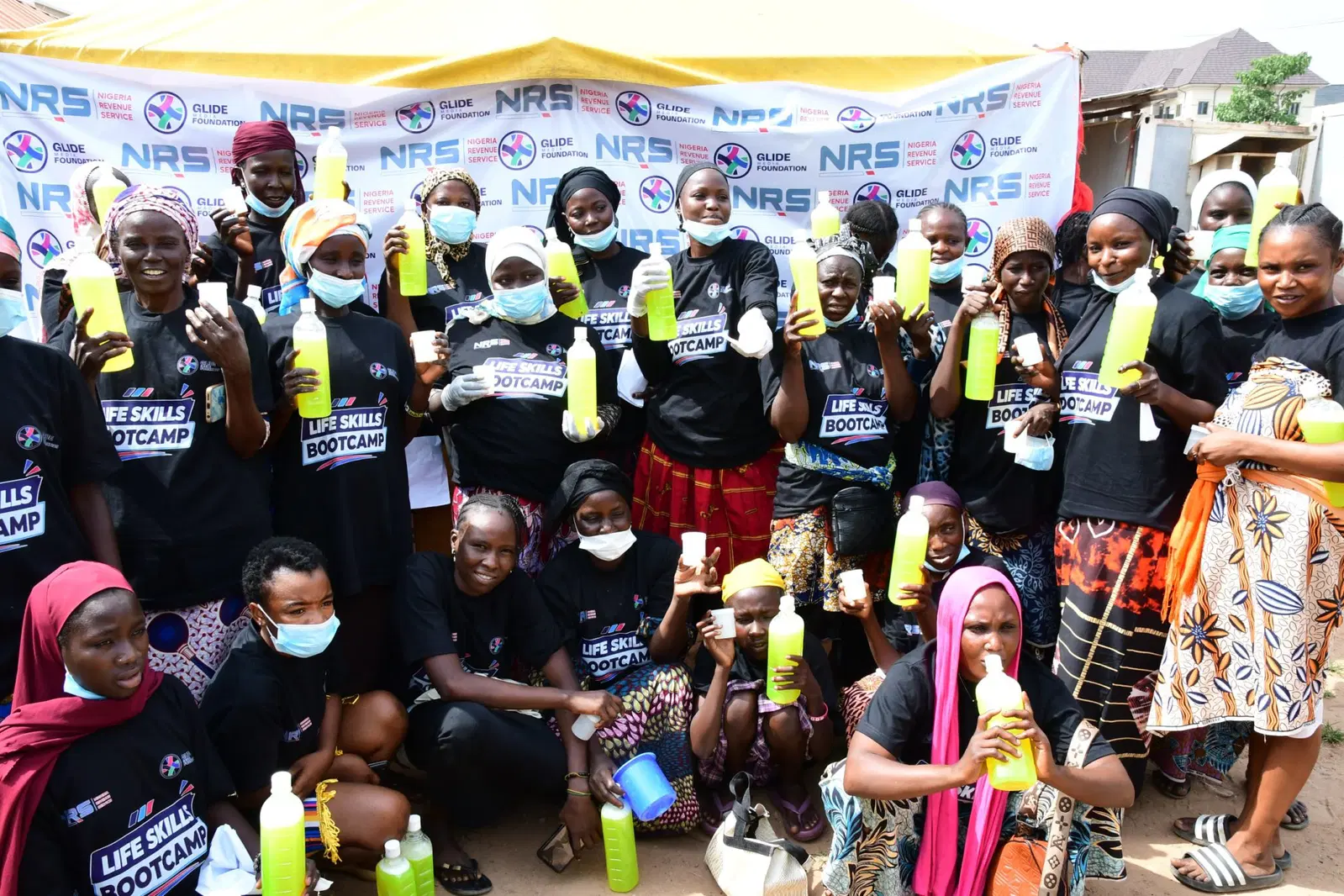
This aspiration informed the five-day Life Skills Bootcamp organised by GLIDE Media Foundation in partnership with the Nigeria Revenue Service (NRS), which provided more than 100 displaced women and girls with vocational training and start-up funding.
The programme, which culminated in a grand finale on Saturday, October 24, 2026, was designed to equip participants with practical knowledge, entrepreneurial skills and financial management techniques to help them establish small businesses and improve their livelihoods.
For the participants, the initiative offered an opportunity to explore income-generating activities that could help them support their families while navigating the economic difficulties associated with displacement.
Turning Skills into Opportunities
At the heart of the programme was the recognition that practical skills can open doors to economic opportunities, particularly for people facing difficult living conditions.
The bootcamp combined classroom-style sessions with hands-on vocational training, allowing participants to learn both the principles of running a business and the practical steps involved in producing goods for sale.
During the practical sessions, participants received training in making beaded slippers, baking, producing soap and preparing petroleum jelly.
They were divided into three groups, with specialised trainers demonstrating production techniques and supervising their activities.
Beyond learning how to make the products, participants received guidance on packaging, marketing and selling their goods. These additional skills were intended to help them understand how to turn their newly acquired abilities into viable small-scale businesses.
The provision of start-up funds at the conclusion of the programme was another important component, offering participants financial support to begin applying what they had learnt.
By combining vocational instruction with initial funding, the organisers sought to bridge the gap between acquiring skills and putting them to productive use.
Building Financial Confidence
The programme also recognised that earning money is only one part of running a successful business. Knowing how to manage income, control expenditure and save for future needs is equally important.
Consequently, the theoretical sessions covered budgeting, saving, expenditure planning and the need to keep personal finances separate from business funds.
Participants were encouraged to understand how financial decisions could affect their businesses and household welfare.
Facilitators also introduced digital financial services, including OPay and Moniepoint, highlighting their potential to support transactions and the management of small businesses.
The sessions provided an opportunity for participants already engaged in business to share their experiences, including the challenges of managing earnings and attracting customers.
Discussions also explored how social media could help entrepreneurs promote their products beyond their immediate communities and reach a wider customer base.
For aspiring business owners, these lessons offered a foundation for thinking beyond production to the practical demands of operating a business in an increasingly competitive environment.
Confidence, Parenting and Personal Development
While economic empowerment remained central to the initiative, the bootcamp also addressed personal development, decision-making, leadership and wellbeing.
Participants were encouraged to build confidence, identify achievable goals and recognise their capacity to contribute to their families and communities despite the challenges associated with displacement.
Parenting and child protection also featured prominently during the sessions.
Discussions covered positive parenting practices, children’s emotional wellbeing, school attendance and the difficulties of balancing childcare responsibilities with income-generating activities.
Facilitators emphasised the importance of supportive home environments and explained how parental behaviour could influence children’s development.
The inclusion of these subjects reflected the programme’s broader focus on helping participants navigate both their economic responsibilities and family obligations.
For women and girls managing several demands, the combination of livelihood training and personal development offered a more comprehensive approach to building resilience.
A Pathway Towards Economic Independence
GLIDE Media Foundation said the initiative was designed to equip displaced women and girls with practical skills that could support their families and reduce their dependence on external assistance.
The partnership with the NRS provided support for a programme that combined entrepreneurship, financial literacy, vocational instruction and start-up funding.
The foundation expressed hope that participants would continue developing their skills and translate the training into sustainable businesses capable of improving their economic circumstances.
However, the long-term impact of the initiative will depend partly on participants’ ability to establish businesses, attract customers and manage their earnings effectively.
Continued guidance, access to markets and opportunities to strengthen their skills could further support their efforts to build sustainable livelihoods.
For the more than 100 women and girls who participated, the bootcamp represents an opportunity to move from learning to action.
Ultimately, its success will be reflected not only in the skills acquired during the five days but also in how effectively participants use their training and start-up funds to generate income, support their families and build greater economic independence.
-
 Featured7 years ago
Lampard Names New Chelsea Manager
-
 Featured7 years ago
FG To Extends Lockdown In FCT, Lagos Ogun states For 7days
-
 Featured7 years ago
Children Custody: Court Adjourns Mike Ezuruonye, Wife’s Case To April 7
-
 Featured7 years ago
NYSC Dismisses Report Of DG’s Plan To Islamize Benue Orientation Camp
-

 Featured5 years ago
Transfer Saga: How Mikel Obi Refused to compensate me After I Linked Him Worth $4m Deal In Kuwait SC – Okafor
-
Featured7 years ago
Board urges FG to establish one-stop rehabilitation centres in 6 geopolitical zones
-

 News2 years ago
Zulu to Super Eagles B team, President Tinubu is happy with you
-
Sports4 years ago
TINUBU LAMBAST DELE MOMODU