
Foreign news
China’s solutions to pandemic-hit global economy – cooperation and opening-up
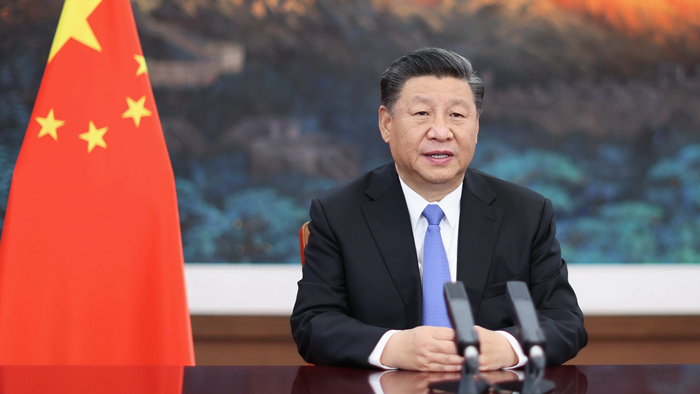
The COVID-19 pandemic has spread at an alarming pace, infecting millions and bringing economic activity to a near-standstill, as countries impose tight restrictions on movement to contain the spread of the virus.
How can the global economy recover from this unprecedented blow?
In his keynote speech via video link at the opening ceremony of the third China International Import Expo (CIIE) on Wednesday, Chinese President Xi Jinping offered the answer from China: upholding the principles of mutually beneficial cooperation and mutual opening-up.
Mutually beneficial cooperation
COVID-19 is a stark reminder that all countries are bound together as a community with a shared future, Xi said, adding that no one can stay immune in a major crisis and countries must work together as partners, with each shouldering its due responsibility.
Solidarity and cooperation are the right choices to make in meeting challenges. “We must uphold the principle of mutually beneficial cooperation,” he said.
The CIIE is now an international public good for the world to share, acting as a major platform for international procurement, investment promotion, cultural exchange and cooperation, he stressed.
The first CIIE in 2018 saw deals for prospective one-year purchase of goods and services reach $57.83 billion, while deals from the Belt and Road countries reached $4.7 billion. At the second CIIE, the figure rose by 23 percent to $71.13 billion.
Flocking to this year’s CIIE are returnees from past expos as well as new faces, including nearly 50 Fortune-500 and industry-leading companies.
Undoubtedly, with the cooperation through this year’s CIIE, fresh impetus can be injected into the global economy.
Mutual opening-up featuring shared benefits, responsibilities and governance
Mutual opening-up is another keyword mentioned by the Chinese president at the CIIE.
Xi said that the hosting of the third CIIE demonstrates the country’s sincere desire to share its market opportunities with the world and contribute to global economic recovery.
Noting that the opening-up measures he announced at last year’s CIIE have been fully implemented, Xi pledged more open domestic and international circulations for not only China’s own development needs but also the greater benefit of people in all countries.
According to official data, China has made the swiftest recovery from the pandemic among major economies. In the first three quarters, its economy expanded by 0.7 percent from a year earlier, while the rest of the world is still largely mired in recession. The country’s total imports and exports also recorded positive year-on-year growth in the same period.
China, the world’s second-largest economy, has been promoting a “dual circulation” development pattern since May. The strategy indicates an economic development pattern that takes domestic development as the mainstay, with domestic and international development reinforcing each other.
Stepping up the building of the new development pattern of “dual circulation” in the next five years was also stressed at the fifth plenary session of the 19th CPC Central Committee, which closed on October 29.
The Chinese president also announced new measures for furthering opening-up in his keynote speech.
China will introduce a negative list for cross-border services trade and open still wider in areas like the digital economy and the internet, and China will pursue creative ways to grow foreign trade, Xi said.
China stands ready to sign high-standard free trade agreements with more countries in the world and China will work for the early signing of the Regional Comprehensive Economic Partnership and speed up negotiations on a China-EU investment treaty and a China-Japan-ROK free trade agreement, he added.



Foreign news
Court of Arbitration Declares Indus Waters Treaty Fully Operational Rejects India’s ‘Abeyance’
Cyril Ogar
The Court of Arbitration has unanimously reaffirmed that the Indus Waters Treaty (IWT) remains fully in force, ruling that India cannot unilaterally place the 1960 agreement in “abeyance” or suspend its obligations under the treaty.
The decision represents a significant legal development in the longstanding dispute between India and Pakistan over the management and use of the Indus river system.
The Court’s finding addresses a fundamental issue at the heart of the dispute: whether either party can unilaterally suspend the treaty outside the legal framework agreed by both countries.
In its unanimous determination, the Court made clear that the IWT continues to bind both India and Pakistan and that its obligations cannot be set aside through a unilateral political declaration.
The ruling means India remains subject to the treaty provisions governing the use of the Western Rivers, including requirements relating to the design and operation of hydroelectric projects, as well as the dispute-resolution mechanisms established under the agreement.
The Court has also ordered interim measures concerning the Ratle Hydroelectric Plant, restricting specified construction activities while the broader dispute remains under consideration.
The measures are aimed at preserving the effectiveness of the arbitration process and preventing developments that could prejudice the outcome of the proceedings.
For Pakistan, the decision represents significant legal validation of its longstanding position that the IWT is a binding international agreement and contains no provision allowing either party to unilaterally place it in abeyance.
Pakistan has consistently maintained that disagreements over the treaty should be addressed through the institutional mechanisms established by the agreement, rather than through unilateral action.
The IWT provides a structured framework for resolving disputes through mechanisms including the Permanent Indus Commission, Neutral Expert and Court of Arbitration processes.
The latest ruling therefore reinforces the principle that treaty obligations cannot simply be disregarded because of deteriorating political relations between signatories.
The significance of the decision extends beyond the India-Pakistan dispute. It underscores the broader international-law principle that agreements governing shared rivers and other transboundary resources must be respected and disputes resolved through established legal and institutional channels.
The Indus river system supports agriculture, livelihoods, food security and communities across the region, making the stability of the treaty particularly important.
The ruling also highlights the distinction between seeking to amend an international agreement through mutually agreed procedures and attempting to alter its obligations unilaterally.
The IWT has endured wars, prolonged diplomatic tensions and periods of limited bilateral engagement. Its continued operation demonstrates the importance of rules-based mechanisms in managing shared resources when relations between neighbouring states become strained.
For Pakistan, the outcome provides an opportunity to frame the decision not merely as a bilateral legal victory, but as an affirmation of international law, treaty compliance and peaceful dispute resolution.
The central message from the ruling is clear: the Indus Waters Treaty remains in force, its obligations continue to bind both parties, and disputes concerning shared waters must be addressed through the legal mechanisms agreed by India and Pakistan.
-
 Featured7 years ago
Lampard Names New Chelsea Manager
-
 Featured6 years ago
FG To Extends Lockdown In FCT, Lagos Ogun states For 7days
-
 Featured7 years ago
Children Custody: Court Adjourns Mike Ezuruonye, Wife’s Case To April 7
-
 Featured7 years ago
NYSC Dismisses Report Of DG’s Plan To Islamize Benue Orientation Camp
-

 Featured5 years ago
Transfer Saga: How Mikel Obi Refused to compensate me After I Linked Him Worth $4m Deal In Kuwait SC – Okafor
-
Featured7 years ago
Board urges FG to establish one-stop rehabilitation centres in 6 geopolitical zones
-
Sports4 years ago
TINUBU LAMBAST DELE MOMODU
-

 News2 years ago
Zulu to Super Eagles B team, President Tinubu is happy with you