
Foreign news
Targeted Poverty Alleviation – The Chinese Path To Fighting Poverty
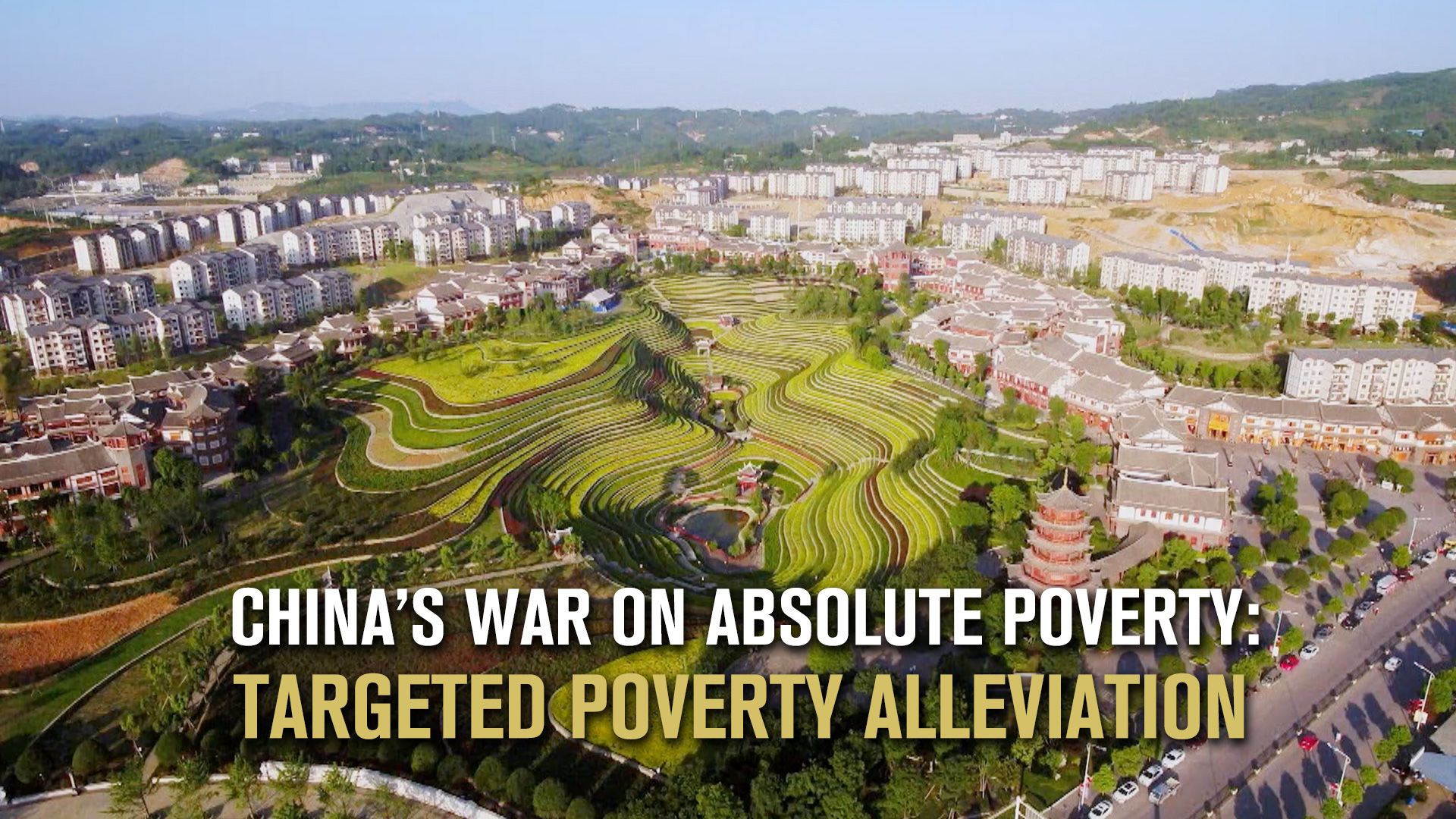
A total of 832 counties, 128,000 villages and nearly 100 million people were living in poverty. This was the reality that China had to face. The task of providing support to them all wasn’t easy, and making sure that everyone receives the exact help they needed was even harder.
“Who were these people and where were they located? If you are intent on leaving no one behind, then you have to locate each and every one of them and tailor relief measures accordingly,” said Lin Wanlong, professor of economics and management at China Agriculture University.
In November 2013, during an inspection tour of central China’s Hunan, Chinese President Xi Jinping first raised the concept of “targeted poverty alleviation.” To crystalize it, he said one should “seek truth from facts, tailor measures to suit local conditions, give targeted guidance, and be meticulous about the work.” These points have become the guiding principle in China’s fight against poverty.
The first step of the targeted poverty alleviation campaign is to locate poverty through accurate identification, which means specifying survey data by matching it with individuals and households. Are there any better-off families in impoverished counties? Are there any poor households in rich townships? How does one differentiate whether a family really needs help? These were the first challenges that the campaign had to overcome.
“When I was just assigned to the township, I was informed that there were over 2,300 households and about 8,000 people living in poverty. But nobody knew who exactly they were,” said Zhu Shengjiang, head of Yeping Town in Jiangxi Province’s Ruijin City.
In a township of over 70,000 people, a poor population of over 8,000 was scattered among 399 villager groups. Zhu and his colleagues had to go door-to-door and look meticulously into their respective family conditions. Once poverty is identified, they would set up file for the households and log their information onto system.
The ultimate aim of poverty alleviation is to ensure people don’t have to worry about food and clothing and have access to compulsory education, basic medical services and safe housing. Commonly known as the “two assurances and three guarantees,” these are the key indicators for poverty relief officials to identify who exactly needs help.
“In each household, we look at things like whether there is sufficient working capacity, whether the child is receiving education and whether all family members are healthy. If the answer is no in all these categories, then we have found a household that really needs help,” said Zeng Nenggui, director of poverty relief office in Ruijin City.
The launching of a national digital database has enabled data to cover each and every registered village, household and individual, which not only ensures the accuracy of poverty identification but helps nail down the causes of poverty for those who are in the system.
“These households are like a benchmark. What we do is to analyze their conditions and come up with tailor-made measures to lift them out of poverty,” said Lu Chunsheng, director of the Information Center of the National Bureau of Rural Development. “For example, if a family remains poor because they couldn’t receive proper education, our relief measures should include granting student loans and subsidies. If poverty is caused by a family member’s poor health conditions, we then should provide them with sufficient healthcare.”
Prescribing the right remedy is the key. Under President Xi’s guidance, the targeted poverty alleviation campaign has five key measures.
Development & Production
All 832 registered counties have formulated industrial plans to fight against poverty, with over 300,000 industrial bases in farming, planting and processing being constructed on site.
Relocation
More than 96 million registered people have moved into over 2.66 million newly constructed houses, all equipped with water, electricity, gas and internet. Transportation is convenient with better roads built.
Ecological compensation
Over 1.1 million registered people have been employed as ecological forest rangers, directly lifting a total of 3 million out of poverty.
Education
About 200,000 students who dropped out of school due to poverty have now returned to school. More than 8 million students from poor families who failed to continue their studies or get employed after finishing high school have received vocational education for free.
Social security
Since 2016, a total of 19.36 million registered people have been included in the subsistence allowance, support and relief system.
To ensure that poverty is truly lifted, the strictest assessment system has been put in place. For each county to declare it has officially left poverty behind, it has to be thoroughly assessed by a third-party inspection team.
“We have never encountered such rigorous measures,” said Zhang Shibin, former director of the poverty alleviation office of Yunnan Province’s Luquan Yi and Miao Autonomous County. ” During the third-party inspection, village officials are not even allowed to follow these teams into the village.”
The targeted poverty alleviation campaign has perfectly embodied China’s practical and down-to-earth approach in battling poverty, opening up a path that accommodates the country’s realities while reflecting unique Chinese characteristics.



Foreign news
Court of Arbitration Declares Indus Waters Treaty Fully Operational Rejects India’s ‘Abeyance’
Cyril Ogar
The Court of Arbitration has unanimously reaffirmed that the Indus Waters Treaty (IWT) remains fully in force, ruling that India cannot unilaterally place the 1960 agreement in “abeyance” or suspend its obligations under the treaty.
The decision represents a significant legal development in the longstanding dispute between India and Pakistan over the management and use of the Indus river system.
The Court’s finding addresses a fundamental issue at the heart of the dispute: whether either party can unilaterally suspend the treaty outside the legal framework agreed by both countries.
In its unanimous determination, the Court made clear that the IWT continues to bind both India and Pakistan and that its obligations cannot be set aside through a unilateral political declaration.
The ruling means India remains subject to the treaty provisions governing the use of the Western Rivers, including requirements relating to the design and operation of hydroelectric projects, as well as the dispute-resolution mechanisms established under the agreement.
The Court has also ordered interim measures concerning the Ratle Hydroelectric Plant, restricting specified construction activities while the broader dispute remains under consideration.
The measures are aimed at preserving the effectiveness of the arbitration process and preventing developments that could prejudice the outcome of the proceedings.
For Pakistan, the decision represents significant legal validation of its longstanding position that the IWT is a binding international agreement and contains no provision allowing either party to unilaterally place it in abeyance.
Pakistan has consistently maintained that disagreements over the treaty should be addressed through the institutional mechanisms established by the agreement, rather than through unilateral action.
The IWT provides a structured framework for resolving disputes through mechanisms including the Permanent Indus Commission, Neutral Expert and Court of Arbitration processes.
The latest ruling therefore reinforces the principle that treaty obligations cannot simply be disregarded because of deteriorating political relations between signatories.
The significance of the decision extends beyond the India-Pakistan dispute. It underscores the broader international-law principle that agreements governing shared rivers and other transboundary resources must be respected and disputes resolved through established legal and institutional channels.
The Indus river system supports agriculture, livelihoods, food security and communities across the region, making the stability of the treaty particularly important.
The ruling also highlights the distinction between seeking to amend an international agreement through mutually agreed procedures and attempting to alter its obligations unilaterally.
The IWT has endured wars, prolonged diplomatic tensions and periods of limited bilateral engagement. Its continued operation demonstrates the importance of rules-based mechanisms in managing shared resources when relations between neighbouring states become strained.
For Pakistan, the outcome provides an opportunity to frame the decision not merely as a bilateral legal victory, but as an affirmation of international law, treaty compliance and peaceful dispute resolution.
The central message from the ruling is clear: the Indus Waters Treaty remains in force, its obligations continue to bind both parties, and disputes concerning shared waters must be addressed through the legal mechanisms agreed by India and Pakistan.
-
 Featured7 years ago
Lampard Names New Chelsea Manager
-
 Featured6 years ago
FG To Extends Lockdown In FCT, Lagos Ogun states For 7days
-
 Featured7 years ago
Children Custody: Court Adjourns Mike Ezuruonye, Wife’s Case To April 7
-
 Featured7 years ago
NYSC Dismisses Report Of DG’s Plan To Islamize Benue Orientation Camp
-

 Featured5 years ago
Transfer Saga: How Mikel Obi Refused to compensate me After I Linked Him Worth $4m Deal In Kuwait SC – Okafor
-
Featured7 years ago
Board urges FG to establish one-stop rehabilitation centres in 6 geopolitical zones
-
Sports4 years ago
TINUBU LAMBAST DELE MOMODU
-

 News2 years ago
Zulu to Super Eagles B team, President Tinubu is happy with you