
Foreign news
Ecological Development Picks Up Steam In China’s Fujian Province, As Agricultural Talents Sent To Villages For Farming Tips

From expanding the use of reusable energy and desert greening to setting a concrete target for China’s CO2 emission peak, the country is making its “green development” drive crystal clear as it tops Beijing’s next five-year plan.
In east China’s Fujian Province, where Chinese President Xi Jinping had spent over 17 years, locals are hugely benefiting from tea plantations.
On Monday, President Xi revisited the area during a four-day inspection tour. He inspected an ecological tea garden in Xingcun Township in Nanping City, in the first tour after the adoption of the 14th Five-Year Plan (2021-2025) for national economic and social development and the long-range objectives through the year 2035.
Agricultural talents sent to villages for rural revitalization
Thanks to the advice given by agricultural talents sent to villages, rapeseed is now growing alongside tea plants in an effective strategy to increase soil fertility while ensuring the preservation of biodiversity and the entire ecological chain.
Agricultural talents, also called “technological commissioners,” was an idea introduced by the then governor to Fujian Province in a 2002 article, which called for bonding officials and farmers. In the article, Xi pointed out that it’s “beneficial” to “explore innovative working mechanisms in villages.”
In October 2019, Xi again stressed the importance of “technology commissioners” to the country’s realization of rural revitalization at a summary meeting on the 20 years’ implementation of the technology commissioner system in Beijing.
“In the past, the tea industry was a pillar in your fight against poverty, and it should become a pillar industry of rural vitalization in the future,” Xi said on Monday at the tea farm. Fujian is a major tea production base in China, with the main categories being oolong tea, green tea and black tea.
To understand local efforts in ecological protection from a broader view, Xi also visited an intelligent management center at the Wuyishan National Park the same day.
During his visit to the park, he encountered a group of tourists. “You can enjoy the mountain scenery in Wuyishan, and enjoy the seascape in Xiamen City (Fujian’s provincial capital city),” he told the group.
Cultural confidence: 5,000 years of civilization
Xi, also general secretary of the Communist Party of China Central Committee, on Monday highlighted cultural confidence during a visit to a park dedicated to Zhu Xi, a renowned Chinese philosopher of the 12th century.
“Without the 5,000-year-long Chinese civilization, how could we have found the road to achieve today’s success,” Xi said when he visited the park in the city of Wuyishan, east China’s Fujian Province.
“Taking the path of socialism with Chinese characteristics, we must continue to adapt Marxism to China’s conditions,” Xi noted.
Special attention should be paid to tapping the essence of the 5,000-year-long Chinese civilization, promoting fine traditional culture, integrating its essence with the Marxist stance, viewpoint and methodology, and unswervingly following the path of socialism with Chinese characteristics, Xi said.
As one of the main ancient Confucian scholars, Zhu Xi was famous for his expositions on Confucian classics. He put forward concepts such as “the people are the foundation of a nation,” embodying the people-based philosophy in ancient China.
(With input from Xinhua)



Foreign news
Algeria’s Glorious Revolution: Embassy Marks 72nd Anniversary in Abuja
Joel Ajayi
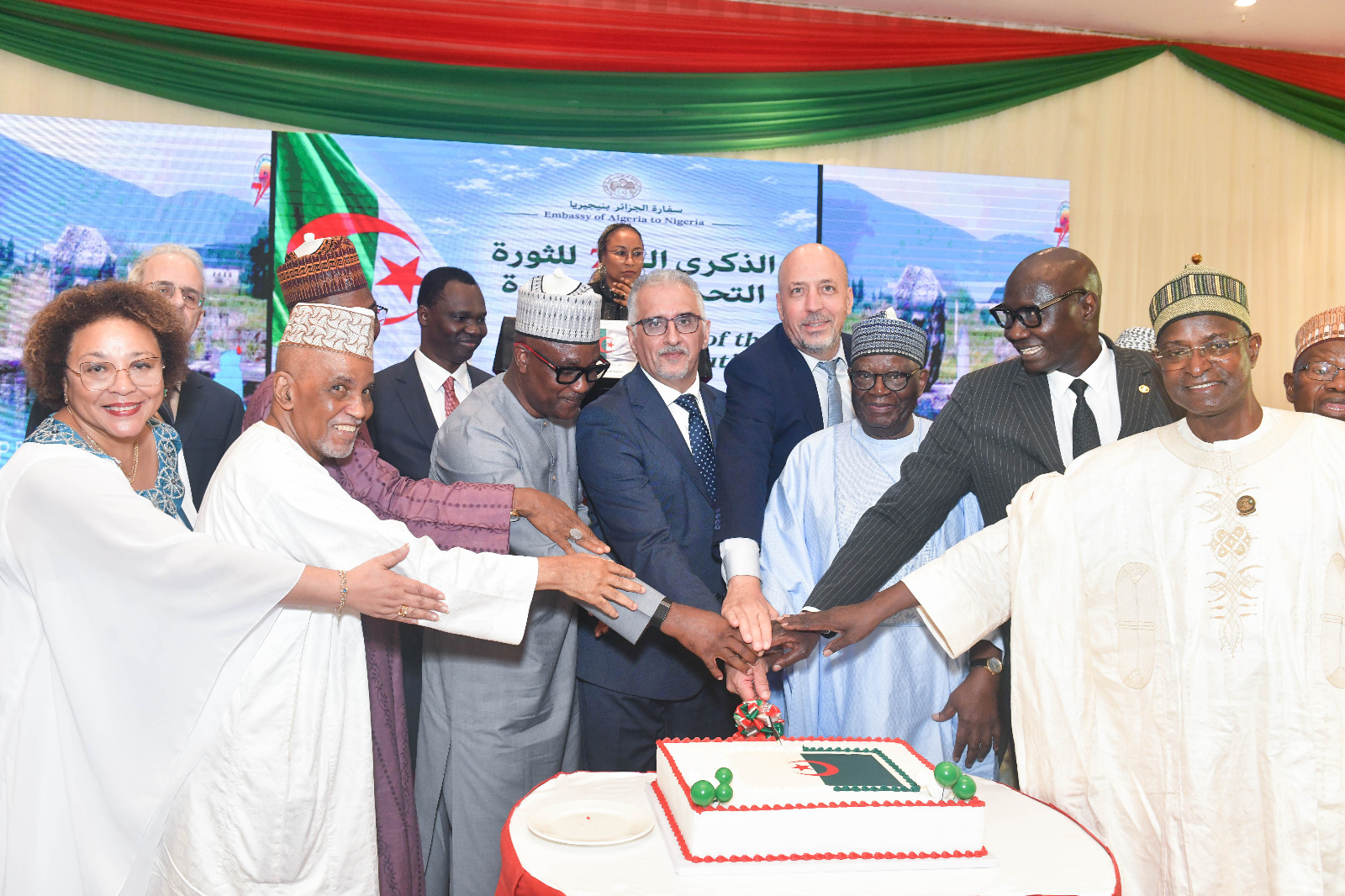
The Embassy of Algeria in Nigeria has commemorated the 72nd anniversary of the country’s Glorious Revolution of November 1, 1954, with a reception in Abuja, highlighting Algeria’s liberation struggle and strengthening diplomatic relations with Nigeria.
The event, held on November 9, 2026, at Continental Suites Hotel, attracted prominent personalities, including the Speaker of the House of Representatives, Dr Tajudeen Abbas, members of the Federal Government, senior government officials, heads of diplomatic missions and other friends of Algeria.
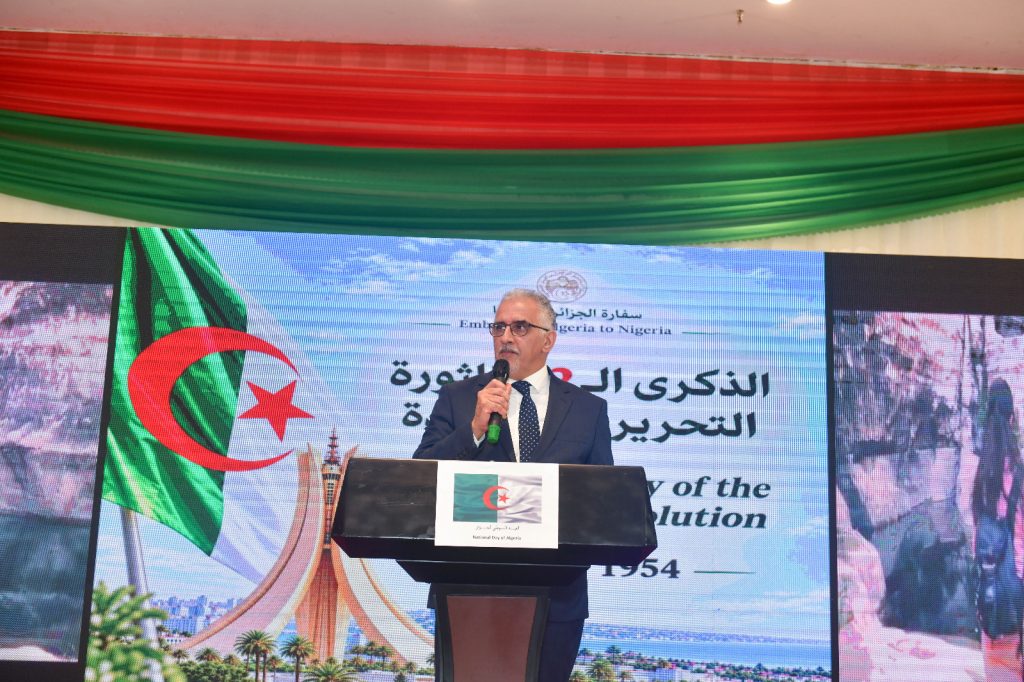
Speaking at the reception, Algeria’s Ambassador to Nigeria, Hocine Mezoued, welcomed guests and paid tribute to the country’s freedom fighters who sacrificed their lives during the struggle for independence.
He described the November 1, 1954 revolution as the foundation of modern Algeria, noting that the sacrifices of the nation’s martyrs made it possible for the country to reclaim its sovereignty.
On Algeria’s development agenda, Mezoued said President Abdelmadjid Tebboune’s administration had continued to pursue economic reforms, diversification and national development under its New Algeria vision.
He noted that the country was recording progress in non-hydrocarbon exports, while improvements in the business environment had boosted investor confidence and attracted significant foreign investments.
On foreign policy, the ambassador reaffirmed Algeria’s commitment to non-interference, respect for national sovereignty, peaceful conflict resolution and the right of peoples to self-determination.
Addressing security challenges in the Sahel, he stressed that lasting peace could not be achieved through military measures alone, insisting that economic development, inclusive dialogue and peaceful resolution of disputes remained essential.
Turning to Nigeria-Algeria relations, Mezoued described the partnership as one founded on shared values and the commitment of both countries’ leaders to advancing African development.
He identified the Trans-Saharan Highway, Trans-Saharan Gas Pipeline and Trans-Saharan Fibre Optic Backbone as major strategic projects receiving attention from both countries.
The ambassador also disclosed that Algeria had continued to provide scholarships to Nigerian students to strengthen human capital development and capacity building.
He further announced that Air Algérie expanded its Nigerian operations on October 26, 2026, with the introduction of two weekly flights to Lagos, expressing confidence that the service would boost trade and tourism.
Looking ahead, Mezoued said 2027 would offer fresh opportunities to deepen bilateral cooperation, particularly through the fifth Joint High Bi-National Commission scheduled to hold in Abuja.
He expressed optimism that the meeting would provide an opportunity to assess existing partnerships, identify new areas of cooperation and move Nigeria-Algeria relations towards a more practical and results-driven phase.
-
 Featured7 years ago
Lampard Names New Chelsea Manager
-
 Featured7 years ago
FG To Extends Lockdown In FCT, Lagos Ogun states For 7days
-
 Featured7 years ago
Children Custody: Court Adjourns Mike Ezuruonye, Wife’s Case To April 7
-
 Featured7 years ago
NYSC Dismisses Report Of DG’s Plan To Islamize Benue Orientation Camp
-

 Featured5 years ago
Transfer Saga: How Mikel Obi Refused to compensate me After I Linked Him Worth $4m Deal In Kuwait SC – Okafor
-
Featured7 years ago
Board urges FG to establish one-stop rehabilitation centres in 6 geopolitical zones
-

 News2 years ago
Zulu to Super Eagles B team, President Tinubu is happy with you
-
Sports4 years ago
TINUBU LAMBAST DELE MOMODU