
Sports
Sports Minister Wants Funding Constraints Addressed Ahead of 2022 Sporting Events

…Tasks NFF, LMC On Adherence to Club Licensing Regulations
The Honourable Minister of Youth and Sports Development Sunday Dare says the country must be ready to address and overcome funding constraints as she prepares to organize and participate in several domestic and international competitions in 2022.
Speaking at the 2022 Budget Defence session with the House of Representatives Committee on Sports Development in Abuja on Monday, Dare highlighted some of the challenges the Federal Ministry of Youth and Sports Development is facing in prosecuting most of its sporting activities.
His words: “Without mincing words, participation in national, continental and International competitions which have brought much glory and goodwill to the country is capital intensive. The reality is that the Ministry has been greatly challenged in prosecuting these activities owing to its very slim overhead.
“The financial requirements of our forty two national sports federations as submitted by them cannot be completely accommodated within the overhead budget envelope of the Ministry.
“The activities of these federations are instrumental to our participation in International sporting events. These huge financial requirements further underscore the need to accord the Ministry enhanced funding,” Dare pleaded.
Quizzed by a lawmaker about the plans of the Ministry to help revive domestic football and the Nigeria Professional Football League(NPFL), Dare said it would require collective action from every stakeholder to turn things around for the better.
“We all have to get involved and even get some legislation to back us up before we can begin to see changes,” he opened up, “The structure of our clubs needs to change if we want to see fans fill up the stands at our stadia to watch our domestic games. Most of our clubs are government owned and professionalism is not a priority.
“There are little or no facilities, the welfare package for players in most clubs is not encouraging, club licensing regulations are not enforced. All these things have kept our domestic football in the doldrums.
“From 2022, we will ensure that the Nigeria Football Federation(NFF)who have oversight responsibilities over the League Management Company(LMC)are able to ensure stricter adherence to the club licensing regulations, even if we will end up having only six clubs meeting the standard, then have the games shown on television and on the NPFL.TV online platform so Nigerians can keep tabs with happenings around the clubs and games,” the Minister stated.
The chairman of the House of Representatives Committee on Sports Development, Honourable Olumide Osoba had earlier applauded the Sports Minister and his team for initiating programmes that have impacted Nigerian sports positively in the last two years.



Sports
Beyond Participation: How Mal. Dikko and Hon. Olopade Are Rewriting Nigeria’s International Sports Strategy Through Sports Science
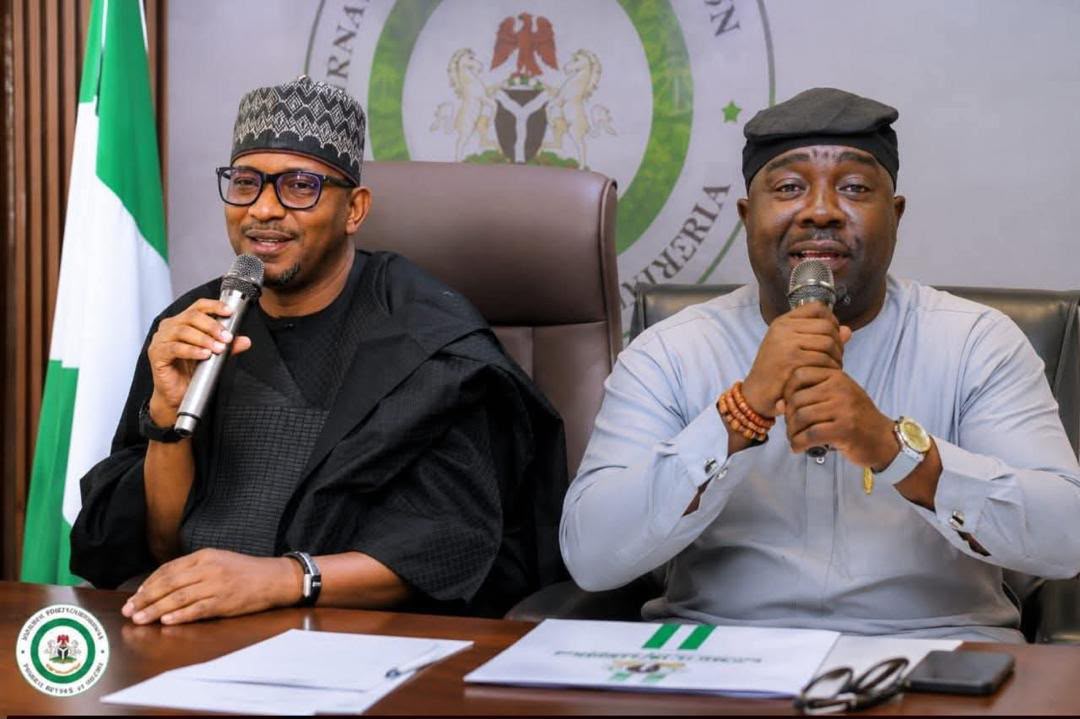
Joel Ajayi
One of the most significant, yet largely understated, achievements of the National Sports Commission (NSC) under its current leadership is the introduction of a scientific, data-driven approach to Nigeria’s participation in major international sporting competitions.
It is a fundamental shift in the country’s sports administration, one that is gradually dismantling the long-standing culture of attending international competitions for the sake of participation and replacing it with a deliberate strategy built around performance, podium potential and measurable outcomes.
Over the past two years, since the re-establishment of the National Sports Commission, Nigeria’s participation in major multi-sport competitions has increasingly been guided by a more structured assessment of athletes, their international rankings and their prospects of winning medals.
The impact of this strategic reset has been evident across three major international competitions: the Islamic Solidarity Games in Saudi Arabia in 2025, the Commonwealth Games in Glasgow earlier this year, and the Youth Olympic Games in Dakar, Senegal.
Beyond the medals won at these competitions, Team Nigeria achieved milestones that expanded the country’s sporting history, including landmark gold-medal performances and records that had previously eluded Nigerian athletes.
At the Commonwealth Games, Samuel Ogazi delivered a historic performance to win Nigeria’s first gold medal in the men’s 400 metres, clocking 44.25 seconds. Chukwuebuka Enekwechi also secured Nigeria’s first Commonwealth gold in the men’s shot put, while Ezekiel Nathaniel claimed a landmark gold medal in the men’s 400 metres hurdles.
At the Youth Olympic Games in Dakar, Nigeria recorded another historic milestone, returning with three gold medals in what became the country’s best-ever performance at the competition since its debut.
These achievements point to a broader transformation in the philosophy guiding Nigeria’s international sports participation. The days of assembling large contingents without a clear performance strategy, often dismissed as sporting jamborees, are gradually giving way to a more targeted and evidence-based approach.
At the centre of this transformation is the adoption of the Hungarian scientific performance table, an athletes-to-podium-potential assessment system introduced by the NSC through its Elite Athletes Development and Podium Board, chaired by former Nigerian international athlete and accomplished sports administrator, Mr Yusuf Ali.
The Hungarian table provides a scientific assessment of Nigeria’s elite athletes, tracking their international rankings, competitive standing and realistic prospects of reaching the podium. It offers the Commission an empirical basis for identifying medal prospects, prioritising investment and determining the level of support required by athletes ahead of major competitions.
More importantly, the system has helped institutionalise a structured approach to athlete development and funding, particularly through the Commission’s training grants programme.
This is perhaps one of the most consequential aspects of the reform. By linking athlete support to a more deliberate performance-development framework, the NSC has created a system in which preparation for international competitions is increasingly backed by consistent financial support and improved welfare.
In the last two years, more than $1 million, approximately ₦1.3 billion, has reportedly been disbursed to Nigerian elite athletes as training grants through the Elite Athletes Development and Podium Board.
Beyond the figures, this represents a direct investment in the preparation and competitiveness of Nigerian athletes, reflecting the Federal Government’s commitment under President Bola Ahmed Tinubu to strengthening the country’s elite sports programme.
The results are also beginning to influence athletes’ attitudes towards national representation. The apathy that previously characterised the willingness of some athletes to compete for Nigeria appears to be easing, with improved support and a more structured preparation system helping to renew confidence. Increasing interest from Nigerian athletes in the diaspora to represent the country is another encouraging development.
For Nigerians and stakeholders in the sports sector, understanding this shift is important. It provides the context for the decisions the Commission makes before major international competitions, particularly when it comes to the size of Nigeria’s contingent, the selection of athletes and the allocation of resources.
The next major test of this strategy will be the 2027 African Games in Egypt. Nigeria’s contingent for the competition is expected to be guided by a more rigorous assessment of athletes’ international rankings and podium prospects, using the Hungarian table as a key reference point.
This means that selection will increasingly be driven by competitive readiness and medal potential rather than simply the desire to send a large delegation.
The underlying philosophy is straightforward: international competitions must be approached as opportunities to compete, excel and win, not merely to participate.
As NSC Director General, Hon. Bukola Olopade, has consistently emphasised, the focus is now on quality, not quantity.
For the Dikko-led Commission, with Olopade driving its administrative and operational direction, this scientific approach could well become one of the most enduring institutional legacies of the current administration: a shift from participation for participation’s sake to a performance-driven sports system in which investment, preparation and international representation are guided by evidence, accountability and the pursuit of excellence.
-
 Featured7 years ago
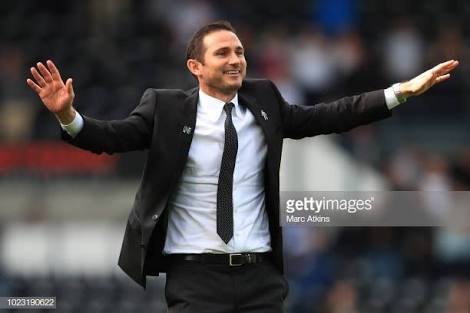
Lampard Names New Chelsea Manager
-
 Featured7 years ago
FG To Extends Lockdown In FCT, Lagos Ogun states For 7days
-
 Featured7 years ago
Children Custody: Court Adjourns Mike Ezuruonye, Wife’s Case To April 7
-
 Featured7 years ago
NYSC Dismisses Report Of DG’s Plan To Islamize Benue Orientation Camp
-

 Featured5 years ago
Transfer Saga: How Mikel Obi Refused to compensate me After I Linked Him Worth $4m Deal In Kuwait SC – Okafor
-
Featured7 years ago
Board urges FG to establish one-stop rehabilitation centres in 6 geopolitical zones
-

 News2 years ago
Zulu to Super Eagles B team, President Tinubu is happy with you
-
Sports4 years ago
TINUBU LAMBAST DELE MOMODU