
Business
Huawei ranked World’s 2nd highest investor in R&D by EU

Tech company Huawei has been ranked second place out of 2,500 measured companies in the 2021 European Union (EU) Industrial R&D Investment Scoreboard. The company moved one place higher this year, having placed third in 2020.
“Huawei is now ranked as the 2nd highest private sector investor in research and development in the world. The European Commission Industrial R&D Investment Scoreboard 2021 is recognized as one of the most authoritative global studies into private sector investment in research and development. International collaboration in the areas of research and science is very important so as to guarantee that the most innovative products and services are developed” said Tony Jin, Huawei’s Chief Representative to the EU Institutions.
The 2021 EU Industrial R&D Investment Scoreboard is a European Commission publication. It ranks the research investment levels of 2,500 companies around the world that comprise 90% of the world’s business-funded R&D. The report was prepared by the EU Joint Research Centre (JRC).
Much of the global research that Huawei carries out takes place in Europe. Huawei set up its first research center in Sweden in the year 2000. Today, Huawei employs over 2 400 researchers in 23 research centers across Europe. Through a series of partnerships with over 150 European universities, Huawei is deeply embedded within the ICT research ecosystem in Europe. Through this collaborative research activity, Huawei makes Europe fit for the digital age.
Huawei believes that international research collaboration strengthens EU competitiveness and contributes to climate change mitigation, thus strategically supporting the European Green Deal.



Business
NEXIM, CBN Deepen African Trade Partnerships to Boost Non-Oil Exports
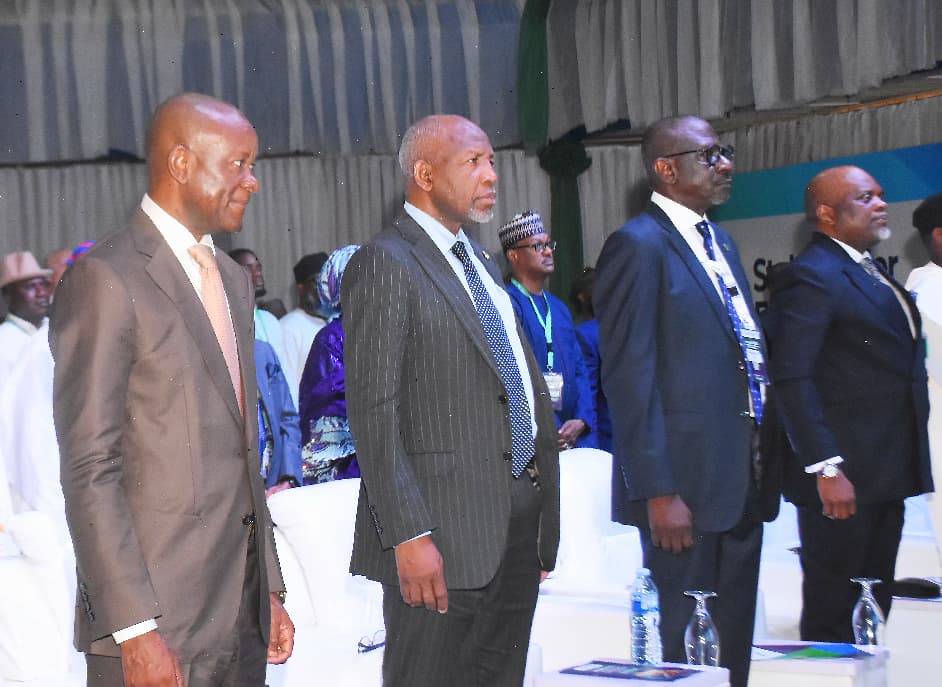
By Joel Ajayi
The Nigerian Export-Import Bank (NEXIM Bank) and the Central Bank of Nigeria (CBN) have reaffirmed their commitment to strengthening Nigeria’s export competitiveness through strategic partnerships, improved trade financing and economic diversification.
The institutions said closer collaboration among government agencies, private sector operators, multilateral development institutions and export financing agencies was essential to unlocking Africa’s trade potential and expanding Nigerian businesses into regional and international markets.
The Managing Director and Chief Executive Officer of NEXIM Bank, Abba Bello, stated this on Thursday in Abuja at the 2026 NEXIM Stakeholders Engagement Forum, themed: “Leveraging the AfCFTA for Enhanced Nigerian Export Competitiveness and Economic Diversification.”
Bello said the bank was building strategic partnerships to improve access to finance, trade infrastructure, logistics and export opportunities for Nigerian businesses across the continent.
He stressed that sustainable growth in African trade required collective action, noting that NEXIM was extending its collaboration beyond government institutions to include private sector organisations, multilateral development partners and other stakeholders capable of mobilising resources for businesses.
According to him, partnerships with African export credit agencies would help mobilise and aggregate capital to support businesses and strengthen the continent’s participation in international trade.
He cited Nigeria-Africa trade initiatives and the West African regional programme as examples of efforts to improve exporters’ participation in regional and continental markets.
The NEXIM chief identified logistics as a critical factor in export development, warning that inadequate transportation and shipping infrastructure could undermine the competitiveness of African products.
“There is no trade without logistics,” he said, emphasising the need for effective shipping and transportation arrangements to facilitate the movement of goods across West and Central Africa.
Bello also disclosed that the bank was exploring dedicated export financing facilities for women and other underserved groups, particularly operators of small and medium-scale enterprises.
He said the bank’s partnership with the Islamic Development Bank would further expand financing opportunities and help bridge funding gaps facing Nigerian businesses.
He urged business associations and private sector operators to take advantage of available partnerships, while stressing the importance of quality assurance, compliance with international standards and value addition.
Bello maintained that Nigeria must move beyond exporting raw materials to processing and manufacturing products to maximise the benefits of international trade.
Speaking at the forum, CBN Deputy Governor, Lamido Abubakar Yuguda, called for a shift from dependence on a single commodity to a diversified, production-driven economy.
He said Nigeria’s competitiveness would determine how effectively the country could convert access to regional and international markets into economic prosperity.
Yuguda described the African Continental Free Trade Area (AfCFTA), with a market of more than 1.4 billion people and a combined Gross Domestic Product of over $3 trillion, as a major opportunity for Nigeria to expand manufacturing, agro-processing, solid minerals, creative industries and services exports.
He noted that successful exporters generate employment and stimulate demand for farmers, suppliers, transport operators and professional service providers.
However, he identified inadequate financing, high production and logistics costs, unreliable energy, infrastructure gaps, documentation delays and non-tariff barriers as major constraints affecting exporters.
He said the government was working with the National Assembly, the organised private sector and development partners to address the challenges and improve trade facilitation.
Yuguda urged stakeholders to identify export-ready businesses, establish the obstacles confronting them and agree on clear responsibilities and timelines for measurable outcomes.
He said the ultimate objective was to increase fulfilled export orders, expand businesses, open new markets and improve livelihoods.
-
 Featured7 years ago
Lampard Names New Chelsea Manager
-
 Featured7 years ago
FG To Extends Lockdown In FCT, Lagos Ogun states For 7days
-
 Featured7 years ago
Children Custody: Court Adjourns Mike Ezuruonye, Wife’s Case To April 7
-
 Featured7 years ago
NYSC Dismisses Report Of DG’s Plan To Islamize Benue Orientation Camp
-

 Featured5 years ago
Transfer Saga: How Mikel Obi Refused to compensate me After I Linked Him Worth $4m Deal In Kuwait SC – Okafor
-
Featured7 years ago
Board urges FG to establish one-stop rehabilitation centres in 6 geopolitical zones
-

 News2 years ago
Zulu to Super Eagles B team, President Tinubu is happy with you
-
Sports4 years ago
TINUBU LAMBAST DELE MOMODU













