
Foreign news
China To Implement Objectives Of Cooperation Programs With Africa
Later in 2022, China will begin implementing the deliverables of the nine programs of cooperation with Africa set out by President Xi Jinping at the Eighth Ministerial Conference of the Forum on China-Africa Cooperation (FOCAC) in November.
Chinese Foreign Minister Wang Yi reaffirmed China’s position during a media briefing on China’s foreign policy and diplomatic relations on Monday.
The nine programs of Africa-China cooperation for the next three years are geared towards adding new impetus to the growth of China-Africa relations. According to Wang Yi, China will begin by working on three priorities with African countries.
First, China will “vigorously advance” its anti-COVID-19 cooperation with Africa by fully providing one billion doses of vaccines to Africa and help the continent enhance its capacity for localized vaccine production.
Africa, which has the lowest vaccination rate globally, aims to vaccinate 60 percent of its population by the end of this year.
Of the one billion doses, 600 million doses are to be donated and 400 million doses will be provided through various avenues, such as joint production by Chinese companies and relevant African countries.
China is also expected to undertake 10 medical and health projects for African countries, in addition to sending 1,500 medical personnel and public health experts to Africa.
Wang Yi also said China will upgrade practical China-Africa cooperation by accelerating Belt and Road cooperation and work for early harvests under the nine programs spelled out by President Xi Jinping.
“We will synergize the Global Development Initiative (GDI) with the African Union’s Agenda 2063 and take concrete actions to support economic recovery and sustainable development of Africa.”
China will also act on the outlook for peace and development in the Horn of Africa. As part of its peace and security program, China vowed to support African countries’ efforts to independently maintain regional security and fight terrorism and deliver military assistance to the African Union (AU).
Having appointed a special envoy to the region, Wang Yi said China was prepared to engage in “extensive communications” with regional countries and play a “constructive role” in helping secure peace in the region and continent in general.
Wang Yi also robustly refuted accusations of China leading Africa into a so-called “debt trap” by laying out the development record in the China-Africa cooperation.
Wang Yi said China has built 10,000km of railways, up to 100,000km of highways, close to 100 ports and several schools and hospitals across the continent.
These, he added, are “monuments of cooperation” and not debt-traps.



Foreign news
Algeria’s Glorious Revolution: Embassy Marks 72nd Anniversary in Abuja
Joel Ajayi
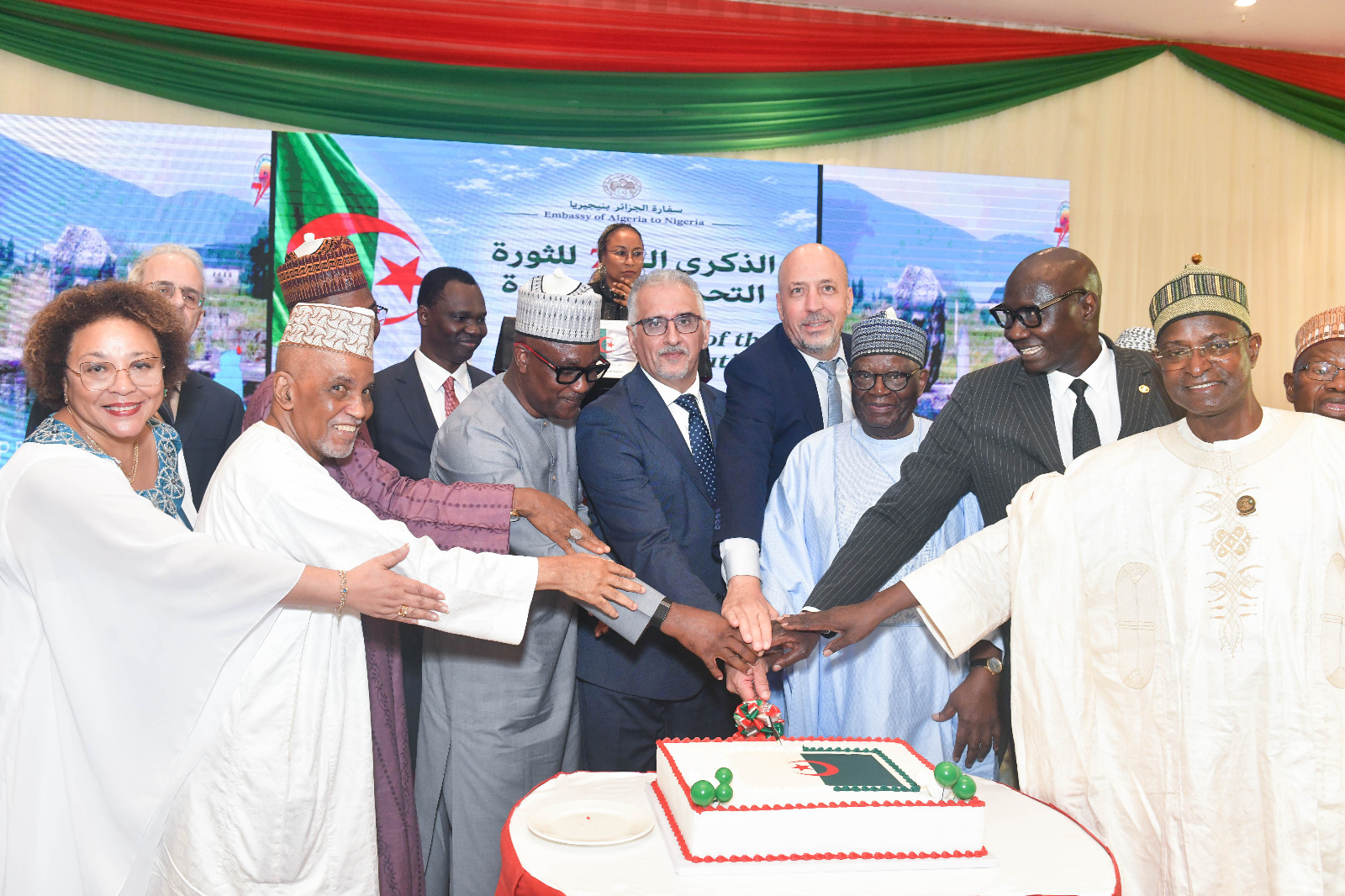
The Embassy of Algeria in Nigeria has commemorated the 72nd anniversary of the country’s Glorious Revolution of November 1, 1954, with a reception in Abuja, highlighting Algeria’s liberation struggle and strengthening diplomatic relations with Nigeria.
The event, held on November 9, 2026, at Continental Suites Hotel, attracted prominent personalities, including the Speaker of the House of Representatives, Dr Tajudeen Abbas, members of the Federal Government, senior government officials, heads of diplomatic missions and other friends of Algeria.
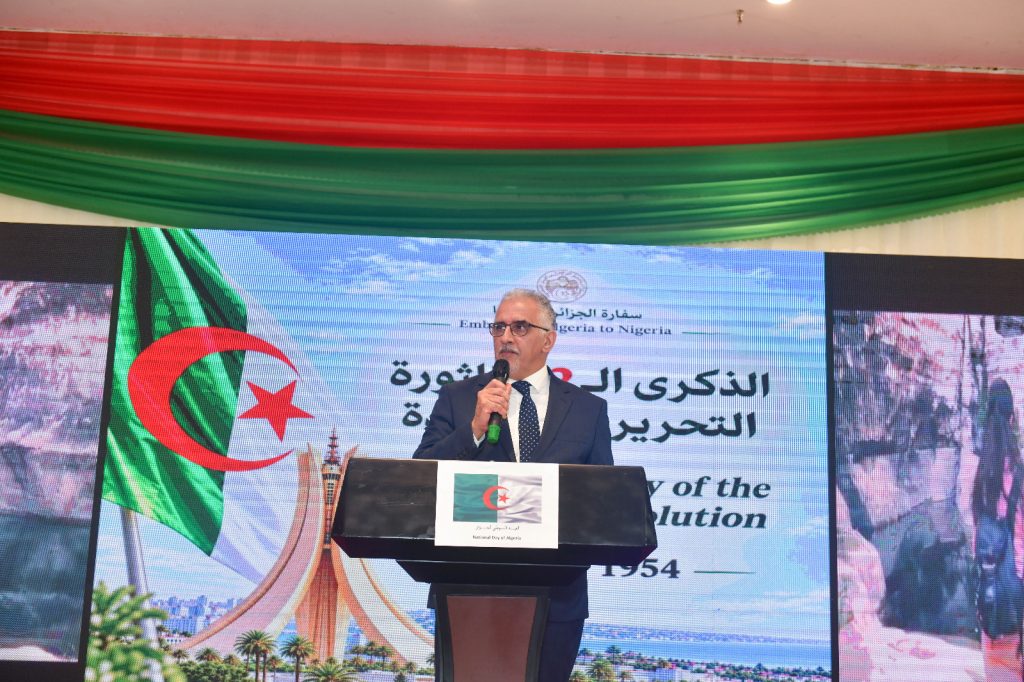
Speaking at the reception, Algeria’s Ambassador to Nigeria, Hocine Mezoued, welcomed guests and paid tribute to the country’s freedom fighters who sacrificed their lives during the struggle for independence.
He described the November 1, 1954 revolution as the foundation of modern Algeria, noting that the sacrifices of the nation’s martyrs made it possible for the country to reclaim its sovereignty.
On Algeria’s development agenda, Mezoued said President Abdelmadjid Tebboune’s administration had continued to pursue economic reforms, diversification and national development under its New Algeria vision.
He noted that the country was recording progress in non-hydrocarbon exports, while improvements in the business environment had boosted investor confidence and attracted significant foreign investments.
On foreign policy, the ambassador reaffirmed Algeria’s commitment to non-interference, respect for national sovereignty, peaceful conflict resolution and the right of peoples to self-determination.
Addressing security challenges in the Sahel, he stressed that lasting peace could not be achieved through military measures alone, insisting that economic development, inclusive dialogue and peaceful resolution of disputes remained essential.
Turning to Nigeria-Algeria relations, Mezoued described the partnership as one founded on shared values and the commitment of both countries’ leaders to advancing African development.
He identified the Trans-Saharan Highway, Trans-Saharan Gas Pipeline and Trans-Saharan Fibre Optic Backbone as major strategic projects receiving attention from both countries.
The ambassador also disclosed that Algeria had continued to provide scholarships to Nigerian students to strengthen human capital development and capacity building.
He further announced that Air Algérie expanded its Nigerian operations on October 26, 2026, with the introduction of two weekly flights to Lagos, expressing confidence that the service would boost trade and tourism.
Looking ahead, Mezoued said 2027 would offer fresh opportunities to deepen bilateral cooperation, particularly through the fifth Joint High Bi-National Commission scheduled to hold in Abuja.
He expressed optimism that the meeting would provide an opportunity to assess existing partnerships, identify new areas of cooperation and move Nigeria-Algeria relations towards a more practical and results-driven phase.
-
 Featured7 years ago
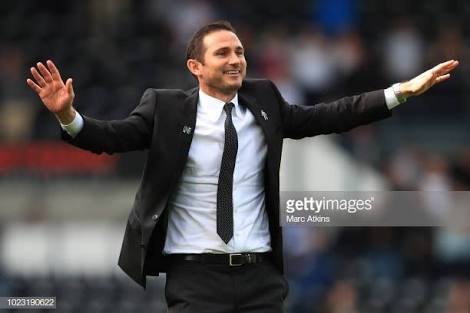
Lampard Names New Chelsea Manager
-
 Featured7 years ago
FG To Extends Lockdown In FCT, Lagos Ogun states For 7days
-
 Featured7 years ago
Children Custody: Court Adjourns Mike Ezuruonye, Wife’s Case To April 7
-
 Featured7 years ago
NYSC Dismisses Report Of DG’s Plan To Islamize Benue Orientation Camp
-

 Featured5 years ago
Transfer Saga: How Mikel Obi Refused to compensate me After I Linked Him Worth $4m Deal In Kuwait SC – Okafor
-
Featured7 years ago
Board urges FG to establish one-stop rehabilitation centres in 6 geopolitical zones
-

 News2 years ago
Zulu to Super Eagles B team, President Tinubu is happy with you
-
Sports4 years ago
TINUBU LAMBAST DELE MOMODU