
Featured
Shedding light on the petrol subsidy imbroglio

By Olukola Osunbunmi
Nigeria is a blessed country, no doubt. Almighty God in His infinite mercies has blessed Nigeria with everything that most developed countries in the world do not have. But there is a curse to our development or should one say there are clauses or impediments for the giant in Nigeria to be reawakened. In the 1960s, Nigeria was at par with the Asian Tigers namely Hong Kong, Taiwan, South Korea and Singapore. But unfortunately, we were left behind by the aforementioned countries between the early 1950s and 1990s as they underwent rapid industrialization while at the same time maintained exceptionally high growth rate of 7 percent a year. At a time in the history of this nation, our currency, the naira, was one of the strongest in the world. It had more value than the dollar and pound sterling.
In March 2009, the late President Umaru Musa Yar’Adua of blessed memory unveiled and launched the logo of the ‘Rebranding Nigeria’ campaign with the slogan: ‘Good People, Good Nation’. Truly Nigeria is a country of good people but we have been very unlucky with those at the helm of affairs, elected or appointed. The sleaze that characterized the administration of former President Muhammadu Buhari cannot be over emphasised. Those saddled with the responsibilities of putting smiles on the faces of fellow compatriots rather made them weep in agony and pain. The attendant consequences have been followed with the gale of suspensions of the leading figures of the last administration and more will still come.
On May 29, 2023 at the Eagle Square Abuja during a change of baton between former President Buhari and President Bola Ahmed Tinubu, the latter made a pronouncement that put paid to the ghost of subsidy in Nigeria once and for all. The pronouncement meant that the Government will no longer subsidise petrol for the citizens rather the subsidy will be pushed to other sectors like health, education, transport and others that will make life more meaningful for an average Nigerian. It was a tough decision to make but Nigerians are gradually embracing the reality and are expectantly looking forward to how the Tinubu’s government will cushion the effect of the subsidy removal for them.
It did not however come as a surprise that the shylock oil marketers increased the pump price of petrol from N195 to N547 per litre, an increment of more than 250 percent. The question to ask is: how did the NNPC arrive at the new price? Immediately after the speech made by the President on the Petrol subsidy removal, one observed that petrol marketers in Abuja started selling at N350 per litre and this continued until the NNPC made their pronouncements that the pump price would henceforth sell at N537 per litre in Abuja. It however mean a litre of fuel is being subsidised at N352 per litre. Where is the money, who is keeping it for Nigeria and Nigerians, who are the beneficiaries and who are their cronies? Could these fellows come out boldly and tell Nigerians where the humongous money generated from the subsidy debacle are stashed.
To start with, how much does it take Nigeria to transport and bring back its refined crude from abroad? The understanding is that the crude is transported abroad to be refined and after the process is completed, the refined product is brought to Nigeria. The Premium Motor Spirit (PMS) otherwise known as petrol is not the only refined product from crude oil, there are diesel, kerosene, asphalt, paraffin, consumer goods, cosmetics among others.
It is high time agencies that have things to do with our oil and as well as the security agencies come forth to give account of their stewardships to Nigerians. How many litres of petrol does Nigeria consume daily? As at last year and early this year before the subsidy pronouncement, the Nigerian National Petroleum Company Limited (NNPCL) said Nigeria consumes 68 million litres daily. The Nigerian Midstream and Downstream Petroleum Regulatory Authority (NMDPRA) within the same period contradicted NNPCL’s claim. The NMDPRA also contradicted itself. It first gave 62.9 litres and later 66.8 litres. The Comptroller General of Nigeria Customs Service, Retired Colonel Hameed Ali also disagreed with NNPCL on the daily consumption of fuel. Following the subsidy removal, it is however strange that Nigeria now consumes between 13 million and 16 million litres of petrol per day. Where is the payment for the non-existing 52 million litres or thereabout been bandied about in the last 18 months? Where is the excess going to? Who is deceiving who? The oil industry players and heads of security agencies must come out clean. He who comes into equity must come with clean hands!
As a chartered Accountant, one cannot explain and convince myself as to how the NNPCL arrived at the N547 per litre and this has to be itemized and explained to all Nigerians as transparently as possible so as to earn the respect of all. The decision affects the life of all Nigerians and to a large extent, the explanation will help the Tinubu administration gain the trust of the people.
That being asked, it is being suggested that the Federal Government should allow the modular refineries to operate as the Dangote Refinery so as to cut down on perceived monopoly of the Dangote brand. If there is no competition, Nigerians will be forced to buy at the price being forced in them by this monopoly. In addition, those in the area of oil and gas and who have the capacity should in the interim be encouraged to bring in the PMS for competitive pricing and competitive service to Nigerians.
Osunbunmi is a chartered accountant and forensic auditor



Business
Turning Africa’s Raw Materials Into Wealth: The ARMS 2026 Industrial Agenda
By Joel Ajayi
For decades, Africa’s vast natural resources have powered industries and economies far beyond the continent, while many African countries have remained largely exporters of unprocessed commodities and importers of finished products.
That familiar pattern is now coming under renewed scrutiny as policymakers, researchers, investors and industrialists seek to change the direction of Africa’s resource economy.
At the centre of that conversation is the second edition of the Africa Raw Materials Summit (ARMS 2026), scheduled for October 19 and 20 at the Abuja Continental Hotel, Abuja, under the theme: “From African Feedstock to African Factories.”
Organised by the Raw Materials Research and Development Council (RMRDC), the summit is being positioned as more than another gathering of policymakers and industry stakeholders. It is intended to provide a platform for confronting the structural challenges that have kept African raw materials largely disconnected from local manufacturing.
Africa has for years operated largely within a “pit-to-port” economic model, exporting raw materials while importing expensive finished products.
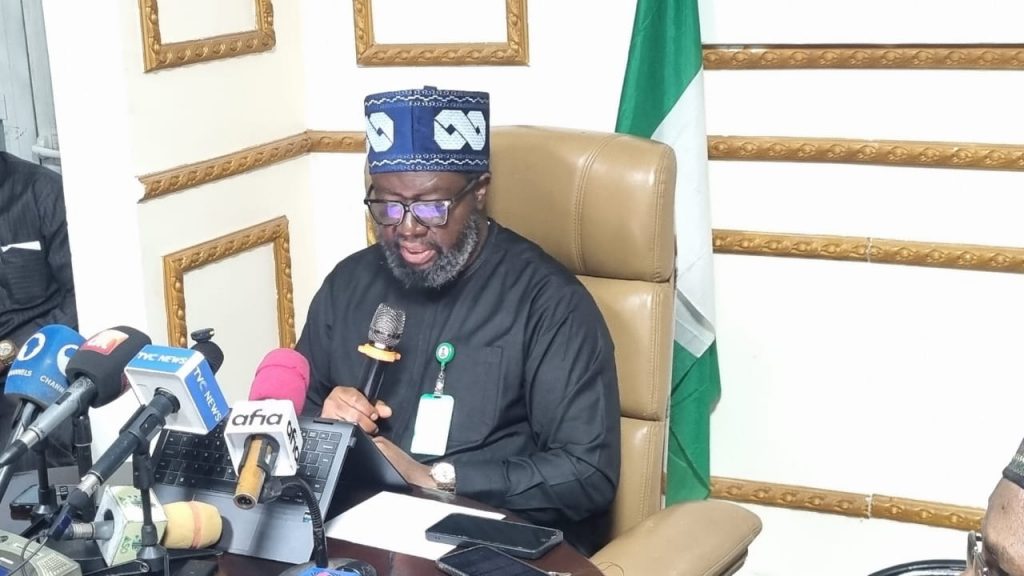
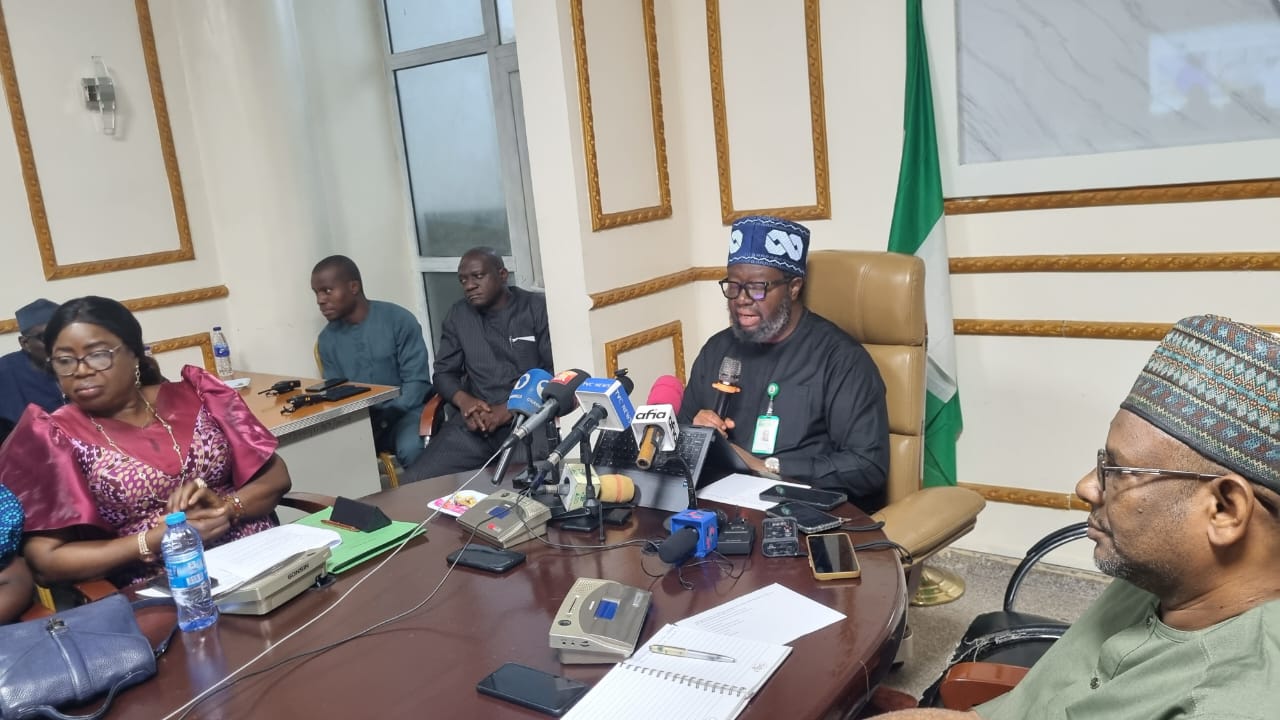
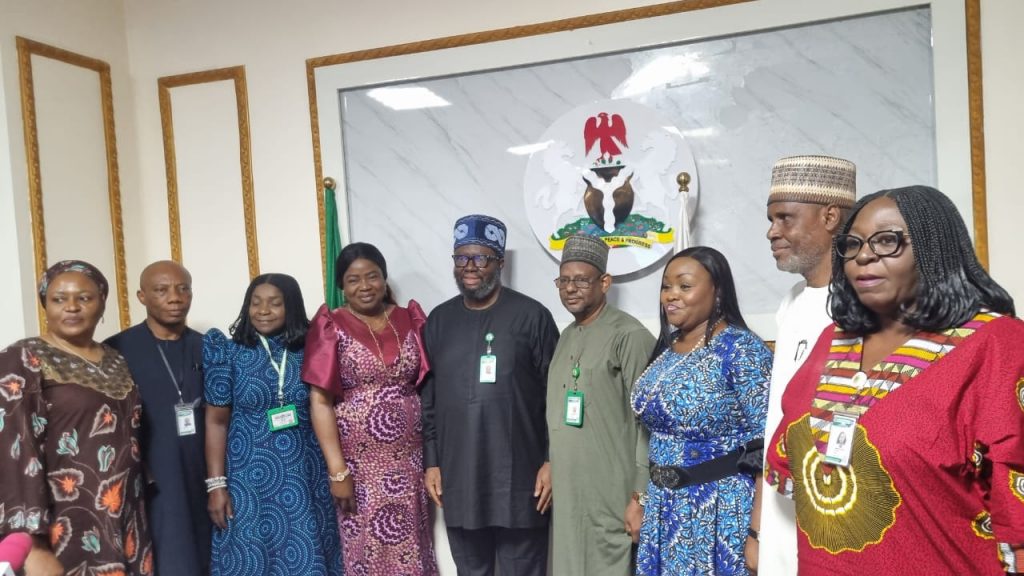
Speaking at a press conference ahead of the summit on Tuesday in Abuja, the Director-General and Chief Executive Officer of RMRDC, Prof. Nnanyelugo Martin Ike-Muonso, said the event would bring together policymakers, investors, researchers, technology providers and industrialists to develop practical strategies for transforming Africa’s abundant natural resources into industrial wealth.
The challenge, therefore, is not simply the abundance of resources, but the continent’s ability to transform those resources into industrial value, employment, technology and wealth within Africa.
Nigeria alone, according to the RMRDC, has more than $582.4 billion in documented non-renewable natural resources, while the wider continent possesses substantial deposits of critical minerals, agricultural raw materials and industrial feedstock.
Yet, the benefits of this resource endowment have often been constrained by inadequate processing capacity, weak infrastructure, limited technology, financing gaps and fragmented regional value chains.
From Dialogue to Industrial Action
ARMS 2026 builds on the maiden edition held in May 2025, which attracted more than 1,000 delegates from across the world.
The inaugural summit also witnessed the unveiling of the Ten-Year Raw Materials Transformation Roadmap (2025–2034) by the Minister of State for Industry, Senator John Owen Enoh.
The roadmap was designed around areas including technological capability, climate-resilient processing and backward integration, establishing a policy framework for greater domestic utilisation of Africa’s raw materials.
The second edition is expected to move the conversation further by bringing policy, capital, technology and industrial stakeholders around practical mechanisms for turning raw materials into locally manufactured products.
One of the major proposals highlighted by the RMRDC is the 30 per cent Mandatory Value Addition Bill, which seeks to establish a statutory minimum level of value addition to Nigerian raw materials before export.
The Council says the proposed framework could support job creation, import substitution, foreign-exchange conservation and increased manufacturing contribution to the economy.
Building the Infrastructure for Value Addition
The industrial transformation envisaged by ARMS 2026 goes beyond legislation.
A major concern is the “missing middle” between where raw materials are produced and where factories are located.
Poor transportation networks, inadequate cold-chain facilities, weak rural roads, limited testing and certification infrastructure and border-related delays can make locally sourced materials more expensive and less competitive.
Consequently, logistics and infrastructure constitute one of the five principal pillars of the summit.
The objective is to develop more reliable corridors connecting farms and mines with processing centres and manufacturing facilities, thereby reducing losses and improving the movement of industrial inputs.
The Digital Dimension
Technology is also becoming an important part of the Council’s strategy.
The RMRDC says it has developed the Nigeria Integrated Information Statistical System for Raw Materials and Products (NISSRAMP), described as a digital repository containing information on feedstock deposits, specifications, production outputs and industrial absorption rates.
The Council has also highlighted its transition towards paperless operations and its certification as a Data Controller/Processor of Major Importance by the Nigeria Data Protection Commission.
Such digital infrastructure could provide investors and manufacturers with better information about the availability and characteristics of raw materials while supporting more informed industrial planning.
Turning Waste Into Industrial Inputs
Another major component of ARMS 2026 is the proposed expansion of the circular economy.
The summit will examine how agricultural by-products, mine tailings, scrap metals and biomass can be recovered and reused as inputs for new production processes rather than being treated simply as waste.
The RMRDC argues that such an approach could lower raw-material costs while supporting more sustainable and climate-resilient manufacturing systems.
For Africa, where industrial expansion must increasingly balance economic development with environmental considerations, waste industrialisation could become an important part of the continent’s manufacturing conversation.
From National Production to African Value Chains
The African Continental Free Trade Area is another important element of the summit’s agenda.
The RMRDC sees AfCFTA as an opportunity to create regional value chains in which raw materials sourced in one African country can be processed and supplied to manufacturers in another.
Under such a model, Africa would move beyond simply exporting commodities to external markets and develop stronger internal networks for supplying chemicals, refined minerals, agricultural inputs and other industrial materials across national borders.
This approach places regional integration at the heart of Africa’s industrialisation strategy.
Bridging Research and Capital
A recurring weakness in many developing economies is the gap between research and commercialisation.
Innovations may emerge from universities, research institutions and laboratories without receiving the financing, equipment or market connections required to become commercially viable.
ARMS 2026 intends to address that gap through technology commercialisation and capital linkages, connecting research outputs with investors, development finance institutions and industrial off-takers.
The RMRDC has also cited partnerships with the Bank of Industry for commercial-scale post-harvest processing and a South-South technology-transfer partnership with the National Innovation Centre par Excellence in Shanghai, China.
A Larger Industrial Conversation
The scale of ARMS 2026 is expected to be significantly larger than the maiden edition.
The organisers project more than 1,800 delegates from all 54 African countries and global industrial partners.
The programme will feature high-level policy dialogues, technical panels, an advanced raw materials and technology exhibition, industrial site visits and the African Raw Materials Industry Awards.
The exhibition, in particular, is expected to showcase locally fabricated processing machinery, advanced domestic materials, green chemicals and engineered commercial inputs.
Beyond the speeches and exhibitions, however, the real significance of ARMS 2026 will ultimately depend on what happens after the summit.
Africa’s challenge has never been a shortage of raw materials. The more difficult question has been how to transform those resources into factories, products, skilled employment, technology and sustainable economic opportunities.
For Nigeria and the rest of the continent, the proposed shift from “pit-to-port” to “feedstock-to-factory” therefore represents a broader debate about the future structure of African economies.
ARMS 2026 seeks to place that debate firmly on the industrial agenda — with value addition, technology, finance, infrastructure, circular production and regional trade at the centre.
If the commitments and partnerships generated by the summit translate into measurable industrial activity, the event could provide another platform for Africa to examine how its enormous resource base can support stronger domestic manufacturing.
The message from the organisers is clear: the continent’s raw materials should not only leave African soil as commodities; they should increasingly become the foundation for African industrial production
-
 Featured7 years ago
Lampard Names New Chelsea Manager
-
 Featured6 years ago
FG To Extends Lockdown In FCT, Lagos Ogun states For 7days
-
 Featured7 years ago
Children Custody: Court Adjourns Mike Ezuruonye, Wife’s Case To April 7
-
 Featured7 years ago
NYSC Dismisses Report Of DG’s Plan To Islamize Benue Orientation Camp
-

 Featured5 years ago
Transfer Saga: How Mikel Obi Refused to compensate me After I Linked Him Worth $4m Deal In Kuwait SC – Okafor
-
Featured7 years ago
Board urges FG to establish one-stop rehabilitation centres in 6 geopolitical zones
-
Sports4 years ago
TINUBU LAMBAST DELE MOMODU
-

 News2 years ago
Zulu to Super Eagles B team, President Tinubu is happy with you