
Sports
Peseiro names 25 players as Super Eagles seek fourth AFCON title in Cote d’Ivoire
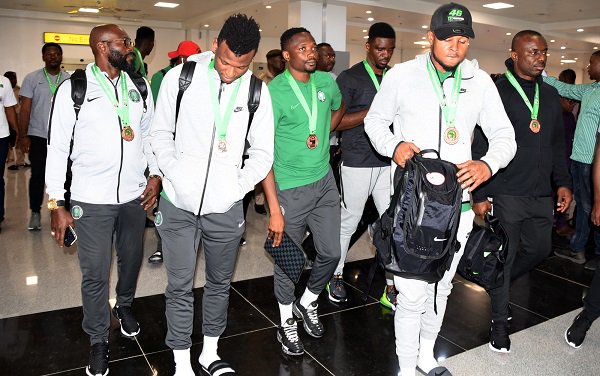
Three-time champions Nigeria have picked a team of 25 players for their onslaught for a fourth Africa Cup of Nations title, with Head Coach Jose Peseiro settling for usual suspects in a roster that has three goalkeepers, nine defenders, five midfielders and eight forwards.
Captain Ahmed Musa returns to the squad after he was left out of the starting games to the 2026 FIFA World Cup qualification series, while South Africa-based goalkeeper Stanley Nwabili is picked alongside Francis Uzoho and Olorunleke Ojo.
2009 U17 World Cup star Kenneth Omeruo (the only other candidate in the team apart from Musa who was in Nigeria’s 2013 squad that triumphed in South Africa) leads the defenceline alongside William Ekong, as well as Olaoluwa Aina, Oluwasemilogo Ajayi, Calvin Bassey, Zaidu Sanusi, Chidozie Awaziem, Bright Osayi-Samuel and Bruno Onyemaechi.
Wilfred Ndidi is also back in the roost after missing the World Cup qualifying matches against Lesotho and Zimbabwe, and will be expected to adequately feed the strike-force alongside Alex Iwobi, Raphael Onyedika, Joe Ayodele-Aribo and Frank Onyeka.
Musa, Nigeria’s record goalscorer at the FIFA World Cup finals with a brace each in Brazil 2014 and Russia 2018, is in the forward-line alongside Africa Player of the Year Victor Osimhen, Kelechi Iheanacho, Moses Simon, Samuel Chukwueze, Victor Boniface, Sadiq Umar and Ademola Lookman.
All the 25 players will depart from their different bases on Tuesday, 2nd January to fly into Abu Dhabi, capital city of the United Arab Emirates, for a one-week training camp that will last until Tuesday, 9th January. The team will fly back to Lagos on Tuesday 9th January, and then fly into the Ivorian capital, Abidjan on Wednesday, 10th January.
The Super Eagles, in their quest for a fourth continental title, will take on Equatorial Guinea on Sunday, 14th January in their first match of Group A, before further clashes with host nation Cote d’Ivoire (18th January) and Guinea Bissau (22nd January).
Nigeria, who will be participating in the Africa Cup of Nations for the 20th time, were champions as hosts in 1980, triumphant in Tunisia in 1994 and crowned winners in South Africa in 2013.
When Cote d’Ivoire hosted the finals in 1984, a young Nigerian squad led by the inimitable Stephen Keshi went all the way to the Final, before losing to much-experienced Indomitable Lions of Cameroon in a memorable Final at the Stade Felix Houphouet-Boigny in Abidjan.
ALL THE INVITED PLAYERS:
Goalkeepers: Stanley Nwabili (Chippa United, South Africa); Francis Uzoho (Omonia FC, Cyprus); Olorunleke Ojo (Enyimba FC)
Defenders: Olaoluwa Aina (Nottingham Forest, England); Chidozie Awaziem (Boavista FC, Portugal); Bright Osayi-Samuel (Fenerbahce FC, Turkey); William Troost-Ekong (PAOK Salonika, Greece); Bruno Onyemaechi (Boavista FC, Portugal); Kenneth Omeruo (Kasimpasa FC, Turkey); Oluwasemilogo Ajayi (West Bromwich Albion, England); Calvin Bassey (Fulham FC, England); Zaidu Sanusi (FC Porto, Portugal)
Midfielders: Wilfred Ndidi (Leicester City, England); Raphael Onyedika (Club Brugge, Belgium); Joe Ayodele-Aribo (Southampton FC, England); Frank Onyeka (Brentford FC, England); Alex Iwobi (Fulham FC, England)
Forwards: Ahmed Musa (Sivasspor K, Turkey); Victor Osimhen (Napoli SC, Italy); Kelechi Iheanacho (Leicester City, England); Sadiq Umar (Real Sociedad, Spain); Moses Simon (FC Nantes, France); Ademola Lookman (Atalanta FC, Italy); Samuel Chukwueze (AC Milan, Italy); Victor Boniface (Bayer Leverkusen, Germany)



Sports
Plateau Vipers, Benue Queens Crowned Champions at HFN North Central Division One Tourney
Joel Ajayi
The President of the Handball Federation of Nigeria (HFN), Jibril Seidu, has said the federation will continue to intensify its grassroots talent development drive through zonal competitions across the country.
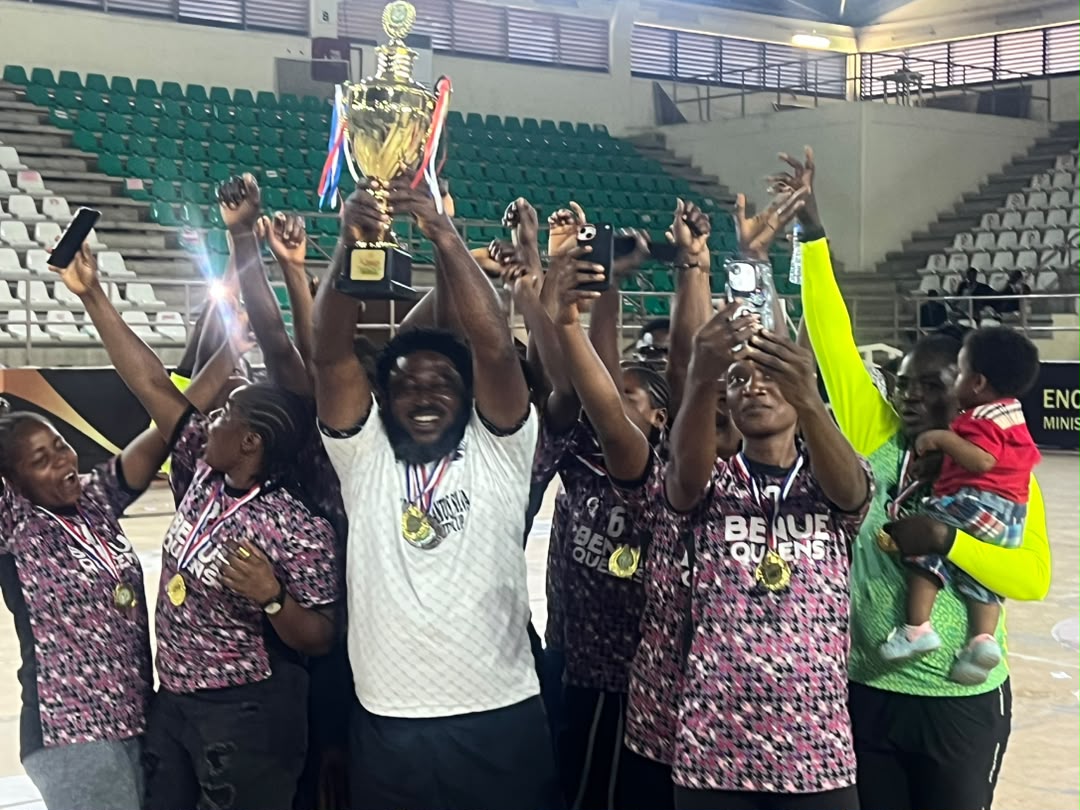
Seidu stated this on Saturday in Abuja at the finals of the 2026 North Central Division One Handball Championship, where Plateau Vipers defeated Suleja Shooters 29-24 to emerge champions in the men’s category.
In the women’s final, Benue Queens of Makurdi defeated City Queens of Suleja to claim the title.
The eight-day tournament featured teams from across the North Central Zone, with Plateau Vipers of Jos, Confluence Stars of Lokoja, Unity Boys of Abuja, Suleja Shooters and Nasarawa Ambassadors of Lafia competing in the men’s category.
In the women’s category, Nuela Handball Academy of Ilorin, Inikpi Babes of Idah, Benue Queens of Makurdi and City Queens of Suleja competed for honours.
At the end of the competition, four teams — two male and two female — emerged as the North Central Zone’s representatives for the national Division One league.
According to Seidu, the tournament was organised as part of the federation’s deliberate strategy to take handball development back to the regions and discover talents that might otherwise remain unnoticed.
He said the HFN board, inaugurated on October 25, 2025, resolved that grassroots development was essential to creating a sustainable pipeline of players for national and international competitions.
“All the teams you have seen here are from the North Central Zone of the country, and every state is represented with an academy or state team,” he said.
Seidu explained that the new approach marked a departure from the previous system, where talent identification was largely centred on the federation’s major league competitions.
He said taking competitions to the regions would provide young players with greater opportunities to showcase their abilities while strengthening the foundation of handball across the country.
The HFN president also linked the grassroots initiative to Nigeria’s recent achievements in international handball, stressing the need to develop younger players who can eventually replace members of the current national teams.
He noted that Nigeria had qualified for the 2027 Men’s Junior Handball World Championship in North Macedonia, describing the achievement as evidence of the potential within the country’s handball system.
“How do we replace these players with upcoming players? This is the avenue for us to get players,” he said.
Seidu added that the federation was determined to make handball more visible and accessible, describing it as one of Nigeria’s major sporting disciplines with significant potential for growth.
The North Central tournament is part of a wider zonal programme designed to decentralise handball development across Nigeria.
According to the federation, similar competitions are being organised across other zones, including the South East, North East, North West and South South, with qualifiers from each zone expected to converge at a designated venue for the next stage of the competition.
The federation also appealed for greater support from sponsors, stakeholders and state associations to sustain its grassroots development programme.
It expressed appreciation to the participating states, academies, team sponsors and other stakeholders for their support and commitment to the growth of handball in Nigeria.
The federation said the initiative would provide a platform for discovering the next generation of Nigerian handball stars while expanding the sport’s reach beyond its traditional centres.
While Speaking the elated coach of Benue Queen Godwin Tondo has promised a stronger and more tactical performance after guiding the team to victory at the 2026 North Central Division One Handball Championship in Abuja.
He attributed the success to the team’s long-term youth development programme, noting that the squad was built through a deliberate process of identifying and nurturing young talents.
According to him, the programme began with the selection of 92 girls from secondary schools, who were subsequently trained and developed over a four-year period.
He said the team’s success was a product of sustained hard work and commitment despite the challenges encountered during preparations for the tournament.
“I feel very pleased being a champion today. The road to this stage was very, very hard, but I am very happy that we have got the result from all the toughness of the game,” he said.
-
 Featured7 years ago
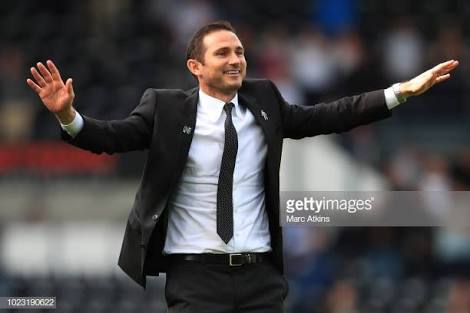
Lampard Names New Chelsea Manager
-
 Featured6 years ago
FG To Extends Lockdown In FCT, Lagos Ogun states For 7days
-
 Featured7 years ago
Children Custody: Court Adjourns Mike Ezuruonye, Wife’s Case To April 7
-
 Featured7 years ago
NYSC Dismisses Report Of DG’s Plan To Islamize Benue Orientation Camp
-

 Featured5 years ago
Transfer Saga: How Mikel Obi Refused to compensate me After I Linked Him Worth $4m Deal In Kuwait SC – Okafor
-
Featured7 years ago
Board urges FG to establish one-stop rehabilitation centres in 6 geopolitical zones
-
Sports4 years ago
TINUBU LAMBAST DELE MOMODU
-

 News2 years ago
Zulu to Super Eagles B team, President Tinubu is happy with you