
Business
Tinubu’s People-Centric Tax Reforms and Ndume’s Threat
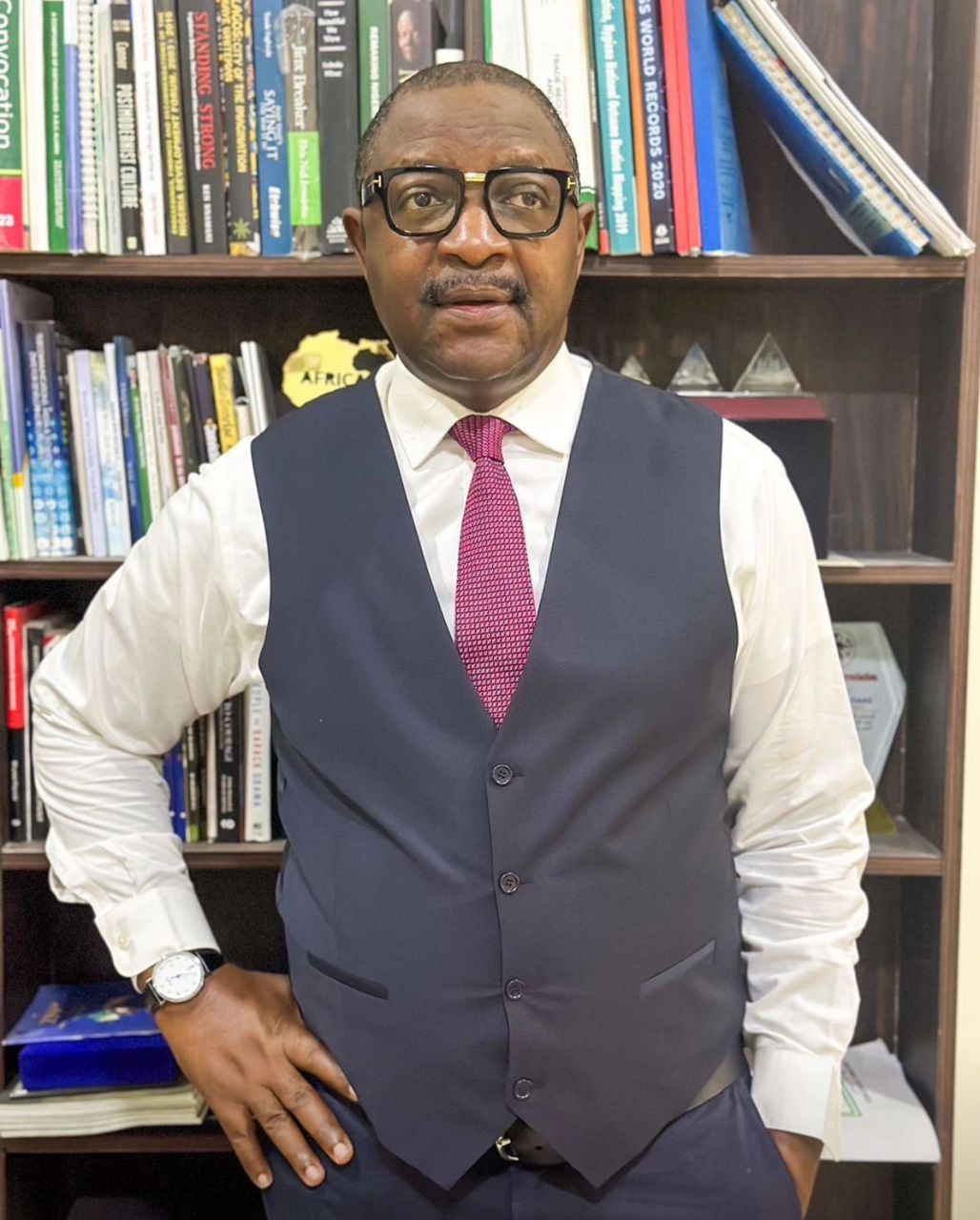
By Sunday Dare
“We cannot continue to tax poverty when we are supposed to promote prosperity” – President Bola Ahmed Tinubu
Senator Alli Ndume. Controversial. Outspoken, brilliant and engaging. Of all his attributes I did not find a place for ‘willful ignorance’ as one of his attributes or did I miss something? His Channels Television Interview was at once interesting and absurd coming from a person of his status : ranking Senator of the Federal Republic.
If his attack of Tinubu Tax Bills now before the Parliament was understandable, his open admission that he has not read the Tax bill he was so vehemently opposed to is unpardonable.
In plain sight Senator Ndume displayed his ignorance. That ignorance will be best cured by facts and not bluster. The Tax bill is not dead on arrival. The tax bill is well and alive and that is why we are having this conversation.
Despite the consensus that a fair, equitable and business-friendly taxation regime is pivotal to Nigeria’s drive for economic growth and sustainable development, the requisite will to pursue the reforms needed for achieving this has, unfortunately, either not been there on the part of the leadership, or where efforts have been made, it has not produced significant results. Nigeria has consistently ranked as one of the countries with the lowest revenue-to-GDP ratios in the world, which, according to Il Jung, “makes its fiscal position vulnerable to shocks”.
This from the IMF staff who prepared Nigeria’s revenue mobilisation report 2023. President Tinubu understands this clearly.
Such is the situation that “general government revenue in Nigeria was 7.3 percent of GDP for 2021—less than half of the average in countries belonging to the Economic Community of West African States (ECOWAS) and nearly a third of the average of countries in Sub-Saharan Africa (SSA)—and ranked as 191st out of 193 countries in the world.”
At 9.4% in 2023, Nigeria’s tax revenue to GDP ratio was not only among the lowest in the world but also on the continent, according to Axel Schimmelpfennig, the IMF mission Chief for Nigeria. To Il Jung, “Nigeria’s low tax revenue has been mainly driven by the narrow bases of its indirect taxes, low tax compliance, large amount of tax exemptions as well as low rates. Tax compliance and tax morale are still very low. Nigeria’s VAT collection efficiency (C-efficiency ratio)—the ratio of actual revenues to potential revenue—is the lowest among peer African countries.” The result is “…that the government has too few resources for social and development spending on health, on education, on infrastructure, etc.,” Schimmelpfennig says.
This age-long challenge of narrow revenue base, huge debt burden and high demand for social and development spending, which successive administrations have been confronted with, is what President Bola Ahmed Tinubu decided to tackle head-long through a Root Cause Analysis in order to identify and resolve underlying issues in Nigeria’s tax system to enable it proffer appropriate solutions. President Tinubu had been upfront about tackling this challenge before assuming office, and in his inauguration speech, he assured local and foreign investors that his “government shall review all their complaints about multiple taxations and various anti-investment inhibitions.”
Less than 2 months in office, he announced the setting up of the Presidential Committee on fiscal policy and tax reforms, headed by former Fiscal Policy Partner and Africa Tax Leader at PricewaterhouseCoopers, Taiwo Oyedele, comprising of experts from both the private and public sectors to undertake comprehensive law reforms, fiscal policy design and coordination, harmonization of taxes, and revenue administration. At the inauguration of the committee in August last year, the President restated his commitment to reforms to ensure a more enabling environment and relief for small businesses and those at the bottom of the pyramid. “We cannot continue to tax poverty when we are supposed to promote prosperity,” he said.
The President’s vision and clear mandate is evident in what the Fiscal policy and tax reforms Committee delivered as recommendations to the government, and became a part of the Economic Stabilisation Bills (ESB) approved by the Federal Executive Council in September, as part of the Accelerated Stability and Advancement Plan (ASAP) of the government. The ESB which seeks to amend about 15 different tax, fiscal, and establishment laws to facilitate economic stability and set the country on the path for sustained inclusive growth, has as some of its objectives: inflation reduction and price stability; complementing monetary policy measures with appropriate fiscal interventions to strengthen the naira and sustain exchange rates convergence; promotion of fiscal discipline and consolidation; enhancement of job creation and poverty alleviation; as well as export promotion and diversification.
It was in furtherance to a realisation of these objectives that President Bola Tinubu sent a letter to the 2 chambers of the National Assembly, requesting for the approval of 4 tax reform bills, which are: “The Nigeria Revenue Service (Establishment) Bill”, “The Nigeria Tax Bill”, “The Nigeria Tax Administration Bill,” and “The Joint Revenue Board (Establishment) Bill.” These Bills seek to provide a consolidated fiscal framework for taxation in Nigeria, a clear and concise legal framework for the fair, consistent and efficient administration of all the tax laws to facilitate ease of tax compliance, reduce tax disputes and optimize revenue, among others.
While investors and the business community have welcomed this development, there has been a pushback from some quarters from those who have apparently not familiarised themselves with the contents of the Bills. The concern by the Northern Governors Forum about the proposed amendment in one of the bills is the distribution model for Value Added Tax (VAT) which has been addressed by Mr Taiwo Oyedele, Chairman of the Fiscal Reforms Committee. He assured them that the aim of the proposal is “to create a fairer system by devising a different form of derivation which takes into account the place of supply or consumption for relevant goods and services whether they are zero rated, exempt or taxable at the standard rate”.
The surprise, though, is the response from Senator Ali Ndume who has declared that the bills “will be dead on arrival”, even as he confessed that he is yet to read the bills, which we presume should be available to him, having been received by the National Assembly, as the Senate President announced on the floor of the Senate. I refuse to believe that any Senator, and definitely not one of Senator Ndume’s standing will say, “We don’t need to study the bill”, as he was quoted to have said. Senator Ndume can’t be that flippant, as the legislative business is serious business.
For the benefit of Senator Ndume and others who might be of the mind that they do not need to study a document before speaking to it, here are some of the changes proposed in the bills:
1.Changes to the income tax laws to facilitate remote work opportunities for Nigerians in Nigeria within the global business process outsourcing. This will empower our youths to play a key role in the digital economy space.
2.Zero rated VAT and other incentives to promote exports in goods, services, and intellectual property.
3.Tax exemptions for small businesses including WHT, VAT, and 0% CIT.
4.Exemption from personal income tax for minimum wage earners and reduced tax burden for over 90% of private and public sector workers
5.VAT at 0% for food, education, health, and exemption for rent and public transportation. These items constitute an average of 82% of household consumption and nearly 100% for low-income households to ameliorate the rising cost of living for the masses.
6.Introduction of the Tax Ombudsman to advocate for improved tax system and protect vulnerable taxpayers
7.Reduction of corporate income tax rate from 30% to 25% over the next 2 years and elimination of earmarked taxes on companies to be replaced with a harmonised single levy at a reduced rate.
8.Elimination of minimum tax on loss-making companies and those with low margins
9. Grant of input VAT credit to businesses on assets and services to reduce cost of investment and improve competitiveness
10.Redesign of the personal income tax band and rates, VAT and Capital Gains Tax to be progressive while protecting the poor
11.Changes to permit the payment of taxes on foreign currency denominated transactions in naira to reduce the pressure on the exchange rate and simplify compliance for businesses.
12.Proposal to repeal over 50 nuisance taxes and levies, and harmonise the remaining taxes to a single digit
13.Equitable basis for VAT revenue sharing to ensure that states without many headquarter companies are fairly treated and recognised for their economic contributions
14.Rationalisation of tax incentives to reduce uncertainty and provide a level playing field for all investors
15.A new National Fiscal Policy to set the framework for fair taxation, responsible borrowing and sustainable spending.
Without a doubt, these Tax-reform Bills have been thoughtfully and carefully designed in alignment with President Tinubu’s agenda to remove all obstacles impeding business growth in the country, promote small businesses and the poor, it is strange that Senator Ali Ndume, who purports to be speaking for the people will stand in opposition to them, even when he confessed to having not read them. If he has not read the bills, I doubt that he read a newspaper editorial, which quoted the Chairman of the Reforms Committee to have explained that “the reforms are geared towards correcting the structural imbalances in the tax system which has seen the poor overburdened with taxes while the elite and middle class routinely evade, avoid, or underpay taxes”.
Senator Ndume might need to familiarise himself with what is driving the reforms and the proposals that have been laid out, which include consolidating the different ‘nuisance taxes’ taxes and levies, which some have put at 62 official and 200 unofficial taxes into a streamlined system of 8 taxes to eliminate unnecessary financial strain on citizens while ensuring a more efficient revenue collection process. The committee is also pushing for a constitutional amendment to limit the total number of taxes on individuals and businesses to a single-digit. The objective, it says, to provide greater financial stability and predictability for taxpayers, fostering a more conducive business environment. Apart from that are the amendments to the withholding tax regulation, with businesses earning below 50 million Naira exempted from this tax, to provide relief for small companies and reduce the tax burden on emerging enterprises to engender growth of SMES, which play a central role in providing employment and the development of the economy.
Estimates from the Federal Inland Revenue Service (FIRS) a few years back had it that out of 70 million taxable adults in Nigeria, only 14 million pay tax, with 96 percent of those who do so through the Pay-As-You-Earn (PAYE) system, which is an indication that most of those outside the formal system don’t pay tax. Yet, a report listed Nigeria as home to almost a thousand billionaires (computed in naira), out of which only 214 pay taxes of N20 million and above. If any proof is needed for allegations of evasion and gross underpayment of personal income taxes, that must be it. President Tinubu’s bold decision to resolve the challenges that confront the tax administration system to improve Nigeria’s tax-to-GDP ratio, increase non-oil revenue generation, attract investment, support businesses and strengthen the economy deserves all the support it can get, especially from the Governors and the National Assembly. Senator Ndume will do well to rally support for the bold initiatives of President Tinubu, study the Tax Reform Bills and work with his colleagues for speedy passage so that Nigerians can take advantage of the opportunities they are designed to unlock.
Sunday Dare
Special Adviser to the President
(Public Communication & Orientation)



Business
Turning Africa’s Raw Materials Into Wealth: The ARMS 2026 Industrial Agenda
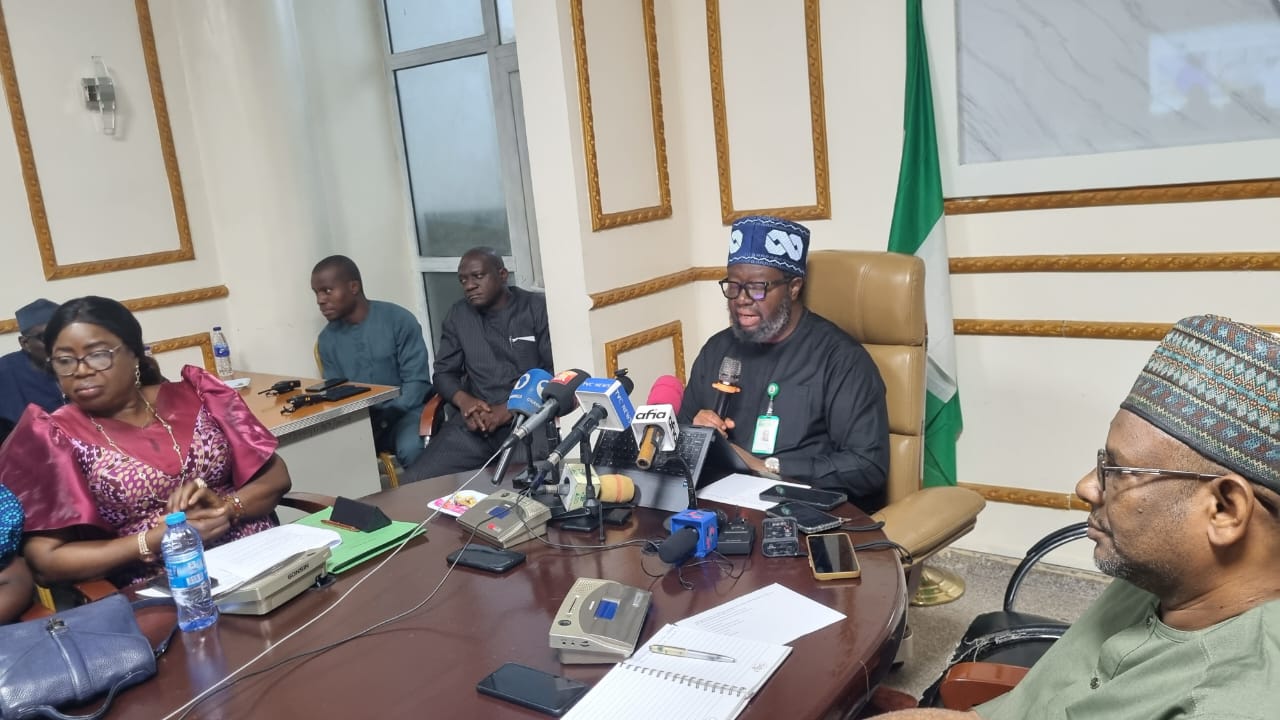
By Joel Ajayi
For decades, Africa’s vast natural resources have powered industries and economies far beyond the continent, while many African countries have remained largely exporters of unprocessed commodities and importers of finished products.
That familiar pattern is now coming under renewed scrutiny as policymakers, researchers, investors and industrialists seek to change the direction of Africa’s resource economy.
At the centre of that conversation is the second edition of the Africa Raw Materials Summit (ARMS 2026), scheduled for October 19 and 20 at the Abuja Continental Hotel, Abuja, under the theme: “From African Feedstock to African Factories.”
Organised by the Raw Materials Research and Development Council (RMRDC), the summit is being positioned as more than another gathering of policymakers and industry stakeholders. It is intended to provide a platform for confronting the structural challenges that have kept African raw materials largely disconnected from local manufacturing.
Africa has for years operated largely within a “pit-to-port” economic model, exporting raw materials while importing expensive finished products.
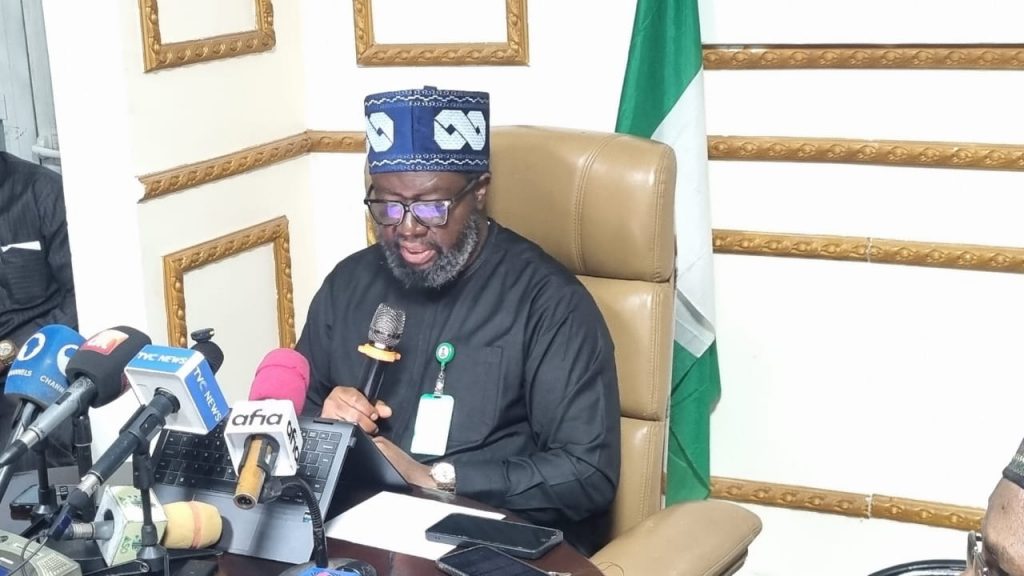
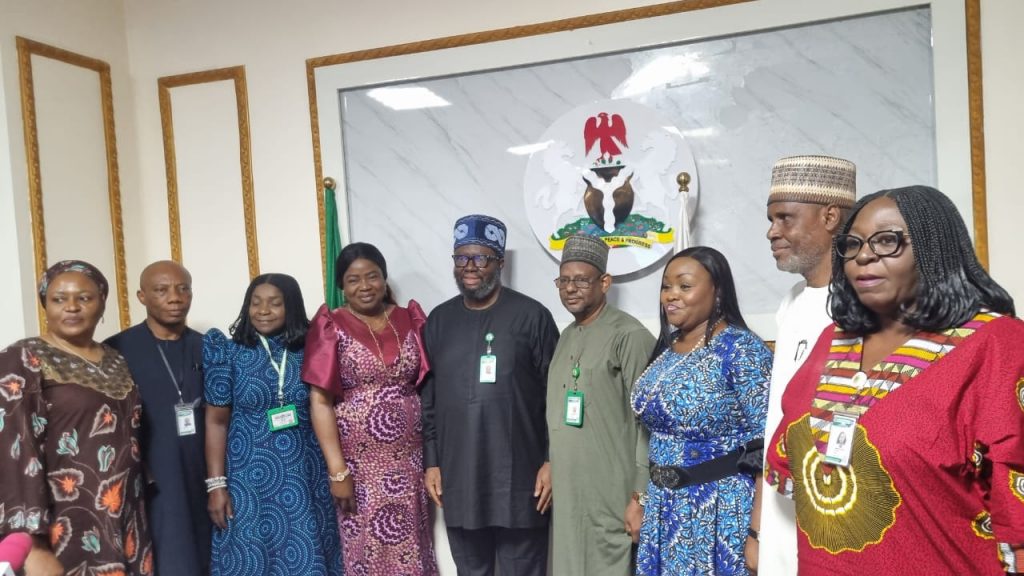
Speaking at a press conference ahead of the summit on Tuesday in Abuja, the Director-General and Chief Executive Officer of RMRDC, Prof. Nnanyelugo Martin Ike-Muonso, said the event would bring together policymakers, investors, researchers, technology providers and industrialists to develop practical strategies for transforming Africa’s abundant natural resources into industrial wealth.
The challenge, therefore, is not simply the abundance of resources, but the continent’s ability to transform those resources into industrial value, employment, technology and wealth within Africa.
Nigeria alone, according to the RMRDC, has more than $582.4 billion in documented non-renewable natural resources, while the wider continent possesses substantial deposits of critical minerals, agricultural raw materials and industrial feedstock.
Yet, the benefits of this resource endowment have often been constrained by inadequate processing capacity, weak infrastructure, limited technology, financing gaps and fragmented regional value chains.
From Dialogue to Industrial Action
ARMS 2026 builds on the maiden edition held in May 2025, which attracted more than 1,000 delegates from across the world.
The inaugural summit also witnessed the unveiling of the Ten-Year Raw Materials Transformation Roadmap (2025–2034) by the Minister of State for Industry, Senator John Owen Enoh.
The roadmap was designed around areas including technological capability, climate-resilient processing and backward integration, establishing a policy framework for greater domestic utilisation of Africa’s raw materials.
The second edition is expected to move the conversation further by bringing policy, capital, technology and industrial stakeholders around practical mechanisms for turning raw materials into locally manufactured products.
One of the major proposals highlighted by the RMRDC is the 30 per cent Mandatory Value Addition Bill, which seeks to establish a statutory minimum level of value addition to Nigerian raw materials before export.
The Council says the proposed framework could support job creation, import substitution, foreign-exchange conservation and increased manufacturing contribution to the economy.
Building the Infrastructure for Value Addition
The industrial transformation envisaged by ARMS 2026 goes beyond legislation.
A major concern is the “missing middle” between where raw materials are produced and where factories are located.
Poor transportation networks, inadequate cold-chain facilities, weak rural roads, limited testing and certification infrastructure and border-related delays can make locally sourced materials more expensive and less competitive.
Consequently, logistics and infrastructure constitute one of the five principal pillars of the summit.
The objective is to develop more reliable corridors connecting farms and mines with processing centres and manufacturing facilities, thereby reducing losses and improving the movement of industrial inputs.
The Digital Dimension
Technology is also becoming an important part of the Council’s strategy.
The RMRDC says it has developed the Nigeria Integrated Information Statistical System for Raw Materials and Products (NISSRAMP), described as a digital repository containing information on feedstock deposits, specifications, production outputs and industrial absorption rates.
The Council has also highlighted its transition towards paperless operations and its certification as a Data Controller/Processor of Major Importance by the Nigeria Data Protection Commission.
Such digital infrastructure could provide investors and manufacturers with better information about the availability and characteristics of raw materials while supporting more informed industrial planning.
Turning Waste Into Industrial Inputs
Another major component of ARMS 2026 is the proposed expansion of the circular economy.
The summit will examine how agricultural by-products, mine tailings, scrap metals and biomass can be recovered and reused as inputs for new production processes rather than being treated simply as waste.
The RMRDC argues that such an approach could lower raw-material costs while supporting more sustainable and climate-resilient manufacturing systems.
For Africa, where industrial expansion must increasingly balance economic development with environmental considerations, waste industrialisation could become an important part of the continent’s manufacturing conversation.
From National Production to African Value Chains
The African Continental Free Trade Area is another important element of the summit’s agenda.
The RMRDC sees AfCFTA as an opportunity to create regional value chains in which raw materials sourced in one African country can be processed and supplied to manufacturers in another.
Under such a model, Africa would move beyond simply exporting commodities to external markets and develop stronger internal networks for supplying chemicals, refined minerals, agricultural inputs and other industrial materials across national borders.
This approach places regional integration at the heart of Africa’s industrialisation strategy.
Bridging Research and Capital
A recurring weakness in many developing economies is the gap between research and commercialisation.
Innovations may emerge from universities, research institutions and laboratories without receiving the financing, equipment or market connections required to become commercially viable.
ARMS 2026 intends to address that gap through technology commercialisation and capital linkages, connecting research outputs with investors, development finance institutions and industrial off-takers.
The RMRDC has also cited partnerships with the Bank of Industry for commercial-scale post-harvest processing and a South-South technology-transfer partnership with the National Innovation Centre par Excellence in Shanghai, China.
A Larger Industrial Conversation
The scale of ARMS 2026 is expected to be significantly larger than the maiden edition.
The organisers project more than 1,800 delegates from all 54 African countries and global industrial partners.
The programme will feature high-level policy dialogues, technical panels, an advanced raw materials and technology exhibition, industrial site visits and the African Raw Materials Industry Awards.
The exhibition, in particular, is expected to showcase locally fabricated processing machinery, advanced domestic materials, green chemicals and engineered commercial inputs.
Beyond the speeches and exhibitions, however, the real significance of ARMS 2026 will ultimately depend on what happens after the summit.
Africa’s challenge has never been a shortage of raw materials. The more difficult question has been how to transform those resources into factories, products, skilled employment, technology and sustainable economic opportunities.
For Nigeria and the rest of the continent, the proposed shift from “pit-to-port” to “feedstock-to-factory” therefore represents a broader debate about the future structure of African economies.
ARMS 2026 seeks to place that debate firmly on the industrial agenda — with value addition, technology, finance, infrastructure, circular production and regional trade at the centre.
If the commitments and partnerships generated by the summit translate into measurable industrial activity, the event could provide another platform for Africa to examine how its enormous resource base can support stronger domestic manufacturing.
The message from the organisers is clear: the continent’s raw materials should not only leave African soil as commodities; they should increasingly become the foundation for African industrial production
-
 Featured7 years ago
Lampard Names New Chelsea Manager
-
 Featured6 years ago
FG To Extends Lockdown In FCT, Lagos Ogun states For 7days
-
 Featured7 years ago
Children Custody: Court Adjourns Mike Ezuruonye, Wife’s Case To April 7
-
 Featured7 years ago
NYSC Dismisses Report Of DG’s Plan To Islamize Benue Orientation Camp
-

 Featured5 years ago
Transfer Saga: How Mikel Obi Refused to compensate me After I Linked Him Worth $4m Deal In Kuwait SC – Okafor
-
Featured7 years ago
Board urges FG to establish one-stop rehabilitation centres in 6 geopolitical zones
-
Sports4 years ago
TINUBU LAMBAST DELE MOMODU
-

 News2 years ago
Zulu to Super Eagles B team, President Tinubu is happy with you