
Health
NGO seeks inclusivity, support for people with autism
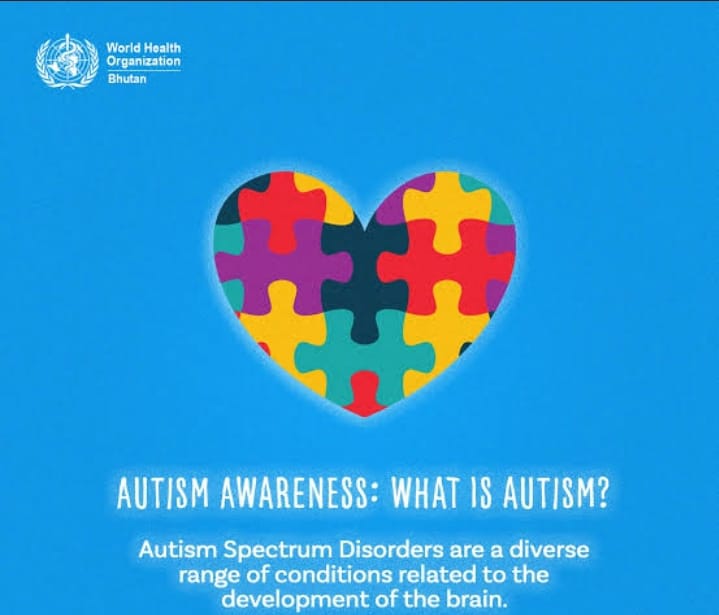
The founder of the Sustainable Development for Africa Youth Initiative (SuDAYI), Victoria Jim, a Non-Governmental Organisation (NGO), is advocating for greater inclusivity and support for individuals with autism spectrum disorder.
Jim made the appeal on Thursday in Abuja during the unveiling of SuDAYI, emphasising the importance of collective efforts in creating a more inclusive society for individuals with autism and their families.
According to Jim, every individual with autism deserves access to quality education, healthcare, and social services that cater to their specific needs.
“Growing up in Africa, I witnessed firsthand the challenges faced by individuals with autism and other disabilities.
“I saw how they were often marginalised, excluded, and denied access to basic rights and opportunities,” she said.
However, Jim also highlighted the potential, talent, and resilience of individuals with autism, noting that with the right support, resources, and opportunities, they could achieve greatness.
Jim stated that SuDAYI was committed to bridging the gap in autism services and support in Nigeria.
“In the next two years, the NGO plans to implement a comprehensive autism management intervention.
“This intervention will focus on providing inclusive education and support to families, caregivers, and healthcare professionals.
“Additionally, SuDAYI aims to establish partnerships with government agencies, NGOs, and community leaders to promote autism awareness and acceptance.”
Rep. Bashiru Dawodu, Chairman of the House of Representatives Committee on Disability Matters, spoke about ongoing efforts to amend the Discrimination Against Persons with Disabilities Prohibition Act 2018.
He noted that the current law did not adequately address the needs of children and women with disabilities.
“We think those areas are specific areas that need to be addressed, including intellectual disabilities and developmental needs for children with cerebral palsy or neurodegenerative conditions,” Dawodu said.
He also emphasised that discrimination against Persons with Disabilities (PwDs) was punishable under the law.
Dr Opiti Chukwunekwu, Associate Director at Health System Consult Limited, discussed the prevalence of autism in Nigeria, which was estimated at 2.1 per cent.
He clarified that autism spectrum disorder (ASD) was not a disease but a developmental disorder that occurred during a child’s development in the womb.
Chukwunekwu explained that autism was a spectrum, with different manifestations across its five elements.
He emphasised the importance of supporting individuals with autism to develop skills and reach their potential.
“Many prominent people have been shown to have traits of autism and still went on to achieve great things,” he said.
Chukwunekwu also stressed that while there was no cure for autism, effective management focused on empowering individuals with the disorder.
“This includes behavioral interventions, speech therapy, occupational therapy, and social skills training, all aimed at improving outcomes for those living with autism.
The News Agency of Nigeria (NAN) reports that SuDAYI’s objective is to empower children and youth with autism and other disabilities, enabling them to participate fully in and contribute to their communities.
(NAN)



Health
Football Legends to Light Up Nigeria in NICRAT’s World Soccer Legends Cancer Match
By Joel Ajayi
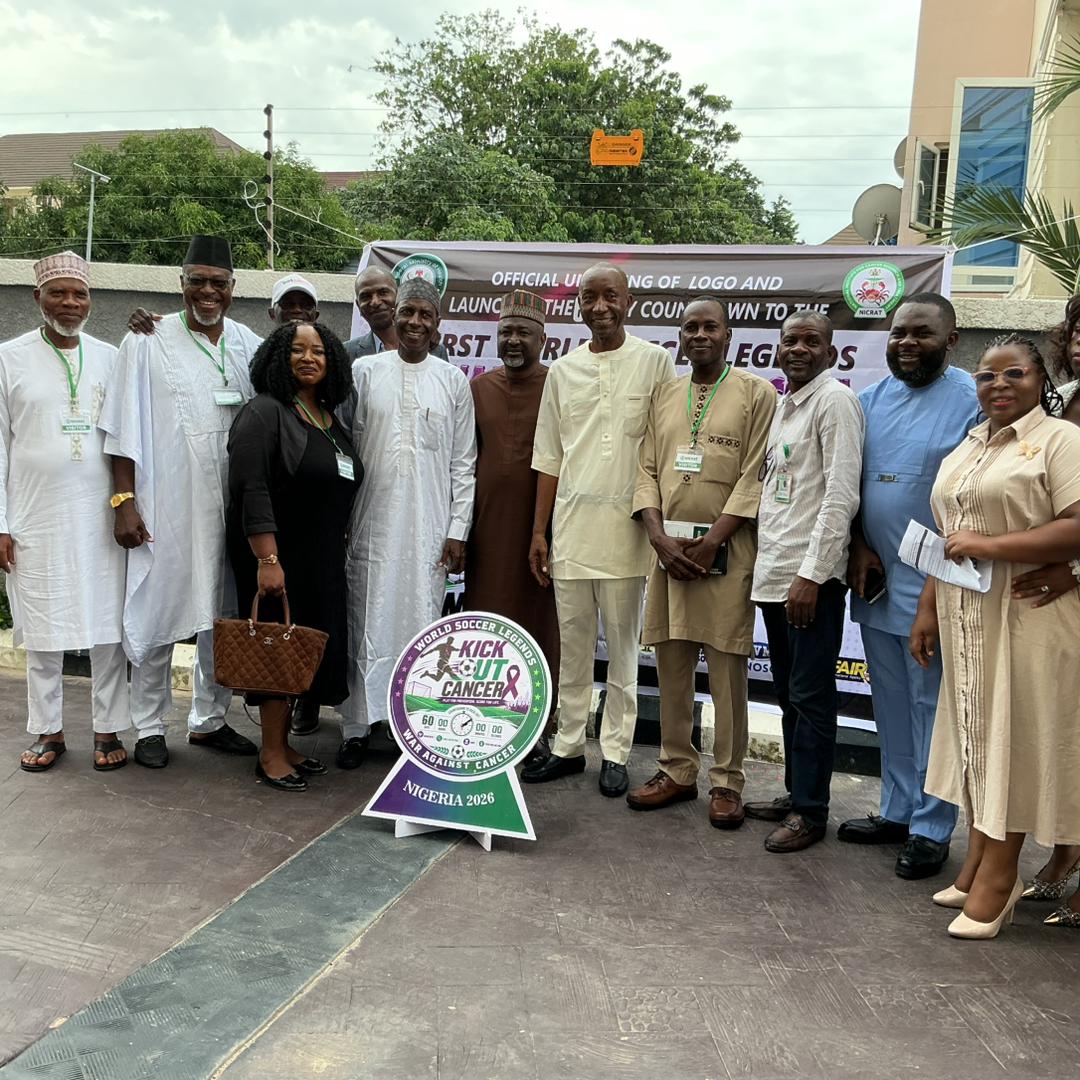
Nigeria is set to witness a football spectacle as some of the world’s greatest football legends converge for the First World Soccer Legends War Against Cancer International Charity Football Match Nigeria 2026.
The star-studded event, backed by the National Institute for Cancer Research and Treatment (NICRAT), is designed to combine football entertainment with a major campaign to raise cancer awareness, promote early detection and mobilise resources for prevention and treatment.
The initiative, themed “Play for Prevention, Score for Life,” was unveiled on Wednesday in Abuja with the official launch of the event logo, kits and a 60-day countdown to the international charity match.
The campaign is expected to feature former international football stars while bringing together cancer advocates, government institutions, corporate organisations, development partners and other stakeholders in a united effort against the disease.
Speaking on behalf of NICRAT Director-General, Prof. Usman Aliyu, Dr Margaret Sawyer said the institute was supporting the initiative because of its potential to take cancer-awareness messages to millions of Nigerians.
She said the campaign would go beyond fundraising by educating Nigerians on cancer prevention, early detection and the need to seek medical attention promptly.
According to her, football offers a unique platform for reaching diverse communities, while the influence of football legends could help deliver important health messages to a wider audience.
Earlier, National Coordinator of the Main Organising Committee (MOC), Mr Jacob Onu, said the event was conceived to transcend the boundaries of sport and evolve into a national and international movement against cancer.
Onu said the participation of former football stars would amplify messages on cancer prevention, screening, treatment, research and support for patients and survivors.
He added that the event would also celebrate life, honour those who had lost their lives to cancer and inspire survivors and people currently battling the disease.
“Together, through football, compassion and collective action, we can win the War Against Cancer,” he said.
Onu called on Nigerians across the 774 local government areas to become ambassadors of the campaign by promoting healthy lifestyles, regular medical checks and early medical intervention.
He also appealed to corporate organisations, philanthropists, international organisations, football stakeholders, media organisations and development partners to support the initiative.
The MOC coordinator commended NICRAT, the Federal Ministry of Health and Social Welfare, the Nigeria Football Federation (NFF), sponsors, partners and other stakeholders for their support.
He assured that the organising committee would deliver an event capable of meeting international standards while creating a lasting legacy in cancer awareness, advocacy, humanitarian support and sports development.
In his goodwill message, President of the Nigeria Olympic Committee (NOC), Engr. Habu Gumel, expressed concern over the rising global cancer burden and called for sustained action beyond the charity match.
Gumel urged the organisers to extend the campaign beyond Abuja to communities across the 36 states, while calling on governments at all levels to strengthen cancer prevention, screening and treatment.
The NOC president pledged his support for the initiative and encouraged Nigerians to make regular cancer screening and periodic health checks a priority.
Also speaking, Director of Cancer Prevention and Control at NICRAT, Dr Usman Mohammed Waziri, reaffirmed the institute’s determination to ensure that the initiative produces a positive and lasting impact on Nigeria’s cancer-control efforts.
With the 60-day countdown officially underway, organisers said the World Soccer Legends Cancer Match would combine the excitement of football with humanitarian action, using the power and influence of football legends to drive a nationwide campaign against cancer.
-
 Featured7 years ago
Lampard Names New Chelsea Manager
-
 Featured6 years ago
FG To Extends Lockdown In FCT, Lagos Ogun states For 7days
-
 Featured7 years ago
Children Custody: Court Adjourns Mike Ezuruonye, Wife’s Case To April 7
-
 Featured7 years ago
NYSC Dismisses Report Of DG’s Plan To Islamize Benue Orientation Camp
-

 Featured5 years ago
Transfer Saga: How Mikel Obi Refused to compensate me After I Linked Him Worth $4m Deal In Kuwait SC – Okafor
-
Featured7 years ago
Board urges FG to establish one-stop rehabilitation centres in 6 geopolitical zones
-
Sports4 years ago
TINUBU LAMBAST DELE MOMODU
-

 News2 years ago
Zulu to Super Eagles B team, President Tinubu is happy with you