
Agriculture
Group calls for improved agriculture innovations to boost food security

Mariam Sanni
A Non Governmental Organization, NGO in the agricultural sector, Self Help Africa, SHA has called for improved agricultural innovations to enhance food security and support farmers.
The Country Director, Joy Aderele made this call during in a media chat at the National Mid-term review for the abatement of short-lived climate pollutants in Nigerian Agricultural sector project held in Abuja .
According to her, a recent learning visit revealed that many innovative solutions exist in institutes but are not reaching farmers.
She added that there is a need for policies that would enable researchers in the agricultural sector to disseminate their innovations more effectively.
She emphasized the need for a protocol that allows researchers to share their work without fear of it being taken over is emphasized.
“So we just returned from a learning visit last week, where we had gone to some institutes, great institutes across the country, and I was surprised and amazed to see that we have a lot of innovation sitting in this institute, professors that have done a lot of things that will even make us not to have any issue a young guy in Nigeria. But this learning or innovation is not trickling down. People don’t know about it. The average farmer in my village does not know about the innovation.
“ So I would say that one thing that the ministry should do is to bring up this protocol that enable researchers in the agri space to disseminate their their data, their innovation freely so that farmers and our food security can improve,” she stated.
Aderele highlighted the major achievement of reducing bush burning among farmers, which improves soil and environmental health.
She explained that the promotion of climate-smart agriculture has led to higher crop yields, benefiting farmers and the community.
According to her, Post-harvest losses have been reduced, with rice residue now used to make briquettes, providing an additional income source for farmers.
The country Director said awareness of climate change has increased among farmers, leading to a shift away from traditional, harmful practices like bush burning.
Aderele revealed that the current pilot project in Benue state is aimed to be replicated across all 36 states and the FCT in Nigeria.
She noted that the organization has worked with over 500,000 small farmers globally, with a focus on making farming attractive to young people.
She added that the organization plans to share the lessons learned from the pilot project to improve farming practices nationwide.
The Director, department of agriculture land and climate change management device, Federal Ministry off Agriculture, Muhammed Bello emphasized the importance of sustainable land management for food security and the government’s goal of ensuring healthy soil for farmers.
He surged that the project on abatement of short-lived climate change pollutants is highlighted as a key initiative to clean up and fertilize the land.
He explained that the collaboration is aimed to replicate the project’s achievements and expand its reach across Nigeria, ensuring that more farmers benefit from healthy soil.



Agriculture
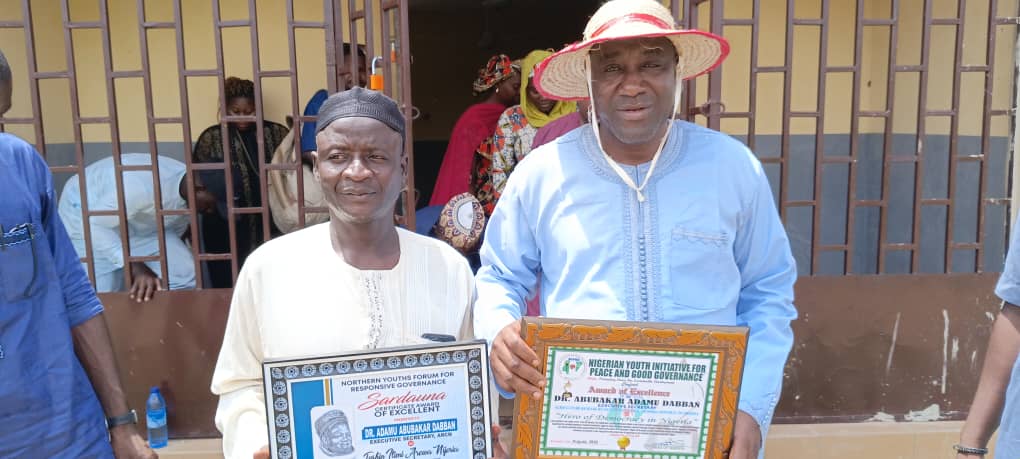
ARCN Executive Secretary Dabbán Earns Double Recognition for Excellence
Joel Ajayi
The Executive Secretary of the Agricultural Research Council of Nigeria (ARCN), Dr. Adamu Abubakar Dabban, has been honoured with a Double Award of Excellence by two youth-focused organisations for his leadership, commitment to good governance and contributions to the development of Nigeria’s agricultural sector.
In a statement signed on Tuesday by the ANIPR PRO, Agricultural Research Council of Nigeria Khadijat Ameen in Abuja stated that the honours were conferred on Dr. Dabban by the Nigeria Youth Initiative for Peace and Good Governance and the Northern Youth Forum for Responsive Governance.
The organisations recognised the ARCN Executive Secretary for what they described as his outstanding leadership and dedication to good governance, as well as his efforts toward advancing agricultural development in Nigeria.
The double recognition highlights the growing attention being given to leadership and institutional efforts aimed at strengthening Nigeria’s agricultural research and development ecosystem.
Receiving the honours, Dr. Dabban expressed appreciation to the organisations for the recognition, noting that such awards serve as encouragement to remain committed to the responsibilities entrusted to him and to the broader goal of advancing agricultural development.
The recognition comes as the ARCN continues its mandate of coordinating and promoting agricultural research and development in support of Nigeria’s food and agricultural priorities.
Congratulations to the Executive Secretary, Dr. Adamu Abubakar Dabban, on this distinguished double honour.
-
 Featured7 years ago
Lampard Names New Chelsea Manager
-
 Featured6 years ago
FG To Extends Lockdown In FCT, Lagos Ogun states For 7days
-
 Featured7 years ago
Children Custody: Court Adjourns Mike Ezuruonye, Wife’s Case To April 7
-
 Featured7 years ago
NYSC Dismisses Report Of DG’s Plan To Islamize Benue Orientation Camp
-

 Featured5 years ago
Transfer Saga: How Mikel Obi Refused to compensate me After I Linked Him Worth $4m Deal In Kuwait SC – Okafor
-
Featured7 years ago
Board urges FG to establish one-stop rehabilitation centres in 6 geopolitical zones
-
Sports4 years ago
TINUBU LAMBAST DELE MOMODU
-

 News2 years ago
Zulu to Super Eagles B team, President Tinubu is happy with you













