
Sports
What WAFU B Stands to Benefit With Ibrahim Gusau as President
By Odogwu Patrick Ngwaogu
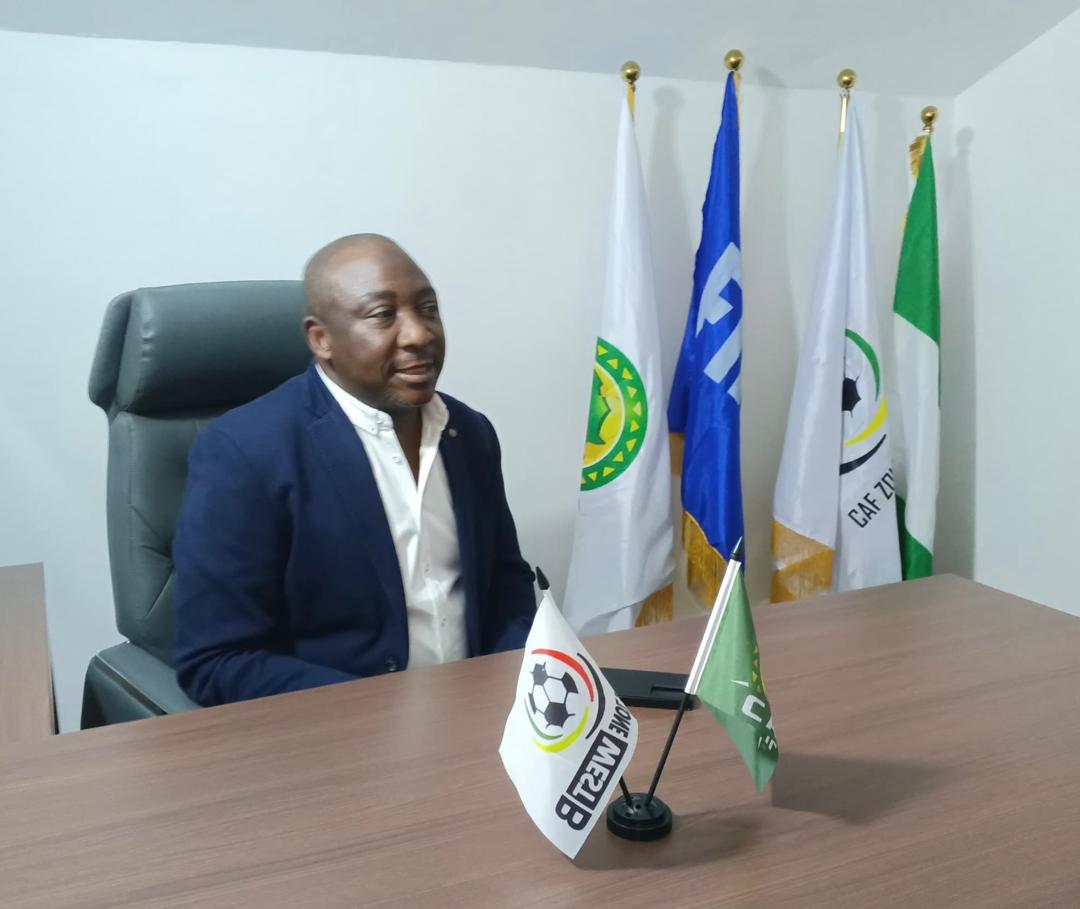
President of the Nigeria Football Federation, Alhaji Ibrahim Musa Gusau (MON) on Monday 30 June formally took office as President of the WAFU Zone B. The taking-over ceremony took place at the WAFU headquarters in Cocody Rivera 4 Area of Abidjan, Cote d’Ivoire.
Gusau was elevated to the position following the election of Mr. Kurt-Edwin Simeon Okraku, President of Ghana FA, into the CAF Executive Committee at the congress in Egypt on 12th March 2025. Okraku has since been appointed CAF’s second Vice President.
Alhaji Ibrahim Musa Gusau as the President of the West African Football Union Zone B (WAFU B) is more than just a change in leadership — it is a strategic development that could usher in a new era of growth, stability, and international recognition for football in West Africa. Known for his steady leadership style, inclusive approach, and deep understanding of the African football ecosystem, Gusau will bring a wealth of experience and a vision that promises significant benefits for WAFU B and its member nations.
One of Gusau’s major strengths lies in his administrative competence. As President of the Nigeria Football Federation (NFF), he has shown a remarkable ability to manage complex football systems and drive reforms within a politically sensitive environment. His emergence as WAFU B President offers the sub-region a leader capable of creating and sustaining stable governance structures.
This stability is crucial for fostering trust with sponsors, CAF, and FIFA, which often hesitate to invest in zones or federations plagued by instability or leadership crises. Gusau’s clean image and administrative tact are likely to strengthen WAFU B’s credibility, making it more attractive to global football stakeholders and development partners.
With strong connections at both CAF and FIFA levels, Gusau is well-placed to attract funding and sponsorships for WAFU B competitions, development programmes, and grassroots initiatives. During his time with the NFF, Gusau has been known for promoting financial transparency and seeking public-private partnerships — qualities that could encourage corporations to trust and invest in WAFU B.
Increased funding would not only enhance the quality of tournaments across the region but also support long-term developmental programmes in areas such as refereeing, coaching, infrastructure, and youth football.
Gusau is a known advocate for grassroots and youth football. Under his leadership, Nigeria has placed renewed emphasis on youth tournaments and talent discovery platforms. As WAFU B President, he is expected to replicate this model at a regional level by initiating or revamping youth competitions, U-15 and U-17 championships, and scouting programs.
This focus will benefit countries like Togo, Benin, and Niger Republic, which have abundant raw talent but often lack structured pathways to nurture young players. A harmonised youth football calendar and development agenda will ensure a more consistent production of talents across the sub-region.
One of the challenges WAFU B has faced over the years is inconsistent scheduling and poor planning of regional tournaments, especially club competitions. With Gusau at the helm, there is a high expectation that WAFU B tournaments — including the WAFU B U-20, U-17, Women’s Cup, and the WAFU Club Championship — will enjoy better organisation, visibility, and consistency.
By leveraging media partnerships and digital broadcasting tools, Gusau can help raise the profile of these tournaments, giving them commercial value and making them a viable platform for scouts, agents, and international clubs to discover talent.
Under Gusau’s leadership at the NFF, women’s football in Nigeria has received growing attention, including support for the Nigerian Women’s Football League (NWFL) and improved preparations for the Super Falcons. His commitment to the women’s game will likely extend to WAFU B, which has significant potential to become a hub for female football development in Africa.
With strong women’s teams in countries like Ghana, Ivory Coast, and Nigeria, Gusau can help build a more robust structure for women’s regional competitions, coaching clinics, and capacity-building workshops for female referees and administrators.
WAFU B is made up of seven countries: Nigeria, Ghana, Ivory Coast, Burkina Faso, Niger, Togo, and Benin Republic. One of the challenges has been fostering sustained cooperation and unity in the face of political, economic, and language barriers.
Gusau’s diplomatic approach, coupled with Nigeria’s strategic position in the region, can facilitate improved collaboration among these nations. He is likely to initiate joint training programs, referee exchange initiatives, and knowledge-sharing forums that will strengthen the sub-region’s football infrastructure.
Another significant benefit under Gusau’s leadership is likely to be the prioritisation of coaching education and referee training. By partnering with CAF, FIFA, and European football associations, WAFU B can roll out regular technical training for coaches, referees, and match commissioners.
This focus on capacity building will improve the overall quality of football in the region and help member nations meet CAF licensing requirements. Additionally, it will reduce dependency on foreign coaches and help build sustainable football knowledge bases locally.
Nigeria is a football powerhouse in Africa, and under Gusau’s leadership, WAFU B can tap into this advantage for the benefit of smaller nations in the zone. Nigeria’s infrastructure, media reach, and commercial networks can be shared through regional hosting opportunities, friendly matches, and joint development programs.
Gusau can also serve as a voice for WAFU B within CAF and FIFA, pushing for more funding, fair representation, and inclusion in global football conversations. His presence in critical football governance circles will elevate the zone’s relevance on the continental and global stages.
Modern football development depends heavily on data, analysis, and digital platforms. As President of WAFU B, Gusau is expected to champion digital innovations — such as a centralised digital registration system for players, online coaching courses, match analytics tools, and a digital scouting database.
These tools will improve transparency in player transfers, reduce age fraud, and enhance matchday preparation and analysis across the zone.
Above all, Ibrahim Gusau’s presidency offers WAFU B a chance to move from a reactive, tournament-based body to a proactive football development engine. By focusing on infrastructure, youth development, governance reform, and inter-country collaboration, he can lay the foundation for a long-lasting football legacy in the sub-region.
Gusau’s success will ultimately be measured not just by the trophies lifted under his watch, but by the systems built to produce future champions, coaches, and administrators from across the region.
WAFU B stands at the threshold of transformation. With Ibrahim Musa Gusau as President, the zone has an opportunity to reimagine its role in African football. His experience, vision, and credibility can serve as the catalyst for long-needed reforms, development, and unity among member nations.
The road ahead requires commitment and collaboration, but with the right leadership, WAFU B can become a model zone for excellence, integrity, and innovation in African football — and under Gusau, that vision is closer than ever before.



Sports
AACT 2026: 31 Days to Africa’s Big Sporting Gathering in Abuja
Joel Ajayi
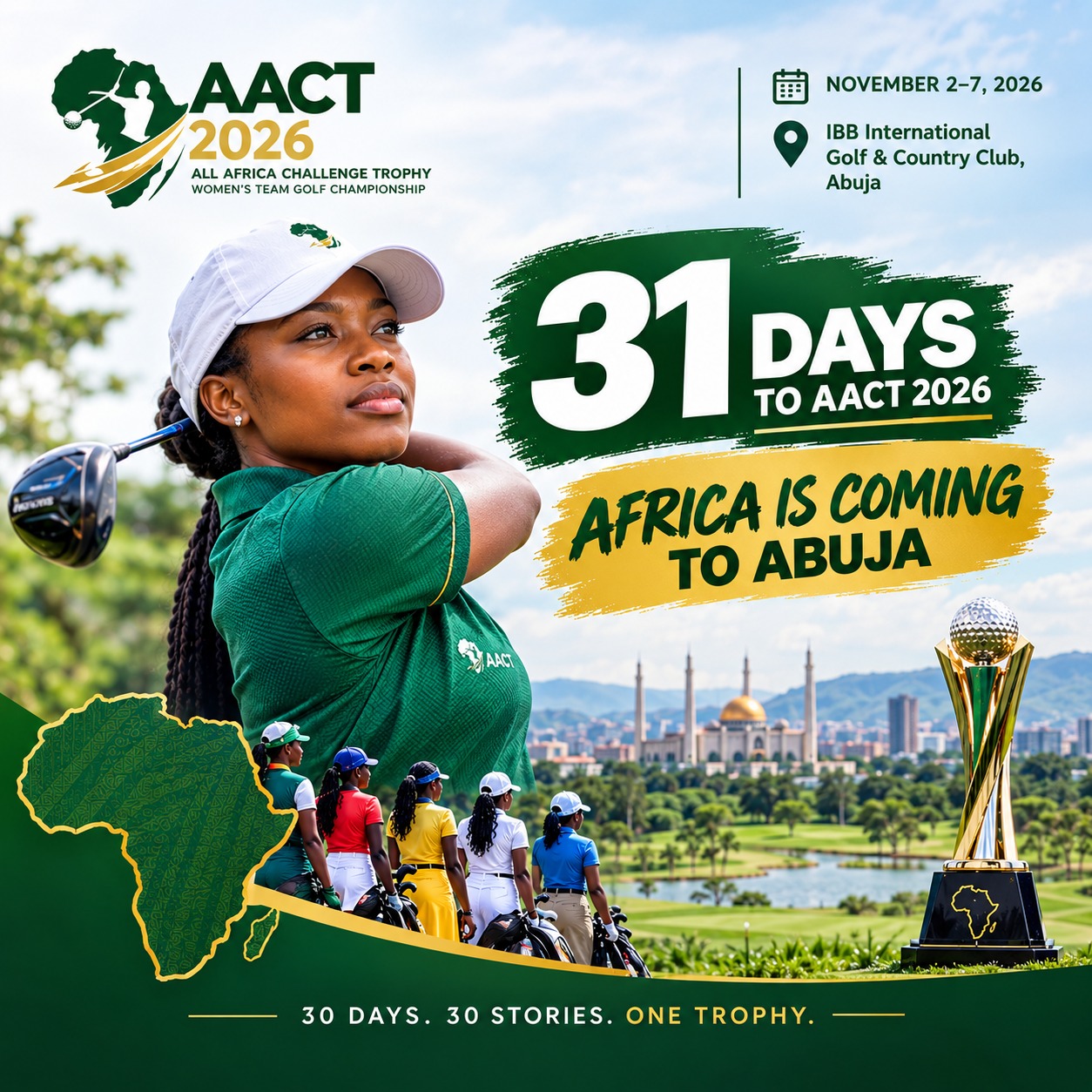
The countdown to the 2026 All Africa Challenge Trophy (AACT) has officially entered the final month, with just 31 days to go before Africa’s leading women’s team golf championship tees off at the IBB International Golf & Country Club in Abuja.
In a statement signed by the AACT 2026Director of Communication Kayode Adeniyi on Friday in Abuja.
Under the theme “Africa Is Coming to Abuja,” the countdown campaign will spotlight the championship, the participating nations, the players, the host venue and the growing development of women’s golf across the continent.
The 2026 AACT, scheduled for November 2–7, will bring together women’s golfing talent from across Africa for six days of continental competition in Nigeria’s capital.
As preparations continue at the IBB International Golf & Country Club, attention is increasingly turning to Abuja, where the championship will provide a platform for African golfers to compete while also showcasing Nigeria’s hospitality and the country’s growing profile as a destination for major sporting events.
The countdown will feature daily stories, interviews, player and country profiles, tournament facts, behind-the-scenes updates and features on the host venue as the championship draws closer.
The campaign will also highlight the role of the Ladies Golf Association of Nigeria (LGAN), the Local Organising Committee and other stakeholders in preparing for the continental championship.
With just 31 days remaining, anticipation is building across the African golfing community as Abuja prepares to welcome the continent’s leading women golfers.
Africa is coming to Abuja.
.
-
 Featured7 years ago
Lampard Names New Chelsea Manager
-
 Featured6 years ago
FG To Extends Lockdown In FCT, Lagos Ogun states For 7days
-
 Featured7 years ago
Children Custody: Court Adjourns Mike Ezuruonye, Wife’s Case To April 7
-
 Featured7 years ago
NYSC Dismisses Report Of DG’s Plan To Islamize Benue Orientation Camp
-

 Featured5 years ago
Transfer Saga: How Mikel Obi Refused to compensate me After I Linked Him Worth $4m Deal In Kuwait SC – Okafor
-
Featured7 years ago
Board urges FG to establish one-stop rehabilitation centres in 6 geopolitical zones
-
Sports4 years ago
TINUBU LAMBAST DELE MOMODU
-

 News2 years ago
Zulu to Super Eagles B team, President Tinubu is happy with you