
Featured
CrediCorp: Tinubu’s Campaign Dream, Uzoma Nwagba’s Execution – Unlocking Prosperity for a New Nigeria

By Dayo Israel, National Youth Leader, All Progressives Congress
In the heat of the 2023 campaign, President Bola Ahmed Tinubu stood before throngs of hopeful Nigerians and made a promise that cut through the noise: “We will build a Nigeria where credit is not a luxury for the elite, but a ladder for every citizen to climb out of poverty and into prosperity.” It was more than rhetoric—it was a blueprint for economic justice, a vow to democratize finance in a nation where 40% of us scrape by below the poverty line, and inequality widens like a chasm.
Fast-forward to 2025, and that promise isn’t just kept; it’s exploding into reality through the Nigerian Consumer Credit Corporation (CrediCorp).
Under the transformative leadership of Managing Director/CEO Engineer Uzoma Nwagba, CrediCorp isn’t revolutionizing credit—it’s rewriting the rules of possibility, turning campaign cheers into concrete change that will echo across generations.
Let’s call it what it is: a game-changer. Established as a Federal Government Development Finance Institution in 2024, CrediCorp is the engine of President Tinubu’s Renewed Hope Agenda, operationalized with laser focus and unyielding execution. In barely 18 months, it has disbursed over ₦30 billion in affordable loans to 153,000 Nigerians—civil servants, artisans, retirees, and yes, our vibrant youth—slashing interest rates by up to 20% and reaching 180,000 lives with credit for everything from solar panels to small business inventory.
This isn’t incremental progress; it’s a seismic shift. Where once credit meant predatory lenders charging 40-60% interest, CrediCorp delivers responsible, low-cost access—up to ₦2 million interest-free in pilots—that empowers without ensnaring. And at the helm? Uzoma Nwagba, the engineer-economist whose quiet brilliance is turning a bold vision into a national movement.
Uzoma Nwagba isn’t just leading CrediCorp—he’s supercharging it. A Harvard MBA graduate with a First Class Honors degree from Howard University, Nwagba’s career is a masterclass in blending Wall Street precision with Silicon Valley innovation. He kicked off as an Analyst at Goldman Sachs in New York, honing the analytical edge that would later dissect markets for the masses. Then, as Product Manager at Microsoft in Redmond, he earned a coveted Gold Star Award—one of the company’s highest honors—for masterfully leading a vast mobile technology team, building enterprise and mobile software tailored for emerging markets like Nigeria, Brazil, Russia, India, China, and South Africa.
Returning home armed with his Harvard MBA, Nwagba dove into private equity at African Capital Alliance, driving transformative investments in financial services and healthcare that scaled impact across the continent. But his true genius shone as Chief Operating Officer of Nigeria’s Government Enterprise and Empowerment Programme (GEEP), where he co-managed the world’s largest microcredit scheme—disbursing and overseeing two million loans to underbanked Nigerians through a tech-driven powerhouse that advanced financial inclusion like never before in Africa.
Under his watch at CrediCorp, he’s launched game-changing initiatives like the ₦100 billion Car Ownership Scheme, making vehicles accessible for the working class and boosting local auto assembly; the Pension-Backed Loan Programme, dignifying retirees with low-interest access for healthcare and home upgrades; and the Inventory Finance Scheme, injecting ₦100,000 loans into 10,000 market women’s hands across 224 markets.
His crown jewel? YouthCred, Nigeria’s largest youth credit intervention, fulfilling President Tinubu’s Democracy Day pledge to empower 400,000 young Nigerians—including NYSC corps members—with tailored loans for startups, devices, and skills training. With 65% of beneficiaries as first-time borrowers—many young hustlers historically shut out—Nwagba’s data-driven dashboards and fraud-proof portals have built trust where skepticism once ruled.
No wonder CrediCorp snagged “Consumer Credit Access Company of the Year” at the 2025 BusinessDay BAFI Awards—Nwagba didn’t just meet the bar; he raised it sky-high.
But let’s not forget the architect: President Tinubu. His campaign wasn’t pie-in-the-sky; it was prescient. He saw a Nigeria where credit fuels consumption, sparks industry, and slays poverty’s dragons—echoing his vow for “affordable credit as a right, not a privilege.” By repealing barriers and injecting ₦100 billion seed capital, the President handed Nwagba the keys to a vault of potential. Their alliance? Pure alchemy.
Tinubu’s political fire meets Nwagba’s operational steel, forging a system that doesn’t just lend money—it lends hope. As Nwagba puts it, this is “empowerment, not exploitation,” a direct line from campaign trail to kitchen tables.
Why does CrediCorp matter so profoundly? In a nation where 89 million souls battle multidimensional poverty and inequality festers like an open wound, credit is the great equalizer.
It breaks cycles: A market woman in Lagos restocks with an inventory loan, hires two apprentices, and lifts her family from subsistence to surplus. A retiree in Kano upgrades her home with pension-backed credit, freeing resources for her grandchildren’s education. A corps member in Enugu launches a solar-powered agrotech venture via YouthCred, creating jobs in a rural economy starved for innovation. By targeting the unbanked—artisans, small traders, youth—CrediCorp injects liquidity into underserved communities, stimulates demand for local goods (think CNG conversions under the CALM Fund), and multiplies economic velocity.
The math is merciless: Nigeria needs ₦180 trillion in circulating credit to match South Africa’s economy; CrediCorp’s wholesale guarantees to lenders are the spark to ignite it. Poverty shrinks when families afford solar panels (cutting energy costs 50%), vehicles (unlocking mobility and markets), and tools (boosting productivity). Inequality fades as first-timers—65% of users—build credit scores that open doors to homes, businesses, and brighter futures. This isn’t trickle-down; it’s flood-up—prosperity rising from the grassroots, enduring because it’s equitable and sustainable.
For everyday Nigerians, the benefits are as immediate as they are profound.
Let’s Break it down: Affordability—rates discounted 20%, turning usurious debt into dignified financing. Accessibility—digital portals and partnerships with 25+ institutions mean no more gatekeepers; apply at credicorp.ng and get verified via BVN in days. Responsibility—mandatory financial literacy modules (like in YouthCred) ensure users aren’t just borrowers, but builders of wealth.
A young entrepreneur in Abuja buys inventory on credit, scales her shop, employs neighbors—poverty’s grip loosens. A civil servant in Port Harcourt converts to CNG, saves on fuel, invests in her child’s tuition—inequality’s scales tip toward balance. And for youth like us? It’s rocket fuel: 400,000 empowered by Q2 2025, turning service-year side hustles into empires.
As the APC National Youth Wing, we’re not just observers—we’re overjoyed architects. Seeing young guns like Uzoma Nwagba in government isn’t tokenism; it’s triumph. At 36, with a resume forged in global powerhouses, he’s proof that when merit meets mandate, magic happens. We hype him because he hypes us: Prioritizing youth in CrediCorp’s DNA, from NYSC tie-ups to innovation challenges, shows a leader who gets it—our generation isn’t the problem; we’re the propulsion. And with President Tinubu’s unwavering backing—allocating fresh funds, championing expansions— this duo is dismantling barriers we thought were permanent.
Nigerians, here’s your call to action: Don’t spectate—seize it. Head to credicorp.ng/apply today. Whether you’re a trader eyeing inventory, a retiree needing home fixes, or a corper with a big idea, CrediCorp is your unlock code. Build that credit score; it’s your invisible asset, your ticket to bigger loans, better lives. Repay responsibly—two years post-use for some—and watch doors fly open.
President Tinubu, your promise wasn’t puffery; it was prophecy. Uzoma Nwagba, you’re the executor extraordinaire, proving young Nigerians in power choose impact over inertia. Together, you’re not just fighting poverty and inequality—you’re forging a Nigeria where every citizen credits their success to a system that believed in them first. This is Renewed Hope, reloaded. Our future? Secured, soaring, and supremely ours.
Dayo Israel is the National Youth Leader of the All Progressives Congress (APC).



Business
Turning Africa’s Raw Materials Into Wealth: The ARMS 2026 Industrial Agenda
By Joel Ajayi
For decades, Africa’s vast natural resources have powered industries and economies far beyond the continent, while many African countries have remained largely exporters of unprocessed commodities and importers of finished products.
That familiar pattern is now coming under renewed scrutiny as policymakers, researchers, investors and industrialists seek to change the direction of Africa’s resource economy.
At the centre of that conversation is the second edition of the Africa Raw Materials Summit (ARMS 2026), scheduled for October 19 and 20 at the Abuja Continental Hotel, Abuja, under the theme: “From African Feedstock to African Factories.”
Organised by the Raw Materials Research and Development Council (RMRDC), the summit is being positioned as more than another gathering of policymakers and industry stakeholders. It is intended to provide a platform for confronting the structural challenges that have kept African raw materials largely disconnected from local manufacturing.
Africa has for years operated largely within a “pit-to-port” economic model, exporting raw materials while importing expensive finished products.
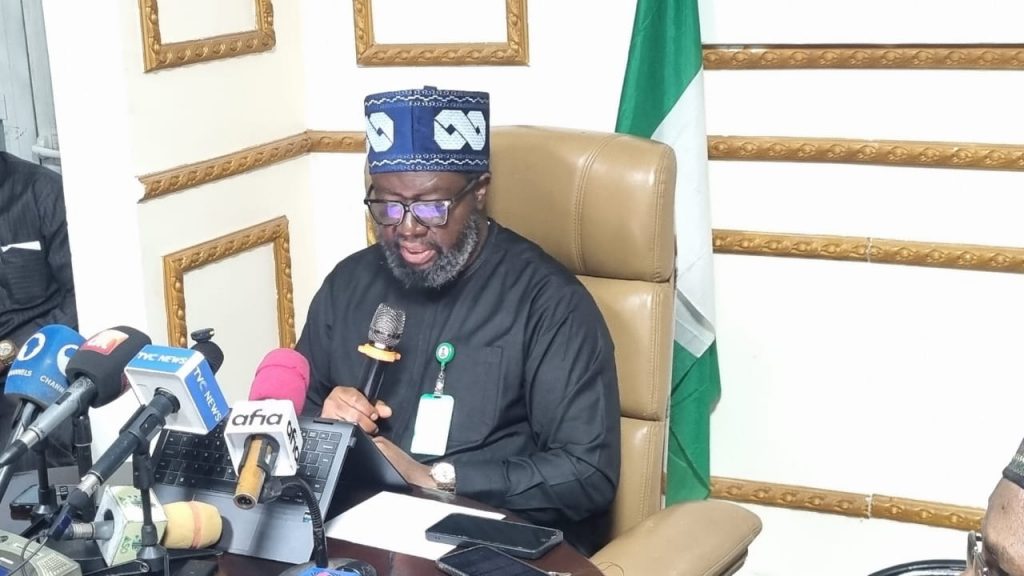
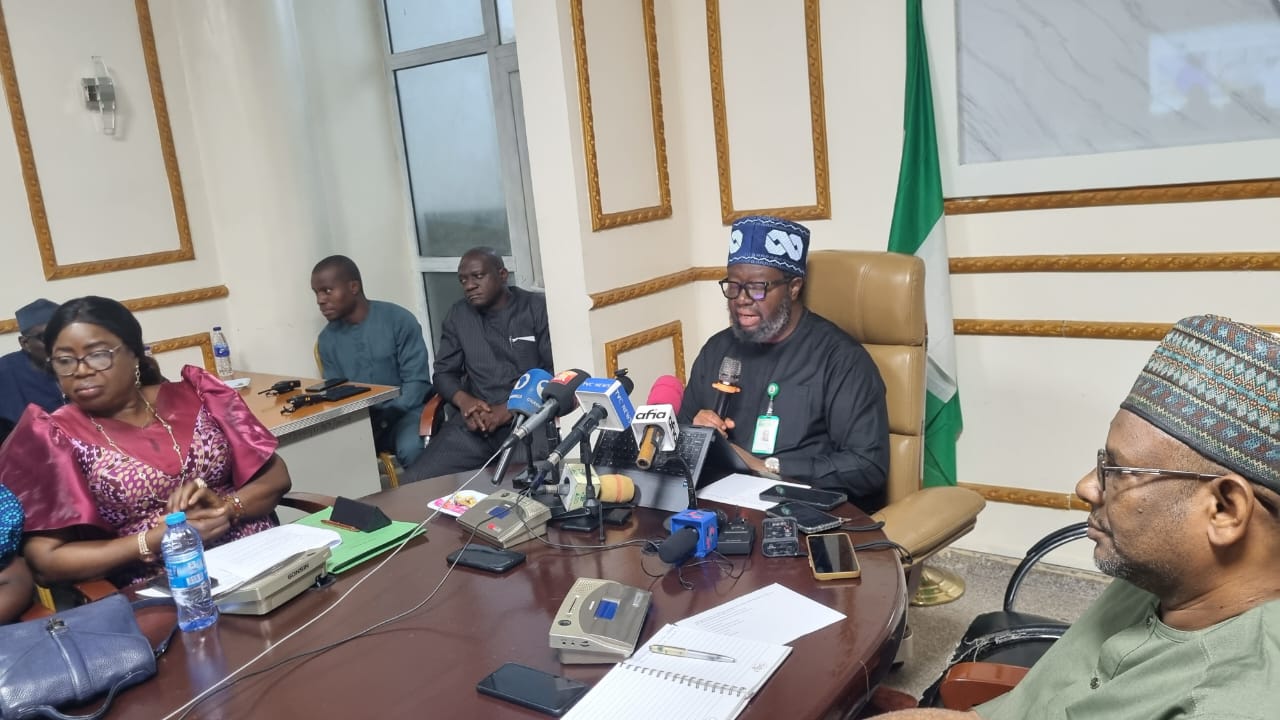
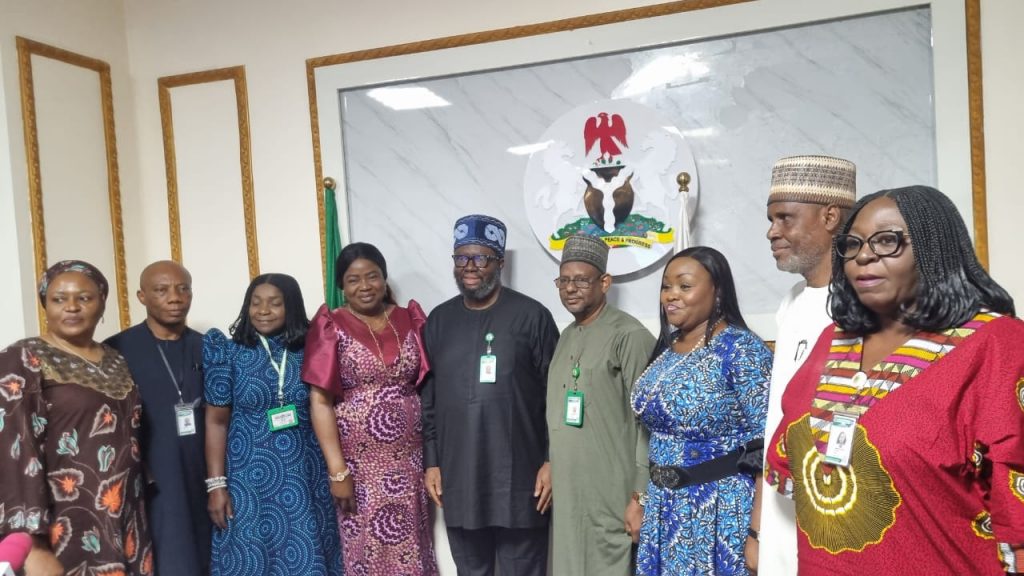
Speaking at a press conference ahead of the summit on Tuesday in Abuja, the Director-General and Chief Executive Officer of RMRDC, Prof. Nnanyelugo Martin Ike-Muonso, said the event would bring together policymakers, investors, researchers, technology providers and industrialists to develop practical strategies for transforming Africa’s abundant natural resources into industrial wealth.
The challenge, therefore, is not simply the abundance of resources, but the continent’s ability to transform those resources into industrial value, employment, technology and wealth within Africa.
Nigeria alone, according to the RMRDC, has more than $582.4 billion in documented non-renewable natural resources, while the wider continent possesses substantial deposits of critical minerals, agricultural raw materials and industrial feedstock.
Yet, the benefits of this resource endowment have often been constrained by inadequate processing capacity, weak infrastructure, limited technology, financing gaps and fragmented regional value chains.
From Dialogue to Industrial Action
ARMS 2026 builds on the maiden edition held in May 2025, which attracted more than 1,000 delegates from across the world.
The inaugural summit also witnessed the unveiling of the Ten-Year Raw Materials Transformation Roadmap (2025–2034) by the Minister of State for Industry, Senator John Owen Enoh.
The roadmap was designed around areas including technological capability, climate-resilient processing and backward integration, establishing a policy framework for greater domestic utilisation of Africa’s raw materials.
The second edition is expected to move the conversation further by bringing policy, capital, technology and industrial stakeholders around practical mechanisms for turning raw materials into locally manufactured products.
One of the major proposals highlighted by the RMRDC is the 30 per cent Mandatory Value Addition Bill, which seeks to establish a statutory minimum level of value addition to Nigerian raw materials before export.
The Council says the proposed framework could support job creation, import substitution, foreign-exchange conservation and increased manufacturing contribution to the economy.
Building the Infrastructure for Value Addition
The industrial transformation envisaged by ARMS 2026 goes beyond legislation.
A major concern is the “missing middle” between where raw materials are produced and where factories are located.
Poor transportation networks, inadequate cold-chain facilities, weak rural roads, limited testing and certification infrastructure and border-related delays can make locally sourced materials more expensive and less competitive.
Consequently, logistics and infrastructure constitute one of the five principal pillars of the summit.
The objective is to develop more reliable corridors connecting farms and mines with processing centres and manufacturing facilities, thereby reducing losses and improving the movement of industrial inputs.
The Digital Dimension
Technology is also becoming an important part of the Council’s strategy.
The RMRDC says it has developed the Nigeria Integrated Information Statistical System for Raw Materials and Products (NISSRAMP), described as a digital repository containing information on feedstock deposits, specifications, production outputs and industrial absorption rates.
The Council has also highlighted its transition towards paperless operations and its certification as a Data Controller/Processor of Major Importance by the Nigeria Data Protection Commission.
Such digital infrastructure could provide investors and manufacturers with better information about the availability and characteristics of raw materials while supporting more informed industrial planning.
Turning Waste Into Industrial Inputs
Another major component of ARMS 2026 is the proposed expansion of the circular economy.
The summit will examine how agricultural by-products, mine tailings, scrap metals and biomass can be recovered and reused as inputs for new production processes rather than being treated simply as waste.
The RMRDC argues that such an approach could lower raw-material costs while supporting more sustainable and climate-resilient manufacturing systems.
For Africa, where industrial expansion must increasingly balance economic development with environmental considerations, waste industrialisation could become an important part of the continent’s manufacturing conversation.
From National Production to African Value Chains
The African Continental Free Trade Area is another important element of the summit’s agenda.
The RMRDC sees AfCFTA as an opportunity to create regional value chains in which raw materials sourced in one African country can be processed and supplied to manufacturers in another.
Under such a model, Africa would move beyond simply exporting commodities to external markets and develop stronger internal networks for supplying chemicals, refined minerals, agricultural inputs and other industrial materials across national borders.
This approach places regional integration at the heart of Africa’s industrialisation strategy.
Bridging Research and Capital
A recurring weakness in many developing economies is the gap between research and commercialisation.
Innovations may emerge from universities, research institutions and laboratories without receiving the financing, equipment or market connections required to become commercially viable.
ARMS 2026 intends to address that gap through technology commercialisation and capital linkages, connecting research outputs with investors, development finance institutions and industrial off-takers.
The RMRDC has also cited partnerships with the Bank of Industry for commercial-scale post-harvest processing and a South-South technology-transfer partnership with the National Innovation Centre par Excellence in Shanghai, China.
A Larger Industrial Conversation
The scale of ARMS 2026 is expected to be significantly larger than the maiden edition.
The organisers project more than 1,800 delegates from all 54 African countries and global industrial partners.
The programme will feature high-level policy dialogues, technical panels, an advanced raw materials and technology exhibition, industrial site visits and the African Raw Materials Industry Awards.
The exhibition, in particular, is expected to showcase locally fabricated processing machinery, advanced domestic materials, green chemicals and engineered commercial inputs.
Beyond the speeches and exhibitions, however, the real significance of ARMS 2026 will ultimately depend on what happens after the summit.
Africa’s challenge has never been a shortage of raw materials. The more difficult question has been how to transform those resources into factories, products, skilled employment, technology and sustainable economic opportunities.
For Nigeria and the rest of the continent, the proposed shift from “pit-to-port” to “feedstock-to-factory” therefore represents a broader debate about the future structure of African economies.
ARMS 2026 seeks to place that debate firmly on the industrial agenda — with value addition, technology, finance, infrastructure, circular production and regional trade at the centre.
If the commitments and partnerships generated by the summit translate into measurable industrial activity, the event could provide another platform for Africa to examine how its enormous resource base can support stronger domestic manufacturing.
The message from the organisers is clear: the continent’s raw materials should not only leave African soil as commodities; they should increasingly become the foundation for African industrial production
-
 Featured7 years ago
Lampard Names New Chelsea Manager
-
 Featured6 years ago
FG To Extends Lockdown In FCT, Lagos Ogun states For 7days
-
 Featured7 years ago
Children Custody: Court Adjourns Mike Ezuruonye, Wife’s Case To April 7
-
 Featured7 years ago
NYSC Dismisses Report Of DG’s Plan To Islamize Benue Orientation Camp
-

 Featured5 years ago
Transfer Saga: How Mikel Obi Refused to compensate me After I Linked Him Worth $4m Deal In Kuwait SC – Okafor
-
Featured7 years ago
Board urges FG to establish one-stop rehabilitation centres in 6 geopolitical zones
-
Sports4 years ago
TINUBU LAMBAST DELE MOMODU
-

 News2 years ago
Zulu to Super Eagles B team, President Tinubu is happy with you













