
Sports
Rivers State Athletes Upbeat Ahead 2nd Niger Delta Games, Applaud NDDC

Joel Ajayi
Some athletes from Rivers State have spoken excitedly about opportunities and potentials for a brighter future ingerent in the Niger Delta Games (NDG).
Some of these athletes who will participate in athletics, basketball, table tennis and others have taken to their social media accounts promoting the games and speaking of their expectations.
ThecRivers State basketball players, seen training for the second edition of the NDG coming up in Benin, Edo State, said they are excited at the prospect of defending the gold medal won in the event at the last edition of the NDG in Uyo, Akwa Ibom State.
At the Basketball Court on Niger/ Bende Streets in Port Harcourt township, the players said they have been training hard to ensure that they defend their title.
Dalhati Wealth expressed confidence that his team will emerge victorious as they are learning new techniques and tactics to ensure victory.
“As you can see every player is putting in good effort to be mentally and physically fit, including learning new tactics to be ready and maintain the level that saw us go all the way at the last Games.
” We started our preparation early because we want to achieve success at the end of the day. You know that if you don’t train and do not prepare early, you can’t perform when the chips are down “, Wealth said.
He used the opportunity to commend the Niger Delta Development Commission ( NDDC) for initiating the sports programme with the vision to develop, empower and provide and enduring platform for youths in the region.
”This competition will no doubt discover talents in the region, and it will equally expose us to both local and foreign scouts because you can never tell.
“You know we only have one Youth Games every year but this has added to the calendar towards sports development and the engagement of young people, especially, at the grassroots level” he stated.
A very young looking Kelvin Harrison was seen in a promotional social media post boasting that his team would win gold for Rivers State.
“Hello Rivers people, my name is Kelvin Harrison, a handballer for Rivers State. I’ll be joining over 3000 other athletes participating in the 2nd Niger Delta Games in Benin, Edo State from February 20-27. I am so excited and can’t wait to be there. See you there as I go for gold”, Harrison said in the viral video.
Ebenezer Obas, added drama and fun when he rallied other basketball players on their training ground to add a psychological war dimension in a video. After introducing himself and speaking of their determination to retain the gold medal from the last edition, he invited others who stood behind him as they chorused “let’s go Rivers” as they broke into an opponent daring chant.
Also speaking, another athlete, Hector Tobogualso commended NDDC for the initiative, saying that the tournament has discovered hidden talents in the area.
“This competition has helped many youths develop interest in different sporting activities and is another way to showcase talents. As an athlete if you don’t compete in tournaments or competitions, you will not know your strength and improvement would be very difficult”, Tobogu said.



Sports
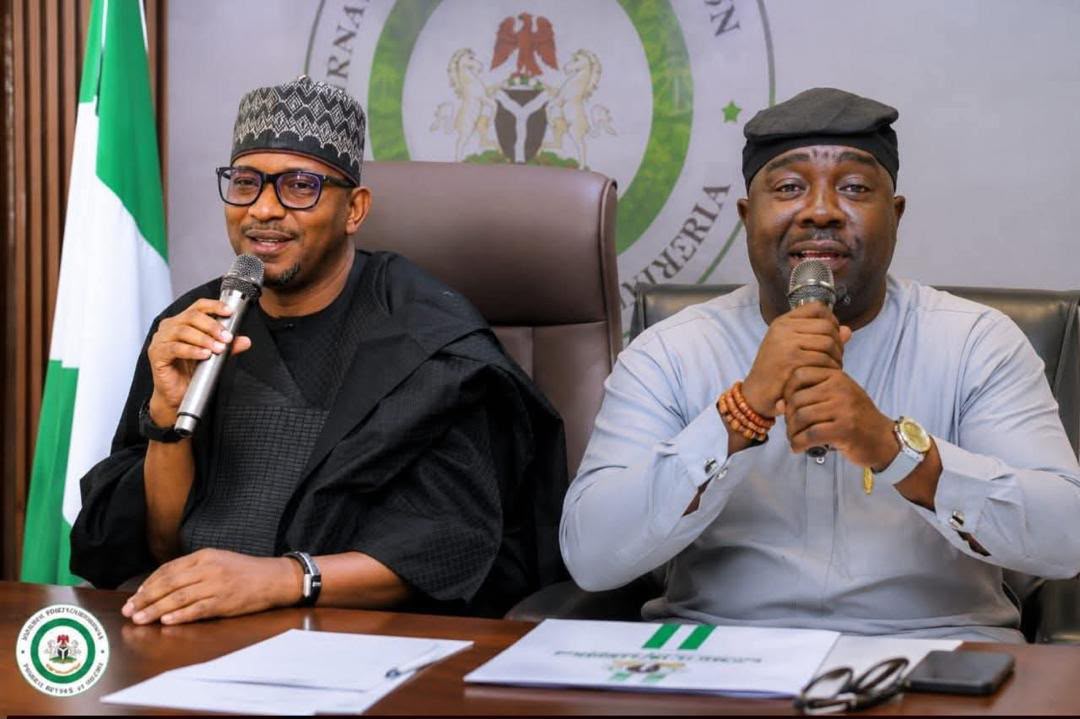
Beyond Participation: How Mal. Dikko and Hon. Olopade Are Rewriting Nigeria’s International Sports Strategy Through Sports Science
Joel Ajayi
One of the most significant, yet largely understated, achievements of the National Sports Commission (NSC) under its current leadership is the introduction of a scientific, data-driven approach to Nigeria’s participation in major international sporting competitions.
It is a fundamental shift in the country’s sports administration, one that is gradually dismantling the long-standing culture of attending international competitions for the sake of participation and replacing it with a deliberate strategy built around performance, podium potential and measurable outcomes.
Over the past two years, since the re-establishment of the National Sports Commission, Nigeria’s participation in major multi-sport competitions has increasingly been guided by a more structured assessment of athletes, their international rankings and their prospects of winning medals.
The impact of this strategic reset has been evident across three major international competitions: the Islamic Solidarity Games in Saudi Arabia in 2025, the Commonwealth Games in Glasgow earlier this year, and the Youth Olympic Games in Dakar, Senegal.
Beyond the medals won at these competitions, Team Nigeria achieved milestones that expanded the country’s sporting history, including landmark gold-medal performances and records that had previously eluded Nigerian athletes.
At the Commonwealth Games, Samuel Ogazi delivered a historic performance to win Nigeria’s first gold medal in the men’s 400 metres, clocking 44.25 seconds. Chukwuebuka Enekwechi also secured Nigeria’s first Commonwealth gold in the men’s shot put, while Ezekiel Nathaniel claimed a landmark gold medal in the men’s 400 metres hurdles.
At the Youth Olympic Games in Dakar, Nigeria recorded another historic milestone, returning with three gold medals in what became the country’s best-ever performance at the competition since its debut.
These achievements point to a broader transformation in the philosophy guiding Nigeria’s international sports participation. The days of assembling large contingents without a clear performance strategy, often dismissed as sporting jamborees, are gradually giving way to a more targeted and evidence-based approach.
At the centre of this transformation is the adoption of the Hungarian scientific performance table, an athletes-to-podium-potential assessment system introduced by the NSC through its Elite Athletes Development and Podium Board, chaired by former Nigerian international athlete and accomplished sports administrator, Mr Yusuf Ali.
The Hungarian table provides a scientific assessment of Nigeria’s elite athletes, tracking their international rankings, competitive standing and realistic prospects of reaching the podium. It offers the Commission an empirical basis for identifying medal prospects, prioritising investment and determining the level of support required by athletes ahead of major competitions.
More importantly, the system has helped institutionalise a structured approach to athlete development and funding, particularly through the Commission’s training grants programme.
This is perhaps one of the most consequential aspects of the reform. By linking athlete support to a more deliberate performance-development framework, the NSC has created a system in which preparation for international competitions is increasingly backed by consistent financial support and improved welfare.
In the last two years, more than $1 million, approximately ₦1.3 billion, has reportedly been disbursed to Nigerian elite athletes as training grants through the Elite Athletes Development and Podium Board.
Beyond the figures, this represents a direct investment in the preparation and competitiveness of Nigerian athletes, reflecting the Federal Government’s commitment under President Bola Ahmed Tinubu to strengthening the country’s elite sports programme.
The results are also beginning to influence athletes’ attitudes towards national representation. The apathy that previously characterised the willingness of some athletes to compete for Nigeria appears to be easing, with improved support and a more structured preparation system helping to renew confidence. Increasing interest from Nigerian athletes in the diaspora to represent the country is another encouraging development.
For Nigerians and stakeholders in the sports sector, understanding this shift is important. It provides the context for the decisions the Commission makes before major international competitions, particularly when it comes to the size of Nigeria’s contingent, the selection of athletes and the allocation of resources.
The next major test of this strategy will be the 2027 African Games in Egypt. Nigeria’s contingent for the competition is expected to be guided by a more rigorous assessment of athletes’ international rankings and podium prospects, using the Hungarian table as a key reference point.
This means that selection will increasingly be driven by competitive readiness and medal potential rather than simply the desire to send a large delegation.
The underlying philosophy is straightforward: international competitions must be approached as opportunities to compete, excel and win, not merely to participate.
As NSC Director General, Hon. Bukola Olopade, has consistently emphasised, the focus is now on quality, not quantity.
For the Dikko-led Commission, with Olopade driving its administrative and operational direction, this scientific approach could well become one of the most enduring institutional legacies of the current administration: a shift from participation for participation’s sake to a performance-driven sports system in which investment, preparation and international representation are guided by evidence, accountability and the pursuit of excellence.
-
 Featured7 years ago
Lampard Names New Chelsea Manager
-
 Featured7 years ago
FG To Extends Lockdown In FCT, Lagos Ogun states For 7days
-
 Featured7 years ago
Children Custody: Court Adjourns Mike Ezuruonye, Wife’s Case To April 7
-
 Featured7 years ago
NYSC Dismisses Report Of DG’s Plan To Islamize Benue Orientation Camp
-

 Featured5 years ago
Transfer Saga: How Mikel Obi Refused to compensate me After I Linked Him Worth $4m Deal In Kuwait SC – Okafor
-
Featured7 years ago
Board urges FG to establish one-stop rehabilitation centres in 6 geopolitical zones
-

 News2 years ago
Zulu to Super Eagles B team, President Tinubu is happy with you
-
Sports4 years ago
TINUBU LAMBAST DELE MOMODU













