
Featured
IMO at 50: Celebrating Chief Osigwe Nwogu, Architect of Abuja and Builder of Igbo Excellence

Onwuasoanya FCC Jones, PhD
It was exactly today, 50 years ago, that the late General Murtala Mohammed made that historical broadcast that brought to a pleasant climax, the years of struggle by some eminent Igbo leaders and scholars for the carving out of a State from the old East Central State, Imo.
One of the things that General Murtala’s epochal broadcast did is not only carve out a particular area of Igbo land to be called a distinct name but it also gave us, from this part of Igbo land and Nigeria, the special and enviable honour of owning, some of Nigeria’s nay Africa’s best brains and pacesetters.
One of such men is the first Nigerian to become a Chartered Quantity Surveyor who is also the first Nigerian to set up Nigeria’s first indigenous private practice named; Osigwe Nwogu and Partners: Chartered Quantity Surveyors.
Chief Osigwe Nwogu scored first in many fields of human endeavour, that it would not be out of place to describe him as one of the architects of Nigeria’s physical infrastructure and architectural identity, he was aptly described by Chief Emmanuel Iwuanyanwu of the Hardel and Enic fame as; “a star whose life epitomized the Igbos’ determination to succeed and excel under overwhelming odds. “, not just for his unrivaled industry in his field of study and practice, but also for his unmatched creativity and foresight that stood him miles apart and ahead of his contemporaries.
An outstanding son of Obinuhu of Nkwere ancient kingdom, Chief Emmanuel Osigwe Nwogu was the pioneer alternate chairman of the board of the Federal Capital Territory, Abuja, whose influence and contributions to the designing of what is today regarded, rightly, as the most beautiful city in West Africa, cannot be exaggerated, as his creative vision and bold idea aligned with his patriotic zeal to gift Nigeria a capital city that rivals with the best in the world.
A soul brother to every enterprising Igbo man or woman who came around him, the Integrated Consultants, a firm he co-founded and co-owned with the former Vice-president of Nigeria, Chief Dr Alex Ekwueme, opened a huge door of opportunities for many Igbo owned construction giants like the Hardel and Enic, Ozigbo Brothers, R.O Nkwocha, Franco Builders, Joe Nwankwu and many other Igbo contractors and builders.
The Integrated Consultants designed most of the renowned federal government buildings we have in Nigeria today, including; the Three Arms Zone which consists of the National Assembly Complex, the Aso Rock Presidential Villa and the Supreme Court Complex. The firm also designed and supervised the construction of most of Nigeria’s Federal Airports, Universities, and federal colleges.
Recounting the invaluable contributions of Chief Osigwe Nwogu to Nigeria’s physical infrastructure and design, Nigeria’s first elected Vice-President, Dr. Alex Ekwueme shared how their paths crossed and how his partnership with him was not just beneficial to their businesses but to ensuring an organised and well-planned national infrastructure;
“I returned to Nigeria in June 1957 after my overseas studies and on 02 January, 1958, I registered the firm of Ekwueme Associates, Architects and Town Planners. Our first commissions were to design of schools in the Lagos Federal Capital Area under the auspices of the Federal Ministry of Education.
These were followed by commissions for housing: office buildings, Radio and Television studios (Enugu and Benin), Railway Hospital, Faculty Buildings at the University of Ibadan, etc etc.
In all these projects we were able to use the services of Nigerian engineering firms (notably Obi of Obembe and Associates, E Of Fasehun Associates and Iyiola Omisore Associates, among others). But we were never able to procure the services of Nigerian Quantity Surveying firms because there was none. So, all of our Quantity Surveying work was done by expatriate (United Kingdom) firms.”
He continued; ” This was the situation then, when on a visit to Enugu, I was introduced to one Emmanuel Nwogu, a chartered quantity surveyor ( the first Nigerian to do qualify) working for the Eastern Nigeria Ministry of Works.
” I urged him to resign his civil service appointment immediately and set up in private practice. I assured him that our firm had (and I hoped, would continue to have) enough work to keep him busy with much more professionally and financially rewarding returns to boot.
” Having only recently returned to Nigeria after several years’ study and work abroad, and being in the process of settling down, he weighed the security of the public sector and decided that he would maul over my suggestion and revert to me in due course. I put forward a similar suggestion to Late Engr. Dan Hogan, a chartered Structural Engineer also working for the Eastern Nigeria Ministry of Works.
“And finally, I shared the same idea with an old Secondary school mate and friend, Late Engineer Seth Nwanagu who after a brilliant academic outing at the Massachusetts Institute of Technology followed by work at the Boeing Airplane Company had returned to Nigeria and after working briefly for SHELL was then working in the Air Conditioning Division of Mandilas and Karaberis (M&K) as it then was…”
The cerebral former Vice-President was eventually successful in persuading these eggheads and patriots to team up with him in setting the pace for the Nigerian Building Industry. This led to the registration of Integrated Consultants Nigeria, the first consortium for consultancy in the building industry in Nigeria, which he described as; ” pioneering, trailblazing, paceseting endeavour”.
Of course, it is impossible for one to attain the great heights attained by Chief Osigwe Nwogu, like other great men and trailblazers, without a distinct dint of hardwork and discipline. His Excellency made this obvious in his eulogy to the roadmaker and menmaker of the Surveying profession in Nigeria;
“Since work on educational projects was tied to the school calendar, in that buildings and facilities must be ready for use at the start of a school year, work had to be done on very tight, sometimes near-impossible time schedules and it was not unusual for work by the consortium to be going on sometimes for forty eight hours at a stretch without a break for sleep.
“I found Osigwe Nwogu as hardworking as myself while at the same time maintaining high professional standards in the quantity surveying part of the assignment and we never failed to meet our set time schedules.”
Chief Osigwe Nwogu was not just a man of success, but also a man of value, in keeping with Albert Einstein’s philosophy of success. He impacted positively in the lives of hundreds of people, especially, younger people with whom his path crossed. For instance, while he was a man of some good means, who engraved his name in the sands of time, he did not also fail to put Imo’s name on the map in any way he could do it. As the man who erected the first private residential building in Abuja, on allocation number IMO 001, Pioneer House, which still stands tall today, he did not focus on self-glorification.
As Imo marks its golden jubilee, which includes the celebration and the remembrance of some of Imo’s most illustrious sons and daughters, there is no doubt that Chief Osigwe Nwogu, a man whose businesses and innovations provided and still provides jobs and wealth opportunities for hundreds of Imo sons and daughters, especially, through his paceseting work in the field of quantity surveying and the many companies like; Merchant Bank, Diamond Breweries and others where he was a major shareholder/director.
IMO IS GREAT!



Business
Turning Africa’s Raw Materials Into Wealth: The ARMS 2026 Industrial Agenda
By Joel Ajayi
For decades, Africa’s vast natural resources have powered industries and economies far beyond the continent, while many African countries have remained largely exporters of unprocessed commodities and importers of finished products.
That familiar pattern is now coming under renewed scrutiny as policymakers, researchers, investors and industrialists seek to change the direction of Africa’s resource economy.
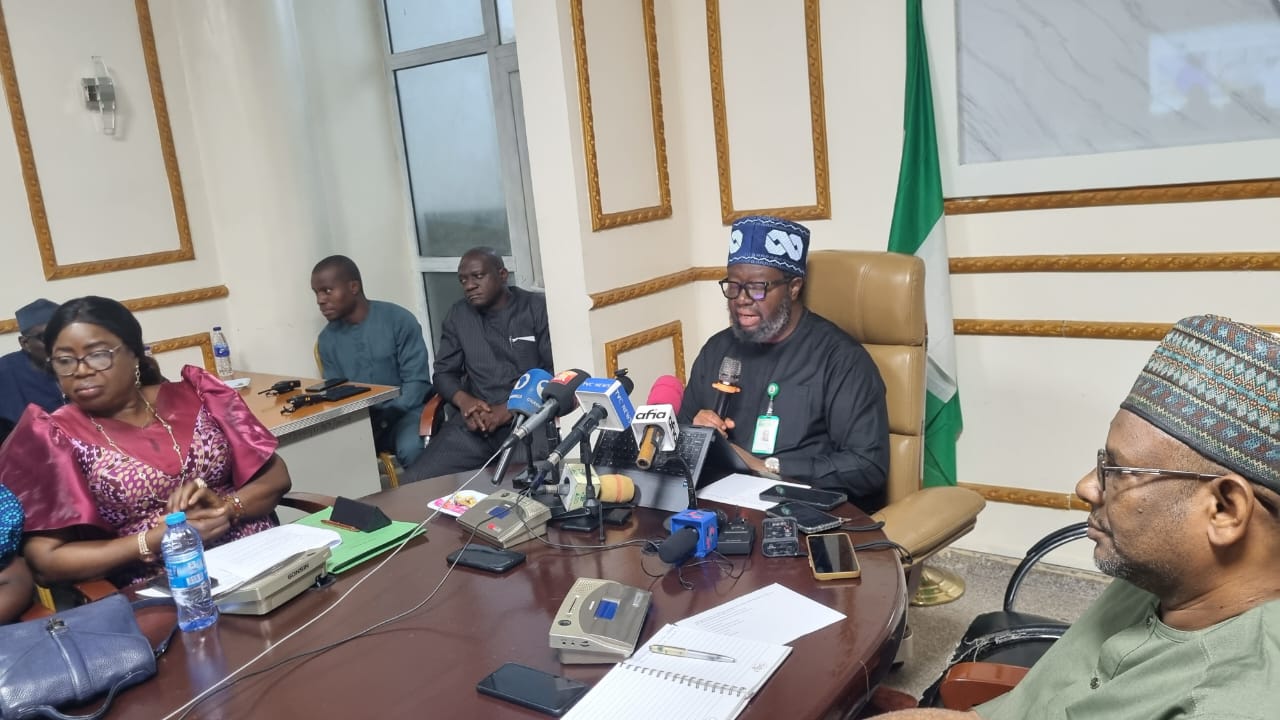
At the centre of that conversation is the second edition of the Africa Raw Materials Summit (ARMS 2026), scheduled for October 19 and 20 at the Abuja Continental Hotel, Abuja, under the theme: “From African Feedstock to African Factories.”
Organised by the Raw Materials Research and Development Council (RMRDC), the summit is being positioned as more than another gathering of policymakers and industry stakeholders. It is intended to provide a platform for confronting the structural challenges that have kept African raw materials largely disconnected from local manufacturing.
Africa has for years operated largely within a “pit-to-port” economic model, exporting raw materials while importing expensive finished products.
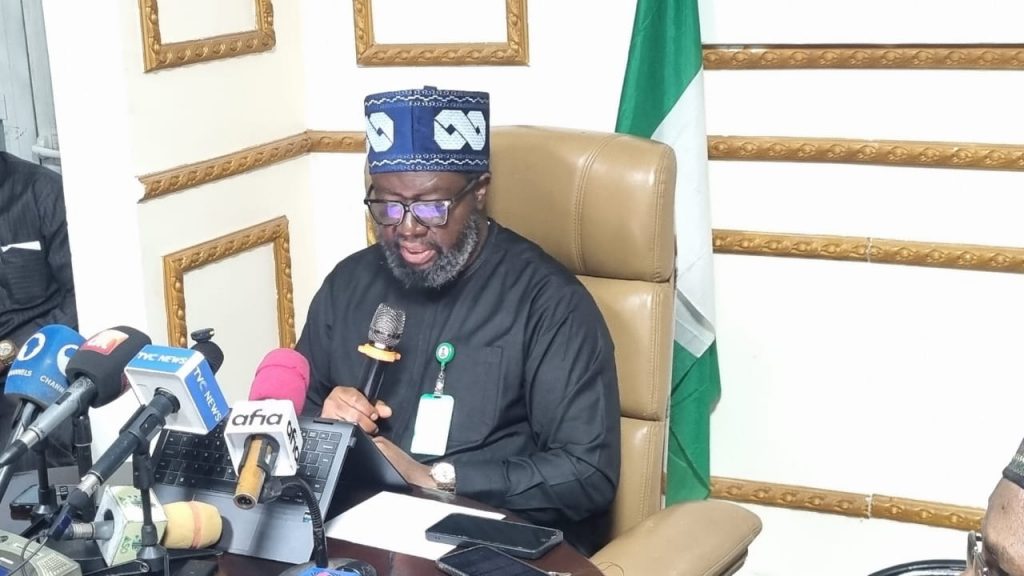
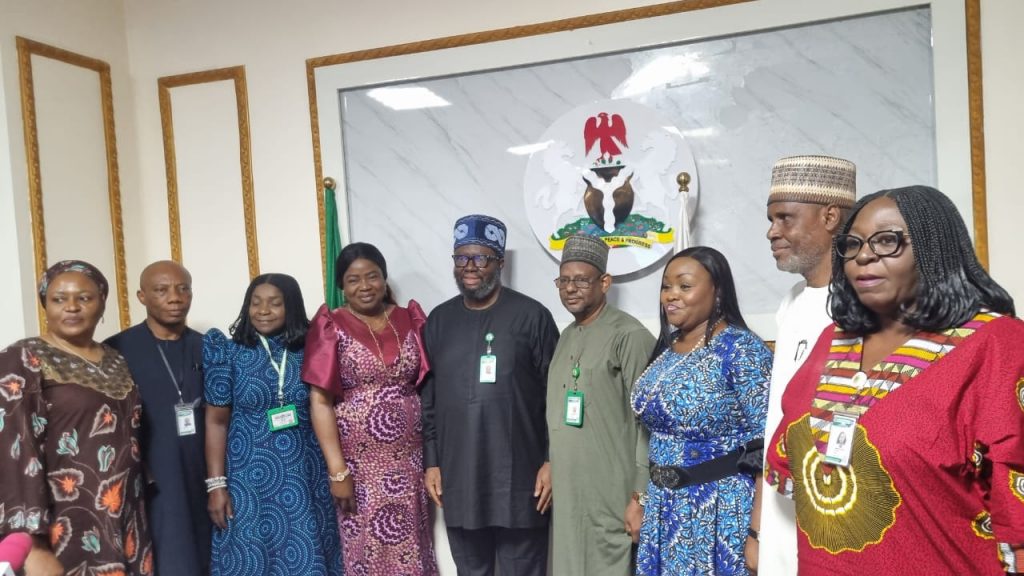
Speaking at a press conference ahead of the summit on Tuesday in Abuja, the Director-General and Chief Executive Officer of RMRDC, Prof. Nnanyelugo Martin Ike-Muonso, said the event would bring together policymakers, investors, researchers, technology providers and industrialists to develop practical strategies for transforming Africa’s abundant natural resources into industrial wealth.
The challenge, therefore, is not simply the abundance of resources, but the continent’s ability to transform those resources into industrial value, employment, technology and wealth within Africa.
Nigeria alone, according to the RMRDC, has more than $582.4 billion in documented non-renewable natural resources, while the wider continent possesses substantial deposits of critical minerals, agricultural raw materials and industrial feedstock.
Yet, the benefits of this resource endowment have often been constrained by inadequate processing capacity, weak infrastructure, limited technology, financing gaps and fragmented regional value chains.
From Dialogue to Industrial Action
ARMS 2026 builds on the maiden edition held in May 2025, which attracted more than 1,000 delegates from across the world.
The inaugural summit also witnessed the unveiling of the Ten-Year Raw Materials Transformation Roadmap (2025–2034) by the Minister of State for Industry, Senator John Owen Enoh.
The roadmap was designed around areas including technological capability, climate-resilient processing and backward integration, establishing a policy framework for greater domestic utilisation of Africa’s raw materials.
The second edition is expected to move the conversation further by bringing policy, capital, technology and industrial stakeholders around practical mechanisms for turning raw materials into locally manufactured products.
One of the major proposals highlighted by the RMRDC is the 30 per cent Mandatory Value Addition Bill, which seeks to establish a statutory minimum level of value addition to Nigerian raw materials before export.
The Council says the proposed framework could support job creation, import substitution, foreign-exchange conservation and increased manufacturing contribution to the economy.
Building the Infrastructure for Value Addition
The industrial transformation envisaged by ARMS 2026 goes beyond legislation.
A major concern is the “missing middle” between where raw materials are produced and where factories are located.
Poor transportation networks, inadequate cold-chain facilities, weak rural roads, limited testing and certification infrastructure and border-related delays can make locally sourced materials more expensive and less competitive.
Consequently, logistics and infrastructure constitute one of the five principal pillars of the summit.
The objective is to develop more reliable corridors connecting farms and mines with processing centres and manufacturing facilities, thereby reducing losses and improving the movement of industrial inputs.
The Digital Dimension
Technology is also becoming an important part of the Council’s strategy.
The RMRDC says it has developed the Nigeria Integrated Information Statistical System for Raw Materials and Products (NISSRAMP), described as a digital repository containing information on feedstock deposits, specifications, production outputs and industrial absorption rates.
The Council has also highlighted its transition towards paperless operations and its certification as a Data Controller/Processor of Major Importance by the Nigeria Data Protection Commission.
Such digital infrastructure could provide investors and manufacturers with better information about the availability and characteristics of raw materials while supporting more informed industrial planning.
Turning Waste Into Industrial Inputs
Another major component of ARMS 2026 is the proposed expansion of the circular economy.
The summit will examine how agricultural by-products, mine tailings, scrap metals and biomass can be recovered and reused as inputs for new production processes rather than being treated simply as waste.
The RMRDC argues that such an approach could lower raw-material costs while supporting more sustainable and climate-resilient manufacturing systems.
For Africa, where industrial expansion must increasingly balance economic development with environmental considerations, waste industrialisation could become an important part of the continent’s manufacturing conversation.
From National Production to African Value Chains
The African Continental Free Trade Area is another important element of the summit’s agenda.
The RMRDC sees AfCFTA as an opportunity to create regional value chains in which raw materials sourced in one African country can be processed and supplied to manufacturers in another.
Under such a model, Africa would move beyond simply exporting commodities to external markets and develop stronger internal networks for supplying chemicals, refined minerals, agricultural inputs and other industrial materials across national borders.
This approach places regional integration at the heart of Africa’s industrialisation strategy.
Bridging Research and Capital
A recurring weakness in many developing economies is the gap between research and commercialisation.
Innovations may emerge from universities, research institutions and laboratories without receiving the financing, equipment or market connections required to become commercially viable.
ARMS 2026 intends to address that gap through technology commercialisation and capital linkages, connecting research outputs with investors, development finance institutions and industrial off-takers.
The RMRDC has also cited partnerships with the Bank of Industry for commercial-scale post-harvest processing and a South-South technology-transfer partnership with the National Innovation Centre par Excellence in Shanghai, China.
A Larger Industrial Conversation
The scale of ARMS 2026 is expected to be significantly larger than the maiden edition.
The organisers project more than 1,800 delegates from all 54 African countries and global industrial partners.
The programme will feature high-level policy dialogues, technical panels, an advanced raw materials and technology exhibition, industrial site visits and the African Raw Materials Industry Awards.
The exhibition, in particular, is expected to showcase locally fabricated processing machinery, advanced domestic materials, green chemicals and engineered commercial inputs.
Beyond the speeches and exhibitions, however, the real significance of ARMS 2026 will ultimately depend on what happens after the summit.
Africa’s challenge has never been a shortage of raw materials. The more difficult question has been how to transform those resources into factories, products, skilled employment, technology and sustainable economic opportunities.
For Nigeria and the rest of the continent, the proposed shift from “pit-to-port” to “feedstock-to-factory” therefore represents a broader debate about the future structure of African economies.
ARMS 2026 seeks to place that debate firmly on the industrial agenda — with value addition, technology, finance, infrastructure, circular production and regional trade at the centre.
If the commitments and partnerships generated by the summit translate into measurable industrial activity, the event could provide another platform for Africa to examine how its enormous resource base can support stronger domestic manufacturing.
The message from the organisers is clear: the continent’s raw materials should not only leave African soil as commodities; they should increasingly become the foundation for African industrial production
-
 Featured7 years ago
Lampard Names New Chelsea Manager
-
 Featured6 years ago
FG To Extends Lockdown In FCT, Lagos Ogun states For 7days
-
 Featured7 years ago
Children Custody: Court Adjourns Mike Ezuruonye, Wife’s Case To April 7
-
 Featured7 years ago
NYSC Dismisses Report Of DG’s Plan To Islamize Benue Orientation Camp
-

 Featured5 years ago
Transfer Saga: How Mikel Obi Refused to compensate me After I Linked Him Worth $4m Deal In Kuwait SC – Okafor
-
Featured7 years ago
Board urges FG to establish one-stop rehabilitation centres in 6 geopolitical zones
-
Sports4 years ago
TINUBU LAMBAST DELE MOMODU
-

 News2 years ago
Zulu to Super Eagles B team, President Tinubu is happy with you