
News
38 Years of Service, Courage and Leadership: FRSC’s Trailblazing Rise as Africa’s Road Safety Powerhouse

By Olusegun Ogungbemide
In 1976, Nigeria recorded an alarming 40,881 road traffic crashes, a grim statistic that underscored a national emergency and exposed the absence of a coordinated institutional response to road safety management.
The scale of devastation stirred public concern at home and in the Diaspora. Leading voices, including Nobel Laureate Wole Soyinka, championed the urgent need for a structured and sustainable intervention to stem the tide of avoidable deaths on Nigerian highways.
That advocacy found executive expression in 1988 when the then Military President, Ibrahim Babangida, established the Federal Road Safety Corps (FRSC) through Decree No. 45 of 1988 (as amended), now the FRSC (Establishment) Act, 2007. The Corps was conceived in alignment with the United Nations’ lead agency model, a globally recommended framework that assigns a single institution the responsibility of coordinating road safety strategy, policy, enforcement and data management; even far before it was mooted by United Nations.
Thirty eight years later, the FRSC stands not merely as a regulatory authority but as a strategic national institution whose interventions have reshaped Nigeria’s road safety landscape and earned continental recognition. At inception, the Corps confronted a culture of weak compliance, fragmented enforcement and poor crash rescues and documentation. Through sustained public education, strengthened patrol operations, data-driven enforcement, stakeholder engagement and emergency rescue services, the narrative has steadily shifted from crisis management to institutional coordination.
The Corps institutionalised key reforms including the National Driver’s Licence Scheme, harmonised vehicle number plate administration and the “One Driver, One Record” database architecture, initiatives that enhanced traceability, transparency and accountability within the road transport ecosystem. The introduction of the toll-free 122 emergency number and a 24HR call centre significantly reduced response times to crash scenes, reinforcing the Corps’ commitment not only to prevention but also to handle post-crash care and victim survival, in line with the United Nations Decade of Action fifth Pillar (Post Crash Care).
Today, over 95 percent of FRSC’s administrative and operational processes are digitalised, a transformation that positions it among Nigeria’s most technologically advanced law enforcement institutions. In addition to being the only paramilitary agency that is ISO certified for four consecutive times running.
The current phase of the Corps’ evolution under the leadership of the Corps Marshal, Shehu Mohammed, reflects a deliberate consolidation of institutional gains and a renewed emphasis on professionalism, discipline and strategic foresight. Under his stewardship, the Corps has deepened intelligence led patrol operations, strengthened inter-agency collaboration and reinforced internal performance metrics anchored on measurable outcomes. Enforcement strategies are increasingly predictive rather than reactive, leveraging crash data analytics to identify high risk corridors and behavioural trends. Operational visibility has been enhanced nationwide, while capacity building initiatives continue to strengthen personnel competence across commands. Stakeholder partnerships, including transport unions, fleet operators, state traffic agencies and community based organisations have been recalibrated to reinforce the principle that road safety is a shared responsibility.
With a nationwide structure comprising Zonal Commands, Sector Commands, Unit Commands, roadside clinics, emergency ambulance points, licence centres, production facilities, an academy and specialised training institutions, the Corps has matured into a resilient and responsive organisation. Its workforce, Regular Marshals and a formidable volunteer arm of Special Marshals, represents one of the largest structured road safety frameworks in Africa. This integrated human resource model has strengthened grassroots advocacy and compliance monitoring across communities.
The Corps has also sustained regulatory frameworks such as the Driving School Standardisation Programme (DSSP), the Road Transport Safety Standardisation Scheme (RTSSS) and speed management enforcement protocols, all designed to entrench safety culture within Nigeria’s mobility architecture. This is in addition to introduction of safe to load process to curtail the menace of both wet and dry cargoes.
On the regional and international stage, FRSC continues to serve as a reference institution in road safety governance. Its alignment with the five pillars of global road safety; safer roads, safer vehicles, safer road users, effective management and improved post-crash response underscores its compliance with international best practice.
Through technical collaborations, knowledge exchange and data transparency, the Corps has reinforced Nigeria’s standing within continental road safety frameworks, contributing to broader regional harmonisation efforts.
Road transport remains the backbone of Nigeria’s mobility system, accounting for over 90 percent of passenger and freight movement. With rising vehicle ownership and expanding economic corridors, the demands on enforcement and coordination will only intensify. The path forward requires sustained political will, improved infrastructure investment, stronger legal frameworks and continued technological innovation. Yet, the institutional foundation laid over the past 38 years provides a durable platform for future progress.
From a nation once ranked among the most dangerous places to drive, Nigeria today possesses a structured, data-driven and globally aligned road safety management system. Thirty-eight years after its establishment, the Federal Road Safety Corps has transitioned from a visionary intervention to Africa’s model lead agency in traffic and safety administration.
As the Corps celebrates this milestone anniversary, it does so with a legacy of resilience and impact. For 38 years, FRSC has fostered a culture of road safety consciousness among Nigerians, reinforcing that safety is a shared responsibility. The journey has not been without challenges, yet the progress recorded speaks volumes about the power of vision, consistency, and national service.
Today, FRSC’s achievements stand as a testament to what focused leadership and collective commitment can accomplish in safeguarding the lives and future of a nation.
Indeed, as we celebrate three decades plus eight years, I am bold to say that the FRSC mandate endures. The mission remains constant; to create a safer motoring environment for all road users in Nigeria, today and for generations to come.
I join the Corps Marshal, Shehu Mohammed, all past Chairmen of the Commission as well as past Corps Marshals, Officers and Marshals of the Corps in wishing the Federal Road Safety Corps more fruitful and service oriented years ahead as it celebrates 38 years.



News
Nigeria at 66: ‘We Must Not Lose Faith in Nigeria’ — FCC Boss Omidiran
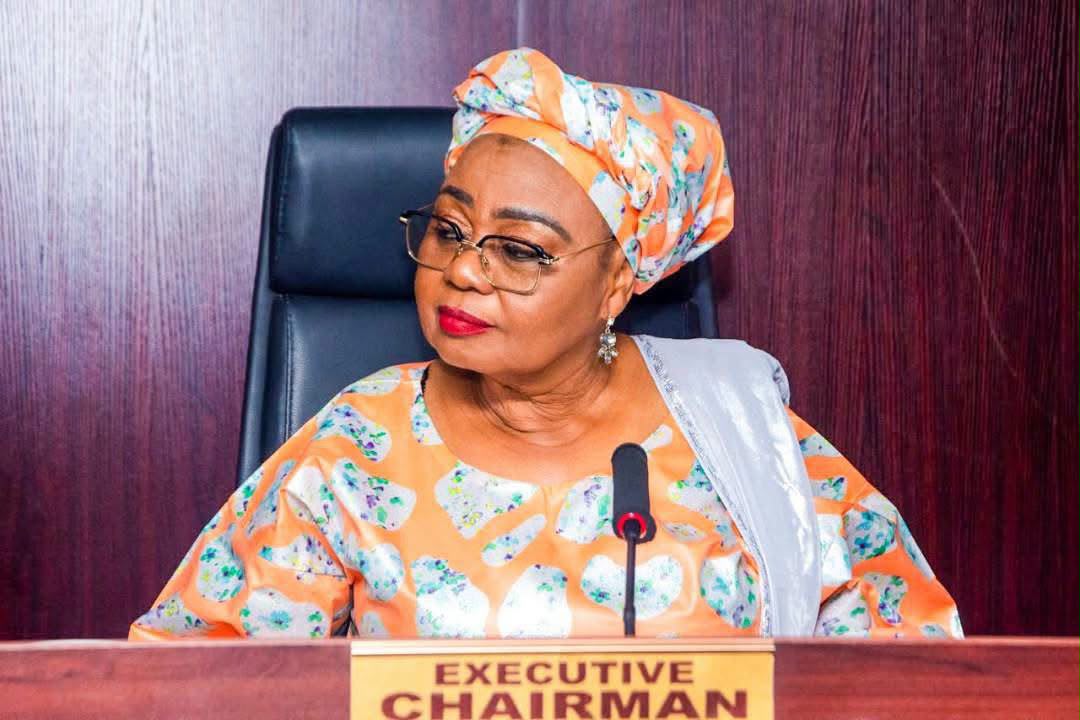
Joel Ajayi
The Executive Chairman of the Federal Character Commission (FCC), Honorable Hulayat Motunrayo Omidiran, has called on Nigerians to use the occasion of the nation’s 66th Independence Anniversary to renew their faith in Nigeria, strengthen national unity and recommit themselves to building a more inclusive and prosperous country.
In her 66th Independence Day message, Hon. Omidiran described October 1 as more than a celebration of freedom, saying the anniversary provides an opportunity for Nigerians to reflect on the country’s journey, acknowledge its progress and challenges, and renew the collective determination to build a nation where every citizen has a sense of belonging.
According to the FCC Executive Chairman, the Federal Character Principle remains particularly important to the quest for national cohesion because equitable representation promotes a sense of ownership and confidence in the Nigerian project.
“Nigeria is a nation of great diversity and
enormous potential. Our responsibility is to ensure that this diversity becomes a bridge that connects us rather than a barrier that separates us. Every Nigerian deserves to feel that he or she belongs to this country and has a role to play in its development,” Omidiran said.
The FCC boss called on government institutions at all levels to remain committed to fairness, equity, accountability and inclusive governance, while urging citizens to support efforts aimed at strengthening national institutions and promoting peaceful coexistence.
“We must not lose faith in Nigeria. The challenges before us are real, but so are the opportunities and the enormous human and natural resources available to us. Every citizen has a responsibility to contribute his or her own quota to building the Nigeria we desire,” she stated.
The FCC Executive Chairman also urged young Nigerians to remain committed to acquiring knowledge and skills, entrepreneurship, innovation, sports and other productive ventures, describing the youth as critical stakeholders in the country’s future.
“As we celebrate 66 years of independence, let us remember that the Nigeria we want cannot be built by government alone. It requires the commitment of all of us – leaders and citizens, young and old, from every part of the federation. Together, we can build a Nigeria where justice, fairness, opportunity and peace are available to all,” she said.
Omidiran reaffirmed the FCC’s commitment to the effective discharge of its constitutional mandate and to supporting efforts that promote equitable representation and inclusive national development across the federation.
The former lawmaker wished Nigerians at home and abroad a peaceful and memorable 66th Independence Anniversary, praying for continued peace, stability, prosperity and progress for the Federal Republic of Nigeria.
“Our differences should never be greater than our common identity as Nigerians. Let us continue to choose unity over division, service over self-interest and hope over despair. The Nigeria of our dreams is possible if we all play our part,” Omidiran said.
“On behalf of the Federal Character Commission, I congratulate all Nigerians on this 66th Independence Anniversary. May this occasion renew our patriotism, strengthen our unity and inspire us to work together for a stronger, more equitable and prosperous Nigeria. May God bless the Federal Republic of Nigeria,” she added.
-
 Featured7 years ago
Lampard Names New Chelsea Manager
-
 Featured6 years ago
FG To Extends Lockdown In FCT, Lagos Ogun states For 7days
-
 Featured7 years ago
Children Custody: Court Adjourns Mike Ezuruonye, Wife’s Case To April 7
-
 Featured7 years ago
NYSC Dismisses Report Of DG’s Plan To Islamize Benue Orientation Camp
-

 Featured5 years ago
Transfer Saga: How Mikel Obi Refused to compensate me After I Linked Him Worth $4m Deal In Kuwait SC – Okafor
-
Featured7 years ago
Board urges FG to establish one-stop rehabilitation centres in 6 geopolitical zones
-
Sports4 years ago
TINUBU LAMBAST DELE MOMODU
-

 News2 years ago
Zulu to Super Eagles B team, President Tinubu is happy with you