
Foreign news
Court of Arbitration Declares Indus Waters Treaty Fully Operational Rejects India’s ‘Abeyance’
Cyril Ogar
The Court of Arbitration has unanimously reaffirmed that the Indus Waters Treaty (IWT) remains fully in force, ruling that India cannot unilaterally place the 1960 agreement in “abeyance” or suspend its obligations under the treaty.
The decision represents a significant legal development in the longstanding dispute between India and Pakistan over the management and use of the Indus river system.
The Court’s finding addresses a fundamental issue at the heart of the dispute: whether either party can unilaterally suspend the treaty outside the legal framework agreed by both countries.
In its unanimous determination, the Court made clear that the IWT continues to bind both India and Pakistan and that its obligations cannot be set aside through a unilateral political declaration.
The ruling means India remains subject to the treaty provisions governing the use of the Western Rivers, including requirements relating to the design and operation of hydroelectric projects, as well as the dispute-resolution mechanisms established under the agreement.
The Court has also ordered interim measures concerning the Ratle Hydroelectric Plant, restricting specified construction activities while the broader dispute remains under consideration.
The measures are aimed at preserving the effectiveness of the arbitration process and preventing developments that could prejudice the outcome of the proceedings.
For Pakistan, the decision represents significant legal validation of its longstanding position that the IWT is a binding international agreement and contains no provision allowing either party to unilaterally place it in abeyance.
Pakistan has consistently maintained that disagreements over the treaty should be addressed through the institutional mechanisms established by the agreement, rather than through unilateral action.
The IWT provides a structured framework for resolving disputes through mechanisms including the Permanent Indus Commission, Neutral Expert and Court of Arbitration processes.
The latest ruling therefore reinforces the principle that treaty obligations cannot simply be disregarded because of deteriorating political relations between signatories.
The significance of the decision extends beyond the India-Pakistan dispute. It underscores the broader international-law principle that agreements governing shared rivers and other transboundary resources must be respected and disputes resolved through established legal and institutional channels.
The Indus river system supports agriculture, livelihoods, food security and communities across the region, making the stability of the treaty particularly important.
The ruling also highlights the distinction between seeking to amend an international agreement through mutually agreed procedures and attempting to alter its obligations unilaterally.
The IWT has endured wars, prolonged diplomatic tensions and periods of limited bilateral engagement. Its continued operation demonstrates the importance of rules-based mechanisms in managing shared resources when relations between neighbouring states become strained.
For Pakistan, the outcome provides an opportunity to frame the decision not merely as a bilateral legal victory, but as an affirmation of international law, treaty compliance and peaceful dispute resolution.
The central message from the ruling is clear: the Indus Waters Treaty remains in force, its obligations continue to bind both parties, and disputes concerning shared waters must be addressed through the legal mechanisms agreed by India and Pakistan.



Foreign news
Sahrawi Envoy Appeals for Nigeria’s Solidarity, Global Pressure to Safeguard Prisoners’ Rights Under Moroccan Detention
Cyril Ogar
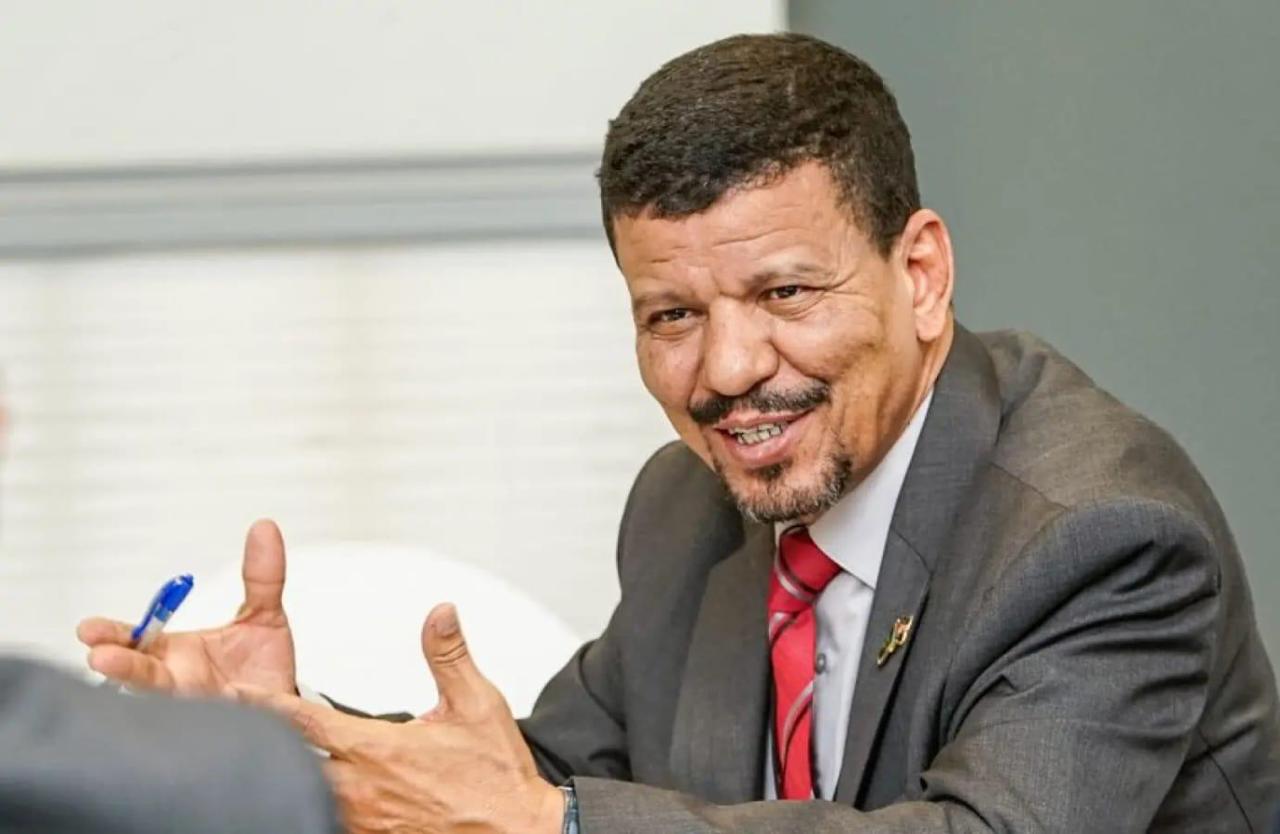
The Special Envoy of the Sahrawi Arab Democratic Republic (SADR) to Nigeria Mohamed Yeslem Beysat has called on the Nigerian government and the international community to intensify diplomatic pressure on Morocco to protect the rights of Sahrawi political prisoners, describing their plight as one of the most pressing humanitarian concerns in the decades-long Western Sahara conflict.
The envoy made the appeal during an interview in Abuja on Wednesday, where he stressed that the Sahrawi Republic was looking to Nigeria’s longstanding commitment to justice, international law and African solidarity to help draw global attention to the condition of prisoners held in Moroccan custody.
“We appeal to Nigeria, peace-loving people and the international community to urge Morocco to respect the fundamental rights of Sahrawi prisoners and ensure their humane treatment,” the envoy said.
He expressed deep concern over what he described as the deteriorating humanitarian situation facing Sahrawi political detainees, citing the case of prominent human rights defender Naama Asfari, who, according to him, has been on a prolonged hunger strike, raising fears for his health and safety.
The envoy insisted that protecting the rights of Sahrawi prisoners should be a priority for the international community, adding that respect for international humanitarian and human rights law remains essential to achieving lasting peace in Western Sahara.
He noted that his visit to Nigeria was undertaken on behalf of President of the Sahrawi Republic, Brahim Ghali, whose written message was delivered to President Bola Ahmed Tinubu through Nigeria’s Minister of State for Foreign Affairs.
According to him, discussions with Nigerian officials centred on strengthening bilateral relations and reviewing recent developments in the Western Sahara peace process.
He commended Nigeria for its consistent support for the Sahrawi people, describing the country as one of Africa’s strongest advocates of decolonisation, justice and African-led conflict resolution.
“We expressed our deep appreciation for Nigeria’s longstanding role in defending justice, international law and promoting African solutions to African problems,” he said.
Speaking on the conflict, the envoy reaffirmed the Sahrawi Republic’s commitment to the United Nations-led peace process, revealing that three rounds of direct negotiations have been held with Morocco under the framework of United Nations Security Council resolutions and with the support of the United States.
The negotiations, he explained, are aimed at reaching a mutually acceptable political solution that guarantees the Sahrawi people’s internationally recognised right to self-determination.
However, he lamented that the conflict has persisted since the resumption of hostilities in 2020, with continued military confrontations complicating diplomatic efforts to restore peace.
On the role of the African Union, the envoy argued that the continental body should play a more active role in resolving the dispute, noting that the original peace initiative was conceived under the former Organisation of African Unity before evolving into a joint United Nations-African Union settlement framework.
He also referenced the African Union’s Johannesburg Declaration on Silencing the Guns, which called for an immediate ceasefire and renewed negotiations toward a referendum on self-determination.
According to the envoy, Morocco has resisted greater African Union involvement by rejecting visits from AU institutions while maintaining that the matter should remain exclusively under the United Nations.
Despite the challenges, he said Nigeria reaffirmed its solidarity with the Sahrawi people during his meetings with government officials and supported the principle of African-led solutions through the African Union.
The envoy further highlighted the Sahrawi Republic’s vast natural resources, including phosphate, iron ore, copper, gold, fisheries and renewable energy potential, expressing hope that they would one day contribute to the prosperity of both the Sahrawi people and the African continent.
He concluded by emphasising that the Sahrawi Republic was not asking for preferential treatment but for the consistent application of international law and the implementation of decisions of international judicial bodies.
“Our people deserve their inalienable rights to freedom, self-determination and dignity. A rules-based international order can only exist if international law is applied consistently,” he said.
-
 Featured7 years ago
Lampard Names New Chelsea Manager
-
 Featured6 years ago
FG To Extends Lockdown In FCT, Lagos Ogun states For 7days
-
 Featured7 years ago
Children Custody: Court Adjourns Mike Ezuruonye, Wife’s Case To April 7
-
 Featured7 years ago
NYSC Dismisses Report Of DG’s Plan To Islamize Benue Orientation Camp
-

 Featured5 years ago
Transfer Saga: How Mikel Obi Refused to compensate me After I Linked Him Worth $4m Deal In Kuwait SC – Okafor
-
Featured7 years ago
Board urges FG to establish one-stop rehabilitation centres in 6 geopolitical zones
-
Sports4 years ago
TINUBU LAMBAST DELE MOMODU
-

 News2 years ago
Zulu to Super Eagles B team, President Tinubu is happy with you