
Basketball
NBBF Elections: Mustapha Abdullahi Offers New Leadership Vision for Nigerian Basketball
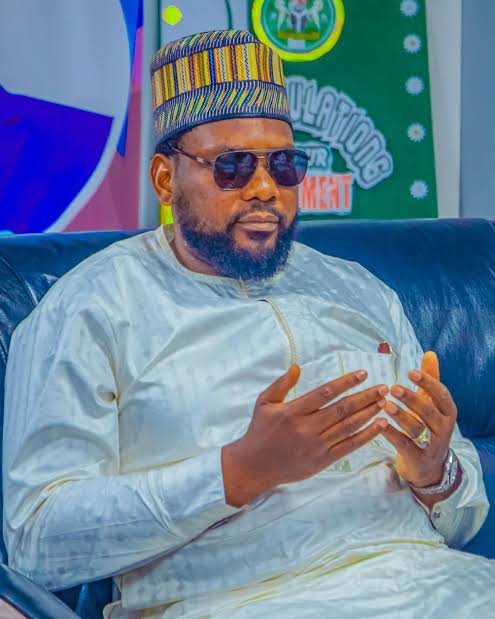
Joel Ajay
As Nigerian basketball prepares for a new leadership cycle, Dr. Mustapha Abdullahi is emerging as one of the voices calling for a fundamental rethink of how the sport is administered, developed and positioned for sustainable growth.
The Director-General and Chief Executive Officer of the Energy Commission of Nigeria is seeking to bring a combination of basketball experience, grassroots involvement and executive management to the leadership of the Nigeria Basketball Federation, NBBF, ahead of the federation’s October 15 elective congress in Abuja.
For Abdullahi, the ambition is rooted in a relationship with basketball that predates his career in public administration.
His involvement with the sport began as a player, including participation with teams in Kano and competitions at different levels, before evolving into support for grassroots development, competitions, facilities and the welfare of players.
That experience has shaped his argument that Nigeria does not lack basketball talent but needs a stronger system capable of identifying, developing and retaining that talent.
Through the DAM Foundation, Abdullahi has supported grassroots basketball initiatives, including the construction of a basketball court and sponsorship of competitions in Kano.
The foundation also organises the annual DAM Foundation Basketball Championship in Okene, Kogi State, while supporting players and young people through welfare interventions, scholarships, medical assistance, business grants and other empowerment initiatives.
The foundation’s activities have reinforced Abdullahi’s belief that basketball development must begin beyond the elite level, with young players provided access to functional facilities, regular competition, mentorship and clear pathways to higher levels of the game.
“If we are serious about the future of Nigerian basketball, we must catch them young, identify their talents and provide the platforms for them to grow,” Abdullahi has said.
His proposed “New Dawn” agenda for the NBBF is built around grassroots development, professional administration, stronger domestic competitions, player welfare, infrastructure, commercialisation and institutional accountability.
At the centre of the proposal is a national development pathway linking schools, academies, clubs, leagues and national teams. Abdullahi has proposed a coordinated national schools basketball programme, regional talent centres and a national talent identification and player-tracking system to ensure that promising players are not lost because of geography, financial circumstances or lack of connections.
He also wants Nigerian domestic basketball to operate with greater consistency and commercial value, with predictable competition calendars, stronger club structures, improved player contracts, better venues, digital statistics and stronger broadcasting and sponsorship platforms.
For national teams, Abdullahi is proposing a shift away from short-term preparation towards permanent development structures for D’Tigers, D’Tigress and Nigeria’s age-grade teams, including improved welfare, medical support, professional technical teams, merit-based selection and succession planning.
Women’s basketball would also occupy a prominent place in the proposed agenda, with Abdullahi pointing to D’Tigress as proof of the level Nigerian basketball can attain when talent is properly supported and developed.
Infrastructure is another major pillar of his proposal. He has called for a national audit of basketball facilities, rehabilitation of abandoned courts and partnerships with state governments and private investors to develop community courts and regional high-performance centres.
Commercialisation also features prominently in the proposed reform programme. Abdullahi believes the NBBF should develop sustainable revenue streams through sponsorship, broadcasting and digital rights, merchandise, event management, corporate partnerships, diaspora engagement and international development funding.
As the October 15 election approaches, his candidacy has attracted support from sections of the basketball community, including former Nigeria international and sports executive Ugo Udezue, who has argued that Nigeria’s basketball challenge is less about a shortage of talent and more about building a viable business and administrative structure around that talent.
With the NBBF set to elect a new board for the 2026-2030 tenure, Abdullahi’s proposition is ultimately built around a simple premise: that Nigeria’s considerable basketball talent must be matched by stronger institutions, sustainable investment and a clearly defined pathway from the grassroots to the global stage.



Basketball
Why Mustapha Abdullahi Is Built for the Job: A New Leadership Opportunity for Nigerian Basketball
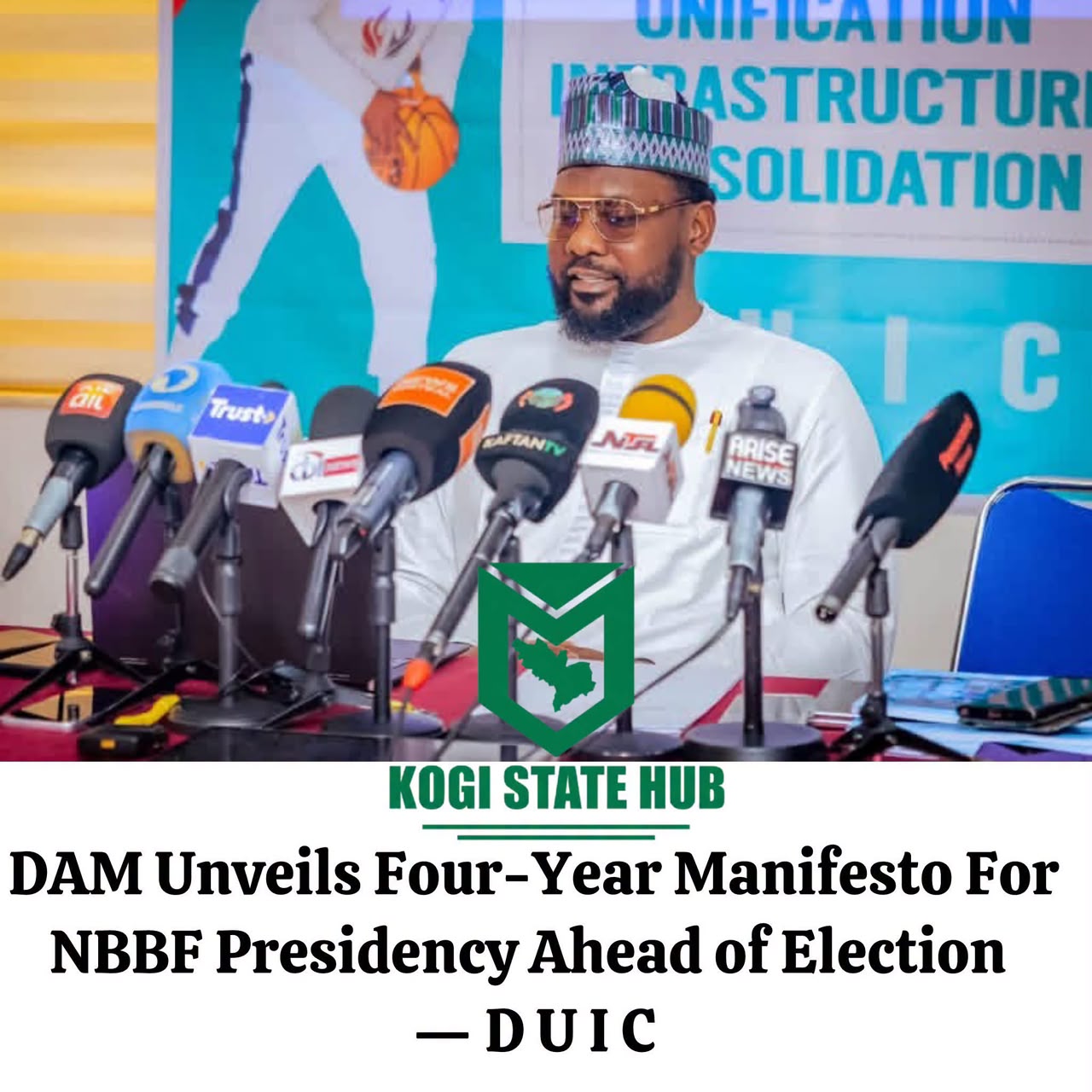
Joy Samania
As Nigerian basketball approaches a defining leadership transition, the candidature of Dr. Abdullahi Mustapha is increasingly attracting attention for one simple reason: he is offering the game something beyond an election promise.
He is Offering a Track Record
Ahead of the October 15, 2026 Nigeria Basketball Federation, NBBF, elective congress in Abuja, Mustapha has emerged with a proposition anchored on experience inside the game, investment at the grassroots and a professional background built around managing complex institutions.
His message is straightforward: Nigerian basketball does not need another administration that simply manages competitions. It needs an institution that can develop talent, protect players, attract investment, strengthen domestic leagues and build a sustainable pathway from the community court to the national team and, ultimately, the global stage.
That is the thinking behind his “New Dawn” agenda.
And it is also why his candidacy is beginning to resonate with stakeholders looking beyond personalities to the kind of leadership Nigerian basketball needs for its next phase.
From the Basketball Court to the Boardroom
What separates Mustapha from a conventional sports administrator is that his relationship with basketball did not begin with an appointment, a government position or an election.
It began on the court. Reports on his basketball background indicate that his involvement spans more than two decades, including participation with Kano State teams, NUGA competitions, Division One and Premier League basketball, the Nigeria U-18 national team and Trafford Basketball Club in Manchester, United Kingdom.
That playing background gives him an understanding of the sport from the perspective of the athlete, while his subsequent work in grassroots development has given him a close view of the challenges confronting young players long before they reach the national-team level.
For Mustapha, this distinction matters. He has consistently argued that Nigeria’s basketball problem is not a shortage of talent. The problem is the absence of a sufficiently connected system capable of identifying that talent early, developing it consistently and creating opportunities for it to thrive.
That philosophy is already reflected in his work through the Dr. Abdullahi Mustapha Foundation, better known as the DAM Foundation.
He is Already Doing What He Wants the NBBF to do
The strongest argument for Mustapha’s candidacy may be that his campaign promises are not entirely theoretical.
Through the DAM Foundation, he has supported grassroots basketball infrastructure and competitions, including the construction of a basketball court in Kano and the sponsorship of tournaments.
The foundation also runs the annual DAM Foundation Basketball Championship in Okene, Kogi State, providing young players with competitive opportunities and visibility.
Stakeholders have further cited the foundation’s basketball academy, reported to involve more than 500 children, alongside support for player welfare, scholarships, medical assistance, business grants and employment opportunities.
In April 2026, the foundation also backed a North-West regional basketball tournament, reinforcing its focus on using competition and community sport as vehicles for youth development.
This is important because the central pillar of Mustapha’s NBBF programme is grassroots development.
He wants a national schools basketball programme, regional talent centres and a national player-identification and tracking system that can connect schools and communities to academies, clubs, domestic leagues and national teams.
In other words, he is not proposing to start caring about grassroots basketball after winning the election. He has already been putting resources into it.
A Technocrat Who Understands Institutions
Mustapha’s professional career provides another dimension to his candidacy. President Bola Ahmed Tinubu appointed him Director-General and Chief Executive Officer of the Energy Commission of Nigeria in October 2023. The Presidency cited his more than a decade of experience in the Nigerian petroleum regulatory system and his background in energy and space technology.
The position places him at the helm of a federal institution responsible for national energy policy, planning and research. The Energy Commission has subsequently highlighted institutional growth, renewable-energy initiatives, international collaboration and sustainable power development among areas of progress under his leadership.
That experience is potentially significant for the NBBF. Running a national sports federation is not simply about understanding the sport. It requires administration, budgeting, stakeholder management, strategic planning, partnerships, accountability and the ability to turn policy into programmes.
Mustapha’s career has been built around precisely those disciplines. He is a Chartered Engineer and a member of the Institution of Mechanical Engineers. His academic career includes a PhD in Mechanical Engineering from the University of Manchester, where he also worked in the School of Engineering as a researcher and teaching assistant. His professional experience has crossed petroleum regulation, space technology, research, engineering and government policy.
That combination gives his basketball proposition an unusual dimension: sporting understanding backed by institutional and technical management experience.
His Blueprint Goes Beyond Winning Games
Mustapha’s “New Dawn” agenda is deliberately broader than national-team performance. His proposed reforms cover seven interconnected areas: grassroots development, domestic competitions, technical capacity, national teams, infrastructure, commercialisation and unity.
On domestic basketball, he is calling for predictable competition calendars, stronger club structures, proper licensing, improved player contracts and welfare, better venues, digital statistics and stronger broadcasting and commercial platforms. That addresses one of the fundamental problems in any sporting ecosystem: talent cannot develop without meaningful competition.
A young player needs a court. Then a coach. Then regular games. Then a properly organised league. Then exposure. Then a pathway to the national team. Then an ecosystem capable of supporting a career.
Mustapha’s proposed structure is designed around that chain.
From Emergency National Teams to Permanent Development
Perhaps the most consequential part of his proposal concerns Nigeria’s national teams.
Mustapha has argued that D’Tigers, D’Tigress and Nigeria’s age-grade teams should no longer depend on emergency preparations whenever major competitions approach.
His proposal calls for earlier preparation, merit-based selection, professional technical teams, medical support, improved welfare and long-term succession planning. That approach would represent a significant shift from viewing national teams primarily as tournament projects to treating them as the final products of a continuous national development system.
And he has placed women’s basketball firmly within that vision. The remarkable achievements of D’Tigress, he argues, demonstrate what Nigerian basketball can accomplish when talent is properly supported.
His proposed administration would therefore make women’s basketball a major component of its development agenda rather than an afterthought.
He Understands That Basketball Must Become an Economy
Another defining feature of Mustapha’s campaign is his emphasis on commercialisation. He wants the NBBF to move beyond dependence on periodic government support and build sustainable revenue through sponsorship, broadcasting and digital rights, merchandise, event management, corporate partnerships, diaspora engagement and international development funding.
This is a critical proposition for a sport with Nigeria’s enormous basketball population. The objective is not simply to find sponsors for the next tournament.
It is to make Nigerian basketball valuable enough that sponsors, broadcasters, investors, clubs and commercial partners have compelling reasons to remain involved.
That means better competitions. Better data. Better storytelling. Better facilities. Better player visibility. Better commercial packaging. And, ultimately, a federation capable of demonstrating value to its partners.
His campaign is built around a player who understands the court, a grassroots investor who understands development, an engineer who understands systems and a public-sector executive who has experience managing institutions.
That combination is the foundation of his case. He is not presenting himself as someone coming to discover Nigerian basketball after winning an election.
He is presenting himself as someone who has already invested in the game, understands its people and has spent his professional career building systems.
-
 Featured7 years ago
Lampard Names New Chelsea Manager
-
 Featured7 years ago
FG To Extends Lockdown In FCT, Lagos Ogun states For 7days
-
 Featured7 years ago
Children Custody: Court Adjourns Mike Ezuruonye, Wife’s Case To April 7
-
 Featured7 years ago
NYSC Dismisses Report Of DG’s Plan To Islamize Benue Orientation Camp
-

 Featured5 years ago
Transfer Saga: How Mikel Obi Refused to compensate me After I Linked Him Worth $4m Deal In Kuwait SC – Okafor
-
Featured7 years ago
Board urges FG to establish one-stop rehabilitation centres in 6 geopolitical zones
-
Sports4 years ago
TINUBU LAMBAST DELE MOMODU
-

 News2 years ago
Zulu to Super Eagles B team, President Tinubu is happy with you