
News
RMAFC Reviews Anambra’s ₦70bn Stabilisation Fund Request for Security, Infrastructure
Joel Ajayi
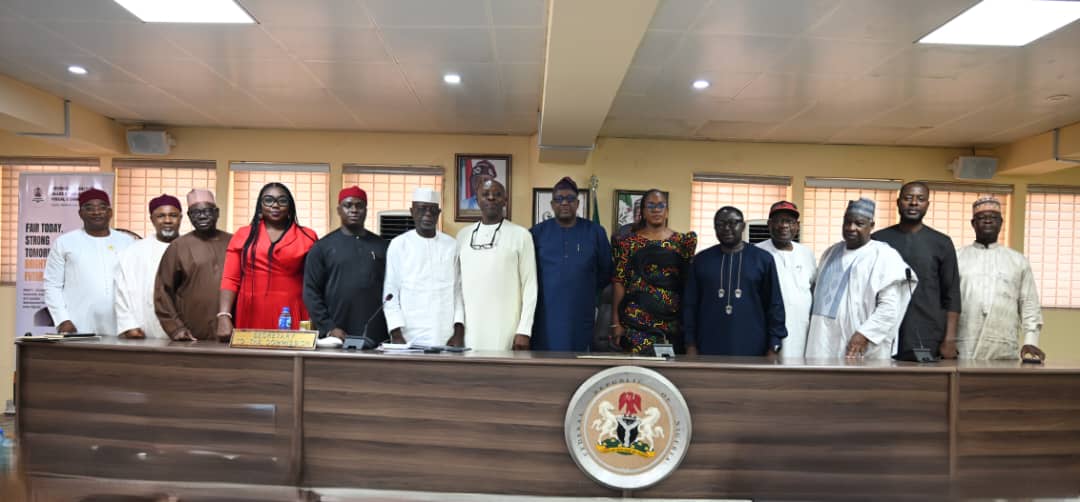
The Indices and Disbursement Committee of the Revenue Mobilisation, Allocation and Fiscal Commission (RMAFC) has received the Anambra State’s presentation on the request for ₦70 billion from the Stabilization Fund to finance its priority projects and other proposed investments across critical sectors of the state’s economy.
Speaking during the technical session held at the Commission’s headquarters in Abuja on Tuesday 20th October, 2026, the Chairman of the committee and Honourable Commissioner representing Lagos State, Prof. Olusegun Adekunle Wright, acknowledged the state government’s initiative in presenting its financial challenges to the committee for consideration. He explained that the Stabilization Fund is an important fiscal intervention mechanism intended to provide assistance in deserving circumstances, subject to established guidelines, availability of resources and the appropriate approval processes.
Prof. Wright noted that the Committee considered it necessary to maintain the established procedure requiring requesting States to first make formal presentations before the Commission prior to the on-the-spot assessment of the targeted projects. He stressed that the committee would examine the credibility of the financial records, viability and estimated costs of proposed projects, implementation requirements and the expected socio-economic benefits to the people of the state. The Committee Chairman pointed out that the technical review did not constitute automatic approval, as the request remained subject to further scrutiny, verification and possible recommendations to the Commission’s plenary.
In her presentation, the Secretary to the Anambra State Government, Chiamaka Nnake, outlined the state’s economic profile, revenue performance, expenditure pressures and development priorities. She disclosed that Anambra has 21 local government areas, 179 communities and an estimated population of 8.9 million people, with a gross domestic product (GDP) of approximately $12.7 billion and a projected 2026 budget of ₦766 billion.
She also reported that the state had increased its internally generated revenue (IGR) from about ₦2.2 billion to approximately ₦7.2 billion. Nnake explained that interconnected commercial and industrial centres, such as Awka, Onitsha, and Nnewi, along with petroleum-producing areas, drive Anambra’s economy.
However, she identified insecurity, erosion, flooding, inflation and the rising cost of public services as major fiscal pressures. She added that sit-at-home orders and restricted movement had disrupted commercial activities, affected government revenue and weakened investor confidence.
On security, the SSG highlighted government interventions, including the enactment of a Homeland Security Law, the establishment of a state security outfit and collaboration through a joint task force.
She said additional support would strengthen security operations through operational vehicles, surveillance and communication equipment, personnel training and improved coordination, thereby helping to protect lives and property, restore investor confidence and stimulate economic activities.
Speaking on environmental challenges, Nnake reported that Anambra had more than 1,000 erosion sites, with 146 communities affected at varying levels. She estimated that approximately ₦170 billion would be required to address identified critical sites.
The SSG highlighted ongoing erosion-control projects to include, flood management, road rehabilitation, land reclamation, waterway clearance, tree planting and restrictions on sand mining near vulnerable areas, while appealing for further resources to protect communities and critical infrastructure.
On healthcare and education, the SSG highlighted the state’s free antenatal care and delivery programme, which she said had supported more than 206,000 deliveries, including 642 Caesarean sections, at no cost to beneficiaries.
She also reported the recruitment of 8,415 teachers and the introduction of free education from nursery to Senior Secondary School Three.
She noted that these initiatives had increased demand for medical personnel, equipment, medicines, classrooms, learning materials and other public services, making sustained investment necessary to maintain quality and expand access.
Nnake identified agriculture as a major opportunity for economic diversification, disclosing that the state had distributed more than 2.3 million coconut and oil-palm seedlings.
She called for investments in processing, storage, irrigation, cold-chain facilities and market access to improve productivity, reduce post-harvest losses and create jobs.
She also identified mineral resources, including kaolin, bentonite, lignite, silica sand, gypsum and laterite, as well as petroleum-related opportunities, noting the need for geological surveys, processing facilities and supporting infrastructure to attract investors.
Tourism was also highlighted as a potential source of employment, investment and revenue growth. Nnake cited Agulu Lake and other natural and heritage attractions, explaining that improved access roads, visitor facilities and supporting infrastructure would help position the state as a more attractive destination.
In concluding her presentation, the SSG reiterated the state’s request for ₦70 billion from the Stabilization Fund to support priority interventions in security, environmental management, infrastructure, healthcare, education, agriculture, solid minerals and tourism.
She said the proposed assistance would complement existing government investments, sustain essential public services, protect livelihoods, improve investor confidence and promote a more diversified and resilient economy.
In his closing remarks, the Honourable Commissioner representing Anambra State, Dr. Enefe Ekene, thanked the committee Chairman for presiding over the session and commended fellow commissioners for their patience, critical observations and contributions.
He also appreciated the committee secretariat for its guidance and support, noting that the observations made would enable the Anambra State delegation to refine and strengthen its presentation ahead of the proposed visit to the state.
He expressed optimism that the engagement would yield fruitful results. The committee reiterated that its consideration would be guided by supporting financial documentation, project feasibility, costs, implementation requirements and expected benefits, stressing that any recommendation would remain subject to further verification and compliance with the relevant procedures.



News
DNKI President Champions Humanitarian Service, Sustainable Community Development
Cyril Samania
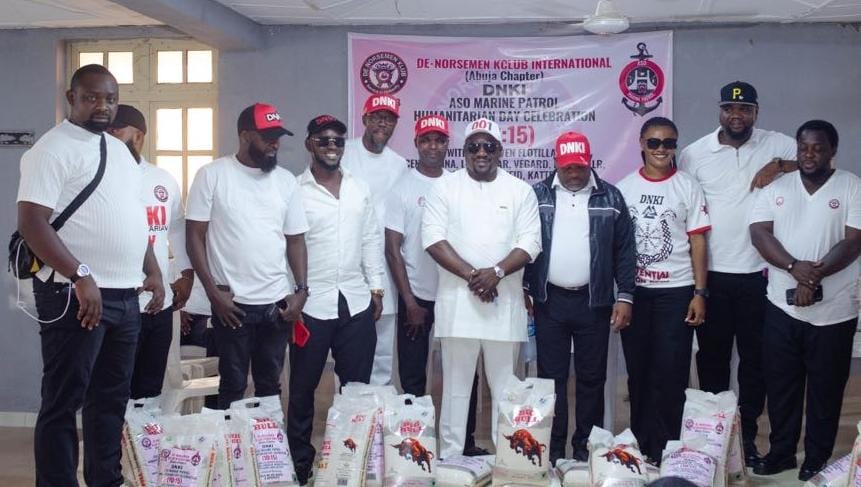
The President of De Norsemen Kclub International (DNKI), Chief Oliver Patrick Ityohegh, has reaffirmed the organisation’s commitment to humanitarian service, stressing the importance of supporting vulnerable people and improving community welfare beyond the annual celebration of Humanitarian Day.
Ityohegh stated this during the organisation’s Cauldron Night and Award Presentation held to commemorate its 2026 Humanitarian Day celebration, theme: “Humanity First: Advancing Hope, Dignity and Community Well-being.” organised by the DNKI Abuja Chapter.
He emphasised that humanitarian service should be a continuous responsibility driven by compassion, solidarity and a commitment to making a meaningful difference in society.
According to him, DNKI’s humanitarian activities reflect its dedication to giving back to society and supporting people in need, while encouraging members to sustain initiatives that promote human dignity and community well-being.
He added that the organisation would continue to strengthen its humanitarian engagements through practical interventions aimed at improving the lives of vulnerable people and promoting community development.
Speaking at the event, the representative of the Abuja Chapter Chairman and Chairman of its Advisory Council, Prince Efiong Okpe, said the organisation’s humanitarian activities extended beyond the annual celebration of Humanitarian Day on October 15.
Okpe explained that DNKI undertook several initiatives throughout the year, including blood donation exercises, visits to hospitals and correctional centres, as well as support for orphanages and other vulnerable groups.
According to him, the organisation also collaborated with humanitarian bodies in the Federal Capital Territory (FCT) to identify areas of need and provide assistance within its available resources.
He described Humanitarian Day as an opportunity for members to renew their commitment to service and demonstrate solidarity with people facing difficult circumstances.
Earlier, the Chairman of the Planning Committee and Coordinator of the DNKI Gwagwalada Zone, Mr Etudaiye Hamzat, disclosed that the chapter had provided financial assistance to some members to help pay their children’s school fees, alongside distributing bags of rice and other relief items to members experiencing hardship.
Hamzat explained that the interventions followed concerns over the difficulties some members faced in meeting their family responsibilities, particularly the rising cost of their children’s education.
He maintained that supporting members in need was consistent with the organisation’s humanitarian principles, adding that DNKI remained committed to extending assistance to non-members and vulnerable communities as part of its commitment to leading by example.
Looking ahead, Hamzat said the Abuja Chapter planned to expand its humanitarian outreach to remote communities within the FCT, with particular attention to orphanages, schools and widows facing difficulties in meeting their family responsibilities.
He also recalled previous interventions for internally displaced persons (IDPs), which included the distribution of food, clothing and educational materials, noting that the chapter intended to scale up such initiatives in the coming year.
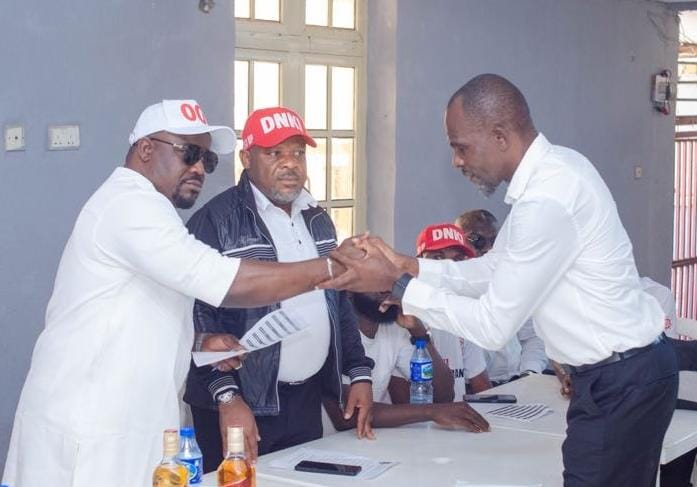
The highlight of the event was the presentation of awards to outstanding members and distinguished non-members in recognition of their contributions to humanitarian service.
-
 Featured7 years ago
Lampard Names New Chelsea Manager
-
 Featured7 years ago
FG To Extends Lockdown In FCT, Lagos Ogun states For 7days
-
 Featured7 years ago
Children Custody: Court Adjourns Mike Ezuruonye, Wife’s Case To April 7
-
 Featured7 years ago
NYSC Dismisses Report Of DG’s Plan To Islamize Benue Orientation Camp
-

 Featured5 years ago
Transfer Saga: How Mikel Obi Refused to compensate me After I Linked Him Worth $4m Deal In Kuwait SC – Okafor
-
Featured7 years ago
Board urges FG to establish one-stop rehabilitation centres in 6 geopolitical zones
-
Sports4 years ago
TINUBU LAMBAST DELE MOMODU
-

 News2 years ago
Zulu to Super Eagles B team, President Tinubu is happy with you













