
News
NTAC DG Reaffirms Tinubu’s Anti-Corruption Drive, Warns Staff Against Abuse of Office
By Joel Ajayi
The Director-General of the Nigerian Technical Aid Corps (NTAC), Rt. Hon. Yusuf Buba Yakub, has reaffirmed his commitment to the fight against corruption in the Nigerian public service, describing the menace as a monster that has devoured several laudable government initiatives over the years, inflicting hardship on citizens and eroding public confidence in governance.
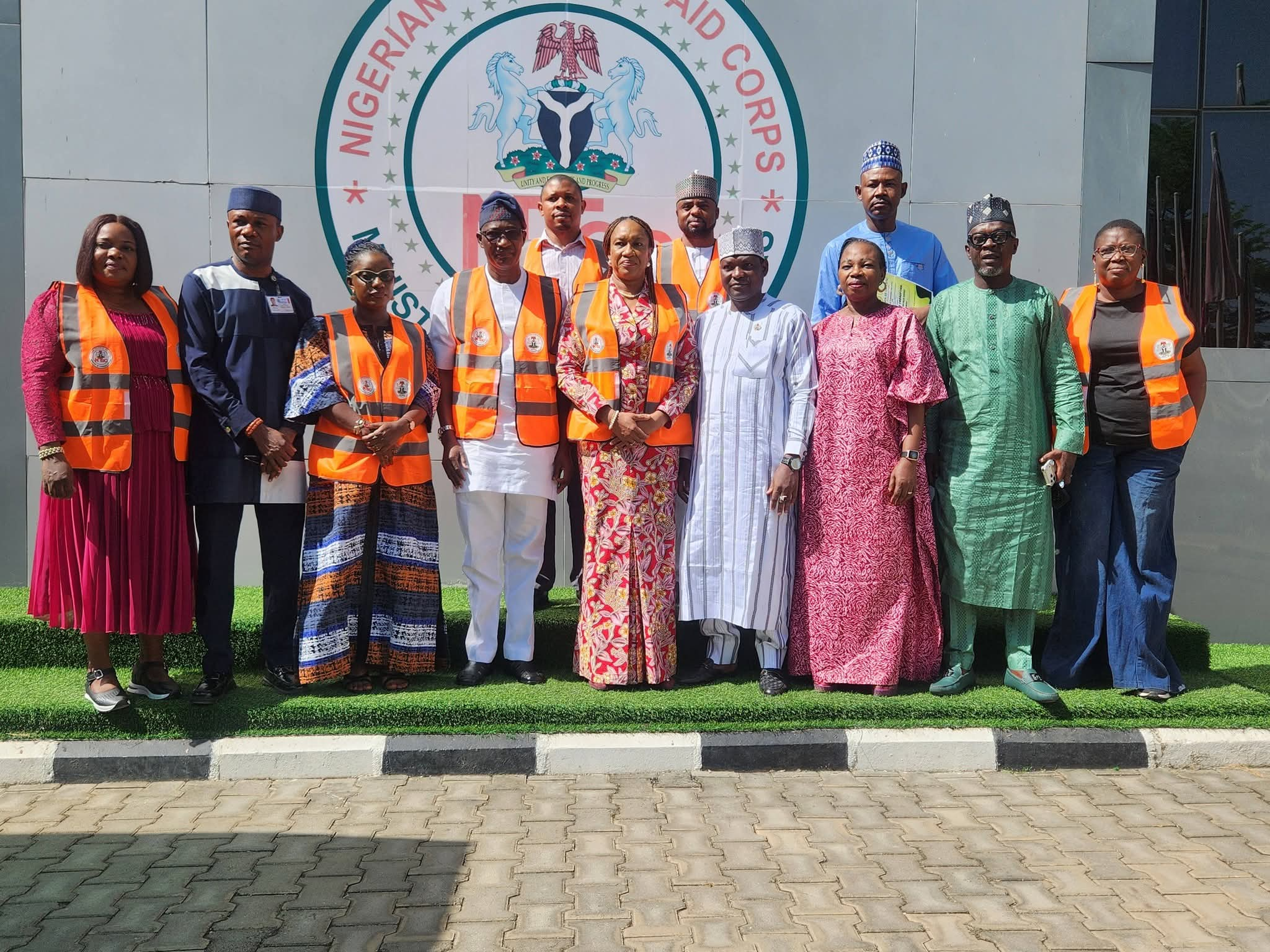
The DG stated this on Friday at a one-day anti-corruption and transparency sensitisation training organised for staff of the Agency in Abuja, with the theme, “The Ills of Corruption: Its Impacts on Public Service.”
He described the fight against corruption as one of the critical pillars of President Bola Ahmed Tinubu’s Renewed Hope Agenda and urged NTAC staff to remain vigilant against all forms of misconduct, abuse of office and practices capable of undermining the policies and objectives of the present administration.
Represented at the event by the Agency’s Deputy Director (Administration) and Chairperson of its Anti-Corruption and Transparency Unit (ACTU), Ambassador Gwendy O. Omijeh, the DG commended officials of the Independent Corrupt Practices and Other Related Offences Commission (ICPC) for their commitment to promoting institutional integrity and serving as agents of positive change through public enlightenment and sensitisation.
He noted that corruption has continued to undermine national development and deprive citizens of the benefits of effective governance, stressing the need for sustained collective action to reverse the trend.
The ICPC officials delivered two major papers at the training session. The first, titled “Corruption: A Threat to National Development and Effective Public Service Delivery,” was presented by Mr. Richard Bello, a Deputy Director at the Commission. He called for renewed commitment by public servants to the principles and practices of transparency, accountability and integrity in the discharge of their official responsibilities.
The second paper, “From Values to Action: Keeping the Core Clean in Promoting Effective Service Delivery,” was delivered by Mrs. Adebimpe Abodurin, a Chief Superintendent (Legal) of the Commission. She highlighted the importance of imbibing strong ethical values as a foundation for responsible conduct in public service and the building of a nation anchored on honesty and accountability.
Earlier, in his goodwill message, the Director of the ICPC’s Systems Study and Review Department, Mr. Olusegun Adigun, challenged participants to translate the lessons of the training into practical conduct in their respective offices.
He expressed concern over the willingness of some public officials to divert funds earmarked for development projects and other government programmes, questioning the rationale behind the accumulation of illicit wealth, particularly by individuals who have already spent a significant part of their lives in public service.
The training session, which featured an interactive segment, provided an opportunity for NTAC staff to engage ICPC officials on various dimensions of anti-corruption measures, institutional transparency, ethical conduct and accountability in the public service.



Politics
56 Days to Go: Ochei Calls for Review of Ndokwa’s Hydrocarbon Allocation, Greater Host Community Benefits
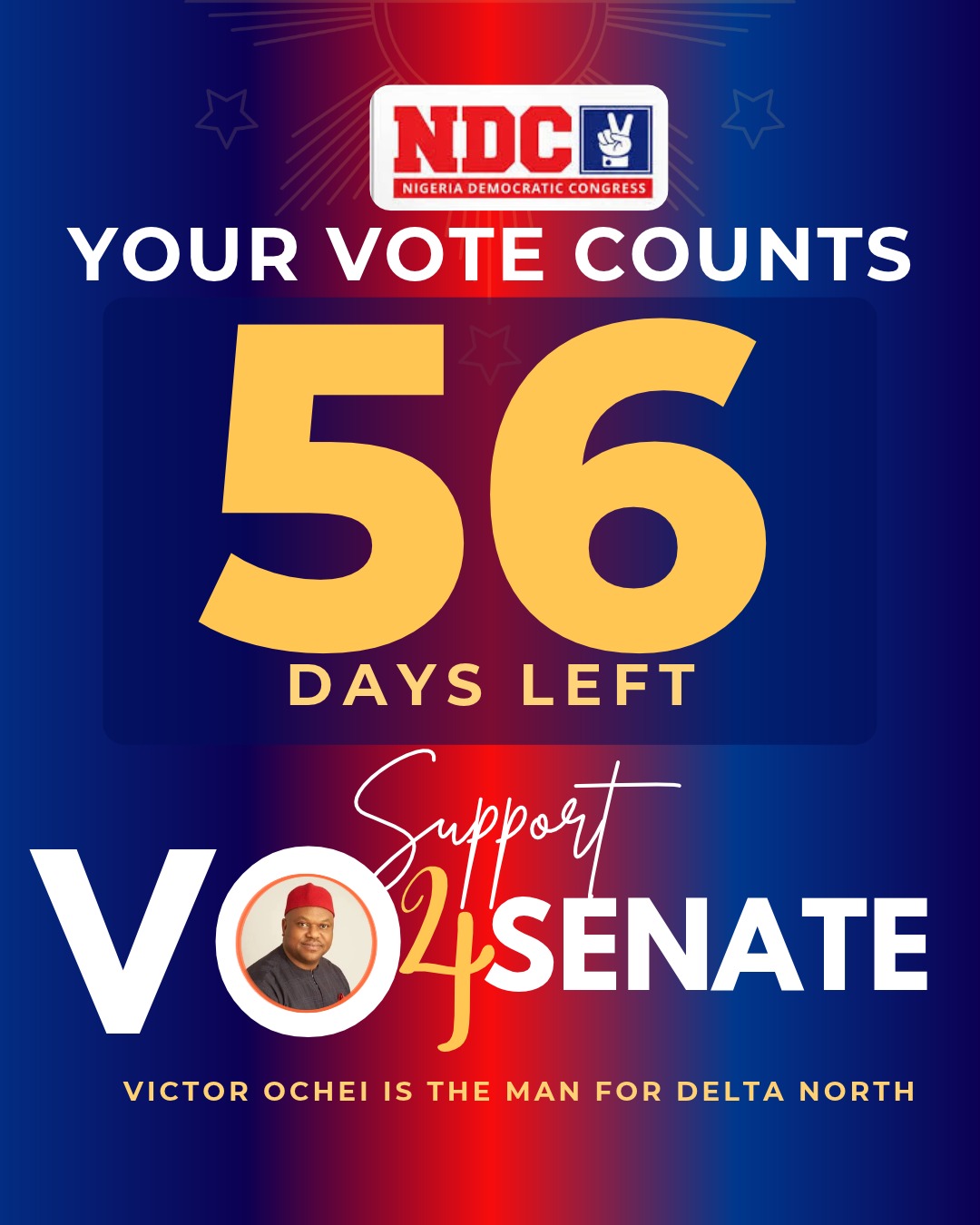
DELTA, November 21, 2026 – NDC Senatorial Candidate for Delta North, Rt. Hon. (Engr.) Victor Onyekachi Ochei, has called for a review of the allocation framework governing hydrocarbon-producing communities in Ndokwa Nation, arguing that the area’s growing contribution to oil and gas production should reflect in greater benefits for its people.
Ochei raised concerns over what he described as the continued allocation of nine per cent of hydrocarbon production to Ndokwa Nation, a figure he said was established approximately 21 years ago and ought to have been reviewed periodically.
He argued that the production landscape has changed significantly since the allocation was established, with several oil companies now operating in the area, yet the percentage attributed to the community has remained unchanged.
“Granted that the Petroleum Industry Act has been passed, and that is helping communities that produce this, however, we are not dealing with them. Today, the percentage of hydrocarbon produced by the Ndokwa Nation, for instance, stands at nine per cent, which was given to me 21 years ago, and we ought to have reviewed this like every five years,” Ochei said.
He noted that when the arrangement was initially established, AGIP was the only producing company in the area, whereas the number of operators has since increased.
“At the time it was done, it was only AGIP that was producing there. Today, you have over eight oil companies producing there, and the quantum still remains nine per cent. These are the kinds of issues you need to address,” he added.
The NDC candidate said the concerns extend beyond Ndokwa Nation to the wider hydrocarbon-producing belt of Delta North, including communities around the Ika axis and Agbor, where oil and gas resources are also present.
According to him, the region’s resources must be harnessed in a manner that prioritises the welfare and development of the people in the communities where extraction takes place.
“I have spoken about the Ndokwa axis. The whole of that belt is a hydrocarbon belt, even up to Ika axis, Agbor and all of that. We have oil flowing, hydrocarbons flowing, and we need all those resources to be harnessed,” he stated.
Ochei emphasised that resource development should not be limited to extraction and revenue generation but should also address the living conditions of host communities.
“But in putting all these together, what is important is that in harnessing them, we don’t just throw them out. We need to harness them to the benefit first of the people who live there,” he said.
The Petroleum Industry Act 2021 introduced a framework for host-community development in petroleum-producing areas, including the establishment of Host Communities Development Trusts funded through contributions by settlors.
Ochei’s remarks raise questions about the adequacy of existing arrangements, the distribution of benefits and the need for periodic reviews to reflect changing production levels and operating conditions in host communities.
His legislative background includes three consecutive terms representing Aniocha North Constituency in the Delta State House of Assembly between 2003 and 2015, during which he served as Speaker from 2011 to 2014.
As the NDC candidate for Delta North, Ochei has identified legislative engagement as a platform for bringing resource allocation, host-community development and the concerns of oil-producing communities before relevant federal institutions.
The issue remains central to discussions about how oil and gas wealth can translate into infrastructure, environmental protection, economic opportunities and improved living conditions for communities that contribute to Nigeria’s hydrocarbon production.
VO 4 SENATE: EXPERIENCE. LEADERSHIP. SERVICE.
56 DAYS TO GO.
-
 Featured7 years ago
Lampard Names New Chelsea Manager
-
 Featured7 years ago
FG To Extends Lockdown In FCT, Lagos Ogun states For 7days
-
 Featured7 years ago
Children Custody: Court Adjourns Mike Ezuruonye, Wife’s Case To April 7
-
 Featured7 years ago
NYSC Dismisses Report Of DG’s Plan To Islamize Benue Orientation Camp
-

 Featured5 years ago
Transfer Saga: How Mikel Obi Refused to compensate me After I Linked Him Worth $4m Deal In Kuwait SC – Okafor
-
Featured7 years ago
Board urges FG to establish one-stop rehabilitation centres in 6 geopolitical zones
-

 News2 years ago
Zulu to Super Eagles B team, President Tinubu is happy with you
-
Sports4 years ago
TINUBU LAMBAST DELE MOMODU













