
Featured
ICC Highlights Benefits of 360 Review of Tour To Nigeria
In recognition of its modest contribution of the present Nigeria Cricket Federation NCF under the leadership of board Prof. Yahaya Adam Ukwenya, the International Cricket Council 360 Reviews was in the country between 16th -23rd June 2019 for the holistic assessment and screening of Cricket activities in Nigeria.

In the one week tour ICC delegations meet with Federation Board Members, Officials from the Federal Ministry of Youth and Sports Development, Staff and administrators, sponsors and potential sponsors, members of the Press/Media, Stakeholders, Players and non-players of the sports, parents of players and whomever deemed necessary to get the required information needed.
The International Cricket Council 360 Reviews went into full swing yesterday 17th June 2019 in Abuja with activities starting at the Federal Ministry of Youth and Sports Development.

ICC team led by Independent Assessor Mr. Zul Ngofounja visited the Permanent Secretary of the Ministry Mr. Alusade Adesola and also in attendance were senior directors from the ministry.
COMPLETE LIST OF ICC DELEGATES
- Zul Ngofonja (Independent Assessor and Consultant with the ICC)
- Andy Hobbs (Senior Manager, Development Services, ICC)
- Patricia Kambarami (Regional Development Manager, ICC Africa)
- Kuben Pillay (Data and Finance Officer, ICC Africa)
- Justine Lyngialingi (Development Officer, ICC Africa)
The Permanent Secretary while receiving the delegates, in his welcome address, thanked the ICC officials for visiting Nigeria yet again with the ICC trophy still fresh in his mind and how much in recent times the Ministry and the Nigeria Cricket Federation have enjoyed a cordial relationship with ICC which had led to a significant improvement in all areas of the sports in Nigeria in the last 2 years. He also highlighted areas where Nigeria as a country and the ICC can continue to strengthen their working relationship to ensure continuous growth, development, and sustenance of the game.

President of the Nigeria Cricket Federation, Prof. Yahaya Adam Ukwenya in his welcome address thanked the officials of the ICC for the opportunity to have the 360 Review and extended his gratitude to the Ministry for receiving the delegates from ICC on behalf of the Government and for their support for the game of Cricket in Nigeria. He briefly explained the purpose of the visit by ICC and formally introduced the delegated to the Ministry officials.

Responding on Behalf of the team from ICC, the ‘Senior Manager, Development Services ICC’ Mr. Andy Hobbs, thanked the Ministry for receiving them and explained in detail the purpose of the 360 reviews. Mr. Andy said that the entire exercise was to have a clearer picture of the sport in Nigeria in regards to Government involvement and support, Administration, Grassroots development, Media relations, Facilities and lots more, to enable the ICC and the Federation champion out the best way to grow the game in the country.
The next stop by the ICC team was the 3 Cricket Ovals located at the package B’ wing of the National Stadium which has one with a laterite surface, a completed turf wicket, and a second turf wicket still under construction. The team also visited the NCF office and was introduced to the staff of the Federation.
The afternoon session resumed with a press conference at the Media Center, of the National Stadium. The members of the high table which included guests from the ICC and the board of the Federation were introduced to members of the Media. The president of the Federation spoke on the Federation’s activities and achievements in the last 2 years, while Mr. Andy Hobbs explained the purpose of the 360 Review. The members of the press responded with questions which were duly answered in areas where necessary.
Mr Zul Ngofonja took over the 360 Review Sessions where he conducted the interactive session with the press asking questions in relation to how the game can be spread across the country using various medium available to the press, challenges faced and more.
The final session on day one ended with the ICC team meeting with the secretariat and technical staff of the Federation.
Day 2: ICC 360 Review (Abuja)
After a successful outing on day 1, The ICC resumed their tour on day 2 at the Velodrome, Package A’ Moshood Abiola Stadium, where the N.C.F had organized a grassroots program for over 250 school students from the FCT in recognition and participation of the ICC world CRIIO program which is centered around changing the narrative that cricket is inaccessible and expensive, rather reflecting the truth that cricket can be played by anyone, anytime and anywhere.
The ICC delegates expressed a lot of excitement at the turn out of the kids and also used the opportunity to participate and play.
Next in the line of activities was the meeting between the ICC team and players in the Abuja, male and female players from Kaduna State, captains and club representatives in Abuja, Sponsors and Potential Sponsors, Coaches and development personnel from Kaduna State, the Secretary-General of the Federation, Treasurer and assistant treasurers of the Federation and finally volunteers.
Day 3: ICC 360 Review (Lagos State)
The ICC team arrived Lagos on Wednesday 19th and headed straight to Tafawa Balewa Square Cricket Oval, the traditional home of Cricket in Nigeria where they met with the Lagos State Cricket association. Amongst the delegations was the Chairman of the Association Mr. Kofi Sagoe, Chairman of the Club Cricket Committee Mr. Charles Omoera. The next session featured sponsors and potential sponsors notably the chairman, Howzat Foundation for Cricket Chief Osatogiwa Osagie.
Next in Line were senior national team players residing in Lagos led by the captain Mr. Ademola Onikoyi.
Other players were Joshua Ayannaike, Leke Oyede, and Vice-captain of the U-19 team, Mohammed Taiwo. Players also domicile in the state as well had their chance to also had the chance of interfacing with the delegates from ICC. The ground staff of the Federation and volunteers was not left out.
Considering the fact that Lagos State is a powerhouse of the sport in Nigeria, there was a need to also have an interactive session with the media to channel out new ways for which the game can be taken to the local nooks and cranny in the less cricket oriented states.
Day 4: ICC 360 Review (Lagos State)
The ICC 360 review continued in Lagos on day 4 at the Tafawa Balewa Square Cricket Oval.
Activities began on the day with the ICC delegates meeting with state and national coaches. Coaches in attendance include National team male Mr. Uthe Clive Ogbimi, and female Mr. Musa Cyril, coaches from Osun state Mr. Isaac Obembe and Rivers State Mr. Cyril Djebah.
Next on the queue of activities were presentations by various zones. Edo State came with an entourage and made an elaborate presentation of Cricket activities in the last 3 years of development and administration.
Leading the delegates for Edo State was the Vice Chairman of the State Association, Barr. Abraham Oviawe
FULL LIST OF DELEGATE.
- Abraham Oviawe Esq., Vice Chairman, ESCA.
- Mr. Charity Igbinosa, Deputy Director (Technical), Edo State Sports Commission.
- Mr. Richard Igbinadolor, Principal, Edo Boys High School.
- Mr. Cyril Musa, Coach, Edo State Senior Female Team/ Assistant Coach, National Female Team.
- Amb. Theophilus Adolphus Ibodeme, Coach, Edo Boys High School/ Edo State Under 15 & 17.
- Miss Samantha Agazuma, Captain, State Senior Female Team.
- Master Peter Aho, Captain, State Senior Team.
- Miss Muni Abu, Data Officer, Edo Cricket League.
- Master David Abiebhode, Acting Captain, Edo State under 15.
- Master Prosper Useni, Captain, Edo Boys High School.
Also present during the presentation were Mr. Kelvin Agbonmwanegbe, Board Member, Edo State Cricket Association, Musa Ehizoje Bodie, P.R.O. Nigeria Cricket Federation/Board Member, Edo State Cricket Association, respectively.
Mr Uthe Clive Ogbimi, Former Regional Development Officer for South-South also gave a brief of cricket activities in other states of the South- South zone.
Next on the list of presentations was the South-East represented by the Regional Development Officer Mr. Charles Obasi, Mr. Tony Ajealu, Chairman, Imo State Cricket Association and the member representing South-East on the board of the N.C.F Mr. Chika Okoro.
Finally on the activities for the day was the session with some female cricketers in the country which included national and state team players. National team players include vice-captain, Samantha Agazuma and Hannah Ayoka, Timi Seaman and other players from Lagos State.
Day 5 and 6: (ICC 360 Review Lagos)
Day 5 resumed with the CRIIO concept participation in TBS, eleven schools with over 200 kids turned out for the exercise where the ICC team took part to have interactions with the kids. The ICC team then retired to have a retreat where all information that has been gathered over the course of their visit to Nigeria was collated, analyzed and a progress document produced for the Board of the Federation.
N.C.F BOARD MEETING (21st June 2019)
While the CRIIO program and the ICC retreat were ongoing, the Nigeria Cricket Federation was involved in a board meeting which started at 6.pm. The board meeting had in attendance, 11 board members, the Secretary General of the Federation Mr. Taiwo Oriss and the General Manager Mr. Emeka Igwilo. The board had a break at 12 midnight to resume 9.am the next day.
Board members regrouped at 9.am, 12th June to continue the meeting and at 11 am, the ICC 360 Review team was invited to make their presentations and recommendations to the board with relations to findings and information processed from all the data received over the week. The session ended with a group photograph with the board members. The meeting continued for the rest of the day.
The ICC 360 review team departed the shores on Sunday 23rd June 2019.



Featured
Strategic Partnerships, Diaspora Investment and Improved Workforce Critical to Industrialization-DG RMRDC
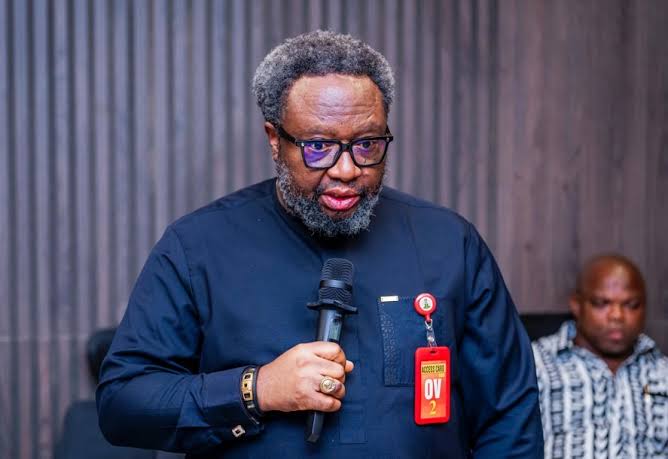
By: Stella Azi and Adaora Adibe
The Director-General/Chief Executive Officer of the Raw Materials Research and Development Council (RMRDC), Prof. Nnanyelugo Ike-Muonso, has called for a strategic shift from the exportation of raw commodities to domestic processing, manufacturing and value addition, declaring that Nigeria possesses enormous untapped raw material resources capable of driving industrialisation, creating jobs and strengthening the country’s economic competitiveness.
Prof. Ike-Muonso made this submission in a lecture titled Unlocking Nigeria’s Raw Material Value Chain for Industrialization, Manufacturing and Competitiveness, where he presented an extensive assessment of Nigeria’s resource endowments, industrial challenges and emerging investment opportunities across agricultural commodities, solid minerals and waste-based raw materials.
The lecture highlighted a combined US$2.65 trillion global market opportunity across 30 major raw material value chains, comprising 12 agricultural value chains valued at US$932 billion, 11 mineral value chains worth US$1.352 trillion and seven circular-economy value chains estimated at US$366 billion.
According to the RMRDC Boss, Nigeria must move beyond the traditional approach of extracting and exporting raw materials to building competitive domestic industries that transform these resources into intermediate products, industrial inputs and finished goods for local consumption and international markets.
He observed that the country’s manufacturing sector has struggled to sustain its 2014 peak, with its contribution to real Gross Domestic Product declining from 9.64 per cent in 2014 to 8.05 per cent in 2025, representing a 16.5 per cent decline. He also drew attention to the increasing cost of raw material imports, which rose to US$20.5 billion in 2025, approximately six times the 2020 level.
He explained that the growing dependence on imported industrial inputs exposes Nigerian manufacturers to foreign exchange volatility, increases production costs and weakens the competitiveness of locally manufactured products.
Prof. ke-Muonso stressed that the solution lies in developing domestic raw material value chains through deliberate investment in processing facilities, research and development, technology, infrastructure and stronger linkages between producers, processors and manufacturers.
He identified agriculture, solid minerals and industrial waste as three major resource platforms for Nigeria’s industrial transformation, stating the country’s significant production capacity and the enormous opportunities available for downstream processing.
Ike-Muonso noted that Nigeria produces over 63 million metric tonnes of cassava annually, making it the world’s largest producer, while also maintaining strong positions in cocoa, cashew, sesame, palm oil and cotton. However, more than 80 per cent of agricultural output leaves farms without adequate processing, resulting in the loss of significant economic value and industrial opportunities.
In the solid minerals sector, he identified more than 44 commercially viable minerals across over 500 locations, including lithium, gold, barite, bitumen, iron ore and high-grade limestone, describing them as strategic resources capable of supporting steel production, energy storage, electrification and advanced manufacturing.
The DG further drew attention to Nigeria’s industrial and agro-waste resources, noting that the country generates over 32 million tonnes of solid waste annually. He explained that agricultural residues, cassava peels, scrap metals, plastics and electronic waste could serve as important feedstock for bio-fertilisers, industrial chemicals, recycled polymers, energy production and other manufacturing applications.
In the agricultural sector, the DG identified cassava and industrial starch, cotton and natural textiles, natural rubber and elastomers, oil palm and oleochemicals, maize derivatives and cocoa processing as priority areas requiring increased investment.
He explained that processing agricultural commodities into industrial starch, sweeteners, textiles, technical rubber, specialty fats and other intermediate products would enable Nigeria to capture more value from its agricultural resources while reducing dependence on imported industrial inputs.
For the minerals sector, he highlighted crude oil-to-olefins and petrochemicals, lithium and energy storage, iron ore and steel, rare earth elements, bauxite and aluminium, and copper and electrification as strategic investment opportunities.
He particularly emphasised the importance of moving beyond mineral extraction into beneficiation, refining, battery precursors, industrial chemicals, metal fabrication and advanced materials production.
On the circular economy, Prof. Ike-Muonso identified electronic waste recovery, scrap metal recycling, plastic waste processing, agro-waste valorisation and battery recycling as emerging industrial opportunities.
He explained that transforming waste into productive industrial feedstock would not only reduce environmental pollution but also create new manufacturing industries, generate employment and reduce the importation of valuable industrial materials.
He noted that to address the structural challenges confronting raw material-based industrialisation, the DG highlighted the strategic interventions of the RMRDC, particularly the proposed 30% Value Addition Bill and the Nigeria Integrated Information Statistical System for Raw Materials and Products (NISSRAMP).
He described the 30% Value Addition Bill as an important policy instrument designed to encourage domestic processing of raw materials before export, strengthen local manufacturing capacity and guarantee access to essential raw materials for Nigerian industries, and NISSRAMP as a critical data infrastructure that would improve access to verified information on the availability, location and quality of raw materials.
According to him, the combination of appropriate policy instruments and reliable resource data would help de-risk investments, improve transparency and strengthen confidence in Nigeria’s raw material sector.
He emphasised the importance of collaboration among government, academia and industry in developing bankable projects, sharing investment risks and accelerating the establishment of processing and manufacturing facilities.
Professor Ike-Muonso called on Nigerians in the diaspora and other local and international investors to take advantage of the opportunities available in Nigeria’s raw material sector.
He identified industrial processing parks, mineral beneficiation and refining, agro-industrial platforms, circular-material processing, industrial input manufacturing and enabling infrastructure as viable investment platforms.
He noted that diaspora investors could contribute beyond financial capital by bringing technology, international business networks, governance standards, technical expertise and access to global markets.
He maintained that Nigeria’s industrial transformation requires coordinated investment across the entire value chain, from raw material sourcing and aggregation to processing, manufacturing, certification and export development.
Professor Ike-Muonso stressed that the country’s industrial future would depend not merely on the volume of raw materials extracted but on the capacity to transform them into competitive products that meet domestic and international market requirements.
He maintained that developing local value chains would stimulate industrial growth, create employment opportunities, diversify exports, conserve foreign exchange and deepen Nigeria’s technological capabilities.
Through its strategic interventions, the RMRDC is positioning itself as a critical bridge between resource availability, investment opportunities and industrial competitiveness, with the ultimate objective of transforming Nigeria from a predominantly raw material exporting economy into a strong manufacturing and value-adding nation.
Ike-Muonso has demonstrated this since assumption of office as the Director General/ CEO RMRDC in the area of capacity building, improved working conditions, promotion of merit, and maintaining a conducive environment that rewards excellence, innovation and dedication. This is evident in his institution of RMRDC training school, reward for winners of the RMRDC innovation challenge among others.
His commitment has brought recognition both nationally and internationally: Al-Jazirah double honour awards as Public Servant /Government Agency of the year 2024-2025 and the recent election as the Sub-Saharan Africa Regional Representative on the Board of the World Association of Industrial and Technological Research Organisations (WAITRO) is a attestation to his commitment.
Concluding the lecture, the DG charged staff, researchers, manufacturers and investors to see themselves as nation builders in the new era of raw materials-led industrialization.
-
 Featured7 years ago
Lampard Names New Chelsea Manager
-
 Featured7 years ago
FG To Extends Lockdown In FCT, Lagos Ogun states For 7days
-
 Featured7 years ago
Children Custody: Court Adjourns Mike Ezuruonye, Wife’s Case To April 7
-
 Featured7 years ago
NYSC Dismisses Report Of DG’s Plan To Islamize Benue Orientation Camp
-

 Featured5 years ago
Transfer Saga: How Mikel Obi Refused to compensate me After I Linked Him Worth $4m Deal In Kuwait SC – Okafor
-
Featured7 years ago
Board urges FG to establish one-stop rehabilitation centres in 6 geopolitical zones
-

 News2 years ago
Zulu to Super Eagles B team, President Tinubu is happy with you
-
Sports4 years ago
TINUBU LAMBAST DELE MOMODU













