
Sports
A Case For Building The Players’ Hostel and Training Pitch At The Moshood Abiola National stadium by the NFF
By
Patrick Odogwu Ngwaogu
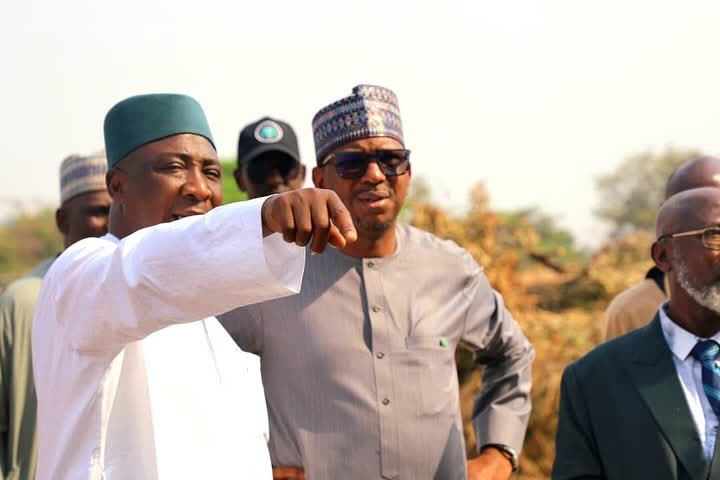
Last week, the NFF President, Alhaji Ibrahim Gusau conducted the Chairman of the National Sports Commission, Mallam Shehu Dikko round the construction site of the new players hostel and playing pitch under construction at the package B of the Moshood Abiola National Stadium, Abuja.
The construction of hostel and Football pitch is long over due, considering the fact that the available facilities at the FIFA Goal Project is over stressed and gradually deterioriating, and needs other structure to complement.
The initiatives of the Ibrahim Gusau led Board is more timely one that will over live the Board.
Football as it is known, is more than just a sport in Nigeria—it is a national passion that unites people across ethnic, religious, and social divides.
The country has produced world-class footballers who have excelled on the global stage, from the Super Eagles’ triumphs in international tournaments to the rising stars emerging from the grassroots football.
However, Ibrahim Gusau has evisaged that for Nigeria to maintain its competitive edge in football, the development of such infrastructure remains crucial.
Construction of hostel and training pitch singular dedicated to the national teams, has become one of the most pressing needs for Nigerian football. This project is essential for improving player welfare, reducing operational costs, and enhancing performance at all levels. While Nigeria has historically relied on makeshift arrangements for player accommodation and training, a purpose-built facility will provide long-term benefits that can transform the footballing landscape.
Construction of these facilities will enhance
the physical and mental well-being of players, which is a major determinant of success on the field. In the past, national team players have often been lodged in hotels, sometimes far from their training grounds. This arrangement has posed several challenges.
It had disrupted and discomforted the players, as they often have to commute between their hotels and training grounds, leading to fatigue and decreased productivity. It leads to Inconsistent nutrition and recovery as hotels may not always provide the specialized diets and recovery facilities that footballers require. There is also the problem of limited team bonding which a dedicated hostel will help and ensure fostering of camaraderie and unity among players, allowing them to bond better, understand each other’s playing styles, and develop team chemistry.
By building a players’ hostel, the NFF ensures that the players stay in an environment tailored to their needs.
The well-equipped hostel will include:
•   Comfortable lodging with modern amenities
•   A dedicated dining hall with nutritionist-approved meals
•   Recreation areas for relaxation and team bonding
•   Medical and physiotherapy units for player health and injury management
A training pitch within the same complex will also ensure players have immediate access to quality training facilities, improving their preparation and fitness.
Building a Hostel for the players will save cost and enhance financial
efficiency. One of the major expenses incurred by the NFF is the cost of accommodating national team players in hotels. Each year, millions of naira are spent on lodging, feeding, and transportation. This financial burden could be significantly reduced if the NFF had its own accommodation facility. Instead of paying for expensive rooms in high-end hotels, players and coaching staff will stay in their dedicated facility at little or no additional cost. Since the hostel and pitch will be within the same complex, the federation will save money on daily transport logistics. The hostel could also generate revenue by hosting training camps for clubs, academies, and even foreign teams willing to pay for its use.
Redirecting these funds into other critical areas—such as youth development, grassroots football, and upgrading stadiums—will have a more lasting impact on Nigerian football.
A state-of-the-art hostel and training pitch will not only serve the national teams but can also play a pivotal role in nurturing young talent. The facility can be used to host youth development programs, where talented young players from across the country train under top coaches.
The Nigeria’s U-17 and U-20 teams have a history of excelling in international tournaments. Providing them with a dedicated training base will further enhance their development. The NFF could partner with local football academies to allow young players access to world-class training facilities, accelerating their growth into future stars.
By establishing a professional environment for young players early in their careers, Nigeria can ensure a steady pipeline of talent for the national teams.
Top footballing nations such as Brazil, Germany, and Spain have long invested in elite training facilities for their national teams. The availability of world-class infrastructure gives these countries a competitive advantage by ensuring their players train in optimal conditions. For Nigeria to compete at the highest levels, it must adopt similar practices. A dedicated hostel and training pitch will provide an uninterrupted, high-quality training environment, enable coaches to implement structured training regimens without external distractions, give players a sense of stability and professional discipline
A well-maintained facility will also serve as a hub for tactical preparations ahead of major tournaments, ensuring that players are physically and mentally ready to compete at the global stage.
Football infrastructure projects require significant financial investment, and the NFF can leverage the hostel and training pitch as a means to attract corporate sponsorships. Many private companies will be eager to associate their brands with sports development, and a state-of-the-art facility like the one the NFF is building in Abuja, will present an excellent opportunity for partnerships. Companies can sponsor different sections of the facility, such as the hostel, gym, or medical center, in exchange for branding opportunities. Billboards, digital screens, and branding spaces within the training complex can generate revenue for the NFF. European clubs looking to expand their presence in Africa might invest in the facility, using it as a scouting and development center.
A properly structured public-private partnership will ensure the long-term sustainability of the project without over-reliance on government funding.
With such state of art facilities available in Nigeria, players will develop a strong connection to the national team environment and International teams visiting Nigeria will have a professional training base, boosting the country’s football image.Nigerian football will be viewed as a more structured and serious entity by FIFA and CAF. This sense of identity and stability is crucial for maintaining a winning culture within Nigerian football.
Beyond football development, the construction of a players’ hostel and training pitch will contribute to the economic growth of the country by creating jobs and stimulating local businesses.
FIFA and the Confederation of African Football (CAF) have clear guidelines on training infrastructure for national teams. Many top African nations, including Egypt, Morocco, and South Africa, already have dedicated facilities for their teams. To host international competitions and remain competitive, Nigeria must meet these standards. A well-structured training complex will help the country fulfill FIFA and CAF requirements, opening doors for Nigeria to host major tournaments in the future.
The construction of a players’ hostel and training pitch by the NFF is not just a luxury—it is a necessity. The benefits of such a project extend far beyond providing accommodation for footballers; it is a strategic investment in the future of Nigerian football.
By ensuring better player welfare, cost savings, youth development, increased competitiveness, and economic growth, the facility will serve as a foundation for long-term success. Additionally, it will enhance Nigeria’s football reputation globally and create opportunities for corporate sponsorships and partnerships.
For Nigeria to maintain its status as a football powerhouse, it must invest in the right infrastructure. Ibrahim Gusau and his NFF’s decision to pursue this project is a commendable step toward securing a brighter future for Nigerian football. If executed properly, the players’ hostel and training pitch will stand as a lasting legacy—one that propels Nigeria to greater heights on the world football stage.



Sports
Montage Community Football Tourney Registration Ends October 30

Cyril Ogar
Registration for the 2026 edition of the Montage Community Football Tournament will close on Friday, October 30, organisers have announced.
The tournament coordinator, Mr Raphael Ekpang, disclosed this on Thursday, urging interested teams across the six Area Councils of the Federal Capital Territory (FCT) to take advantage of the remaining days to register.
Ekpang said registration had been ongoing since Monday, encouraging eligible teams to complete the process before the deadline.
The tournament, themed “Montage FM 99.7: Empowering Youth, Uniting Communities Through Football,” is scheduled to kick off on November 3, 2026, with playoffs across the six Area Councils of the FCT.
The grand finale will hold on December 5, 2026, at the Old Parade Ground, Garki Area 10, Abuja, where the top four teams will compete for first-, second- and third-place honours.
A total of 48 teams will participate in the competition, with eight teams representing each of the six Area Councils.
The participating teams will compete for cash prizes worth over ₦2 million and other valuable rewards.
-
 Featured7 years ago
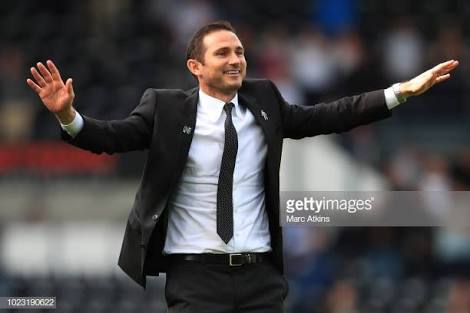
Lampard Names New Chelsea Manager
-
 Featured7 years ago
FG To Extends Lockdown In FCT, Lagos Ogun states For 7days
-
 Featured7 years ago
Children Custody: Court Adjourns Mike Ezuruonye, Wife’s Case To April 7
-
 Featured7 years ago
NYSC Dismisses Report Of DG’s Plan To Islamize Benue Orientation Camp
-

 Featured5 years ago
Transfer Saga: How Mikel Obi Refused to compensate me After I Linked Him Worth $4m Deal In Kuwait SC – Okafor
-
Featured7 years ago
Board urges FG to establish one-stop rehabilitation centres in 6 geopolitical zones
-
Sports4 years ago
TINUBU LAMBAST DELE MOMODU
-

 News2 years ago
Zulu to Super Eagles B team, President Tinubu is happy with you