
News
A Policy Roundtable On Whistleblower Protection Law Underway In Abuja
In continuation of the advocacy for the passage of the whistleblower protection law in the country, a consortium of civil society partners working on good governance and accountability will hold a policy roundtable in Abuja on November 7.
The roundtable, whose theme is Towards a Whistleblower Protection Law in Nigeria, is put together by the African Centre for Media and Information Literacy (AFRICMIL) in collaboration with the Progressive Impact Organisation for Community Development (PRIMORG), Shehu Musa Yar’Adua Foundation (SMYF) and other grantees of the MacArthur Foundation.
According to a statement by the organizers, “This intervention aims to develop key ideas and strategies to put whistleblowing and the passage of a whistleblower protection law in Nigeria on the front burner of national conversation.”
Whistleblowers have been playing positive, legitimate, and crucial roles in the prevention of and in the fight against corruption and the promotion of human rights in Nigeria and around the world.
“Over the years, they have uncovered and disclosed information on various corrupt and suspicious dealings linked to corrupt and politically exposed persons, leading to wider public debates about corruption and the need for accountability, the adoption of transparency regulations, investigations by national authorities, and international bodies, and the prosecution and condemnation of some of those involved,” the statement noted.
Despite the recognition of the importance of whistleblowers in various anti-corruption treaties, including Article 33 of the United Nations Convention Against Corruption (UNCAC), which requires state parties to protect whistleblowers, most whistleblowers have continued to face retaliation for exposing corruption and other illegal practices. According to the organizers, “Some whistleblowers in Nigeria face reprisals such as dismissal, threats, physical violence or abusive legal proceedings, while others are forced into exile or even killed.”
The statement noted that Nigeria, unfortunately, is one of the countries where whistleblowers face a lack of a safe and enabling legal environment that would allow them to report wrongdoing without fear of reprisals. It attributed the situation to a lack of effective protection laws, pointing out that only 10 55 African countries have adopted specific laws to protect whistleblowers.
“This is compounded by ineffective access to information laws that would enable them and others to obtain information held by public bodies and empower them to hold powerful individuals and entities to account, as well as the lack of effective and independent judicial institutions that could provide access to justice and effective remedies for human rights violations,” it said.
The statement observed that although efforts had been made over the years to enact a whistleblower protection law, particularly since the introduction of the whistleblowing policy by the Nigerian government in December 2016, such efforts had proved unsuccessful.
It paid tribute to the efforts of civil society organizations and partners, including the media, in the last five years, which had ensured “some level of awareness about whistleblowing and willingness on the part of patriotic Nigerians to blow the whistle on corruption and other wrongdoing in the interest of the public.”
Stakeholders expected at the policy roundtable are drawn from civil society organizations, media, the National Assembly, public interest lawyers, and government institutions, including the Presidential Initiative on Continuous Audit (PICA) of the Ministry of Finance, Ministry of Justice, law enforcement, and anti-corruption agencies.
Among other things, participants will take stock of the situation of whistleblowing and whistleblowers in Nigeria, the current position of the draft whistleblower protection law, and challenges and opportunities in the quest to have a whistleblower protection law in Nigeria.



News
SPORTS -OCHEI: BUILDING TOMORROW’S CHAMPIONS THROUGH GRASSROOTS SPORTS DEVELOPMENT
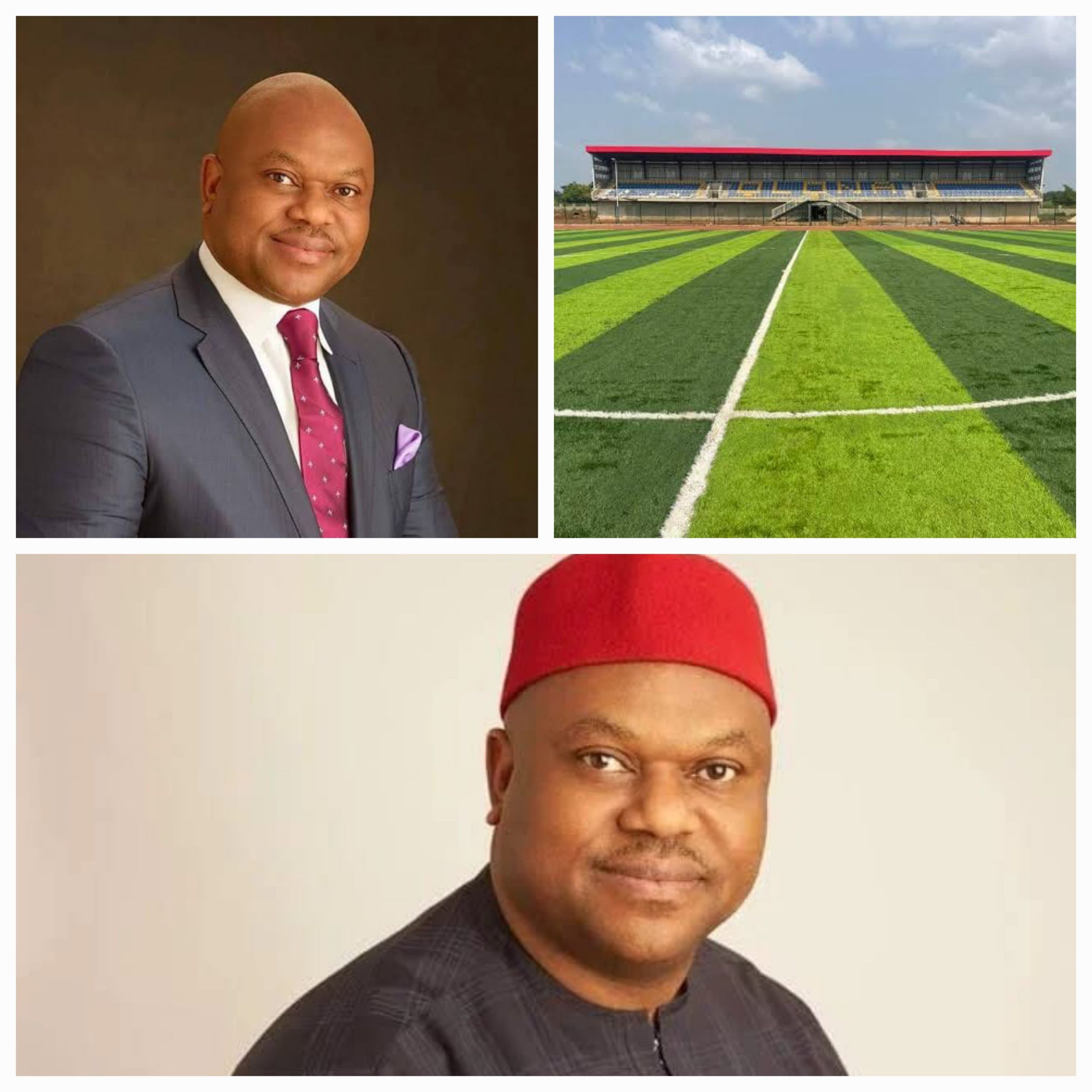
Beyond politics and public office, Rt. Hon. Engr. Victor Ochei, FNSE, Esq., has demonstrated a commitment to sports development through sponsorship, sports administration and investment in community infrastructure. His philosophy reflects the belief that every talented young person deserves an opportunity to excel, irrespective of background.
Across the world, sports have evolved beyond recreation into powerful instruments of youth development, economic empowerment, social inclusion and national integration. From Qatar’s Aspire Academy to Barcelona’s La Masia football development system, strategic investment in grassroots sports has demonstrated how talent can be identified, nurtured and transformed into international excellence.
This philosophy finds practical expression in the sports development initiatives associated with Victor Ochei, former Speaker of the Delta State House of Assembly and current President of the Nigeria Tennis Federation.
His sponsorship of the annual DAVNOTCH National Tennis Championship and the National Wheelchair Basketball Championship reflects an interest in expanding sporting opportunities, including for athletes living with disabilities.
Perhaps his most remarkable grassroots investment is the sports facility he has personally undertaken in his hometown of Onicha-Olona, Aniocha North Local Government Area of Delta State.
The Donald Ochei Mini Stadium features a modern football pitch, standard tartan athletics tracks with drainage facilities, dressing rooms and a tennis court.
The facility was conceived to strengthen the annual Onicha-Olona Football Tournament, which has continued to provide opportunities for young football talents to showcase their abilities.
Importantly, this is an investment undertaken with Ochei’s personal resources, demonstrating how private initiative can complement public efforts in community development.
The vision has interesting parallels with Qatar’s Aspire Project, which integrates sporting infrastructure, talent identification, education and professional training. Although different in scale and institutional capacity, both initiatives underscore the importance of creating environments where young talents can develop.
The historical experience of Nelson Mandela’s South Africa also demonstrates the power of sports to promote unity, reconciliation and social cohesion.
For Ochei, sports development represents more than winning trophies. It is about giving young people constructive opportunities, promoting discipline, discovering talents and creating pathways to economic independence.
As a lawyer, engineer, former legislator and sports administrator, his experience provides a basis for broader discussions about the role of legislation and public policy in strengthening grassroots sports development.
His proposed areas of interest, as a Senator, include improved sports infrastructure, sustainable funding, school and community competitions, disability inclusion, talent discovery and greater private-sector participation.
With the global sports industry generating enormous economic opportunities in broadcasting, tourism, coaching, facility management and athlete representation, Nigeria cannot afford to treat sports merely as recreation.
The enduring lesson from Ochei’s grassroots sports initiatives is that investing in young people is investing in the future. A football pitch can discover a future international star; an athletics track can nurture a national champion; and a tennis court can open doors to opportunities beyond the shores of Nigeria.
Ultimately, the true measure of sports development is not just the trophies won, but the lives transformed and opportunities created.Suggested publication headline.
Ochei is a goal!!!
Austin Edemodu, PhD.
-
 Featured7 years ago
Lampard Names New Chelsea Manager
-
 Featured7 years ago
FG To Extends Lockdown In FCT, Lagos Ogun states For 7days
-
 Featured7 years ago
Children Custody: Court Adjourns Mike Ezuruonye, Wife’s Case To April 7
-
 Featured7 years ago
NYSC Dismisses Report Of DG’s Plan To Islamize Benue Orientation Camp
-

 Featured5 years ago
Transfer Saga: How Mikel Obi Refused to compensate me After I Linked Him Worth $4m Deal In Kuwait SC – Okafor
-
Featured7 years ago
Board urges FG to establish one-stop rehabilitation centres in 6 geopolitical zones
-
Sports4 years ago
TINUBU LAMBAST DELE MOMODU
-

 News2 years ago
Zulu to Super Eagles B team, President Tinubu is happy with you













