
News
Africa Must Move Beyond Raw Mineral Exports, Embrace Value Addition — Tinubu
By Joel Ajayi
President Bola Ahmed Tinubu has called for stronger cooperation among African countries to end the export of raw minerals and ensure that the continent derives greater economic value from its vast mineral resources.
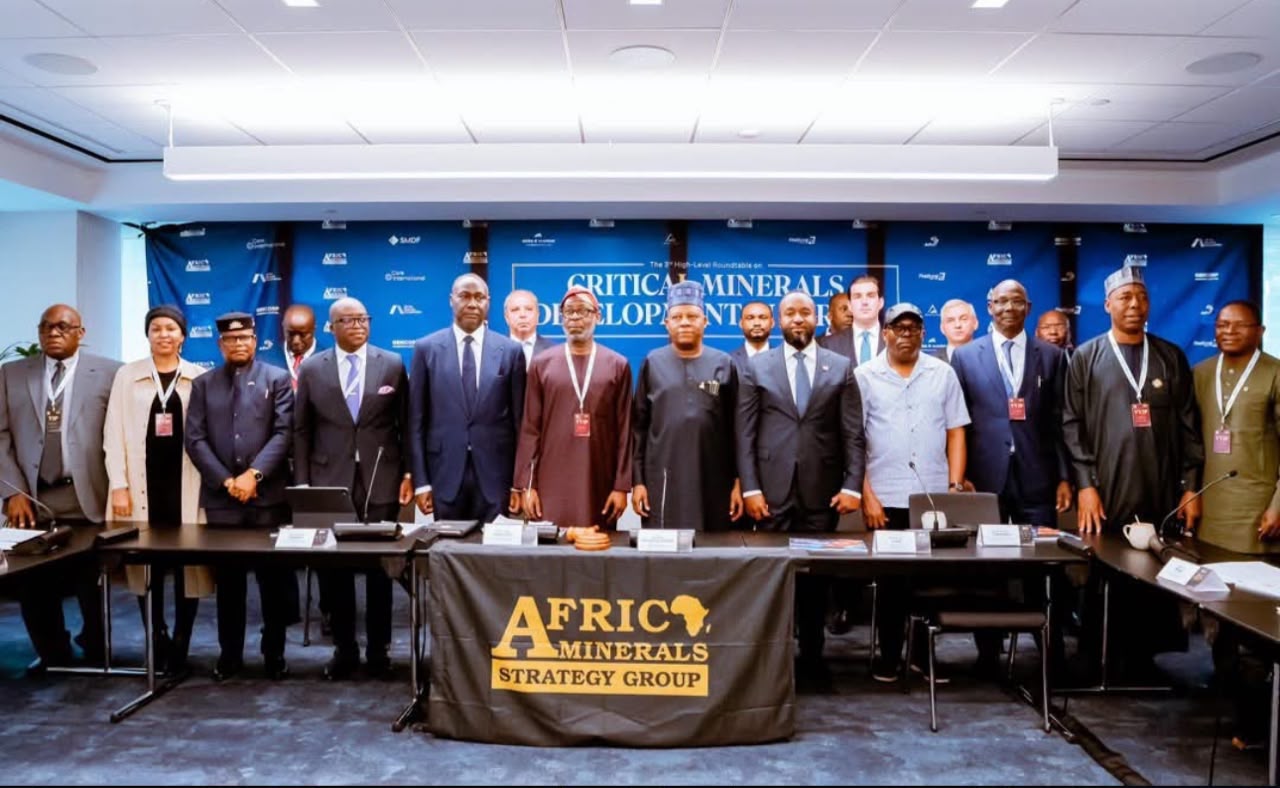
Tinubu made the call on Monday in New York during the third Africa Minerals Strategy Group (AMSG) High-Level Roundtable on Critical Minerals Development in Africa, held on the sidelines of the 81st United Nations General Assembly.
Represented by Vice President Kashim Shettima, the President said Africa must move beyond its traditional role as a supplier of raw materials and develop local capacity for processing, refining, manufacturing and other forms of value addition.
The roundtable, chaired by Tinubu alongside Shettima and AMSG Chairman and Minister of Solid Minerals Development, Dele Alake, was themed: “From Resources to Wealth: Continental Cooperation for Mineral Value Addition, Data Sovereignty, Innovative Financing and Critical Minerals Security.”
Tinubu said Africa could not continue exporting its mineral wealth while communities where the resources are extracted remain deprived of jobs, infrastructure and economic opportunities.
He identified processing, refining, battery production, component manufacturing, technology transfer and skills development as key areas through which Africa could convert its mineral resources into sustainable wealth.
According to him, the value of mining should be measured not only by revenue generated but also by the jobs, industries, infrastructure, technology and prosperity created for African communities.
The President also warned against competition among African countries through lower royalties, weak local-content requirements and excessive concessions, saying such fragmentation could undermine the continent’s bargaining position.
He advocated coordinated policies, integrated markets, shared infrastructure and stronger African financing mechanisms to improve the continent’s negotiating strength in the global critical-minerals market.
Tinubu said Nigeria would continue to pursue policies requiring greater local value addition, improved geological data, formalisation of artisanal mining and stronger measures against illegal mining.
He also urged AMSG members to speak with one voice in advancing Africa’s interests, stressing that partnerships with international investors should promote mutual benefit, technological development and African industrial capacity.
The meeting also adopted the Continental Integration and Economic Assurance Declaration (CIEAD), which Tinubu said should be backed by clear timelines, financing arrangements, implementation mechanisms and public accountability rather than remain merely a declaration.
Earlier in his remarked, Alake described CIEAD as a proposed framework for creating a unified continental architecture for Africa’s critical and solid-minerals value chains.
He urged more African countries to join AMSG, arguing that greater cooperation would help align policies, resources, financing and infrastructure development across the continent.
Kenya’s Minister of Blue Economy and Maritime Affairs, Hassan Ali Joho, also stressed the importance of domestic resource mobilisation, transparency and greater alignment of licensing procedures while respecting the sovereignty of individual member states.



News
DNKI President Champions Humanitarian Service, Sustainable Community Development
Cyril Samania
The President of De Norsemen Kclub International (DNKI), Chief Oliver Patrick Ityohegh, has reaffirmed the organisation’s commitment to humanitarian service, stressing the importance of supporting vulnerable people and improving community welfare beyond the annual celebration of Humanitarian Day.
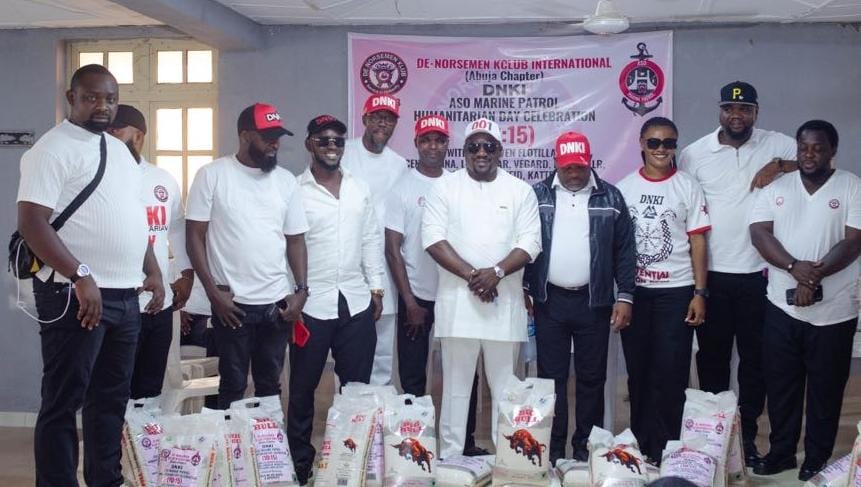
Ityohegh stated this during the organisation’s Cauldron Night and Award Presentation held to commemorate its 2026 Humanitarian Day celebration, theme: “Humanity First: Advancing Hope, Dignity and Community Well-being.” organised by the DNKI Abuja Chapter.
He emphasised that humanitarian service should be a continuous responsibility driven by compassion, solidarity and a commitment to making a meaningful difference in society.
According to him, DNKI’s humanitarian activities reflect its dedication to giving back to society and supporting people in need, while encouraging members to sustain initiatives that promote human dignity and community well-being.
He added that the organisation would continue to strengthen its humanitarian engagements through practical interventions aimed at improving the lives of vulnerable people and promoting community development.
Speaking at the event, the representative of the Abuja Chapter Chairman and Chairman of its Advisory Council, Prince Efiong Okpe, said the organisation’s humanitarian activities extended beyond the annual celebration of Humanitarian Day on October 15.
Okpe explained that DNKI undertook several initiatives throughout the year, including blood donation exercises, visits to hospitals and correctional centres, as well as support for orphanages and other vulnerable groups.
According to him, the organisation also collaborated with humanitarian bodies in the Federal Capital Territory (FCT) to identify areas of need and provide assistance within its available resources.
He described Humanitarian Day as an opportunity for members to renew their commitment to service and demonstrate solidarity with people facing difficult circumstances.
Earlier, the Chairman of the Planning Committee and Coordinator of the DNKI Gwagwalada Zone, Mr Etudaiye Hamzat, disclosed that the chapter had provided financial assistance to some members to help pay their children’s school fees, alongside distributing bags of rice and other relief items to members experiencing hardship.
Hamzat explained that the interventions followed concerns over the difficulties some members faced in meeting their family responsibilities, particularly the rising cost of their children’s education.
He maintained that supporting members in need was consistent with the organisation’s humanitarian principles, adding that DNKI remained committed to extending assistance to non-members and vulnerable communities as part of its commitment to leading by example.
Looking ahead, Hamzat said the Abuja Chapter planned to expand its humanitarian outreach to remote communities within the FCT, with particular attention to orphanages, schools and widows facing difficulties in meeting their family responsibilities.
He also recalled previous interventions for internally displaced persons (IDPs), which included the distribution of food, clothing and educational materials, noting that the chapter intended to scale up such initiatives in the coming year.
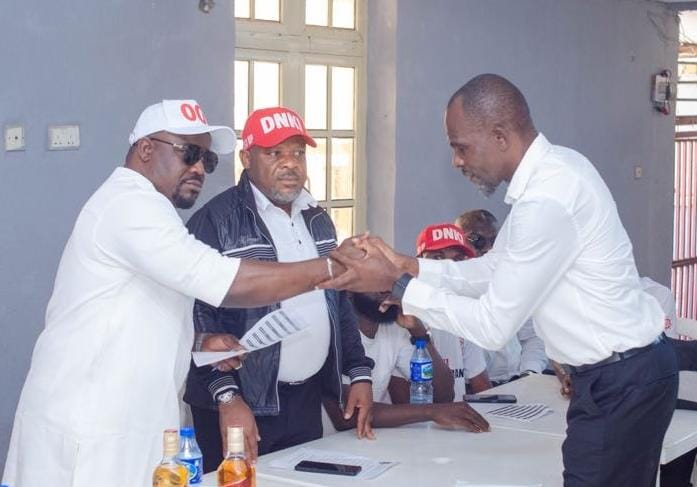
The highlight of the event was the presentation of awards to outstanding members and distinguished non-members in recognition of their contributions to humanitarian service.
-
 Featured7 years ago
Lampard Names New Chelsea Manager
-
 Featured7 years ago
FG To Extends Lockdown In FCT, Lagos Ogun states For 7days
-
 Featured7 years ago
Children Custody: Court Adjourns Mike Ezuruonye, Wife’s Case To April 7
-
 Featured7 years ago
NYSC Dismisses Report Of DG’s Plan To Islamize Benue Orientation Camp
-

 Featured5 years ago
Transfer Saga: How Mikel Obi Refused to compensate me After I Linked Him Worth $4m Deal In Kuwait SC – Okafor
-
Featured7 years ago
Board urges FG to establish one-stop rehabilitation centres in 6 geopolitical zones
-
Sports4 years ago
TINUBU LAMBAST DELE MOMODU
-

 News2 years ago
Zulu to Super Eagles B team, President Tinubu is happy with you













