
Sports
Akinwunmi lauds FCAAN efforts at improving Nigeria coaches

First Vice President of the Nigeria Football Federation, Barr. Seyi Akinwunmi has commended the efforts of the Football Coaches Association of African Nations (FCAAN) in enhancing the capacity of Football Coaches in Nigeria.
Akinwunmi, who is also the Chairman of Lagos State Football Association, made this known on a visit to the FCAAN ‘C’ course ongoing in the Ondo State capital, Akure on Tuesday. “I am impressed with what I have seen here because there is nothing to trump capacity –building and capacity –enhancement in any profession. Training the trainers is an important aspect of football and other sports, and what FCAAN is doing can be seen in this light.”
The seven-day programme which started on Monday has about 100 coaches in attendance. Akinwunmi spent time with the participants during match analysis session and was impressed by what he saw. FCAAN President, Dr Terry Eguaoje explained to Akinwunmi that the body presently has some of its trained coaches working in India, Oman and Benin Republic.
The NFF chieftain was in company with Chairman of the Ekiti State Football Association, Mr Bayo Olanlege and other top officials of the State Football Associations of Ondo and Ekiti States. Olanlege described the coaching programme as lofty and opined that it should be encouraged.
Eguaoje, who is NFF’s Consultant on Coaching and Development, made known his position that Football Coaches in Nigeria should start directing the affairs of the National Teams in no distant time. The ‘C’ course will round off on Saturday.



Sports
SWAN President Calls for Gender-Fair Reporting in Sports Journalism
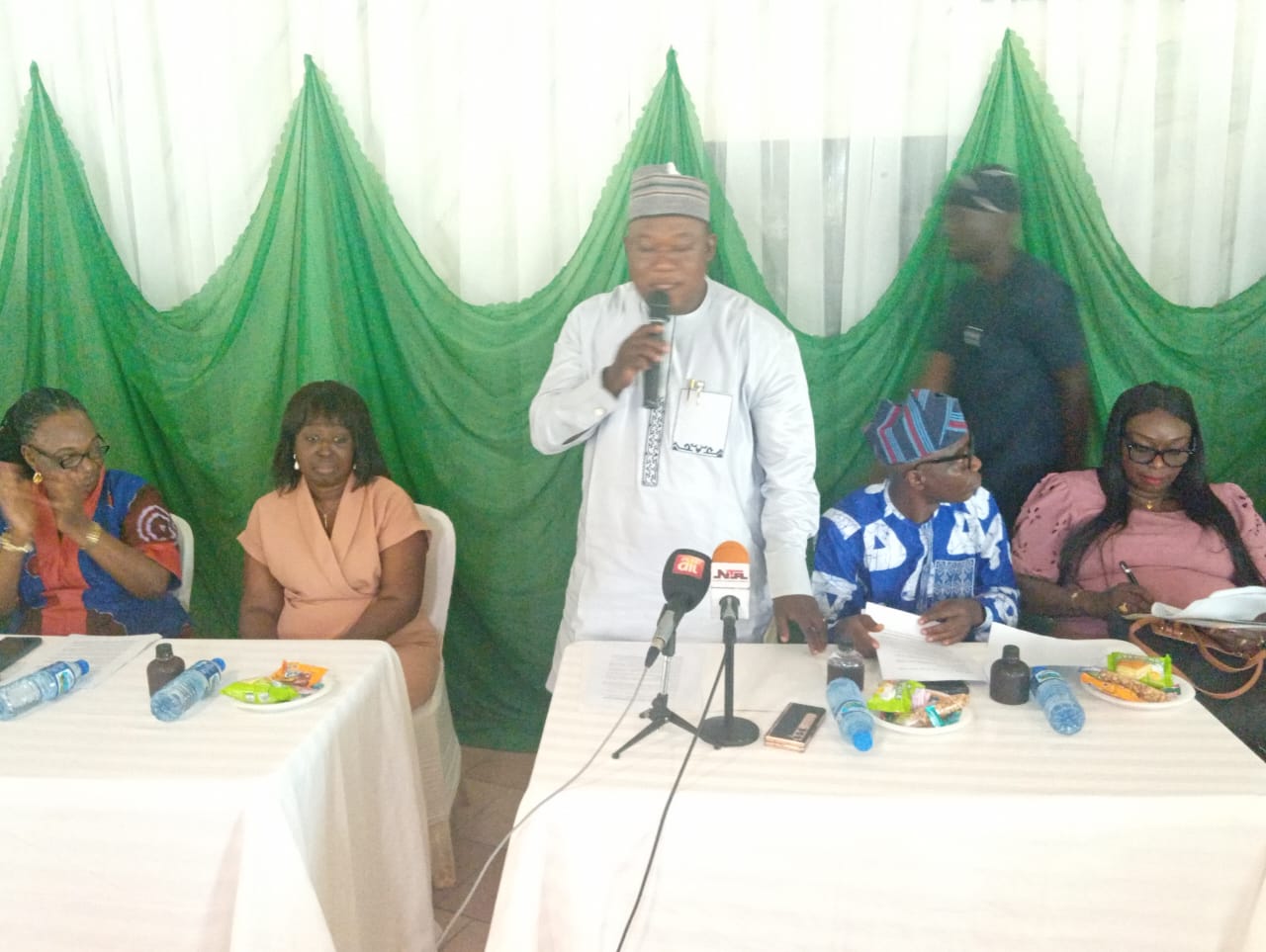
By Joel Ajayi
The President of the Sports Writers Association of Nigeria (SWAN), Isaiah Kemje Benjamin, has urged sports journalists to eliminate gender stereotypes and bias in their reports to promote fairness, inclusion and greater visibility for women in sports.
Benjamin made the call on Monday in Abuja while delivering a presentation titled “Gender-Sensitive Journalism: Removing Gender Stereotypes and Bias in Sports Reporting” at the Annual Women in Sports Leadership Training/Seminar for Journalists, organised by the Women Commission of the Nigeria Olympic Committee (NOC).
He said sports journalists play a critical role in shaping public opinion, influencing athletes’ visibility and determining which achievements receive recognition, sponsorship and investment.
According to him, the way the media reports women in sports can either reinforce existing barriers or help dismantle them.
Benjamin explained that gender-sensitive journalism requires fairness, accuracy, equality and inclusion, stressing that it does not mean giving female athletes favourable coverage or shielding them from legitimate criticism.
He identified common forms of bias in sports reporting, including giving men’s competitions greater prominence, focusing on female athletes’ appearance rather than performance, defining women by their marital or family status, and questioning their competence in leadership positions.
The SWAN president urged journalists to adopt respectful language, apply consistent professional standards and extend coverage beyond national teams to domestic leagues, grassroots competitions, female coaches, referees and sports administrators.
Using Nigeria’s sporting landscape as an example, he said the achievements of the Super Falcons deserved sustained analysis beyond match results, including discussions on investment, player development, professional leagues and grassroots structures.
He also noted that digital platforms offered opportunities to expand coverage of women’s sports but warned journalists against sensationalism, online harassment and sexist commentary.
Benjamin proposed seven measures, including gender-sensitive editorial guidelines, regular coverage audits, diversified sources, professional development, stronger grassroots reporting and measurable progress.
He called on SWAN to collaborate with the NOC, sports federations, leagues and clubs to improve access to information and strengthen women’s visibility in sports.
He urged journalists to ensure that athletes are judged by their performances and achievements rather than gender stereotypes.
“Gender-sensitive journalism must be fair, not favourable,” he said, emphasising that responsibility for change rests with reporters, editors, broadcasters, photographers and digital publishers.
-
 Featured7 years ago
Lampard Names New Chelsea Manager
-
 Featured7 years ago
FG To Extends Lockdown In FCT, Lagos Ogun states For 7days
-
 Featured7 years ago
Children Custody: Court Adjourns Mike Ezuruonye, Wife’s Case To April 7
-
 Featured7 years ago
NYSC Dismisses Report Of DG’s Plan To Islamize Benue Orientation Camp
-

 Featured5 years ago
Transfer Saga: How Mikel Obi Refused to compensate me After I Linked Him Worth $4m Deal In Kuwait SC – Okafor
-
Featured7 years ago
Board urges FG to establish one-stop rehabilitation centres in 6 geopolitical zones
-
Sports4 years ago
TINUBU LAMBAST DELE MOMODU
-

 News2 years ago
Zulu to Super Eagles B team, President Tinubu is happy with you













