
News
Alake Backs Regional Effort to Unlock South-South’s Untapped Mineral Resources
Joel Ajayi
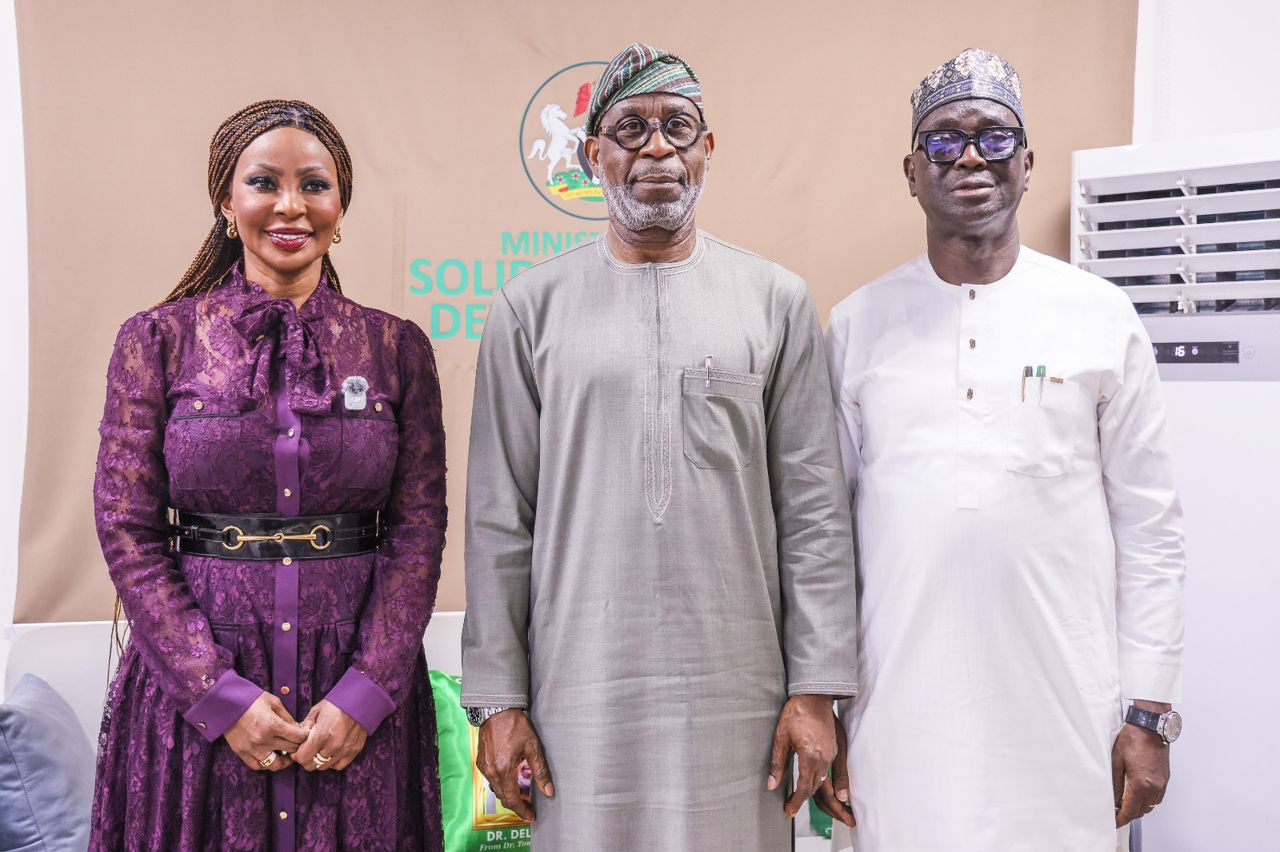
The Minister of Solid Minerals Development, Mr. Dele Alake, has pledged the Ministry’s full support to the South-South Development Commission (SSDC) to harness the region’s solid mineral resources for investment, job creation and sustainable development.
In statement issued on Tuesday in Abuja, by the Special Assistant on Media to the Honourable Minister of Solid Minerals Development Lara Owoeye-Wise stated that Alake made the commitment when the Director-General of the SSDC, Ms. Usoro Offiong Akpabio, led a delegation of the Commission on a courtesy visit to the Ministry.
The Minister said the engagement was particularly significant given the Federal Government’s broader agenda of using the geopolitical development commissions established by President Bola Ahmed Tinubu to accelerate development and unlock the economic potential of Nigeria’s six geopolitical zones.
He noted that the South-South, known for oil and gas reserves, was strategically positioned in the nation’s diversification drive, because it possesses significant deposits of solid minerals.
Alake said the Ministry’s reforms were repositioning the sector to be a major driver of industrialisation through local value addition, responsible mining, investment promotion and stronger regulation.
He highlighted the progress recorded since the commencement of the reforms, including a sharp increase in revenue accruing to the Federal Government from the sector and more than $2.6 billion in Foreign Direct investment, (FDI) alongside the emergence of mineral processing facilities that have gainfully employed Nigerians across the country.
The Minister also encouraged the South-South states to take advantage of the Federal Government’s framework for direct state participation in mining through State-owned Special Purpose Vehicles (SPVs) and properly obtained mining titles.
According to him, “ several states have already secured mining licence approvals through this framework”.
He, however, cautioned against unilateral state policies on mining, noting that regulatory consistency is essential to giving investors confidence and avoid multiple or conflicting authorities in the sector.
“We have a commonality of objective, we just need to harmonise our strategies and tactics to achieve it,” the Minister said, assuring the Commission of the Ministry’s cooperation.
Earlier, Ms. Akpabio said the SSDC was seeking a practical partnership with the Ministry around sustainable mining, environmental innovation, investment and job creation. She said the Commission would align its activities with the Ministry’s policies and work with state authorities and security agencies, particularly in the training and formalisation of artisanal miners.
The Minister and the SSDC leadership also agreed on the importance of regional stakeholder and investment engagements to showcase specific mineral opportunities and connect investors with projects across the South-South.
Replying, Alake said the Ministry would involve the SSDC in such engagements, describing the Commission as a potential driver of deeper investment and development in the region.
This engagement is part of a growing collaboration between the Ministry and the geopolitical development bodies established by the Tinubu administration.
Similar engagements have recently seen regional development stakeholders, including the Northwest Development Coalition, seek partnerships with the Ministry to leverage Nigeria’s mineral wealth for regional economic development.
The collaboration underscores the Federal Government’s emerging strategy of linking Nigeria’s mineral resources with the new regional development architecture to drive investment, industrialisation, employment and sustainable development across the geopolitical zones.



News
DNKI President Champions Humanitarian Service, Sustainable Community Development
Cyril Samania
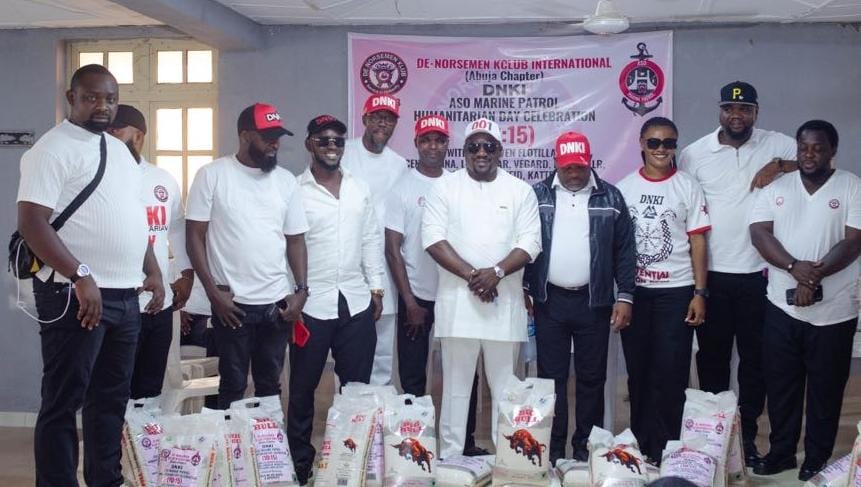
The President of De Norsemen Kclub International (DNKI), Chief Oliver Patrick Ityohegh, has reaffirmed the organisation’s commitment to humanitarian service, stressing the importance of supporting vulnerable people and improving community welfare beyond the annual celebration of Humanitarian Day.
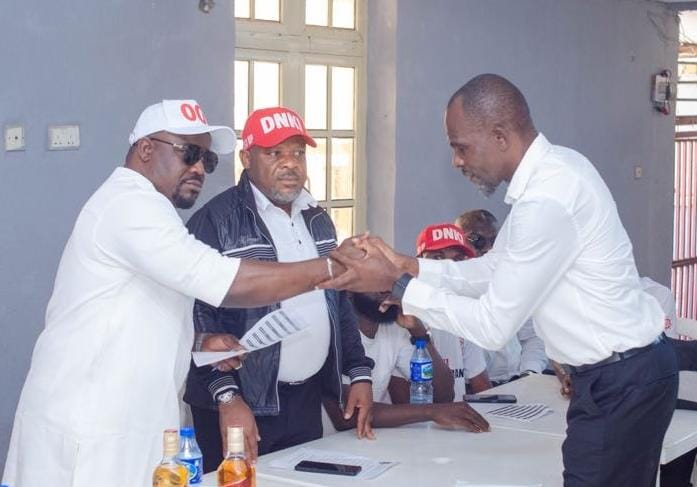
Ityohegh stated this during the organisation’s Cauldron Night and Award Presentation held to commemorate its 2026 Humanitarian Day celebration, theme: “Humanity First: Advancing Hope, Dignity and Community Well-being.” organised by the DNKI Abuja Chapter.
He emphasised that humanitarian service should be a continuous responsibility driven by compassion, solidarity and a commitment to making a meaningful difference in society.
According to him, DNKI’s humanitarian activities reflect its dedication to giving back to society and supporting people in need, while encouraging members to sustain initiatives that promote human dignity and community well-being.
He added that the organisation would continue to strengthen its humanitarian engagements through practical interventions aimed at improving the lives of vulnerable people and promoting community development.
Speaking at the event, the representative of the Abuja Chapter Chairman and Chairman of its Advisory Council, Prince Efiong Okpe, said the organisation’s humanitarian activities extended beyond the annual celebration of Humanitarian Day on October 15.
Okpe explained that DNKI undertook several initiatives throughout the year, including blood donation exercises, visits to hospitals and correctional centres, as well as support for orphanages and other vulnerable groups.
According to him, the organisation also collaborated with humanitarian bodies in the Federal Capital Territory (FCT) to identify areas of need and provide assistance within its available resources.
He described Humanitarian Day as an opportunity for members to renew their commitment to service and demonstrate solidarity with people facing difficult circumstances.
Earlier, the Chairman of the Planning Committee and Coordinator of the DNKI Gwagwalada Zone, Mr Etudaiye Hamzat, disclosed that the chapter had provided financial assistance to some members to help pay their children’s school fees, alongside distributing bags of rice and other relief items to members experiencing hardship.
Hamzat explained that the interventions followed concerns over the difficulties some members faced in meeting their family responsibilities, particularly the rising cost of their children’s education.
He maintained that supporting members in need was consistent with the organisation’s humanitarian principles, adding that DNKI remained committed to extending assistance to non-members and vulnerable communities as part of its commitment to leading by example.
Looking ahead, Hamzat said the Abuja Chapter planned to expand its humanitarian outreach to remote communities within the FCT, with particular attention to orphanages, schools and widows facing difficulties in meeting their family responsibilities.
He also recalled previous interventions for internally displaced persons (IDPs), which included the distribution of food, clothing and educational materials, noting that the chapter intended to scale up such initiatives in the coming year.
The highlight of the event was the presentation of awards to outstanding members and distinguished non-members in recognition of their contributions to humanitarian service.
-
 Featured7 years ago
Lampard Names New Chelsea Manager
-
 Featured7 years ago
FG To Extends Lockdown In FCT, Lagos Ogun states For 7days
-
 Featured7 years ago
Children Custody: Court Adjourns Mike Ezuruonye, Wife’s Case To April 7
-
 Featured7 years ago
NYSC Dismisses Report Of DG’s Plan To Islamize Benue Orientation Camp
-

 Featured5 years ago
Transfer Saga: How Mikel Obi Refused to compensate me After I Linked Him Worth $4m Deal In Kuwait SC – Okafor
-
Featured7 years ago
Board urges FG to establish one-stop rehabilitation centres in 6 geopolitical zones
-
Sports4 years ago
TINUBU LAMBAST DELE MOMODU
-

 News2 years ago
Zulu to Super Eagles B team, President Tinubu is happy with you













