
News
Alake’s Bold Mining Reforms Under Tinubu Signal a New Economic Future for Nigeria
By Arabinrin Aderonke
Nigeria’s economic future may no longer depend solely on oil. Increasingly, the country’s vast mineral resources are emerging as a major driver of economic growth, industrialisation, and long-term prosperity. The recent announcement by the Minister of Solid Minerals Development, Dele Alake, at the 5th African Natural Resources and Energy Investment Summit (AFNIS), points to what could become one of the most important turning points in Nigeria’s economic diversification journey under President Bola Ahmed Tinubu.
The discovery of high-grade deposits of gold, nickel, copper, lithium, platinum group metals, and rare earth elements in Kaduna State is a major development. This goes far beyond a geological breakthrough. It presents Nigeria with a rare opportunity to position itself as a leading destination for global mining and strategic mineral investments. With rising global demand for critical minerals used in electric vehicles, battery storage, clean energy systems, and advanced manufacturing, Nigeria is strategically placed to benefit from this global transition.
Alake’s speech at AFNIS reflected clarity, vision, and a strong understanding of the future of resource management. One of the strongest highlights of his address was his emphasis on local processing and value addition. This policy direction represents a major shift from the long-standing model where African countries export raw materials at low value and import finished products at significantly higher costs.
That old model has delivered limited economic value, weak industrial growth, and insufficient job creation across the continent. Nigeria’s new direction seeks to change this narrative. By prioritising local processing, refining, and manufacturing, the country stands to create thousands of jobs, deepen industrial capacity, encourage technology transfer, and retain more value within the domestic economy.
This policy direction is already producing visible results. Historically, Nigeria’s mining sector contributed less than 1 percent to GDP despite the country possessing over 44 commercially viable solid minerals across more than 500 locations. This reflects years of underinvestment, weak regulation, illegal mining, and policy inconsistency.
Today, however, the sector is beginning to witness renewed momentum. Multi-billion-dollar investments are flowing into the industry, including major lithium processing projects, iron ore development, and mineral refining facilities. This growing investor confidence is not accidental. It is a direct result of regulatory reforms, stronger policy implementation, and deliberate government efforts to reposition the sector.
Alake’s contributions to this transformation have been significant. His decision to revoke 3,000 mineral licences was bold, strategic, and necessary. The revocation was based on clear regulatory criteria, including dormancy of licenses, non-payment of royalties, default in statutory obligations, non-payment of annual service fees, etc. For years, speculative licence holders sat on valuable assets without meaningful development, slowing sector growth and discouraging serious investors. This clean-up exercise sent a strong message that Nigeria’s mining sector is entering a new era of accountability, discipline, and transparency.
Beyond regulation, Alake has also successfully elevated mining conversations from simple resource extraction to economic transformation. His focus has consistently remained on building an industry that supports revenue generation, industrial growth, and national development.
President Tinubu also deserves recognition for providing the political will needed to drive these reforms. Economic diversification remains central to his administration’s agenda, and the solid minerals sector is fast becoming a critical pillar of that strategy. Nigeria’s ratification of the African Mineral Strategy Group Charter further reinforces the administration’s commitment to regional cooperation, responsible mining, and long-term sustainable growth.
The future of mining in Nigeria is promising. If properly managed, the sector can significantly boost government revenue, create millions of direct and indirect jobs, strengthen foreign exchange earnings, and reduce the country’s dependence on oil. Countries such as Australia, Canada, and South Africa have successfully used mining as a major engine of economic growth. Nigeria has the resources, market potential, and strategic location to achieve similar success.
The Tinubu administration, with Alake driving reforms in the mining sector, is laying the foundation for meaningful economic transformation. The opportunity before Nigeria is enormous. The focus now must remain on policy consistency, investor confidence, and sustainable execution. If this momentum is maintained, mining could become one of the strongest pillars of Nigeria’s economic future.
Arabinrin Aderonke Atoyebi is an award-winning investigative journalist; 2016 finalist, CNN Africa Journalist Award; Peace and good governance advocate



News
DNKI President Champions Humanitarian Service, Sustainable Community Development
Cyril Samania
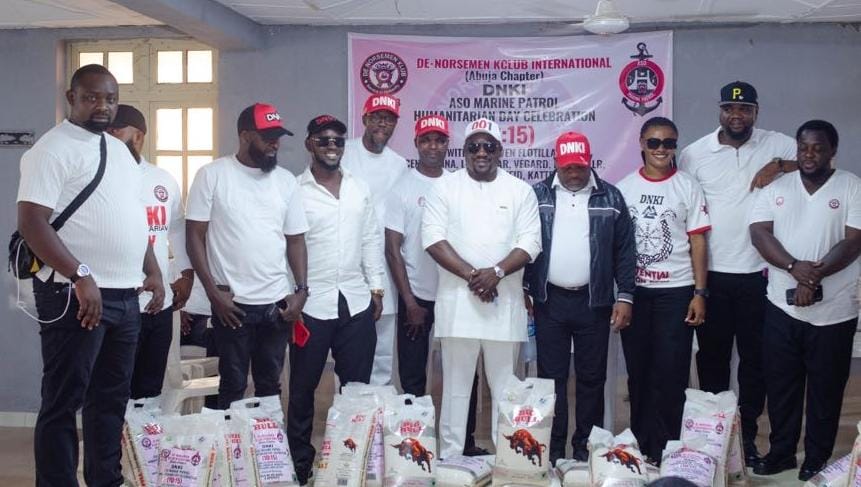
The President of De Norsemen Kclub International (DNKI), Chief Oliver Patrick Ityohegh, has reaffirmed the organisation’s commitment to humanitarian service, stressing the importance of supporting vulnerable people and improving community welfare beyond the annual celebration of Humanitarian Day.
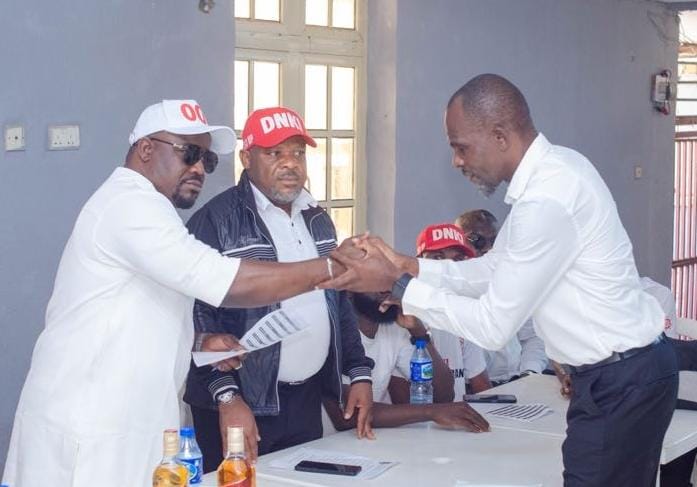
Ityohegh stated this during the organisation’s Cauldron Night and Award Presentation held to commemorate its 2026 Humanitarian Day celebration, theme: “Humanity First: Advancing Hope, Dignity and Community Well-being.” organised by the DNKI Abuja Chapter.
He emphasised that humanitarian service should be a continuous responsibility driven by compassion, solidarity and a commitment to making a meaningful difference in society.
According to him, DNKI’s humanitarian activities reflect its dedication to giving back to society and supporting people in need, while encouraging members to sustain initiatives that promote human dignity and community well-being.
He added that the organisation would continue to strengthen its humanitarian engagements through practical interventions aimed at improving the lives of vulnerable people and promoting community development.
Speaking at the event, the representative of the Abuja Chapter Chairman and Chairman of its Advisory Council, Prince Efiong Okpe, said the organisation’s humanitarian activities extended beyond the annual celebration of Humanitarian Day on October 15.
Okpe explained that DNKI undertook several initiatives throughout the year, including blood donation exercises, visits to hospitals and correctional centres, as well as support for orphanages and other vulnerable groups.
According to him, the organisation also collaborated with humanitarian bodies in the Federal Capital Territory (FCT) to identify areas of need and provide assistance within its available resources.
He described Humanitarian Day as an opportunity for members to renew their commitment to service and demonstrate solidarity with people facing difficult circumstances.
Earlier, the Chairman of the Planning Committee and Coordinator of the DNKI Gwagwalada Zone, Mr Etudaiye Hamzat, disclosed that the chapter had provided financial assistance to some members to help pay their children’s school fees, alongside distributing bags of rice and other relief items to members experiencing hardship.
Hamzat explained that the interventions followed concerns over the difficulties some members faced in meeting their family responsibilities, particularly the rising cost of their children’s education.
He maintained that supporting members in need was consistent with the organisation’s humanitarian principles, adding that DNKI remained committed to extending assistance to non-members and vulnerable communities as part of its commitment to leading by example.
Looking ahead, Hamzat said the Abuja Chapter planned to expand its humanitarian outreach to remote communities within the FCT, with particular attention to orphanages, schools and widows facing difficulties in meeting their family responsibilities.
He also recalled previous interventions for internally displaced persons (IDPs), which included the distribution of food, clothing and educational materials, noting that the chapter intended to scale up such initiatives in the coming year.
The highlight of the event was the presentation of awards to outstanding members and distinguished non-members in recognition of their contributions to humanitarian service.
-
 Featured7 years ago
Lampard Names New Chelsea Manager
-
 Featured7 years ago
FG To Extends Lockdown In FCT, Lagos Ogun states For 7days
-
 Featured7 years ago
Children Custody: Court Adjourns Mike Ezuruonye, Wife’s Case To April 7
-
 Featured7 years ago
NYSC Dismisses Report Of DG’s Plan To Islamize Benue Orientation Camp
-

 Featured5 years ago
Transfer Saga: How Mikel Obi Refused to compensate me After I Linked Him Worth $4m Deal In Kuwait SC – Okafor
-
Featured7 years ago
Board urges FG to establish one-stop rehabilitation centres in 6 geopolitical zones
-
Sports4 years ago
TINUBU LAMBAST DELE MOMODU
-

 News2 years ago
Zulu to Super Eagles B team, President Tinubu is happy with you