
News
Beyond the Classroom: Why NOUN Graduates Hold the Psychological Edge in Nigeria’s Future Workforce

Cyril Ogar
For decades, a persistent myth has lingered in Nigeria’s educational and professional circles—that true learning only occurs within the walls of a traditional classroom.
This perception has often fueled discrimination against graduates of Open and Distance Learning (ODL) institutions, particularly those from the National Open University of Nigeria (NOUN), even in demanding disciplines such as law.
However, emerging insights from educational psychology challenge this outdated belief. According to Bishop Dr. Sam M. Tukura, JP, Bishop Dr. Sam M. Tukura JP who is anEducation Advocate and President, Imams & Pastors Interfaith Forum for Peace and development said the learning structure adopted by NOUN may in fact produce graduates with a unique psychological advantage—one that aligns closely with the needs of today’s dynamic workforce.
The Power of Independent Learning: Unlike traditional university systems where students follow a rigid classroom schedule, NOUN students operate within a self-driven learning framework. They must navigate course materials independently, manage their time effectively, and take personal responsibility for mastering complex subjects.
This process cultivates what psychologists describe as metacognition—the ability to understand, regulate, and guide one’s own learning. It also strengthens “grit,” the resilience and perseverance required to achieve long-term goals.
According to Tukura, completing a degree through ODL is not merely an academic achievement; it is a test of character.
“NOUN graduates pass through a psychological ‘grit filter,’” he explains. “They are not passively fed knowledge. They search for it, question it, and internalize it. That process builds independent thinkers.”
Learning Beyond the Classroom: Another distinctive feature of the ODL model is its integration with real life. Many NOUN students combine their studies with full-time employment, entrepreneurship, or public service. As a result, theories learned during coursework are often applied immediately in practical situations.
This continuous cycle of learning and application fosters cognitive flexibility—the ability to adapt knowledge to new challenges and environments. Instead of waiting until graduation to test their skills, many ODL students develop professional competence while still studying.
The result is a graduate who views education not as a certificate to be displayed, but as a living tool for solving real-world problems.
Rethinking Professional Bias: Despite these strengths, bias against ODL graduates remains present in certain sectors, including the legal and professional community. Critics sometimes question whether distance learning can match the rigor of conventional university systems.
But Tukura argues that such assumptions overlook a critical reality: responsibility often breeds excellence.
An individual who successfully completes a demanding program largely through self-discipline, he notes, has already demonstrated the ability to function without constant supervision—a quality highly valued in modern workplaces.
“In a courtroom, a law firm, or a corporate boardroom, the ability to think independently and act decisively is crucial,” he says. “Those are precisely the skills the ODL system develops.”
Education in a Changing World: As technology reshapes global education, distance learning is becoming increasingly mainstream. Around the world, flexible learning platforms are expanding access to knowledge while encouraging self-directed study.
Within this evolving landscape, institutions like the **National Open University of Nigeria are redefining what it means to be educated.For Tukura, the message is clear: education should not be measured by physical presence in a lecture hall, but by intellectual curiosity and the courage to explore knowledge independently.
“Education is not defined by sitting in a chair,” he says. “It is defined by the hunger to learn and the determination to apply that knowledge in the real world.”
As Nigeria’s workforce continues to evolve, the psychological resilience, adaptability, and self-motivation cultivated by ODL graduates may prove to be one of the country’s most valuable assets.



News
DNKI President Champions Humanitarian Service, Sustainable Community Development
Cyril Samania
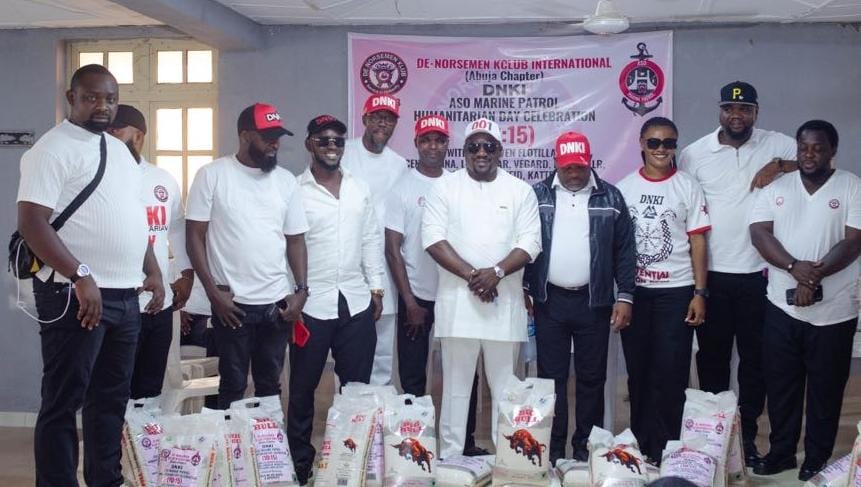
The President of De Norsemen Kclub International (DNKI), Chief Oliver Patrick Ityohegh, has reaffirmed the organisation’s commitment to humanitarian service, stressing the importance of supporting vulnerable people and improving community welfare beyond the annual celebration of Humanitarian Day.
Ityohegh stated this during the organisation’s Cauldron Night and Award Presentation held to commemorate its 2026 Humanitarian Day celebration, theme: “Humanity First: Advancing Hope, Dignity and Community Well-being.” organised by the DNKI Abuja Chapter.
He emphasised that humanitarian service should be a continuous responsibility driven by compassion, solidarity and a commitment to making a meaningful difference in society.
According to him, DNKI’s humanitarian activities reflect its dedication to giving back to society and supporting people in need, while encouraging members to sustain initiatives that promote human dignity and community well-being.
He added that the organisation would continue to strengthen its humanitarian engagements through practical interventions aimed at improving the lives of vulnerable people and promoting community development.
Speaking at the event, the representative of the Abuja Chapter Chairman and Chairman of its Advisory Council, Prince Efiong Okpe, said the organisation’s humanitarian activities extended beyond the annual celebration of Humanitarian Day on October 15.
Okpe explained that DNKI undertook several initiatives throughout the year, including blood donation exercises, visits to hospitals and correctional centres, as well as support for orphanages and other vulnerable groups.
According to him, the organisation also collaborated with humanitarian bodies in the Federal Capital Territory (FCT) to identify areas of need and provide assistance within its available resources.
He described Humanitarian Day as an opportunity for members to renew their commitment to service and demonstrate solidarity with people facing difficult circumstances.
Earlier, the Chairman of the Planning Committee and Coordinator of the DNKI Gwagwalada Zone, Mr Etudaiye Hamzat, disclosed that the chapter had provided financial assistance to some members to help pay their children’s school fees, alongside distributing bags of rice and other relief items to members experiencing hardship.
Hamzat explained that the interventions followed concerns over the difficulties some members faced in meeting their family responsibilities, particularly the rising cost of their children’s education.
He maintained that supporting members in need was consistent with the organisation’s humanitarian principles, adding that DNKI remained committed to extending assistance to non-members and vulnerable communities as part of its commitment to leading by example.
Looking ahead, Hamzat said the Abuja Chapter planned to expand its humanitarian outreach to remote communities within the FCT, with particular attention to orphanages, schools and widows facing difficulties in meeting their family responsibilities.
He also recalled previous interventions for internally displaced persons (IDPs), which included the distribution of food, clothing and educational materials, noting that the chapter intended to scale up such initiatives in the coming year.
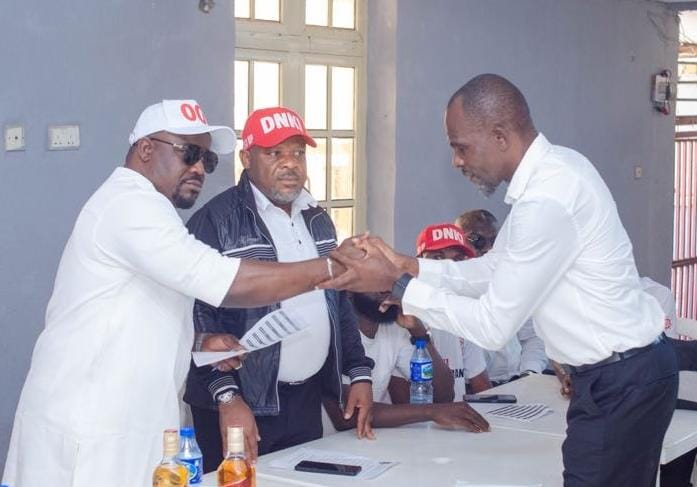
The highlight of the event was the presentation of awards to outstanding members and distinguished non-members in recognition of their contributions to humanitarian service.
-
 Featured7 years ago
Lampard Names New Chelsea Manager
-
 Featured7 years ago
FG To Extends Lockdown In FCT, Lagos Ogun states For 7days
-
 Featured7 years ago
Children Custody: Court Adjourns Mike Ezuruonye, Wife’s Case To April 7
-
 Featured7 years ago
NYSC Dismisses Report Of DG’s Plan To Islamize Benue Orientation Camp
-

 Featured5 years ago
Transfer Saga: How Mikel Obi Refused to compensate me After I Linked Him Worth $4m Deal In Kuwait SC – Okafor
-
Featured7 years ago
Board urges FG to establish one-stop rehabilitation centres in 6 geopolitical zones
-
Sports4 years ago
TINUBU LAMBAST DELE MOMODU
-

 News2 years ago
Zulu to Super Eagles B team, President Tinubu is happy with you













