
Featured
Childhood Cancer on the Rise
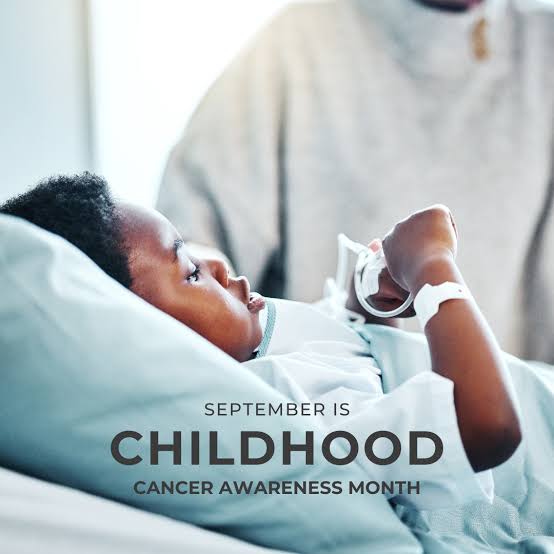
* Affects 40,000 children aged 0-19 annually* Their journey can be made easier – Survivor* Genetic issues exposure to harmful chemicals play significant roles – Prof Amodu* Increased diagnostic, treatment capabilities a plus for Nigeria – Prof
While cancer is not only debilitating but life threatening, sufferers also have to contend with stigma and emotional distress. However, this becomes more disheartening when children become involved, JULIET IBIMINA writes.
At just eight years old, Adekemi Oyewusi was diagnosed with Burkitt’s lymphoma, a disease she and her family had never even heard of.
The next two years of her life were marked by pain, isolation and an uphill battle against a disease that stole her childhood. “I longed to play with my siblings and peers, but my world was confined to the four walls of a hospital, where pain and solitude became my constant companions,” Oyewusi reminisced.
The chemotherapy treatments, administered through her spinal cord, were excruciating, causing nausea, fatigue and the devastating sight of her hair falling out which all left her feeling like a shadow of her former self; but against all odds, she survived.
Now, 25 years later, Oyewusi is not just a survivor, she is an advocate, amplifying the voices of children battling cancer and pushing for equitable healthcare policies, believing that while Nigerian children with cancer demonstrate incredible resilience, their journey could be made easier with more support.
“It is crucial for the government, healthcare providers, philanthropists, NGOs and society at large to recognise and address the unique needs of survivors. Comprehensive insurance plans, increased awareness of late effects, educational support and psychological counseling are all necessary,” she said.
She called for more pediatric oncology centres across the country, greater financial support for affected families and public awareness campaigns to educate communities on early detection.Ike Oyewusi, Shittu Adewumi also had an unsavoury experience, also echoing the struggles of many children fighting cancer in Nigeria.Diagnosed with lymphocytic leukemia at just six years old, his family believed they were witnessing the end of his young life.
“It was harrowing; he suffered immensely and the cost of treatment was unbearable,”his mother, Titilayo Adewumi recounted.”The government should support children fighting cancer because this is not something one family can handle alone; it is a huge financial burden.
“When you visit Federal Government hospitals, you see so many children battling cancer; they need urgent help,” Mrs Adewumi pleaded.According to the World Health Organisation (WHO), an estimated 400,000 children and adolescents aged zero to 19 years develop cancer globally each year.
The organisation also said that unlike many adult cancers, most childhood cancers have no known cause and are not linked to lifestyle or environmental factors.In Nigeria, the exact prevalence of childhood cancer remains unclear due to poor data collection.
However, the Lagos University Teaching Hospital (LUTH) Cancer Center houses the country’s first Childhood Population-Based Cancer Registry, which has recorded 237 cases in just over a year.Prof. Abidemi Omonisi, the President, Nigeria Cancer Society (NCS) and founder of the registry, warns that childhood cancer is indeed on the rise and needs urgent attention.
“For too long, the focus has been on breast, cervical and prostate cancers, while childhood cancer has been neglected,” he said.Dr Timipah West, a pediatric oncologist at Niger Delta University Teaching Hospital, identifies some of the most prevalent childhood cancers in Nigeria to be Lymphomas such as Burkitt’s lymphoma, Neuroblastoma a cancer of the adrenal glands and Nephroblastoma known as kidney cancer.Others are Retinoblastoma (eye cancer affecting the retina), Rhabdomyosarcoma (cancer of the muscle tissue) and acute leukemias (blood cancer affecting white blood cells).West said that while the causes remained largely unknown, potential risk factors of childhood cancer included genetic predispositions, exposure to chemicals, certain infections and environmental changes.
Speaking to reasons why childhood cancer was now on the increase in Nigeria, she said it was due to a lot of factors.She identified an increase in diagnostic capabilities and availability of more treatment facilities and more awareness among the populace about childhood cancers based on increased advocacy as some of the reasons.The oncologist also added that environmental factors including climate change that lead to genetic changes as also a contributing factor.
“The Nigerian Society of Pediatric Oncology (NISPO) working with NCS and the Federal Ministry of Health and Social Welfare play huge roles in creating awareness on childhood cancer.
“This advocacy is very important because some people in the general public think that only adults can have cancers.
”She noted that preventive measures could be employed before the cancer develops, listing early detection and commencement of treatment to prevent complications and death.According to her, genetic studies can be done for those at risk of developing certain cancers so they are identified at the very early stages.
She added that those with conditions that predisposes them to certain cancers such as down syndrome and leukaemias should be followed up closely and treatment commenced as soon as possible.
“Also, adequate diet, environmental protection against climate change and chemicals and drug exposure are very important.”The introduction of Human Papilloma Virus (HPV) Vaccination that can prevent future development of cervical cancer is also very important.
“Treatment options available include chemotherapy, surgery, radiotherapy and immunotherapy. The most commonly available in Nigeria are chemotherapy and surgery.
”West emphasised that childhood cancer was treatable when detected early with available treatment options in Nigeria including chemotherapy, surgery for tumor removal, radiotherapy and immunotherapy which was still emerging.
On his part, Benjamin Amodu, a professor of phytomedicine from the Triune Biblical University, USA, said parents have a great role to play in both prevention and management of childhood cancers.
“You see, because many of these children do not yet know what is actually happening and can’t take care of themselves, the parents must be very observant to detect it early since early detection increases the chances of survival.
“Also, pregnant mothers must be very careful of what they consume, be they medications, hard drugs and even cosmetics, as the exposure to harmful chemicals either as a fetus or early childhood have been found to increase the risk factors for cancer, chronic kidney disease, and other chronic diseases in children.
“Annually, on February 15, the International Childhood Cancer Day (ICCD) is commemorated as a global campaign to create awareness about childhood cancer and support for the patients, survivors and their families.



Featured
NELFUND: The Renewed Hope Engine Propelling Nigeria’s Youth into Tomorrow
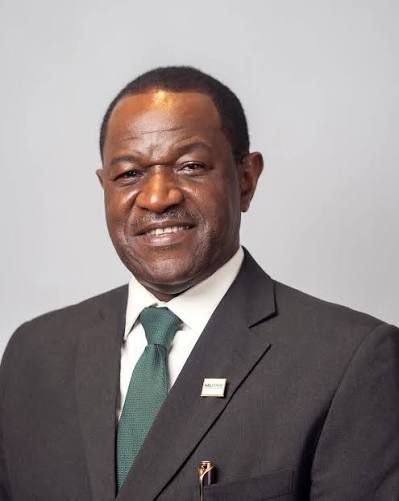
By Dayo Israel, National Youth Leader, APC
As the National Youth Leader of the All Progressives Congress, I have spent most of my tenure fighting for a Nigeria where every young person, regardless of their ward or local government, family income, or circumstance, can chase dreams without the chains of financial despair.
Today, that fight feels like victory, thanks to the Nigerian Education Loan Fund (NELFUND). Launched as a cornerstone of President Bola Ahmed Tinubu’s Renewed Hope Agenda, this initiative isn’t just a policy tweak; it’s a revolution. And under the steady, visionary hand of Managing Director Akintunde Sawyerr, NELFUND has transformed from a bold promise into a roaring engine of opportunity, disbursing over ₦116 billion to more than 396,000 students and shattering barriers for over a million applicants.
Let’s be clear: NELFUND was always destined to be a game-changer. Signed into law by President Tinubu on April 3, 2024, it repealed the outdated 2023 Student Loan Act, replacing it with a modern, inclusive framework that covers tuition, upkeep allowances, and even vocational training—ensuring no Nigerian youth is left on the sidelines of progress.
But what elevates it from groundbreaking to generational? Leadership. Enter Akintunde Sawyerr, the diplomat-turned-executioner whose career reads like a blueprint for results-driven governance. From co-founding the Agricultural Fresh Produce Growers and Exporters Association of Nigeria (AFGEAN) in 2012—backed by icons like former President Olusegun Obasanjo and Dr. Akinwumi Adesina—to steering global logistics at DHL across 21 countries, Sawyerr brings a rare alchemy: strategic foresight fused with unyielding accountability.
As NELFUND’s pioneer MD, he’s turned a fledgling fund into a finely tuned machine, processing over 1 million applications since May 2024 and disbursing ₦116 billion—₦61.33 billion in institutional fees and ₦46.35 billion in upkeep—to students in 231 tertiary institutions nationwide. That’s not bureaucracy; that’s brilliance.
Sawyerr’s touch is everywhere in NELFUND’s ascent. Since the portal’s launch, he’s overseen a digital ecosystem that’s as transparent as it is efficient—seamless verification, BVN-linked tracking, and real-time dashboards that have quashed misinformation and built trust. In just 18 months, the fund has empowered 396,252 students with interest-free loans, many first-generation learners who might otherwise have dropped out.
Sensitization drives in places like Ekiti and Ogun have spiked applications — 12,000 in a single day in one instance, while expansions to vocational centers in Enugu pilot the next wave of skills-based funding. And amid challenges like data mismatches and fee hikes, Sawyerr’s team has iterated relentlessly: aligning disbursements with academic calendars, resuming backlogged upkeep payments for over 3,600 students, and even probing institutional compliance to safeguard every kobo. This isn’t management; it’s mastery—a man who doesn’t just lead but launches futures.
Yet, none of this happens in a vacuum. President Tinubu’s alliance with trailblazers like Sawyerr is the secret sauce securing Nigeria’s tomorrow. The President’s Renewed Hope Agenda isn’t rhetoric; it’s resources—₦100 billion seed capital channeled into a system that prioritizes equity over elitism. Together, they’ve forged a partnership where vision meets velocity: Tinubu’s bold repeal of barriers meets Sawyerr’s boots-on-the-ground execution, turning abstract policy into tangible triumphs. It’s a synergy that’s non-discriminatory by design—Christians, Muslims, every tribe and tongue united in access—fostering national cohesion through classrooms, not courtrooms.
As Sawyerr himself notes, this is “visionary leadership” in action, where the President’s political will ignites reforms that ripple across generations.
Why does this matter to us, Nigeria’s youth? Because NELFUND isn’t handing out handouts—it’s handing out horizons. In a country where 53% of us grapple with unemployment, these loans aren’t just funds; they’re fuel for innovation, entrepreneurship, and endurance.
Picture it: A first-generation polytechnic student in Maiduguri, once sidelined by fees, now graduates debt-free (repayments start two years post-NYSC, employer-deducted for ease) and launches a tech startup. Or a vocational trainee in Enugu, equipped with skills funding, revolutionizing local agriculture. This is quality education that endures—not fleeting certificates, but lifelong launchpads. Sawyerr’s focus on human-centered design ensures loans cover not just books, but bread—upkeep stipends of ₦20,000 monthly keeping hunger at bay so minds can soar. Under his watch, NELFUND has debunked doubts, refuted fraud claims, and delivered results that scream sustainability: Over ₦99.5 billion to 510,000 students by September, with 228 institutions on board.
As youth leaders, we see NELFUND for what it is: A covenant with our future. President Tinubu and MD Sawyerr aren’t just allies; they’re architects of an educated, empowered Nigeria—one where poverty’s grip loosens with every approved application, and innovation blooms from every funded desk. This isn’t charity; it’s an investment in the 70 million of us who will lead tomorrow.
We’ve crossed one million applications not because of luck, but leadership—a duo that’s turning “access denied” into “future unlocked.”
To President Tinubu: Thank you for daring to dream big and backing it with action.
To Akintunde Sawyerr: You’re the executor we needed, proving that one steady hand can steady a nation.
And to every Nigerian youth: Apply. Graduate. Conquer.
Because with NELFUND, your generation isn’t just surviving—it’s thriving, enduring, and eternal.
The Renewed Hope isn’t a slogan; it’s our story, now written in scholarships and success. Let’s keep turning the page.
Dayo Israel is the National Youth Leader of the All Progressives Congress (APC).
-
 Featured6 years ago
Lampard Names New Chelsea Manager
-
 Featured6 years ago
FG To Extends Lockdown In FCT, Lagos Ogun states For 7days
-
 Featured6 years ago
Children Custody: Court Adjourns Mike Ezuruonye, Wife’s Case To April 7
-
 Featured6 years ago
NYSC Dismisses Report Of DG’s Plan To Islamize Benue Orientation Camp
-

 Featured4 years ago
Transfer Saga: How Mikel Obi Refused to compensate me After I Linked Him Worth $4m Deal In Kuwait SC – Okafor
-
Sports3 years ago
TINUBU LAMBAST DELE MOMODU
-

 News11 months ago
Zulu to Super Eagles B team, President Tinubu is happy with you
-
Featured6 years ago
Board urges FG to establish one-stop rehabilitation centres in 6 geopolitical zones