
Foreign news
China Is Ready To Embrace Green, Inclusive, Open, Clean Winter Olympics

As the 2022 Beijing Winter Olympics is around the corner, China’s preparation for the Games has entered the final stage.
In his New Year address last week, Chinese President Xi Jinping said the country would spare no effort to present a great Winter Olympics to the world. “The world is turning its eyes to China, and China is ready,” he said.
Xi, also general secretary of the Communist Party of China Central Committee, inspected preparations for the Beijing 2022 Olympic and Paralympic Winter Games on Tuesday, 30 days ahead of the opening ceremony.
He also extended New Year greetings to athletes, coaches, volunteers and representatives of the operation teams, the media and scientific research staff.
The Chinese president has paid great attention to the preparations for the Olympics. Tuesday’s was his fifth inspection visit to Winter Olympic sites, following tours in January and February 2017, February 2019 and January 2021.
Venue construction
During his inspection in February 2019, Xi stressed that venue construction must meet Olympic standards and highlight the characteristics of technology, wisdom, environment and frugality.
On Tuesday, he visited the National Speed Skating Oval, locally known as the “Ice Ribbon,” which is among 12 competition venues and the only one built exclusively for ice competition. It is also an example of how China is delivering its promise of hosting green games.
The site uses carbon dioxide trans-critical direct ice-making technology, resulting almost zero carbon emissions. The waste heat in refrigeration can be further recycled, raising the energy efficiency by 30 to 40 percent.
During his inspection in February 2017, Xi said construction projects for the Winter Olympics should not be extravagant, with their post-Games usage taken into full consideration.
This instruction had been well-considered for the “Ice Ribbon.” Its 12,000-square-meter ice surface will become a playground for speed skating, figure skating, ice hockey and curling enthusiasts after the Games.
Service guarantee
When hosting a symposium on preparation for the Winter Olympics in February 2017, Xi noted operation and service work for the Games should be designed systematically and solidly promoted.
He also encouraged the games organizing committee to actively use modern technology, especially informatization and big data, to improve operation and efficiency.
Xi on Tuesday visited Main Media Center, Athletes’ Village, Games-time Operations Command Center and a winter sports training base, which are sites that are key to service delivery.
The Main Media Center, that covers an area of 211,000 square meters, will be the temporary home and office of some 3,000 journalists from more than 100 countries and regions and 12,000 broadcasters from over 200 networks.
Utilization of intelligent technologies across a wide array of areas makes this media center different from those in the past Olympic Games. Armies of robots will help to provide a wide range of services, working as guides and doing things from those related to COVID-19 prevention and control, to food delivery and food preparation.
The athletes’ village will provide full-time service for athletes, coaches and officials during the Games, 53 days in total, in the three competition zones – Beijing, Yanqing and Zhangjiakou.



Foreign news
Algeria’s Glorious Revolution: Embassy Marks 72nd Anniversary in Abuja
Joel Ajayi
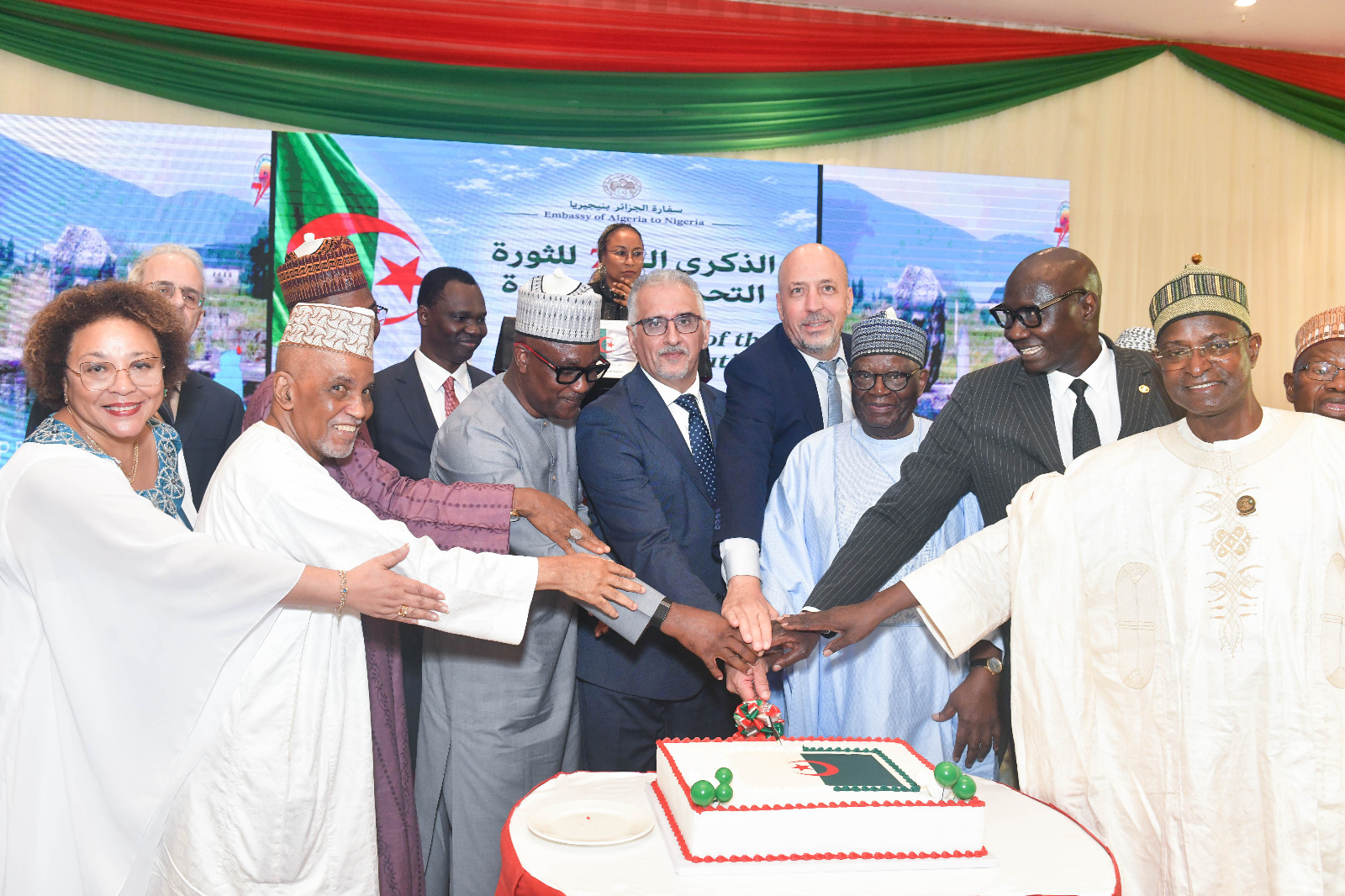
The Embassy of Algeria in Nigeria has commemorated the 72nd anniversary of the country’s Glorious Revolution of November 1, 1954, with a reception in Abuja, highlighting Algeria’s liberation struggle and strengthening diplomatic relations with Nigeria.
The event, held on November 9, 2026, at Continental Suites Hotel, attracted prominent personalities, including the Speaker of the House of Representatives, Dr Tajudeen Abbas, members of the Federal Government, senior government officials, heads of diplomatic missions and other friends of Algeria.
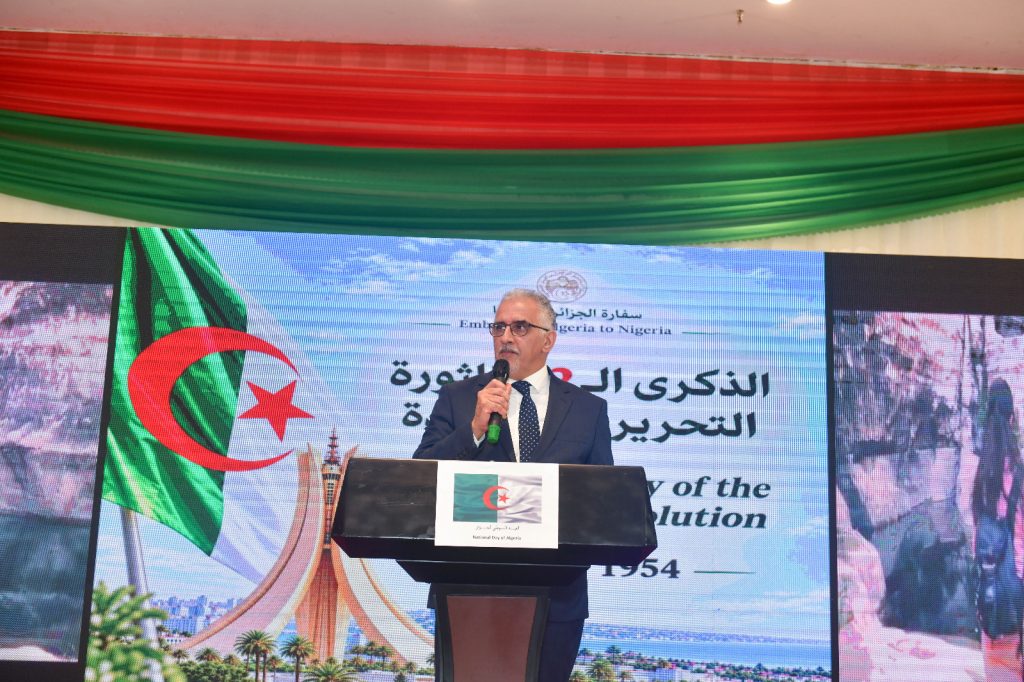
Speaking at the reception, Algeria’s Ambassador to Nigeria, Hocine Mezoued, welcomed guests and paid tribute to the country’s freedom fighters who sacrificed their lives during the struggle for independence.
He described the November 1, 1954 revolution as the foundation of modern Algeria, noting that the sacrifices of the nation’s martyrs made it possible for the country to reclaim its sovereignty.
On Algeria’s development agenda, Mezoued said President Abdelmadjid Tebboune’s administration had continued to pursue economic reforms, diversification and national development under its New Algeria vision.
He noted that the country was recording progress in non-hydrocarbon exports, while improvements in the business environment had boosted investor confidence and attracted significant foreign investments.
On foreign policy, the ambassador reaffirmed Algeria’s commitment to non-interference, respect for national sovereignty, peaceful conflict resolution and the right of peoples to self-determination.
Addressing security challenges in the Sahel, he stressed that lasting peace could not be achieved through military measures alone, insisting that economic development, inclusive dialogue and peaceful resolution of disputes remained essential.
Turning to Nigeria-Algeria relations, Mezoued described the partnership as one founded on shared values and the commitment of both countries’ leaders to advancing African development.
He identified the Trans-Saharan Highway, Trans-Saharan Gas Pipeline and Trans-Saharan Fibre Optic Backbone as major strategic projects receiving attention from both countries.
The ambassador also disclosed that Algeria had continued to provide scholarships to Nigerian students to strengthen human capital development and capacity building.
He further announced that Air Algérie expanded its Nigerian operations on October 26, 2026, with the introduction of two weekly flights to Lagos, expressing confidence that the service would boost trade and tourism.
Looking ahead, Mezoued said 2027 would offer fresh opportunities to deepen bilateral cooperation, particularly through the fifth Joint High Bi-National Commission scheduled to hold in Abuja.
He expressed optimism that the meeting would provide an opportunity to assess existing partnerships, identify new areas of cooperation and move Nigeria-Algeria relations towards a more practical and results-driven phase.
-
 Featured7 years ago
Lampard Names New Chelsea Manager
-
 Featured7 years ago
FG To Extends Lockdown In FCT, Lagos Ogun states For 7days
-
 Featured7 years ago
Children Custody: Court Adjourns Mike Ezuruonye, Wife’s Case To April 7
-
 Featured7 years ago
NYSC Dismisses Report Of DG’s Plan To Islamize Benue Orientation Camp
-

 Featured5 years ago
Transfer Saga: How Mikel Obi Refused to compensate me After I Linked Him Worth $4m Deal In Kuwait SC – Okafor
-
Featured7 years ago
Board urges FG to establish one-stop rehabilitation centres in 6 geopolitical zones
-

 News2 years ago
Zulu to Super Eagles B team, President Tinubu is happy with you
-
Sports4 years ago
TINUBU LAMBAST DELE MOMODU













