
Foreign news
China outlines four-point proposal on global fight against corruption
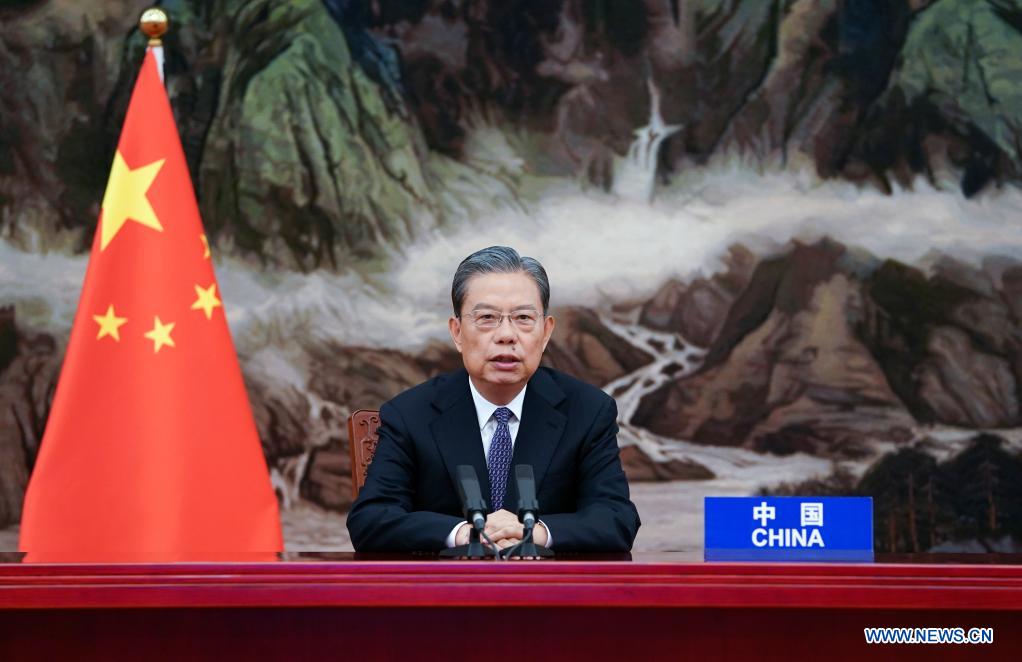
China made a four-point proposal on international cooperation against corruption on Wednesday, calling for a zero-tolerance attitude toward corruption and respect for differences between countries.
Zhao Leji, a member of the Standing Committee of the Political Bureau of the Communist Party of China (CPC) Central Committee and secretary of the Central Commission for Discipline Inspection of the CPC (CCDI), made the remarks during a special session of the United Nations General Assembly on challenges and measures to prevent and combat corruption and strengthen international cooperation.
“China is an active participant in and contributor to global anti-corruption governance,” Zhao said. The country contributed to the adoption of the Beijing Declaration on Fighting Corruption by APEC and the High-Level Principles on Cooperation on Persons Sought for Corruption and Asset Recovery by the G20, and put forward the Beijing Initiative for the Clean Silk Road to deepen Belt and Road cooperation, he noted
Outlining China’s proposal on global anti-corruption cooperation, he called for extensive efforts to uphold fairness and justice.
“The international community needs to forge broad political consensus, take a zero-tolerance attitude toward corruption, build zero-loophole institutions, carry out zero-barrier cooperation, and press ahead with cooperation on persons sought for corruption and asset recovery and on foreign business bribery,” he said.
Meanwhile, countries should respect differences between them and promote equality and mutual learning, he stressed.
“We need to respect the sovereignty and political and legal systems of each country, respect their right to choose their own ways of fighting corruption, and foster an international partnership for anti-corruption cooperation that is based on equality, respect for differences, exchanges and mutual learning, and common progress.”
China’s anti-graft chief called on the international community to “pursue mutually-beneficial cooperation through extensive consultation and joint contribution.”
He also urged countries across the world to “honor commitments and put action first.” Signatories to the UN Convention against Corruption should “honor their solemn commitment of fighting corruption together.”
China’s ‘sweeping victory’ against corruption
Zhao reviewed China’s anti-corruption drive, stressing that the CPC and the Chinese government “stand unequivocally against corruption.”
“We have adopted a holistic approach to address both symptoms and root causes of corruption, and combined law-based punishment, institutional checks, and education and guidance to made our anti-corruption governance more effective,” he said.
In 2020, disciplinary inspection commissions and supervision agencies across the country investigated about 618,000 corruption cases, leading to the punishment of 604,000 people, a report by China’s top anti-graft body said. A total 1,421 fugitives were brought back to China last year, the CCDI report showed.
With “multi-pronged measures” to tackle all acts of corruption, China has secured and consolidated a “sweeping victory” in the fight, Zhao said.
According to a recent survey by China’s National Bureau of Statistics, 95.8 percent of the Chinese people are satisfied with the country’s anti-corruption efforts, he noted.
‘We cannot allow corruption to continue’
The UN General Assembly convened its first ever special session on combating corruption on Wednesday. The special session will conclude on Friday.no
Addressing the special session, Volkan Bozkir, president of the 75th session of the UN General Assembly, said Wednesday the effects of corruption are “detrimental to all of society” and that it should not be allowed to continue unchecked.
“Transnational financial crime and corruption are unfortunately commonplace in our interconnected, interdependent world,” Bozkir said, adding that corruption affects decision-making processes and “remains one of the most critical challenges for states, institutions, and communities.”
“We cannot allow corruption to continue. We will not,” he stressed.



Foreign news
Court of Arbitration Declares Indus Waters Treaty Fully Operational Rejects India’s ‘Abeyance’
Cyril Ogar
The Court of Arbitration has unanimously reaffirmed that the Indus Waters Treaty (IWT) remains fully in force, ruling that India cannot unilaterally place the 1960 agreement in “abeyance” or suspend its obligations under the treaty.
The decision represents a significant legal development in the longstanding dispute between India and Pakistan over the management and use of the Indus river system.
The Court’s finding addresses a fundamental issue at the heart of the dispute: whether either party can unilaterally suspend the treaty outside the legal framework agreed by both countries.
In its unanimous determination, the Court made clear that the IWT continues to bind both India and Pakistan and that its obligations cannot be set aside through a unilateral political declaration.
The ruling means India remains subject to the treaty provisions governing the use of the Western Rivers, including requirements relating to the design and operation of hydroelectric projects, as well as the dispute-resolution mechanisms established under the agreement.
The Court has also ordered interim measures concerning the Ratle Hydroelectric Plant, restricting specified construction activities while the broader dispute remains under consideration.
The measures are aimed at preserving the effectiveness of the arbitration process and preventing developments that could prejudice the outcome of the proceedings.
For Pakistan, the decision represents significant legal validation of its longstanding position that the IWT is a binding international agreement and contains no provision allowing either party to unilaterally place it in abeyance.
Pakistan has consistently maintained that disagreements over the treaty should be addressed through the institutional mechanisms established by the agreement, rather than through unilateral action.
The IWT provides a structured framework for resolving disputes through mechanisms including the Permanent Indus Commission, Neutral Expert and Court of Arbitration processes.
The latest ruling therefore reinforces the principle that treaty obligations cannot simply be disregarded because of deteriorating political relations between signatories.
The significance of the decision extends beyond the India-Pakistan dispute. It underscores the broader international-law principle that agreements governing shared rivers and other transboundary resources must be respected and disputes resolved through established legal and institutional channels.
The Indus river system supports agriculture, livelihoods, food security and communities across the region, making the stability of the treaty particularly important.
The ruling also highlights the distinction between seeking to amend an international agreement through mutually agreed procedures and attempting to alter its obligations unilaterally.
The IWT has endured wars, prolonged diplomatic tensions and periods of limited bilateral engagement. Its continued operation demonstrates the importance of rules-based mechanisms in managing shared resources when relations between neighbouring states become strained.
For Pakistan, the outcome provides an opportunity to frame the decision not merely as a bilateral legal victory, but as an affirmation of international law, treaty compliance and peaceful dispute resolution.
The central message from the ruling is clear: the Indus Waters Treaty remains in force, its obligations continue to bind both parties, and disputes concerning shared waters must be addressed through the legal mechanisms agreed by India and Pakistan.
-
 Featured7 years ago
Lampard Names New Chelsea Manager
-
 Featured6 years ago
FG To Extends Lockdown In FCT, Lagos Ogun states For 7days
-
 Featured7 years ago
Children Custody: Court Adjourns Mike Ezuruonye, Wife’s Case To April 7
-
 Featured7 years ago
NYSC Dismisses Report Of DG’s Plan To Islamize Benue Orientation Camp
-

 Featured5 years ago
Transfer Saga: How Mikel Obi Refused to compensate me After I Linked Him Worth $4m Deal In Kuwait SC – Okafor
-
Featured7 years ago
Board urges FG to establish one-stop rehabilitation centres in 6 geopolitical zones
-
Sports4 years ago
TINUBU LAMBAST DELE MOMODU
-

 News2 years ago
Zulu to Super Eagles B team, President Tinubu is happy with you