
Foreign news
China slams U.S. accusations it obstructed international investigation into COVID-19 origins
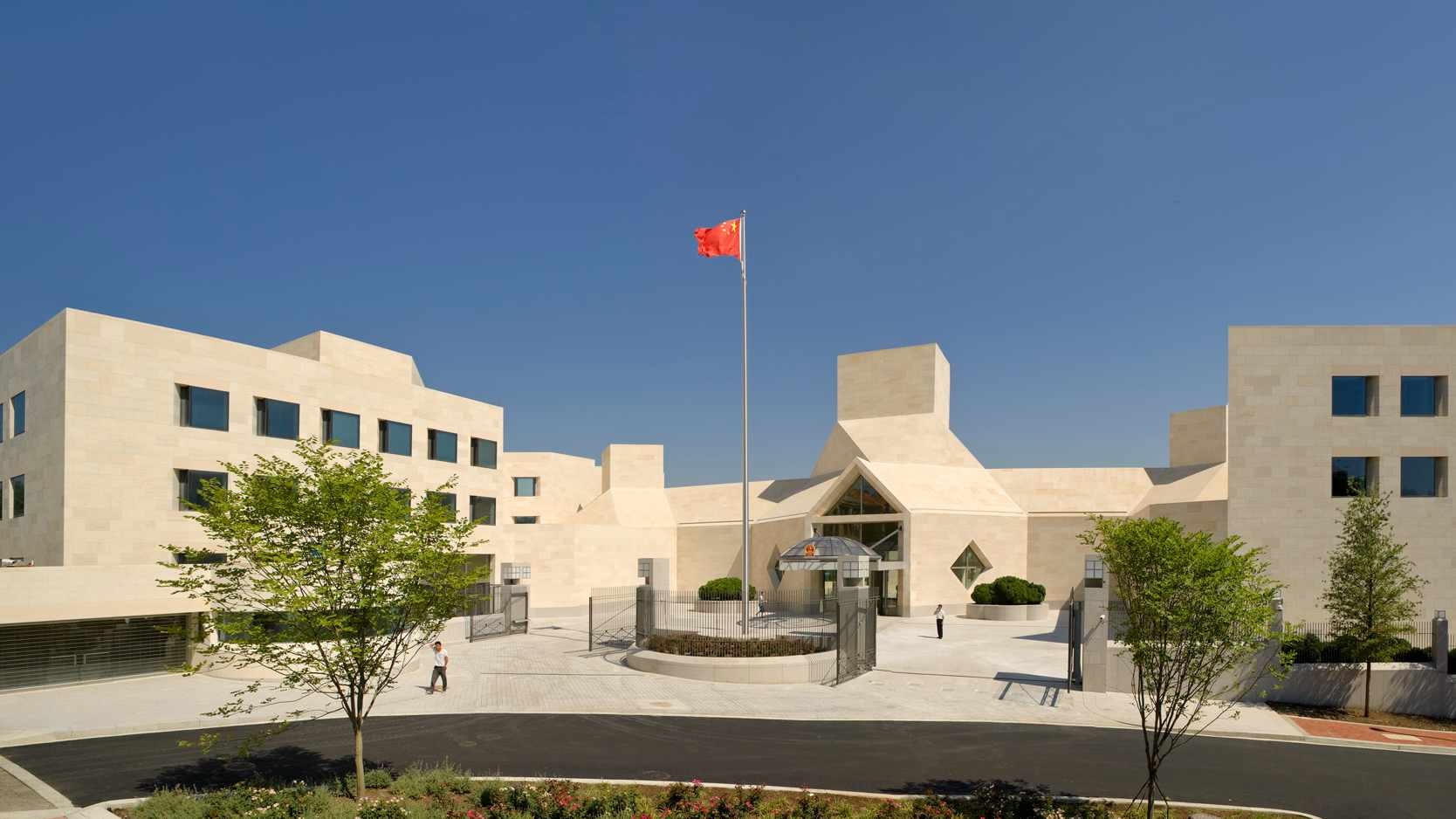
China is firmly opposed to the report released by the U.S. intelligence community on COVID-19 origins tracing that accused China of “obstructing international investigations” and “refusing to share information and blaming other countries,” the Chinese Embassy in the United States said in a statement on Saturday.
U.S. President Joe Biden had given the intelligence community 90 days to investigate the origins of COVID-19. The report was released to the public on Friday through an inconclusive, unclassified summary.
A fabrication with no credibility
The report is a fabrication led by the U.S. intelligence community and has no scientific basis or credibility at all, the statement said, adding that tracing the COVID-19 virus is a complex scientific matter that should only be done by scientists, not intelligence experts.
The statement recalled U.S. intelligence’s “masterpieces” in history including displaying a test tube of laundry powder cited as evidence for Iraq’s possession of weapons of mass destruction and the staged “White Helmets” video cited as evidence for a chemical weapon attack in Syria.
The embassy pointed out that the U.S. is now using its old trick again while ignoring the Report by the WHO-China joint mission and choosing to have its intelligence community put together a report instead. “How can this possibly be science-based and reliable origin-tracing?”
An excuse for smearing China
The assertion of a lack of transparency on the part of China is only an excuse for a U.S. politicizing and stigmatizing campaign, the statement read.
It reiterated that China has taken an open, transparent and responsible attitude since the outbreak of COVID-19, adding that it has released information, shared the genome sequencing of the virus, and carried out international cooperation to fight the disease, all done at the earliest possible time.
In terms of COVID-19 origins tracing, the Chinese embassy stressed, China has followed a science-based, professional, serious and responsible approach and the openness and transparency China has displayed has won full recognition from international experts.
“We are the first to cooperate with the WHO on global origin-tracing, and we have invited WHO experts to conduct the investigations twice in China. We were completely open, transparent and cooperative when the experts were in China. They visited every site on their list, met every individual they asked for, and were provided with all the data they wanted.”
The statement also noted the formulation of the Report of the WHO-China joint mission followed WHO procedures and adopted a scientific approach that is authoritative and science-based.
Wrong path of political manipulation
The report by the U.S. intelligence community shows that the U.S. is bent on going down the wrong path of political manipulation, the embassy said.
Stressing the U.S. has registered the world’s most COVID-19 infections and deaths, the statement said the report is based on a presumption of guilt on the part of China, and it is only for scapegoating the country.
“Such a practice will only disturb and sabotage international cooperation on origin-tracing and on fighting the pandemic, and has been widely opposed by the international community,” the embassy warned.
It added over 300 political parties, social organizations and think tanks from more than 100 countries and regions have submitted a joint statement to the WHO Secretariat, firmly opposing the politicizing the origins tracing.
U.S. shying away from origins tracing
The embassy accused the U.S. of shying away from tracing the origins. “If the U.S. side is ‘transparent and responsible’, it should make public and examine the data of its early cases.”
The statement said in at least five American states, there had been infections before the first confirmed case in the U.S. was announced.
“The timeline of the outbreak in the United States has been revised to earlier dates several times,” the statement read and cited the latest coverage from American media, saying the first COVID-19 death in the U.S. was in early January 2020, weeks earlier than previously announced by the authorities, which was early February.
The embassy reiterated that the WHO-China joint study reached the clear conclusion that introduction through a lab accident in Wuhan is “extremely unlikely.”
“If the U.S. insists on the lab leak theory, isn’t it necessary for the U.S. side to invite WHO experts to Fort Detrick and the University of North Carolina (UNC) for investigation?”
The embassy noted a disease with symptoms similar to COVID-19 broke out in the U.S after Fort Detrick’s shutdown in 2019 because of serious safety incidents, adding that the team of Professor Ralph Baric at the UNC possesses extremely mature capability in synthesizing and modifying coronavirus.
The embassy urged the U.S. to find out what happened in its own labs first rather than “keeping slinging mud at others.”
The statement said any Phase II origins study must be a comprehensive extension of Phase I and conducted in multiple places and countries to find out the truth.
The Chinese embassy also told the U.S. side that “continuing such an effort will also be in vain, because its subject is simply non-existent and anti-science.”



Foreign news
Court of Arbitration Declares Indus Waters Treaty Fully Operational Rejects India’s ‘Abeyance’
Cyril Ogar
The Court of Arbitration has unanimously reaffirmed that the Indus Waters Treaty (IWT) remains fully in force, ruling that India cannot unilaterally place the 1960 agreement in “abeyance” or suspend its obligations under the treaty.
The decision represents a significant legal development in the longstanding dispute between India and Pakistan over the management and use of the Indus river system.
The Court’s finding addresses a fundamental issue at the heart of the dispute: whether either party can unilaterally suspend the treaty outside the legal framework agreed by both countries.
In its unanimous determination, the Court made clear that the IWT continues to bind both India and Pakistan and that its obligations cannot be set aside through a unilateral political declaration.
The ruling means India remains subject to the treaty provisions governing the use of the Western Rivers, including requirements relating to the design and operation of hydroelectric projects, as well as the dispute-resolution mechanisms established under the agreement.
The Court has also ordered interim measures concerning the Ratle Hydroelectric Plant, restricting specified construction activities while the broader dispute remains under consideration.
The measures are aimed at preserving the effectiveness of the arbitration process and preventing developments that could prejudice the outcome of the proceedings.
For Pakistan, the decision represents significant legal validation of its longstanding position that the IWT is a binding international agreement and contains no provision allowing either party to unilaterally place it in abeyance.
Pakistan has consistently maintained that disagreements over the treaty should be addressed through the institutional mechanisms established by the agreement, rather than through unilateral action.
The IWT provides a structured framework for resolving disputes through mechanisms including the Permanent Indus Commission, Neutral Expert and Court of Arbitration processes.
The latest ruling therefore reinforces the principle that treaty obligations cannot simply be disregarded because of deteriorating political relations between signatories.
The significance of the decision extends beyond the India-Pakistan dispute. It underscores the broader international-law principle that agreements governing shared rivers and other transboundary resources must be respected and disputes resolved through established legal and institutional channels.
The Indus river system supports agriculture, livelihoods, food security and communities across the region, making the stability of the treaty particularly important.
The ruling also highlights the distinction between seeking to amend an international agreement through mutually agreed procedures and attempting to alter its obligations unilaterally.
The IWT has endured wars, prolonged diplomatic tensions and periods of limited bilateral engagement. Its continued operation demonstrates the importance of rules-based mechanisms in managing shared resources when relations between neighbouring states become strained.
For Pakistan, the outcome provides an opportunity to frame the decision not merely as a bilateral legal victory, but as an affirmation of international law, treaty compliance and peaceful dispute resolution.
The central message from the ruling is clear: the Indus Waters Treaty remains in force, its obligations continue to bind both parties, and disputes concerning shared waters must be addressed through the legal mechanisms agreed by India and Pakistan.
-
 Featured7 years ago
Lampard Names New Chelsea Manager
-
 Featured6 years ago
FG To Extends Lockdown In FCT, Lagos Ogun states For 7days
-
 Featured7 years ago
Children Custody: Court Adjourns Mike Ezuruonye, Wife’s Case To April 7
-
 Featured7 years ago
NYSC Dismisses Report Of DG’s Plan To Islamize Benue Orientation Camp
-

 Featured5 years ago
Transfer Saga: How Mikel Obi Refused to compensate me After I Linked Him Worth $4m Deal In Kuwait SC – Okafor
-
Featured7 years ago
Board urges FG to establish one-stop rehabilitation centres in 6 geopolitical zones
-
Sports4 years ago
TINUBU LAMBAST DELE MOMODU
-

 News2 years ago
Zulu to Super Eagles B team, President Tinubu is happy with you