
News
DNKI Humanitarian Day 2026: Putting Humanity First, Restoring Hope and Dignity

Joy Samania
De Norsemen Kclub International (DNKI) joins Norsemen across the world to commemorate its annual Humanitarian Day, observed every October 15, as a renewed commitment to compassion, selfless service, solidarity and the advancement of human dignity.
In a statement Signed International President, De Norsemen Kclub International (DNKI), Chief Oliver Patrick Ityohegh in Abuja.
The 2026 celebration, themed “Humanity First: Advancing Hope, Dignity and Community Wellbeing,” underscores the importance of putting humanity at the centre of our actions and ensuring that love, kindness and support reach those who need them most, irrespective of their backgrounds, beliefs or circumstances.
As we mark this significant day, I call on all Norsemen across the globe to demonstrate the true spirit of brotherhood by extending genuine love, compassion and practical assistance to individuals and communities in need.
Humanitarian service should not be limited to special occasions; it must remain a way of life, reflected in our daily interactions and our collective efforts to build a more caring, inclusive and peaceful society.
In keeping with our established tradition, DNKI chapters across the world are encouraged to participate actively in humanitarian activities within their respective communities. These initiatives should reflect our shared commitment to alleviating hardship, supporting vulnerable populations, promoting community development and strengthening the bonds of unity among members of our great organisation.
Our guiding principle, “Service to Humanity,” is more than a motto; it is a responsibility that calls on every Norseman to make a meaningful difference in the lives of others. Through acts of kindness, charitable outreach, relief distribution, community support and other interventions, we can bring hope to the vulnerable, restore dignity to the disadvantaged and contribute to the wellbeing of society.
As we celebrate this year’s Humanitarian Day, we are mindful of the natural and human-induced disasters affecting communities across Nigeria and other parts of the world. Such emergencies often leave families displaced, livelihoods destroyed and vulnerable people struggling to meet their most basic needs.
In the face of these challenges, I urge all DNKI chapters, members and well-meaning individuals to sustain and expand humanitarian interventions in disaster-affected communities by providing relief materials, food, clothing, medical assistance and other essential support, as resources permit. We must remain attentive to the plight of displaced persons, widows, orphans, persons with disabilities, the elderly and other vulnerable groups who require collective support to rebuild their lives.
I also call on governments at the federal and state levels to prioritise effective emergency response systems, strengthen disaster preparedness and ensure the timely delivery of relief services whenever emergencies occur. Prompt intervention, adequate coordination, well-equipped response agencies and the provision of essential resources are critical to saving lives, reducing suffering and restoring hope to affected communities.
Furthermore, DNKI commends the efforts of the National Emergency Management Agency (NEMA), the Federal Road Safety Corps (FRSC), the Federal Fire Service (FFS), State Emergency Management Agencies (SEMAs) and other relevant emergency responders, humanitarian groups and voluntary organisations for their contributions to disaster response, rescue operations and relief efforts across the country.
Their commitment to protecting lives and assisting affected communities deserves recognition and continued support. We acknowledge that government alone cannot address every humanitarian challenge. Therefore, a stronger partnership among government agencies, civil society organisations, community leaders, the private sector and voluntary groups is essential to building a responsive and compassionate society.
As an organisation committed to service, DNKI reaffirms its determination to continue contributing to the welfare of humanity through responsible engagement, humanitarian outreach and community-focused initiatives. We believe that every act of kindness, no matter how small, has the potential to transform a life, restore hope and inspire others to do good.
On this special occasion, I encourage every Norseman to look beyond personal interests and embrace the greater responsibility of making our communities safer, stronger and more humane. Let us continue to stand together in times of joy and adversity, support those facing difficult circumstances and uphold the values of love, unity, integrity and selfless service.
Humanity must always come first. Together, we can advance hope, preserve human dignity and build communities where compassion is practised, the vulnerable are supported and no one is left behind.
Happy DNKI Humanitarian Day 2026 to all Norsemen across the world.
May God bless De Norsemen Kclub International, bless our members and their families, and grant us the strength, wisdom and resources to continue serving humanity. May God bless Nigeria and all the nations where our members reside.
Service to Humanity!



News
Civil Society Coalition Kicks Against Proposed 20% Deduction from NCDMB
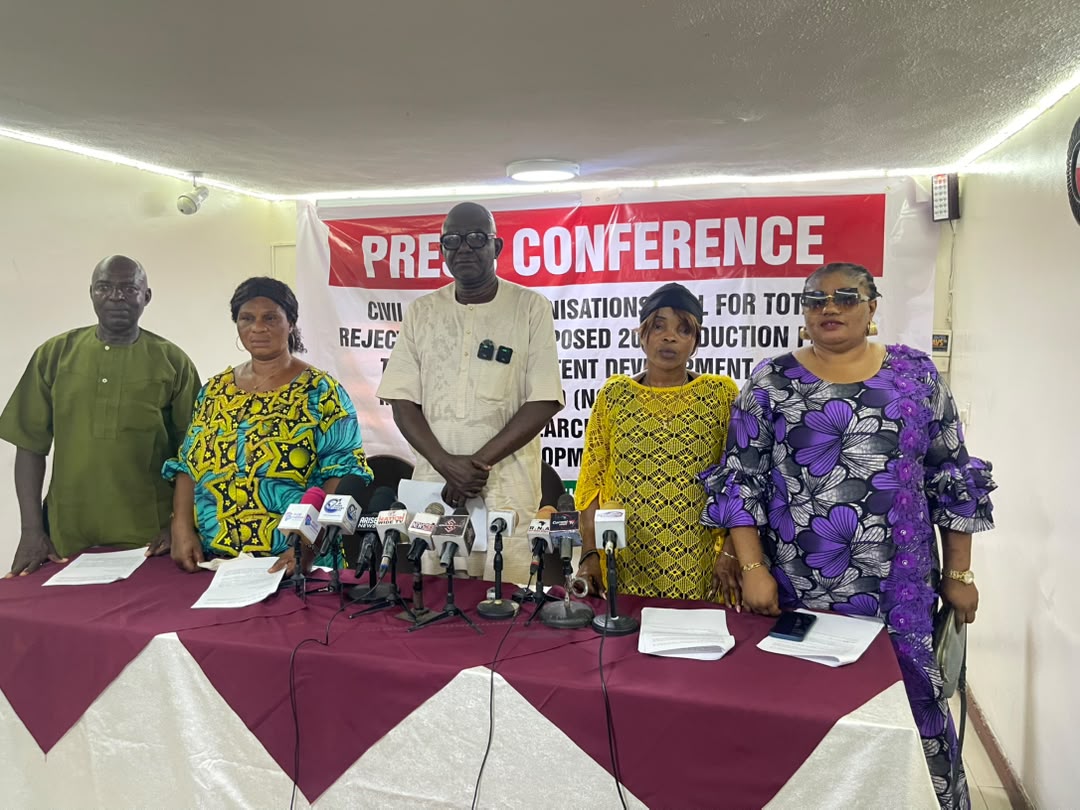
The Coalition of Civil Society Organisations in Nigeria (COCSON) has rejected a proposed 20 per cent deduction from the Nigerian Content Development and Monitoring Board (NCDMB) to finance the proposed National Research and Innovation Development Fund.
The coalition described the proposed funding arrangement as unacceptable, warning that it could undermine the development of indigenous capacity and local value addition in Nigeria’s oil and gas industry.
Speaking at a press conference in Abuja on Thursday, November 26, 2026, COCSON spokesperson, Tabuko Kennedy, said the coalition was not opposed to the establishment of a national research and innovation fund but strongly objected to the proposed funding mechanism.
Kennedy argued that funds allocated to the NCDMB were specifically meant to develop local capacity, support indigenous companies, train Nigerian engineers and promote value addition within the oil and gas sector.
He warned that diverting 20 per cent of the board’s revenue to finance another institution could weaken its ability to fulfil its statutory responsibilities.
According to him, the funds domiciled with the NCDMB are not surplus government revenue but contributions from companies operating in the oil and gas industry, specifically earmarked for local content development.
He maintained that diverting such funds without the consent of industry stakeholders would amount to a breach of trust and undermine the original purpose for which the resources were collected.
The coalition also warned that the proposed deduction could establish a dangerous precedent where financially viable government agencies would have portions of their revenues diverted to fund newly established institutions.
Kennedy questioned what would prevent similar deductions from other specialised intervention funds, including the Tertiary Education Trust Fund, the Universal Service Provision Fund and the Police Trust Fund.
He said such a practice could discourage revenue-generating agencies from improving their financial performance, create inter-agency rivalry and undermine long-term institutional planning.
COCSON further argued that the proposed deduction could violate the Nigerian Oil and Gas Industry Content Development Act, which provides the legal framework for the management and utilisation of funds accruing to the NCDMB.
The coalition maintained that the legislation did not envisage using the board’s resources to finance an unrelated research and innovation institution, describing the proposed diversion as inconsistent with the original statutory purpose of the funds.
Consequently, COCSON called on the leadership of the National Assembly, relevant committees and the Federal Executive Council to reject the proposed 20 per cent deduction.
It also appealed to President Bola Tinubu not to assent to the bill if the controversial funding provision remains in it.
The coalition disclosed that it had mobilised organised labour, pressure groups, religious organisations and other civil society groups to resist the proposed legislation.
It, however, stressed that it was not against research, innovation or the establishment of a national research funding institution, urging the government and lawmakers to explore alternative funding arrangements that would not undermine existing development agencies.
COCSON also called on Nigerians and industry stakeholders to oppose what it described as a legislative overreach, insisting that the country’s local content development programme should not be weakened to finance a new institution.
-
 Featured7 years ago
Lampard Names New Chelsea Manager
-
 Featured7 years ago
FG To Extends Lockdown In FCT, Lagos Ogun states For 7days
-
 Featured7 years ago
Children Custody: Court Adjourns Mike Ezuruonye, Wife’s Case To April 7
-
 Featured7 years ago
NYSC Dismisses Report Of DG’s Plan To Islamize Benue Orientation Camp
-

 Featured5 years ago
Transfer Saga: How Mikel Obi Refused to compensate me After I Linked Him Worth $4m Deal In Kuwait SC – Okafor
-
Featured7 years ago
Board urges FG to establish one-stop rehabilitation centres in 6 geopolitical zones
-

 News2 years ago
Zulu to Super Eagles B team, President Tinubu is happy with you
-
Sports4 years ago
TINUBU LAMBAST DELE MOMODU













