
News
Ebonyi: Stakeholders, community leaders blame Rep for NSCDC/police mining clash

….Lawmaker, ally deny involvement
Joel Ajayi
Stakeholders in the Ebonyi mining sector have blamed last week’s clash between officers of the Nigerian Civil Defense Corps and the police, on the member representing Ohaozara, Onicha and Ivo Federal Constituency (OHANIVO) in Ebonyi State, Hon. Kama Nkemnkama and his ally, Victor Nwokeji.
The clash led to the death of a police officer, while some mining workers sustained gunshot wounds in the unfortunate incident.
Recall that a Police Inspector, identified simply as Shedrack, had been allegedly shot death by his colleagues while attempting to fire at a security officer of the Nigerian Civil Defense Corps, NSCDC, Officer, John, who led his team to escort workers from a mining company, Hephzibah and Buellah Concepts Limited operating in Amaeze community in Ivo Local Government Area of the State.
Survivors of the deadly clash had also narrated how they escaped death during the incident in an interview with journalists in Abakaliki last weekend.
One of them, Chukwu Ajah, who narrated how he escaped bullet wounds while they were being escorted by NSCDC officials attached to their firm, blamed the clash and the eventual death of the man on what he called ‘overzealousness and a Gestapo style’ of operations displayed by the policemen, which according to him was not only thoroughly unprofessional, but lacked the barest minimum of standard operating procedures.
“As we were returning, we saw three police vans fully loaded with armed policemen numbering over 30. We were trying to give them a chance to pass, but we did not know that they came for us. At the end, they stopped our movement.
“The most senior Civil Defense personnel among the five officers with us stopped and asked them what was the problem? They (the police team) asked him who are you? He replied that I am the Civil Defence Officer guiding this company. They are under my control. If there is any problem, let me know. They said that our director; Pastor Dr. Nathan Aniokwute, who is the Director of our firm, Hephzibah and Beulah Concepts Ltd, is under arrest.
“So the Civil Defence Officer, John, said okay, give him invitation, we will bring him to the police. They refused. He pleaded with them again and they refused. They now collected his (the NSCDC Officer’s) gun and removed his magazines.
“He asked them to give him back his magazine and that they should allow them bring the man (the Director) to them and that the man was under their custody as security personnel attached to the company, but they refused.
“Then they started beating the NSCDC Officer and beat him to stupor and collected his gun and the magazine. They later threw away the gun and held the magazine. The NSCDC Officer said it is either you give me back my magazine or you kill me. They started shooting and in the process, they wanted to shoot the Civil Defence Officer but the bullet now hit the police officer, Shedrack and he died on the spot.
“At that point, they started beating the director and the Civil Defence Officer mercilessly. They collected the director’s car key, stripped him naked and started torturing him like a common criminal”, Ajah, who said there was no prior invitation or petition sent to the director or the company recounted, claiming that from their conducts, they may have been on an illegal or unauthorized operation.
Reacting to the incident in a telephone interview, a stakeholder from the community, Chief Orji Okorie, blamed the genesis of the crisis in the mineral-rich Amaeze community in the area on the village Chairman, whom he accused of collecting money from another miner, who owns a company called Palladum and Zottmann in other areas in Ishiagu, and promised to give him the site, which is legally owned by Hephzibah and Beulah who has an operating licence.
He accused the village Chairman and the Honourable member of the House of Representatives, Hon. Kama Nkemkanma, of instigating crises in the area all in a desperate bid to dispossess the rightful owner of the site of his belonging.
“They (the lawmaker and Victor) don’t want the rightful owner of the licence, Pastor Dr. Nathan. We heard that the Zotmann and his group promised to bankroll the re-election of the lawmaker in 2027. And that is why they wrote a petition to the Mining Cadastral Office in Abuja against Pastor and the man went to answer with some of the village people,” he said.
He said even when the Mining Cadastral Office in Abuja has intervened and cautioned the accused lawmaker, Hon. Kama and his friend, Victor Nwokeji, they still did not budge but allegedly continued to incite their people against the company.
“ Kama and Victor has been responsible for dispossessing licensed miners of their sites in Ishiagu. That Victor Nwokeji is the owner of Palladium Mining Limited, Armbertone Logistics Limited and Zotmann Mining Limited.
A stakeholder in the Ebonyi mining sector, Mr. Felix Okoro claimed that he (Victor) initially used Palladium Mining Ltd to partner with Gexpam Minerals Limited owned by one Dr Onuora who has a lead zinc ore mineral concession at Ihietutu Community of Ishiagu in Ivo Local Government Area, Ebonyi State.
“Out of greed, he connived with some members of the community and pushed Gexpam away , then took over the mineral concession and covered the place in the name of his Armbertone Logistics Limited, one of his companies. Gexpam sued him in the state high court and got judgement against him.
“Court awarded billions of naira against Victor Nwokeji and his company to Gexpam and ordered Victor to vacate the site.
“Victor refused and took the matter to Appeal court where Gexpam defeated him too with an increased cost awarded to Gexpam by the appeal court with an instruction to Victor to vacate the site.
“Victor has taken the case to the supreme court in a bid to buy time to frustrate Gexpam. He is still operating on that site till today,” he alleged.
He said now that the same Victor has caused mayhem in Amaeze community of ishiagu, Ivo LGA in a bid to clandestinely dispossess a licensed miner of his mineral concession, it was time for the State government to look into the snowballing crisis and sanction him and his sponsors.
“Victor Nwoke is notorious for obnoxiously using money to collect sites from miners and communities. He used the same method in the name of Zotmann Mining Limited to annex a mineral concession in Ngwugwo community of Ishiagu in the same Ivo LGA, which landed him in a very tough legal battle with some aggrieved members of the community,” he further alleged.
Reacting to the incident and the allegation against him, the member representing Ohaozara, Onicha and Ivo federal constituency in the House of Representatives, Hon. Nkemkanma Kama, said the community rejected Hephzibah and Beulah company for the mining business and the company forced themselves on the community, which led to the crisis
“How did I cause the crisis in Amaeze, how? There was a meeting the community held last Saturday over the mining issue and I pleaded with the community to allow Hephzibah and Beulah company to come in and they said they don’t want the company.
“At a point, we now said anyone who is supporting the company to operate in the community should queue up and it was under the rain. My brother, not even a single person, queued behind Pastor Nathan the owner of this Hephzibah and Beulah company. The videos of everything that day are there for everybody to see.
“We now asked the man, will you go and work in Sambisa forest and he said no and we asked him why do you want to go and work in a place where people don’t want you to come in?
“I told him since it is like this, I want you to quickly tell me how much you have spent in this transaction to ensure you don’t lose so that there will be peace. He refused this offer,” Kama said.
Also reacting, to the allegation against him, Victor Nwokeji described it as fabrication with no basis
He said his company, Zotmann Mining Limited operates on the core principles of integrity, legality and community cooperation.
“The attention of the management of Zotmann Mining Limited has been drawn to a baseless and entirely false story circulating online and in certain media outlets.
“This story alleges that the company sponsored the recent unfortunate clash between officers of the Nigerian Security and Civil Defense Corps (NSCDC) and the Nigerian Police Force in Ebonyi State at a mining pit in Amaeze community, Ishiagu in Ivo Local Government Area of the state.
“We categorically and unequivocally deny this allegation in its entirety. It is a malicious fabrication with no basis in fact.
“Zotmann Mining Limited currently operates at Ihetutu and Ngwongwo both in Ishiagu Community, Ivo Local Government Area of Ebonyi State. We do not have any presence at Amaeze Community.
“Our company operates on the core principles of integrity, legality and community cooperation. The idea that we would instigate violence between law enforcement agencies is not only abhorrent, but also diametrically opposed to everything we stand for.
“We are a law-abiding entity that depends on the stability provided by these agencies to operate safely. We urge the public and the media to disregard this reckless misinformation,” he said.



Health
New Malaria Plan Puts States, Local Data At Centre Of Nigeria’s 2030 Response
Cyril Ogar
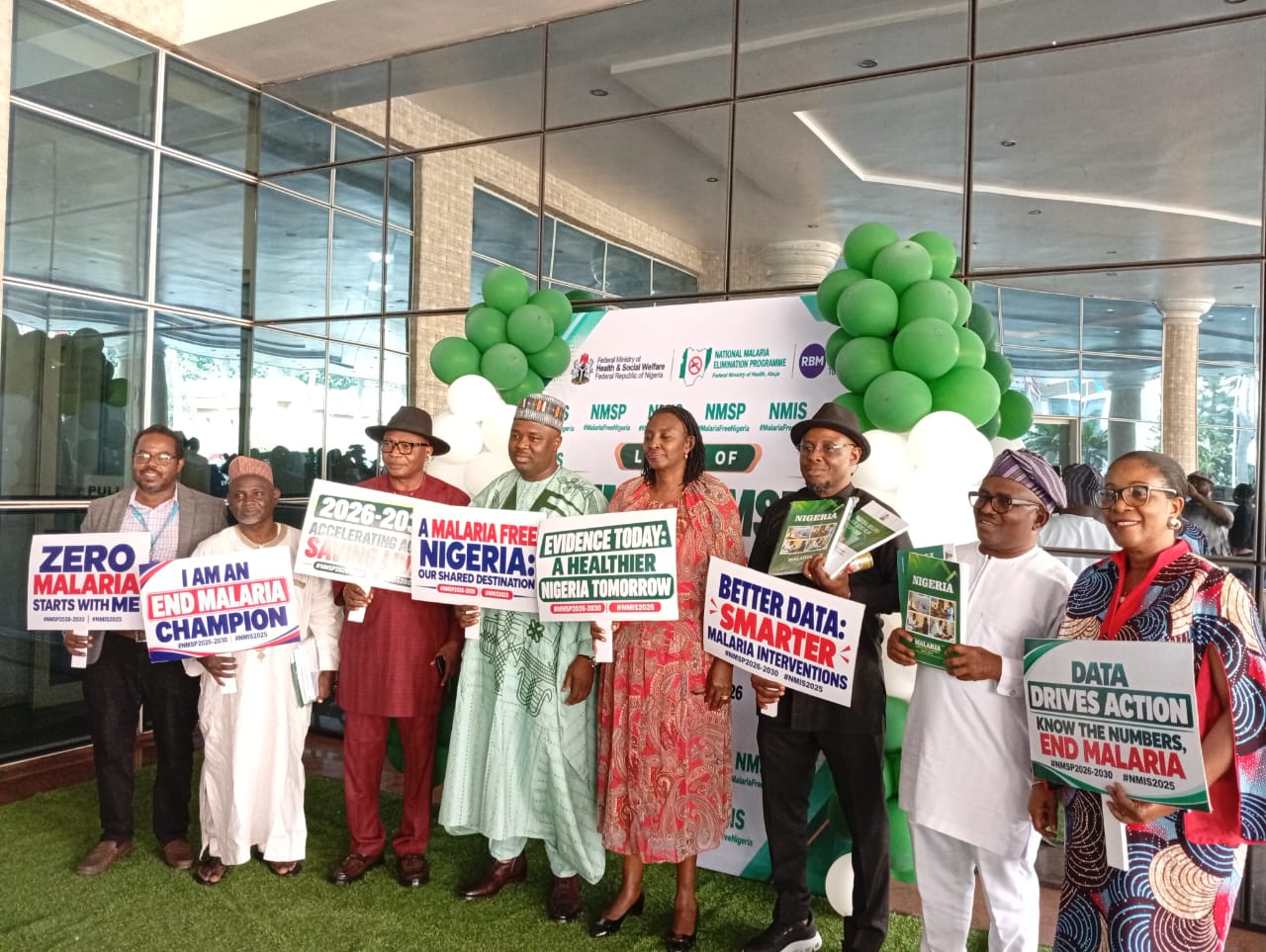
Nigeria’s latest malaria data point to a country making progress overall but facing sharply different disease burdens from one state to another, prompting health authorities to shift emphasis towards locally tailored interventions under a new five-year strategy.
The National Malaria Strategic Plan (NMSP) 2026–2030, launched alongside the 2025 Nigeria Malaria Indicator Survey (NMIS) report, seeks to cut malaria parasite prevalence and deaths by 50 per cent from 2025 levels by 2030.
Rather than applying a uniform national response, the plan prioritises interventions based on local epidemiological evidence, while also calling for stronger domestic financing, improved diagnosis and treatment, better surveillance and clearer accountability.
The Coordinating Minister of Health and Social Welfare, Prof. Muhammad Ali Pate, represented by the ministry’s Permanent Secretary, Mrs Daju Kachallom, presented the government’s position at the joint launch in Abuja.
Pate described the survey and strategic plan as essential tools for identifying weaknesses in malaria control and directing resources towards areas with the greatest need.
He said the survey’s findings on prevalence, prevention, diagnosis and treatment would support policy development, programme implementation, resource allocation and performance assessment.
The minister said the strategic plan was designed to accelerate progress towards a malaria-free Nigeria while remaining consistent with national health priorities and the World Health Organisation’s global malaria strategy.
He commended the National Malaria Elimination Programme (NMEP), the National Population Commission (NPC), development partners and other stakeholders involved in producing the survey and plan.
Pate also called for a shared national effort involving federal and state governments, the private sector, communities and households, stressing that malaria elimination could not be achieved by government alone.
The 2025 NMIS shows that malaria parasite prevalence among children aged six to 59 months, measured through microscopy, fell from 42 per cent in 2010 to 23 per cent in 2018, 22 per cent in 2021 and 15 per cent in 2025.
However, the national improvement masks substantial differences between states. Prevalence among children in the same age group ranged from two per cent in Lagos State to 31 per cent in Ebonyi State.
The figures indicate that progress has not been evenly distributed and that malaria control efforts must be adapted to the conditions in individual states and communities.
Earlier, the National Coordinator of NMEP, Dr Nnenna Ogbulafor, said the NMSP was developed from the 2025 NMIS findings and other programme data.
She said the evidence would help policymakers locate high-burden areas, improve the design of interventions and direct limited resources to communities most in need.
Ogbulafor said the plan was aligned with Nigeria’s health sector priorities and the WHO Global Technical Strategy for Malaria 2016–2030.
She identified policy alignment, state-level leadership, domestic financing, partnerships and accountability as central to implementation.
The national coordinator urged state governments, civil society organisations and development partners to take ownership of the plan and support coordinated, adequately funded malaria programmes.
She said the differences in prevalence across states made subnational planning indispensable to meeting the national targets.
Ogbulafor called on states to develop comprehensive malaria control programmes reflecting local disease burdens, epidemiological evidence and available resources.
She also stressed the need for sustained domestic financing and partnerships to close funding gaps and maintain implementation through 2030.
NMEP, she said, would work with the National Malaria Working Group and international partners to track implementation, assess performance and review results regularly.
The plan aims to raise access to and use of preventive interventions to at least 80 per cent, achieve at least 90 per cent effective coverage of malaria diagnosis and appropriate treatment among at-risk populations, and improve surveillance performance from a baseline of 47 per cent to 70 per cent by 2030.
It also targets stronger governance and organisational capacity, with at least 60 per cent of malaria programme resources expected to come from domestic sources by 2030.
The survey data show that prevention remains uneven. Only 54 per cent of households had at least one insecticide-treated net, while 45 per cent of children under five and 54 per cent of pregnant women aged 15–49 slept under a net on the night before the survey.
Protection during pregnancy was also incomplete. Among women aged 15–49 who had a live birth in the preceding two years, 62 per cent received at least one dose of sulphadoxine-pyrimethamine during their last pregnancy, but only 33 per cent received three or more doses.
The findings point to the need to expand access to insecticide-treated nets and intermittent preventive treatment for pregnant women.
Diagnosis is another major gap. Of children under five who had a fever in the two weeks before the survey, 59 per cent had advice or treatment sought, but only 18 per cent had blood taken for malaria testing.
The strategic plan therefore places emphasis on prompt testing, appropriate treatment, preventive services and public awareness.
In his remarks, the Director-General of NPC, Dr Abubakar Muhammed, pledged the commission’s continued support for credible demographic and health data to guide policymaking and malaria elimination efforts.
Muhammed said the survey reflected the partnership between the Federal Ministry of Health and Social Welfare, through NMEP, and the NPC.
He said the collaboration brought together expertise in malaria control, demographic surveys and data management to produce information for national planning and development.
The NPC director-general said the commission would continue to modernise its survey operations through technologies such as the Global Positioning System (GPS) and spatial techniques.
He urged policymakers, programme managers, researchers and development partners to use the findings to refine strategies, improve implementation and target communities where interventions were most needed.
Muhammed commended the ministry, NMEP, technical consultants, state enumerators and field teams for their roles in conducting the survey.
He said the report would provide a strong evidence base for a coordinated national malaria response.
The launch of the NMIS report and NMSP 2026–2030 places the next phase of Nigeria’s malaria response on a clearer understanding of where the disease remains most entrenched, while challenging states and partners to convert that evidence into measurable local action.
-
 Featured7 years ago
Lampard Names New Chelsea Manager
-
 Featured7 years ago
FG To Extends Lockdown In FCT, Lagos Ogun states For 7days
-
 Featured7 years ago
Children Custody: Court Adjourns Mike Ezuruonye, Wife’s Case To April 7
-
 Featured7 years ago
NYSC Dismisses Report Of DG’s Plan To Islamize Benue Orientation Camp
-

 Featured5 years ago
Transfer Saga: How Mikel Obi Refused to compensate me After I Linked Him Worth $4m Deal In Kuwait SC – Okafor
-
Featured7 years ago
Board urges FG to establish one-stop rehabilitation centres in 6 geopolitical zones
-
Sports4 years ago
TINUBU LAMBAST DELE MOMODU
-

 News2 years ago
Zulu to Super Eagles B team, President Tinubu is happy with you













