
News
Federal Ministry Begins Tsetse Fly Monitoring and Pest Control Drive in Abia, South-East, South-South
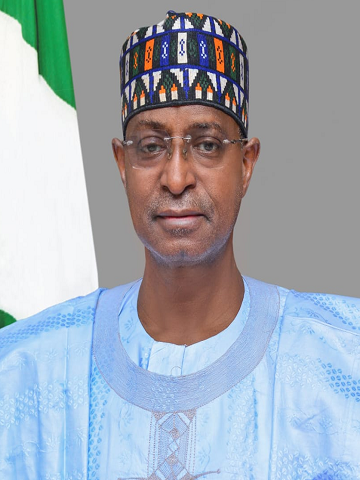
The Federal Ministry of Livestock Development (FMLD) has commenced a fresh round of tsetse fly surveillance and pest control operations in Abia State as part of efforts to curb trans-boundary pests and improve livestock production across the South-East and South-South geopolitical zones.
The exercise, which began on June 29, is part of the ministry’s nationwide surveillance and control programme covering the six geopolitical zones of the country.
Speaking during a courtesy visit by the FMLD team to the Abia State Ministry of Agriculture in Umuahia, the Commissioner for Agriculture, Dr Cliff Agbeze, said the state government was collaborating with the Federal Ministry to combat tsetse flies and other pests affecting livestock production.
Agbeze, who was represented by the Permanent Secretary of the ministry, Dr Adamma Aguwa, said the partnership underscored the commitment of both the federal and state governments to reducing the impact of pests on livestock and agricultural productivity.
He said the initiative would help improve crop and livestock yields while strengthening food security in the state and across the country.
The commissioner assured the team of the ministry’s support, adding that officials had been assigned to guide them to locations where the surveillance and pest control activities would be carried out.
Earlier, the Team Lead of the FMLD Tsetse Fly Surveillance and Control Project, Mr Gilbert Okoro, said the team was in Abia to conduct surveillance and control operations aimed at curbing the spread of trans-boundary pests, particularly the tsetse fly.
Okoro explained that the insect transmits trypanosomiasis, a disease that affects cattle and can also cause sleeping sickness in humans.
According to him, the disease reduces milk and meat production, weakens livestock and poses significant public health and economic challenges.
He said the project aligns with the World Health Organisation’s One Health Initiative, which promotes integrated approaches to improving human, animal and environmental health.
Okoro said the nationwide project had already been implemented in the North-East geopolitical zone, adding that Abia was selected to represent the South-East, while Akwa Ibom would serve as the project location for the South-South zone.
He added that the surveillance exercise in Abia would cover the state’s three senatorial districts, including Aba in Abia South, Umuahia in Abia Central and Lokpanta in Abia North.
Following the meeting, the FMLD team visited the Veterinary Teaching Hospital, Umudike, to finalise arrangements for the commencement of surveillance and pest control activities in Umudike and other parts of the state.
Officials present during the visit included the Director of Veterinary Services, Dr Vitus Nwokoh; the Director of Livestock and Fisheries, Mr Victor Obasi; the Director of Epidemiology, Dr Onu Nwokedi; and the Head of Media and Information, Mrs Oluchi Franklin.



News
DNKI President Champions Humanitarian Service, Sustainable Community Development

Cyril Samania
The President of De Norsemen Kclub International (DNKI), Chief Oliver Patrick Ityohegh, has reaffirmed the organisation’s commitment to humanitarian service, stressing the importance of supporting vulnerable people and improving community welfare beyond the annual celebration of Humanitarian Day.

Ityohegh stated this during the organisation’s Cauldron Night and Award Presentation held to commemorate its 2026 Humanitarian Day celebration, theme: “Humanity First: Advancing Hope, Dignity and Community Well-being.” organised by the DNKI Abuja Chapter.
He emphasised that humanitarian service should be a continuous responsibility driven by compassion, solidarity and a commitment to making a meaningful difference in society.
According to him, DNKI’s humanitarian activities reflect its dedication to giving back to society and supporting people in need, while encouraging members to sustain initiatives that promote human dignity and community well-being.
He added that the organisation would continue to strengthen its humanitarian engagements through practical interventions aimed at improving the lives of vulnerable people and promoting community development.
Speaking at the event, the representative of the Abuja Chapter Chairman and Chairman of its Advisory Council, Prince Efiong Okpe, said the organisation’s humanitarian activities extended beyond the annual celebration of Humanitarian Day on October 15.
Okpe explained that DNKI undertook several initiatives throughout the year, including blood donation exercises, visits to hospitals and correctional centres, as well as support for orphanages and other vulnerable groups.
According to him, the organisation also collaborated with humanitarian bodies in the Federal Capital Territory (FCT) to identify areas of need and provide assistance within its available resources.
He described Humanitarian Day as an opportunity for members to renew their commitment to service and demonstrate solidarity with people facing difficult circumstances.
Earlier, the Chairman of the Planning Committee and Coordinator of the DNKI Gwagwalada Zone, Mr Etudaiye Hamzat, disclosed that the chapter had provided financial assistance to some members to help pay their children’s school fees, alongside distributing bags of rice and other relief items to members experiencing hardship.
Hamzat explained that the interventions followed concerns over the difficulties some members faced in meeting their family responsibilities, particularly the rising cost of their children’s education.
He maintained that supporting members in need was consistent with the organisation’s humanitarian principles, adding that DNKI remained committed to extending assistance to non-members and vulnerable communities as part of its commitment to leading by example.
Looking ahead, Hamzat said the Abuja Chapter planned to expand its humanitarian outreach to remote communities within the FCT, with particular attention to orphanages, schools and widows facing difficulties in meeting their family responsibilities.
He also recalled previous interventions for internally displaced persons (IDPs), which included the distribution of food, clothing and educational materials, noting that the chapter intended to scale up such initiatives in the coming year.
The highlight of the event was the presentation of awards to outstanding members and distinguished non-members in recognition of their contributions to humanitarian service.
-
 Featured7 years ago
Lampard Names New Chelsea Manager
-
 Featured7 years ago
FG To Extends Lockdown In FCT, Lagos Ogun states For 7days
-
 Featured7 years ago
Children Custody: Court Adjourns Mike Ezuruonye, Wife’s Case To April 7
-
 Featured7 years ago
NYSC Dismisses Report Of DG’s Plan To Islamize Benue Orientation Camp
-

 Featured5 years ago
Transfer Saga: How Mikel Obi Refused to compensate me After I Linked Him Worth $4m Deal In Kuwait SC – Okafor
-
Featured7 years ago
Board urges FG to establish one-stop rehabilitation centres in 6 geopolitical zones
-
Sports4 years ago
TINUBU LAMBAST DELE MOMODU
-

 News2 years ago
Zulu to Super Eagles B team, President Tinubu is happy with you













