
Health
Fertility Association Seeks Collaboration, Regulation For Robust Practice
The Association for Fertility and Reproductive Health (AFRH), has called for collaboration and robust regulation for the practice of Assisted Reproductive Technology (ART) in Nigeria.
The President, Prof. Preye Fiebai, made the call on Thursday in Abuja, at the opening ceremony of the association’s 14th Annual International Conference.
The conference is themed “Collaboration for Assisted Reproductive Techno- logy (ART): Global Best Practices in Nigeria”.
According to Fiebai, ART in Nigeria has made a lot of progress, but collaboration is the key to accelerating the said progress.
“To elevate Nigeria’s ART sector to global standards, we must foster collaboration across multiple sectors.
“Reproductive health specialists in Nigeria must collaborate nationally and with international experts to share knowledge, skills and technological advancements.”
He said that ethical guidelines and remarkable advances have emerged from countries at the forefront of ART and that domestication of global best practices could shape the future of the field in Nigeria.
According to the president, robust frameworks for ART practices, research and regulation have been established in the said countries, including adherence to ethical standards to protect the rights and health of patients, donors and resulting offspring.
Fiebai emphasised that establishing clear and comprehensive regulatory frameworks was long overdue, stressing the need for robust legal frameworks to ensure transparent and well-defined protocols.
He said that Lagos State had set the ball rolling with the establishment of guidelines for ART practice in the state, a feat that should be replicated across the country.
He, however, said that the National Assembly had made several attempts to pass a law and all stakeholders in the sector must collaborate to make it a reality.
The president also advocated for research partnerships, Public-Private Partnerships and cultural and community engagements for traditional and religious leaders.
This, he said, was because understanding the cultural and societal nuances surrounding infertility in Nigeria was vital to building ART services that arre not only medically effective but also socially acceptable.
Describing the important role ART plays, Fiebai said that it offered a pathway to fulfilling the dreams of parenthood for many couples experiencing infertility, especially at a time when fertility rates are declining worldwide.
He added that Nigeria had witnessed a growing demand for ART services due to increasing awareness and social acceptance.
Dr Yusuf Sununu, Minister of State for Education, emphasised the necessity of collaboration, stating that the government cannot achieve its goals alone.
He highlighted the importance of sharing resources and risks to attain a common objective.
Sununu who was the Chairman, House of Representatives Committee on Health Care Services in the 10th National Assembly, however, said that some medical practices required an Act of Parliament for proper guidance and protection.
“We need protection, we need to be guided. Certain litigations are left at the discretion of judges because there are no enabling laws and most of the times, practitioners are the ones who suffer.
“Our elders, they have done so much in training us, we need to also sit down and develop what we can do to protect our practice, to ensure that what we are doing is within the ethics of our profession.”
He also said that because the practice of ART was expensive, resources must be put together to make progress.
“The cost of practicing medicine has skyrocketed. Equipment that was once readily affordable now threatens to deplete our clinic’s resources. Even a single purchase would significantly strain our assets.
“There is a pressing need for a dedicated funding mechanism, such as a bank or fund that provides single-digit interest loans.
“While the Bank of Industry exists, we require a specialised institution catering exclusively to healthcare practitioners.
“Currently, we’re losing billions of dollars in foreign exchange due to Nigerians seeking medical care abroad.”
Speaking about the theme of the conference, the Chairman, Local Organising Committee, Dr Sunday Onuh, said that it underscored the practitioners’ relentless pursuit of excellence and collaboration in the field of ART.
“We stand on the threshold of revolutionary breakthroughs, and gatherings like this catalyse our collective progress toward achieving these ambitious goals.
“This year’s conference aims to promote ethical standards and regulate the practice of Assisted Reproductive Technology (ART), with a specific focus on third-party ART.”
The reports have it that the three-day conference which began on Wednesday will end on Friday.
NAN



Health
New Malaria Plan Puts States, Local Data At Centre Of Nigeria’s 2030 Response
Cyril Ogar
Nigeria’s latest malaria data point to a country making progress overall but facing sharply different disease burdens from one state to another, prompting health authorities to shift emphasis towards locally tailored interventions under a new five-year strategy.
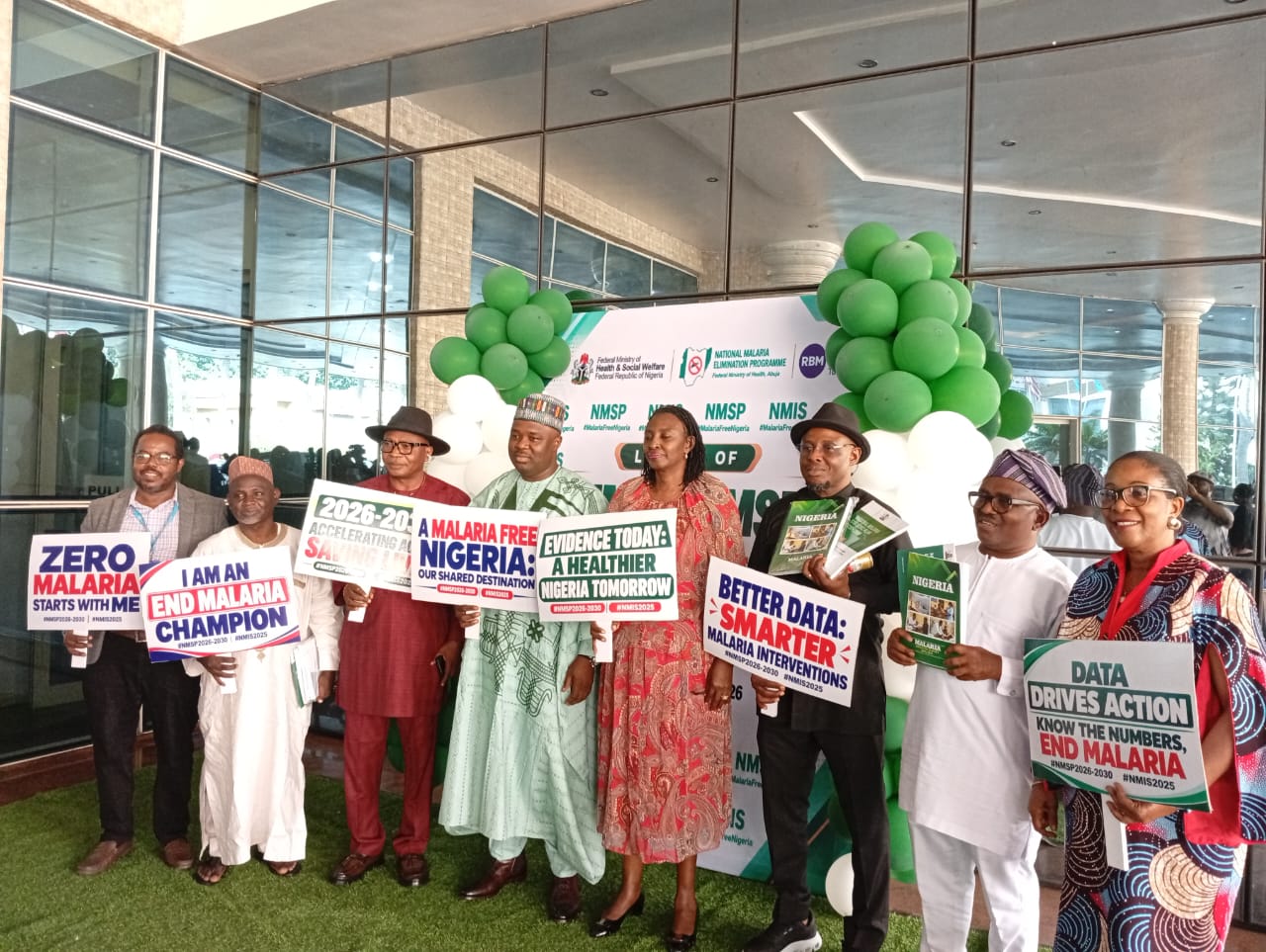
The National Malaria Strategic Plan (NMSP) 2026–2030, launched alongside the 2025 Nigeria Malaria Indicator Survey (NMIS) report, seeks to cut malaria parasite prevalence and deaths by 50 per cent from 2025 levels by 2030.
Rather than applying a uniform national response, the plan prioritises interventions based on local epidemiological evidence, while also calling for stronger domestic financing, improved diagnosis and treatment, better surveillance and clearer accountability.
The Coordinating Minister of Health and Social Welfare, Prof. Muhammad Ali Pate, represented by the ministry’s Permanent Secretary, Mrs Daju Kachallom, presented the government’s position at the joint launch in Abuja.
Pate described the survey and strategic plan as essential tools for identifying weaknesses in malaria control and directing resources towards areas with the greatest need.
He said the survey’s findings on prevalence, prevention, diagnosis and treatment would support policy development, programme implementation, resource allocation and performance assessment.
The minister said the strategic plan was designed to accelerate progress towards a malaria-free Nigeria while remaining consistent with national health priorities and the World Health Organisation’s global malaria strategy.
He commended the National Malaria Elimination Programme (NMEP), the National Population Commission (NPC), development partners and other stakeholders involved in producing the survey and plan.
Pate also called for a shared national effort involving federal and state governments, the private sector, communities and households, stressing that malaria elimination could not be achieved by government alone.
The 2025 NMIS shows that malaria parasite prevalence among children aged six to 59 months, measured through microscopy, fell from 42 per cent in 2010 to 23 per cent in 2018, 22 per cent in 2021 and 15 per cent in 2025.
However, the national improvement masks substantial differences between states. Prevalence among children in the same age group ranged from two per cent in Lagos State to 31 per cent in Ebonyi State.
The figures indicate that progress has not been evenly distributed and that malaria control efforts must be adapted to the conditions in individual states and communities.
Earlier, the National Coordinator of NMEP, Dr Nnenna Ogbulafor, said the NMSP was developed from the 2025 NMIS findings and other programme data.
She said the evidence would help policymakers locate high-burden areas, improve the design of interventions and direct limited resources to communities most in need.
Ogbulafor said the plan was aligned with Nigeria’s health sector priorities and the WHO Global Technical Strategy for Malaria 2016–2030.
She identified policy alignment, state-level leadership, domestic financing, partnerships and accountability as central to implementation.
The national coordinator urged state governments, civil society organisations and development partners to take ownership of the plan and support coordinated, adequately funded malaria programmes.
She said the differences in prevalence across states made subnational planning indispensable to meeting the national targets.
Ogbulafor called on states to develop comprehensive malaria control programmes reflecting local disease burdens, epidemiological evidence and available resources.
She also stressed the need for sustained domestic financing and partnerships to close funding gaps and maintain implementation through 2030.
NMEP, she said, would work with the National Malaria Working Group and international partners to track implementation, assess performance and review results regularly.
The plan aims to raise access to and use of preventive interventions to at least 80 per cent, achieve at least 90 per cent effective coverage of malaria diagnosis and appropriate treatment among at-risk populations, and improve surveillance performance from a baseline of 47 per cent to 70 per cent by 2030.
It also targets stronger governance and organisational capacity, with at least 60 per cent of malaria programme resources expected to come from domestic sources by 2030.
The survey data show that prevention remains uneven. Only 54 per cent of households had at least one insecticide-treated net, while 45 per cent of children under five and 54 per cent of pregnant women aged 15–49 slept under a net on the night before the survey.
Protection during pregnancy was also incomplete. Among women aged 15–49 who had a live birth in the preceding two years, 62 per cent received at least one dose of sulphadoxine-pyrimethamine during their last pregnancy, but only 33 per cent received three or more doses.
The findings point to the need to expand access to insecticide-treated nets and intermittent preventive treatment for pregnant women.
Diagnosis is another major gap. Of children under five who had a fever in the two weeks before the survey, 59 per cent had advice or treatment sought, but only 18 per cent had blood taken for malaria testing.
The strategic plan therefore places emphasis on prompt testing, appropriate treatment, preventive services and public awareness.
In his remarks, the Director-General of NPC, Dr Abubakar Muhammed, pledged the commission’s continued support for credible demographic and health data to guide policymaking and malaria elimination efforts.
Muhammed said the survey reflected the partnership between the Federal Ministry of Health and Social Welfare, through NMEP, and the NPC.
He said the collaboration brought together expertise in malaria control, demographic surveys and data management to produce information for national planning and development.
The NPC director-general said the commission would continue to modernise its survey operations through technologies such as the Global Positioning System (GPS) and spatial techniques.
He urged policymakers, programme managers, researchers and development partners to use the findings to refine strategies, improve implementation and target communities where interventions were most needed.
Muhammed commended the ministry, NMEP, technical consultants, state enumerators and field teams for their roles in conducting the survey.
He said the report would provide a strong evidence base for a coordinated national malaria response.
The launch of the NMIS report and NMSP 2026–2030 places the next phase of Nigeria’s malaria response on a clearer understanding of where the disease remains most entrenched, while challenging states and partners to convert that evidence into measurable local action.
-
 Featured7 years ago
Lampard Names New Chelsea Manager
-
 Featured7 years ago
FG To Extends Lockdown In FCT, Lagos Ogun states For 7days
-
 Featured7 years ago
Children Custody: Court Adjourns Mike Ezuruonye, Wife’s Case To April 7
-
 Featured7 years ago
NYSC Dismisses Report Of DG’s Plan To Islamize Benue Orientation Camp
-

 Featured5 years ago
Transfer Saga: How Mikel Obi Refused to compensate me After I Linked Him Worth $4m Deal In Kuwait SC – Okafor
-
Featured7 years ago
Board urges FG to establish one-stop rehabilitation centres in 6 geopolitical zones
-
Sports4 years ago
TINUBU LAMBAST DELE MOMODU
-

 News2 years ago
Zulu to Super Eagles B team, President Tinubu is happy with you