
News
FG Applauds JONAPWD for Developing Comprehensive Disability Database
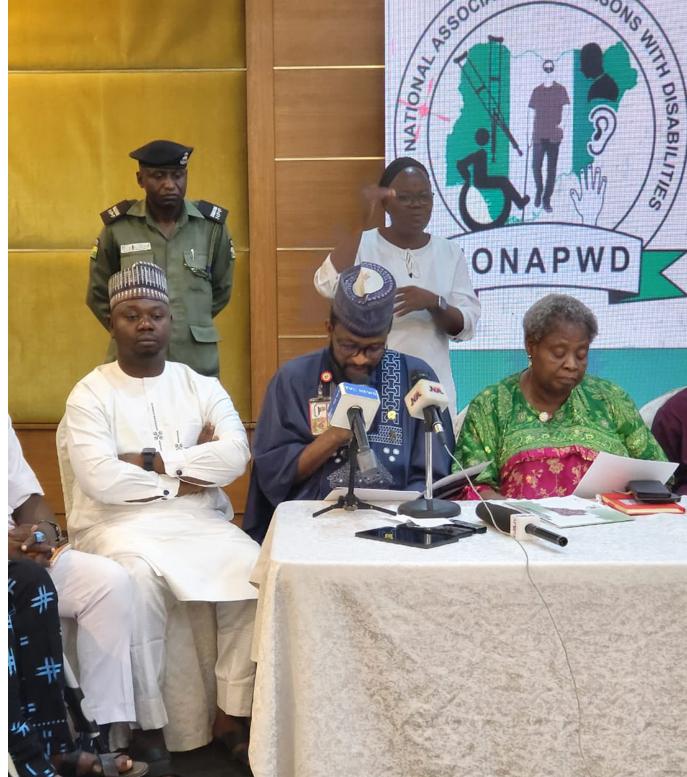
The Federal Government has commended the Joint National Association of Persons with Disabilities (JONAPWD) for producing what it described as a reliable and comprehensive database of Persons with Disabilities (PWDs) in Nigeria.
The Senior Special Assistant to the President on Special Needs and Equal Opportunities, Mohammed Abba Isa, gave the commendation on Wednesday at a press conference to unveil the Exploratory Disability Disaggregated Data for Persons with Disabilities in Nigeria, a landmark publication compiled by JONAPWD.
Abba Isa said the document represents a significant milestone in the collective effort to advance inclusive development and evidence-based policymaking for Persons with Disabilities across the country.
He noted that for many years, the absence of credible and comprehensive data on Persons with Disabilities had remained a major challenge for policymakers, stakeholders and development partners.
According to him, various figures had previously been cited, with some estimating the population of PWDs at about 25 million and others projecting between 35 million and 40 million.
However, he said such figures were largely based on conjecture or fragmented information.
“Without reliable data, even the best intentions toward inclusion cannot translate into measurable impact,” he said.
Abba Isa explained that the report projects that Nigeria’s population of Persons with Disabilities could reach about 35 million by 2025, with detailed disaggregation across the 36 states and the Federal Capital Territory.
He revealed that Kano State has the highest estimated population of Persons with Disabilities at about 2.5 million, followed by Lagos State with approximately 2.1 million.
The presidential aide also highlighted the report’s breakdown by disability clusters and gender.
According to the findings, the physical disability cluster constitutes the largest group with about 8.2 million persons, followed closely by the deaf community, which accounts for about 7.7 million persons.
In terms of gender distribution, male Persons with Disabilities number over 17.6 million, while females account for approximately 17.2 million.
“These insights provide critical clarity about the diversity and scale of the disability community in Nigeria,” he said.
Abba Isa commended the leadership and members of JONAPWD for what he described as a bold initiative to address one of the most persistent barriers to inclusive development—the absence of credible disability data.
“As the foremost umbrella body representing Persons with Disabilities in Nigeria, JONAPWD has demonstrated vision and commitment by tackling this long-standing challenge,” he said.
He added that the database would serve as an important resource for policymakers, development agencies, researchers and advocates working to advance disability inclusion in Nigeria.
The presidential aide noted that the initiative also supports the Federal Government’s ongoing efforts to establish an official database for vulnerable populations, including Persons with Disabilities.
He emphasised that the administration of Bola Ahmed Tinubu recognises the critical role of data in governance, research and policy formulation.
According to him, under the Renewed Hope Agenda, the Federal Government remains committed to supporting initiatives that generate credible evidence and strengthen institutional capacity for inclusive policymaking.
Abba Isa assured that his office would continue to collaborate with stakeholders, development partners and organisations of Persons with Disabilities to promote accessibility, inclusion and equal opportunities across all sectors.
Earlier, the National President of JONAPWD, Abdullahi A. Usman, described the report as a landmark development for disability advocacy and inclusive governance in Nigeria.
Usman said the absence of reliable demographic data had for years hindered efforts to advance the rights and welfare of Persons with Disabilities.
He stressed that credible statistics are essential for informed decision-making, strategic planning and the design of policies that ensure no one is left behind.
“Without reliable statistics to guide planning and policy formulation, the goal of inclusion becomes difficult to achieve in practical terms,” he said.
According to him, the report relied on the widely recognised global estimate that about 15 per cent of every country’s population lives with some form of disability—a benchmark adopted by the World Health Organization and the United Nations.
Also speaking, the Executive Secretary of the National Commission for Persons with Disabilities (NCPWD), Ayuba Burki Gufwan, represented by Hajiah Fatima Doki, noted that development partners often require reliable and verifiable data before committing support to programmes and interventions.
She said the newly released dataset provides the kind of evidence required by international partners when considering investments in disability-focused initiatives.
Doki added that although the Commission has faced financial limitations in conducting a nationwide data exercise, efforts are ongoing to collaborate with development partners to support such initiatives.
In his remarks, a representative of the National Population Commission, Onah Adeyi, said the estimated 35 million Persons with Disabilities in Nigeria represents not only a demographic reality but also a significant constituency capable of influencing national development.
According to him, when properly organised and engaged, the disability community could become a strong voice in shaping democratic outcomes and leadership in the country.
“If properly mobilised, persons with disabilities possess the numerical strength to influence who emerges as leaders at different levels of governance,” he said.
Adeyi added that the disaggregated dataset would also help guide government planning, budgetary allocations and targeted programmes aimed at improving the wellbeing of Persons with Disabilities across Nigeria.



News
DNKI President Champions Humanitarian Service, Sustainable Community Development
Cyril Samania
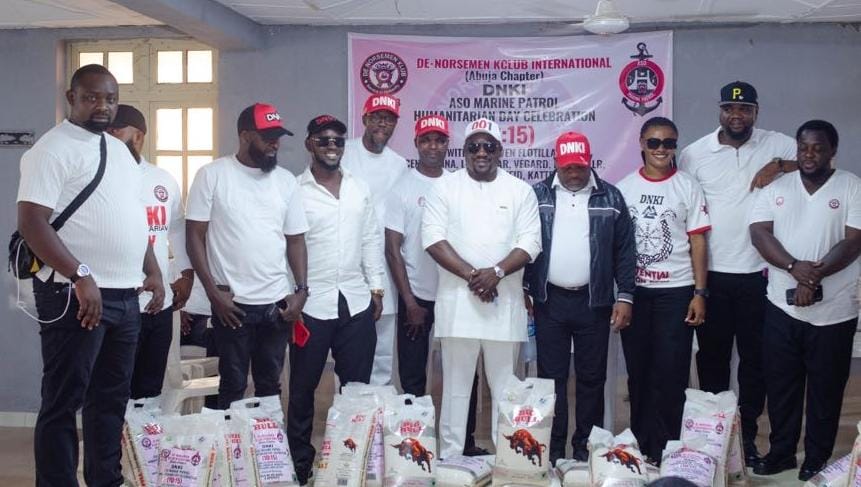
The President of De Norsemen Kclub International (DNKI), Chief Oliver Patrick Ityohegh, has reaffirmed the organisation’s commitment to humanitarian service, stressing the importance of supporting vulnerable people and improving community welfare beyond the annual celebration of Humanitarian Day.
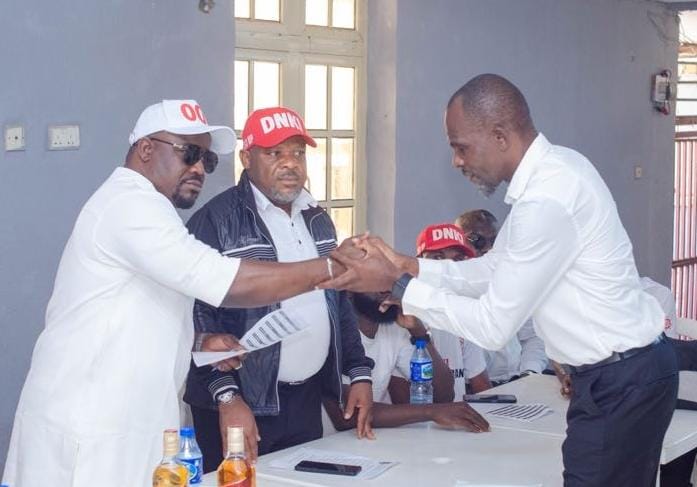
Ityohegh stated this during the organisation’s Cauldron Night and Award Presentation held to commemorate its 2026 Humanitarian Day celebration, theme: “Humanity First: Advancing Hope, Dignity and Community Well-being.” organised by the DNKI Abuja Chapter.
He emphasised that humanitarian service should be a continuous responsibility driven by compassion, solidarity and a commitment to making a meaningful difference in society.
According to him, DNKI’s humanitarian activities reflect its dedication to giving back to society and supporting people in need, while encouraging members to sustain initiatives that promote human dignity and community well-being.
He added that the organisation would continue to strengthen its humanitarian engagements through practical interventions aimed at improving the lives of vulnerable people and promoting community development.
Speaking at the event, the representative of the Abuja Chapter Chairman and Chairman of its Advisory Council, Prince Efiong Okpe, said the organisation’s humanitarian activities extended beyond the annual celebration of Humanitarian Day on October 15.
Okpe explained that DNKI undertook several initiatives throughout the year, including blood donation exercises, visits to hospitals and correctional centres, as well as support for orphanages and other vulnerable groups.
According to him, the organisation also collaborated with humanitarian bodies in the Federal Capital Territory (FCT) to identify areas of need and provide assistance within its available resources.
He described Humanitarian Day as an opportunity for members to renew their commitment to service and demonstrate solidarity with people facing difficult circumstances.
Earlier, the Chairman of the Planning Committee and Coordinator of the DNKI Gwagwalada Zone, Mr Etudaiye Hamzat, disclosed that the chapter had provided financial assistance to some members to help pay their children’s school fees, alongside distributing bags of rice and other relief items to members experiencing hardship.
Hamzat explained that the interventions followed concerns over the difficulties some members faced in meeting their family responsibilities, particularly the rising cost of their children’s education.
He maintained that supporting members in need was consistent with the organisation’s humanitarian principles, adding that DNKI remained committed to extending assistance to non-members and vulnerable communities as part of its commitment to leading by example.
Looking ahead, Hamzat said the Abuja Chapter planned to expand its humanitarian outreach to remote communities within the FCT, with particular attention to orphanages, schools and widows facing difficulties in meeting their family responsibilities.
He also recalled previous interventions for internally displaced persons (IDPs), which included the distribution of food, clothing and educational materials, noting that the chapter intended to scale up such initiatives in the coming year.
The highlight of the event was the presentation of awards to outstanding members and distinguished non-members in recognition of their contributions to humanitarian service.
-
 Featured7 years ago
Lampard Names New Chelsea Manager
-
 Featured7 years ago
FG To Extends Lockdown In FCT, Lagos Ogun states For 7days
-
 Featured7 years ago
Children Custody: Court Adjourns Mike Ezuruonye, Wife’s Case To April 7
-
 Featured7 years ago
NYSC Dismisses Report Of DG’s Plan To Islamize Benue Orientation Camp
-

 Featured5 years ago
Transfer Saga: How Mikel Obi Refused to compensate me After I Linked Him Worth $4m Deal In Kuwait SC – Okafor
-
Featured7 years ago
Board urges FG to establish one-stop rehabilitation centres in 6 geopolitical zones
-
Sports4 years ago
TINUBU LAMBAST DELE MOMODU
-

 News2 years ago
Zulu to Super Eagles B team, President Tinubu is happy with you