
News
FG Unveils Renewed Hope Youth Strategic Blueprint To Unlocks Nigerian Youth Potential For Economic Growth

Joel Ajayi
Federal Government has unveiled the Renewed Hope Youth Strategic Blueprint to different donor agencies in order to harness and unlock the vast potential of Nigeria’s youth, who represent a significant driver of economic growth.
While speaking during the donor engagement meeting, the Honourable Minister, Federal Ministry of Youth Development, Comrade Ayodele Olawande emphasized that Nigeria’s youth are the backbone of the nation and hold the key to realizing its full potential.
“With over 70% of our population—more than 130 million—within the youth age group, we have a significant advantage for socio-economic transformation.”
“However, we also recognize that this large youth population can present both great opportunities and challenges. That is why engagements like this are very important. With your support, through strategic investments, innovation, and collaboration, I am confident we can overcome any obstacle,” he said.
Highlighting the pressing issue of youth unemployment, which he noted remains a formidable challenge in our society, Ayodele underscored the significant progress made by the current administration in tackling this problem.
He pointed out that : “the youth unemployment rate has dramatically decreased from a concerning 12.55% in 2020 to a remarkable 5.84% in 2023, showcasing the effectiveness of targeted policies and initiatives designed to empower young people.”
The Minister observed that despite significant progress, the youth unemployment rate rose slightly to 6.5% in the second quarter of 2024. He urged donors to recognize both the tremendous strides that have been made and the importance of maintaining the momentum in collaborative efforts and investments as innovative programs are essential to opening doors for young people, ensuring they acquire the skills and opportunities needed to succeed in today’s competitive job market.
He emphasized the significant opportunity to strategically position government institutions, including the Federal and State Ministries of Youth, the NYSC, and the Citizenship and Leadership Training Centre (CLTC). Through organizational reforms and capacity building, he added, these institutions can become key platforms for driving policies and youth development plans that meet the demands of the 21st century.
Olawande also urged donors to collaborate and take a focused approach to reshape the behaviors and mindsets of young people, especially in this era of social media and digital technology. The Minister noted that with the population projected to reach 350 million by 2050, there is a crucial opportunity for youth to either become the world’s valuable human resource or conversely, a burden to the society.
Dr. Osubor Gregory, representative of the African Development Bank (AFDB), stressed the organization’s strong commitment to youth development. He highlighted that his Agency is actively launching several innovative programs aimed at empowering young people, adding that the dedication is not just an initiative; it is a fundamental principle of the organization. “The African Development Bank is determined to ensure that every project directly benefits youth, fostering their growth and potential for a brighter future”, he concluded.
The representative of the Islamic Bank, Ibrahim Suraju recognized the Ministry’s ongoing commitment to empowering youth and advancing sustainable development in Nigeria. He said that the Islamic Bank is dedicated to supporting initiatives and programs that improve skill development, promote capacity building, nurture entrepreneurship, and stimulate innovation. “These elements are not just important, they are essential catalysts for driving sustainable economic growth. Together, they can pave the way for a brighter future,” Suraju stated.



Foreign news
Algeria’s Glorious Revolution: Embassy Marks 72nd Anniversary in Abuja
Joel Ajayi
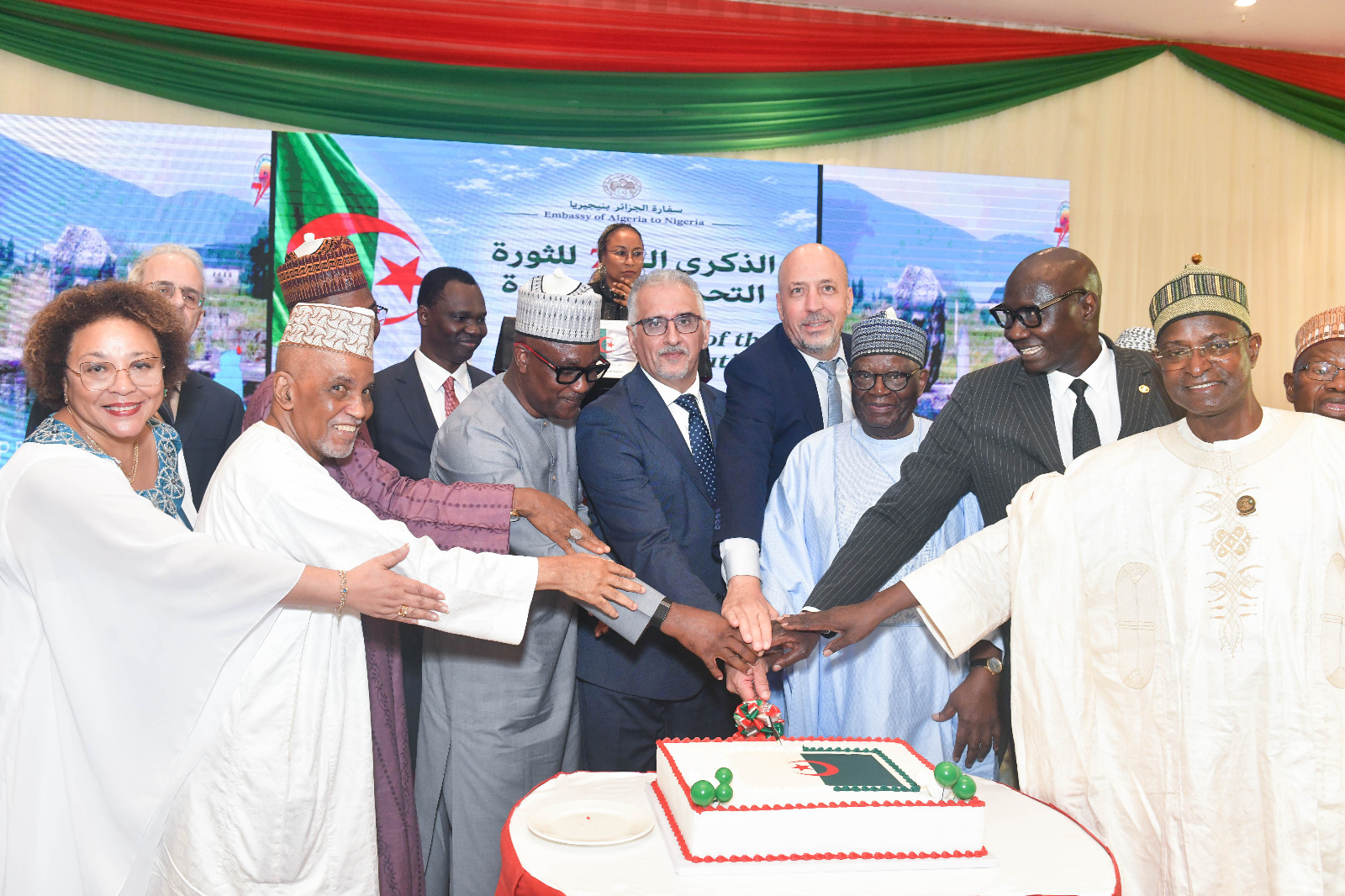
The Embassy of Algeria in Nigeria has commemorated the 72nd anniversary of the country’s Glorious Revolution of November 1, 1954, with a reception in Abuja, highlighting Algeria’s liberation struggle and strengthening diplomatic relations with Nigeria.
The event, held on November 9, 2026, at Continental Suites Hotel, attracted prominent personalities, including the Speaker of the House of Representatives, Dr Tajudeen Abbas, members of the Federal Government, senior government officials, heads of diplomatic missions and other friends of Algeria.
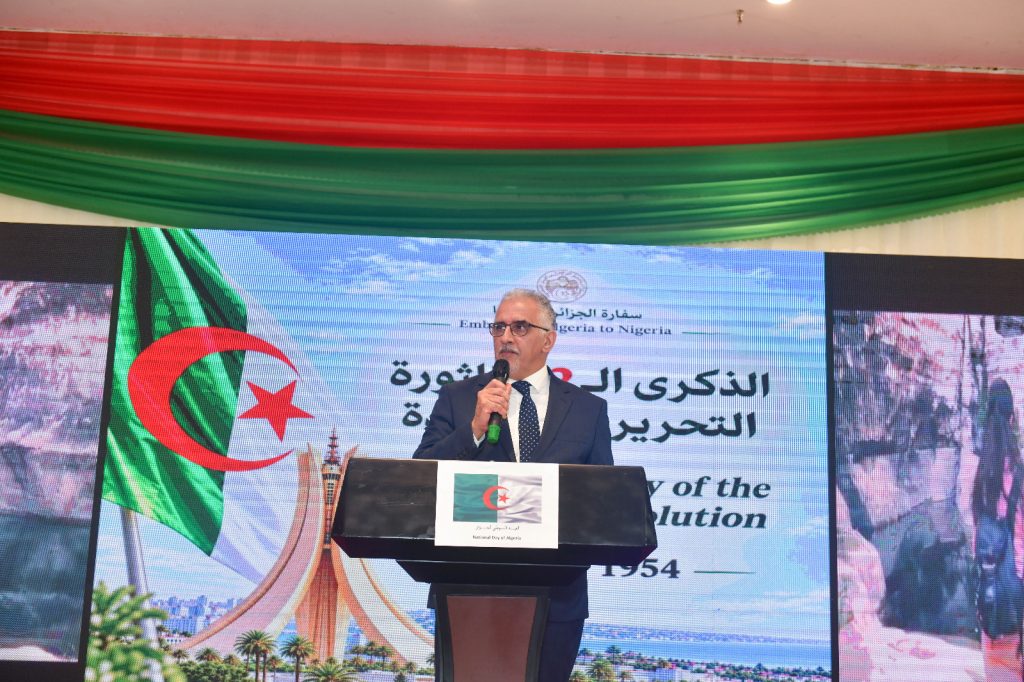
Speaking at the reception, Algeria’s Ambassador to Nigeria, Hocine Mezoued, welcomed guests and paid tribute to the country’s freedom fighters who sacrificed their lives during the struggle for independence.
He described the November 1, 1954 revolution as the foundation of modern Algeria, noting that the sacrifices of the nation’s martyrs made it possible for the country to reclaim its sovereignty.
On Algeria’s development agenda, Mezoued said President Abdelmadjid Tebboune’s administration had continued to pursue economic reforms, diversification and national development under its New Algeria vision.
He noted that the country was recording progress in non-hydrocarbon exports, while improvements in the business environment had boosted investor confidence and attracted significant foreign investments.
On foreign policy, the ambassador reaffirmed Algeria’s commitment to non-interference, respect for national sovereignty, peaceful conflict resolution and the right of peoples to self-determination.
Addressing security challenges in the Sahel, he stressed that lasting peace could not be achieved through military measures alone, insisting that economic development, inclusive dialogue and peaceful resolution of disputes remained essential.
Turning to Nigeria-Algeria relations, Mezoued described the partnership as one founded on shared values and the commitment of both countries’ leaders to advancing African development.
He identified the Trans-Saharan Highway, Trans-Saharan Gas Pipeline and Trans-Saharan Fibre Optic Backbone as major strategic projects receiving attention from both countries.
The ambassador also disclosed that Algeria had continued to provide scholarships to Nigerian students to strengthen human capital development and capacity building.
He further announced that Air Algérie expanded its Nigerian operations on October 26, 2026, with the introduction of two weekly flights to Lagos, expressing confidence that the service would boost trade and tourism.
Looking ahead, Mezoued said 2027 would offer fresh opportunities to deepen bilateral cooperation, particularly through the fifth Joint High Bi-National Commission scheduled to hold in Abuja.
He expressed optimism that the meeting would provide an opportunity to assess existing partnerships, identify new areas of cooperation and move Nigeria-Algeria relations towards a more practical and results-driven phase.
-
 Featured7 years ago
Lampard Names New Chelsea Manager
-
 Featured7 years ago
FG To Extends Lockdown In FCT, Lagos Ogun states For 7days
-
 Featured7 years ago
Children Custody: Court Adjourns Mike Ezuruonye, Wife’s Case To April 7
-
 Featured7 years ago
NYSC Dismisses Report Of DG’s Plan To Islamize Benue Orientation Camp
-

 Featured5 years ago
Transfer Saga: How Mikel Obi Refused to compensate me After I Linked Him Worth $4m Deal In Kuwait SC – Okafor
-
Featured7 years ago
Board urges FG to establish one-stop rehabilitation centres in 6 geopolitical zones
-
Sports4 years ago
TINUBU LAMBAST DELE MOMODU
-

 News2 years ago
Zulu to Super Eagles B team, President Tinubu is happy with you













