
News
Forced Marriage Booms In Niger State

… Foul Cries Follow Investigative Reports
… Govt Urged To Save Young Girls
Niger state government has been urged to rise in defence of young girls being forced into marriages by their families, as well as ensuring perpetrators of the illegal act are sanctioned.
The call for Governor Mohammed Bago-led Niger State to frontally tackle the spate of forced marriage is coming on the heels of an investigative report by the International Center for Investigative Reporting (ICIR) exposing how young girls are married off against their wishes in villages in Gbako and Lavun Local Government Areas (LGAs) of Niger State.
Legal practitioner & gender activist Yewande Ogundipe led the call for enforcement of child rights laws and punishment of offenders during an anti-corruption radio programme, PUBLIC CONSCIENCE, produced by PRIMORG, Wednesday in Abuja.
Ogundipe lamented that despite orientation and reorientation over the years, the situation is worsening due to a lack of consequence for those forcing underage children into marriage, emphasizing that the way out is “sanctions and enforcement.”
She stressed that some sections of the Nigerian Constitution had not helped the fight against forced marriage in the country as “it on one breathe prohibits and on another supports child marriage,” allowing some people to exploit the constitutional lacuna and continue marrying underage girls.
“The constitution of Nigeria in use currently is not helping the matter. There is more to be done. There are a lot of dead letter laws. Child rights laws have expressly prohibited marrying children, but who has enforced them? Who has been jailed for marrying a child? The constitution is confused about the issue.
“Every state in Nigeria should be made to ratify and domesticate child rights law, have your own child rights law that will protect the children better, NGOs should go to the grassroots and deal directly with women and children in distress, let them know if this (child marriage) happens to call this phone number, we would come and rescue you, there is a level of fear and compliance when they know an organization is involved.
“Lawyers in Niger state, what are you doing about child marriages, have evangelism concerning this issue. It’s a fight for all,” Ogundipe advised.
Similarly, Senior investigative journalist at TheICIR, Olugbenga Adaniki, joined the call for the Niger state government to sanction perpetrators of forced marriage, stressing it will deter others with such intentions.
Adaniki called for the collaboration of faith-based organizations and religious leaders against the unlawful act, insisting that the political will of the state governor to punish offenders of child brides will send the right signal.
He added: “Niger state government can also deploy and stick approach by rewarding communities that deliberately work towards eliminating child marriage while sanctioning those found culpable.”
The journalist revealed that young girls interviewed during the investigation had terrible experiences. Some resorted to spending days in forests to escape their abusers. He said that in some cases, parents of the victims hypnotize their children to make them sleep with the man they have been married off to.
Adanikin emphasized that the abuse young girls are facing through forced marriages is worrisome and happening not only in the northern part of the country but also in other regions, hence urging that there should be a national campaign against child brides.
The investigation also revealed that both Child Rights Protection Agency in Niger state and Bida Emir’s Palace alluded that cases of child marriage are recurrent in the state.
Public Conscience is a syndicatchilded weekly anti-corruption radio program PRIMORG uses to draw government and citizens’ attention to corruption and integrity issues in Nigeria.
The program has the support of the MacArthur Foundation.



News
AWESSA 2026: Customs Assures Border Cooperation for Women Entrepreneurs
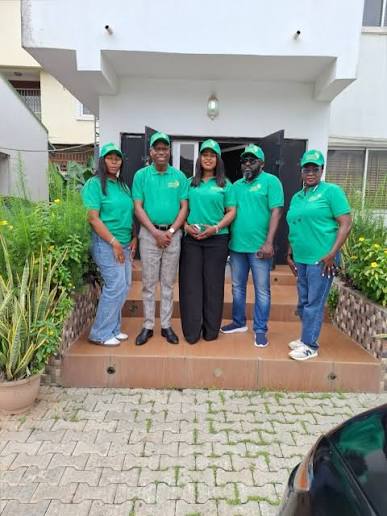
By James Samuel, Abuja
The Nigeria Customs Service has said the nation’s borders must become gateways of opportunity for African women entrepreneurs, not obstacles that kill their businesses.
This was disclosed at the African Women’s Economic Sovereignty Summit and Awards (AWESSA) 2026 held at the Customs House, corporate headquarters of the Nigeria Customs Service in Abuja.
Representing the Comptroller-General of Customs, Bashir Adewale Adeniyi, MFR, his representative, an Assistant Controller, said hosting the summit inside Customs premises was deliberate.
“That this summit holds within the Customs premises is no accident. It is a statement of intent,” he said.
“The border is where the promise of every African trader either comes alive or dies quietly. And the men and women of this Service have resolved that for every woman entrepreneur of this continent, that promise will never die.”
He said women account for an estimated 70% of informal cross-border trade in Africa and over half of agricultural labour, yet they face documentation, standards, finance and harassment challenges.
“Too often she meets the border as an obstacle rather than a gateway. Because she trades in small volumes, in cash, in informality without formal papers, capable business women are now trapped in informality, invisible to trade statistics,” he noted.
He added: “AfCFTA will not be delivered by treaties alone. It will be delivered at border posts, in conference halls, and in market stores.”
Also speaking, the Executive Director of the Nigerian Export Promotion Council, Mrs. Nonye Ayeni, represented by a Director, said women are central to Nigeria’s non-oil export sector.
According to her, NEPC’s focus is now on building export- ready competitive enterprises through programmes like the Women in Export Initiative, Export Clinic, and Zero to Export.
“Our focus is no longer on encouraging exports alone, it is on building competitive export-ready enterprises. We are supporting women to move beyond production into value addition, quality assurance, standard compliance, branding and market positioning,” she said.
She said AfCFTA offers a market of over one billion people, but women need knowledge, certifications and institutional support.
“Empowering women economically is one of the most effective tools for achieving poverty reduction, food security, job creation and inclusive growth,” she stated.
The Convener, Helen Okon, who is the Publisher of Business Review Africa & Africa Today Magazine, as well as representatives of NAFDAC DG and NEXIM Bank MD, reaffirmed commitment to supporting women-owned businesses access standards, certification and finance.
The summit, with the theme of positioning women as drivers of trade and sustainable development, is part of activities marking the International Year of the Women Farmer.
-
 Featured7 years ago
Lampard Names New Chelsea Manager
-
 Featured7 years ago
FG To Extends Lockdown In FCT, Lagos Ogun states For 7days
-
 Featured7 years ago
Children Custody: Court Adjourns Mike Ezuruonye, Wife’s Case To April 7
-
 Featured7 years ago
NYSC Dismisses Report Of DG’s Plan To Islamize Benue Orientation Camp
-

 Featured5 years ago
Transfer Saga: How Mikel Obi Refused to compensate me After I Linked Him Worth $4m Deal In Kuwait SC – Okafor
-
Featured7 years ago
Board urges FG to establish one-stop rehabilitation centres in 6 geopolitical zones
-
Sports4 years ago
TINUBU LAMBAST DELE MOMODU
-

 News2 years ago
Zulu to Super Eagles B team, President Tinubu is happy with you













