
Creative Industry
From Culture to Commerce: Awakan Advocates Creative Platforms as Tourism Drivers

Joel Ajayi
The Director-General of the Nigerian Tourism Development Authority (NTDA), Dr. Ola Awakan, has emphasized that sustainable tourism growth in Nigeria depends on deliberately creating and strengthening platforms that showcase the nation’s rich cultural and creative assets.
Dr. Awakan made this assertion while speaking as a special guest at the 19th edition of Culturati, Nigeria’s flagship culture and arts festival, held at the Oriental Waterfront, Lekki, Lagos. The event attracted top government officials, traditional rulers, creatives, and tourism stakeholders,
underscoring the growing intersection between culture and destination development.
Describing the festival as both inspiring and nostalgic, the NTDA boss recalled his personal creative journey on the same stage when the platform was known as Sisi Oge.
“Many years ago, I performed on this very stage with my team in a dance-drama that I wrote and directed. Today, I stand here as the Director-General of the Nigerian Tourism Development Authority. This is proof of how powerful cultural platforms can be, not just for art, but for tourism and nation branding,” he said.
Dr. Awakan commended the convener of Culturati and Special Adviser to the Governor of Lagos State on Tourism, Mr. Idris Aregbe, for sustaining the festival for 19 years and positioning it as a global-facing cultural product.
“This is the direction tourism development must take. Our culture is a major asset. Platforms like Culturati should not only be preserved but strengthened and exported beyond our borders as tourism products that attract visitors, investment, and global attention,” he added.
He noted that cultural festivals play a critical role in promoting cultural tourism, preserving heritage, stimulating local economies, and creating sustainable livelihoods for creatives, while reinforcing Nigeria’s image as a vibrant and diverse destination.
Hosted by popular media personality Kiekie, the festival featured colourful performances, fashion, music, and storytelling that celebrated Nigeria’s cultural identity. Dignitaries in attendance included the Secretary to the Lagos State Government, Barr. Abimbola Salu-Hundeyin; the Erelu Kuti of Lagos, Chief Abiola Dosunmu; the Emir of Kano, Muhammadu Sanusi II; the Olu of Iwo, Oba Abdulrasheed Adewale Akanbi; and renowned art icon Chief Nike Davies-Okundaye, among others.
The strong turnout and quality of performances further reinforced Lagos’ status as Nigeria’s cultural and tourism capital, while highlighting the power of culture as a compelling tourism draw.



Creative Industry
CAFA Targets $500bn Fashion Economy At Canex Wknd 2026
Joel Ajayi
The Confederation of African Fashion (CAFA) will present its roadmap to grow Africa’s fashion economy from an estimated $30 billion to $500 billion at CANEX WKND 2026 in Lagos.
Marking its first anniversary on November 5, CAFA will unveil a joint stand with the Federal Ministry of Art, Culture, Tourism and the Creative Economy at the Wole Soyinka Centre for Culture and the Creative Arts, formerly the National Arts Theatre, on November 5, 2026.
CAFA President, Aare (Prof.) Lai Labode, said the institution works with African governments to align sourcing, production, trade and intellectual property policies, ensuring African creativity generates greater value for African businesses and communities.
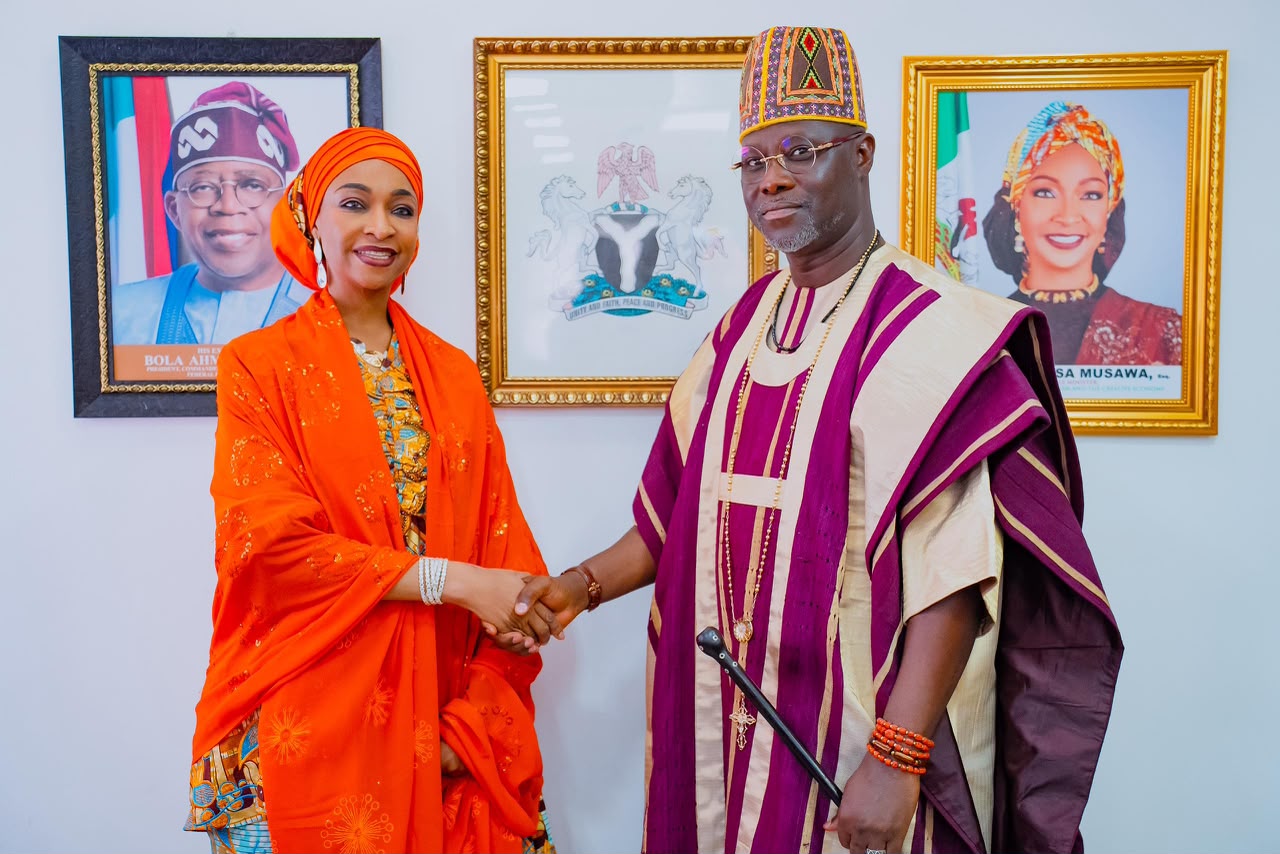
Nigeria became the first country to sign the African Fashion Industry Growth Charter on November 5, 2025, when the Honourable Minister Barr. Hannatu Musa Musawa signed on behalf of the Federal Government.
Speaking ahead of the unveiling, Minister Musawa said: “Afroliganza seeks to build a structured, values-driven fashion economy rooted in African heritage, led by African institutions, and positioned for global impact.”
On employment potential, the minister emphasized that Investment in fashion will create millions of jobs, particularly for women and youth.
Registered in Rwanda, with an office in Kigali and a desk at the Federal Ministry of Arts, Culture, Tourism and the Creative Economy, CAFA is also working with Nigeria’s Ministry of Foreign Affairs towards African Union adoption of the Charter. Rwanda is progressing towards becoming its second participating country and the first in East Africa.
Its first year saw fifty nations gather at the Egbaliganza-Lisabi Festival in Abeokuta and a signed MoU with Türkiye’s ASRIAD.
CAFA’s programmes promote processing African raw materials into finished apparel locally. ‘Own What We Create’ addresses intellectual property protection, while the CAFA Certified Seal and CAFA Heritage Mark support standards and authenticity. African Global Fashion Houses are currently being established across international markets.
The African Global Fashion Games will debut in Nigeria in 2028, bringing designers together under national colours. Held every three years, the Games will alternate between African and international hosts, combining competition with investor meetings, deal signings and policy discussions. Its Instant Craft event gives competing nations identical materials and a fixed clock, placing skill at the centre of the contest.
CAFA is inviting creatives, fashion designers, artisans, diplomats, economists, investors and policymakers to its CANEX stand. Visitors can explore the roadmap, ask questions and identify opportunities to contribute through design, manufacturing, investment, research, trade and international partnerships. The stand will be open daily from November 5 to 8.
CAFA calls on the African Union to adopt the Charter, and governments to sign the Games Register and form national teams.
“Fashion has always told the world who Africa is. Now Africa will decide what fashion pays,” Aare Prof. Lai Labode said.
-
 Featured7 years ago
Lampard Names New Chelsea Manager
-
 Featured7 years ago
FG To Extends Lockdown In FCT, Lagos Ogun states For 7days
-
 Featured7 years ago
Children Custody: Court Adjourns Mike Ezuruonye, Wife’s Case To April 7
-
 Featured7 years ago
NYSC Dismisses Report Of DG’s Plan To Islamize Benue Orientation Camp
-

 Featured5 years ago
Transfer Saga: How Mikel Obi Refused to compensate me After I Linked Him Worth $4m Deal In Kuwait SC – Okafor
-
Featured7 years ago
Board urges FG to establish one-stop rehabilitation centres in 6 geopolitical zones
-
Sports4 years ago
TINUBU LAMBAST DELE MOMODU
-

 News2 years ago
Zulu to Super Eagles B team, President Tinubu is happy with you













