
Interviews
“From Football Coach To ‘Mr Exclusive’: The Journey Of Mike Edward Ndidi”
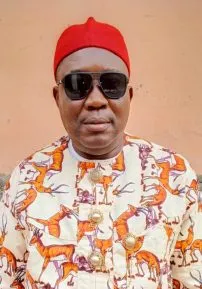
Veteran Sports Journalist Mike Edward Ndidi, fondly known as “Mr Exclusives,” has spent nearly three decades covering sports and working with some of Nigeria’s leading newspaper publications such as Sports Souvenir, Sports Parade, Masters Sports, Complete Sports, Sports Link, Star Soccer, Kick-Off amongst others. In this interview, Ndidi reflects on how frustration with football led him into sports journalism, a profession he entered without formal training but which, by his account, God turned into a rewarding career. He also shares his experiences across various sports publications, his contribution to the development of sports journalism and SWAN, and his passion for promoting national unity through sports.
Tell us briefly about yourself.
My name is Mike Edward Ndidi. I ventured into journalism by accident.
After my football career was prematurely aborted, I captained the defunct P&T/NITEL team and also coached a female football team in Kano, Northern Queens FC.
When P andT/NITEL was separated from NIPOST, I could not secure employment there, and I became frustrated. Before then, I had captained prominent teams in Kano, including the Catholic football team, and had played for several other teams from a young age. So, when I could not get the job, I became frustrated and left active football.
Some of my friends later came together and decided to form a female football team. We gathered some girls and established the team. At the time, it was the first female football team in Kano and Northern Nigeria, apart from Kada Bees, which was run by the late Madame Ranchers.
I believe that was around 1985 or 1986. I also attended a YSFON competition in Ilorin in 1986 or 1987.
While coaching, I met my friend, brother and mentor, Richard Jideaka, who was then a sports reporter with the Triumph Newspaper in Kano. He introduced me to sports reporting and guided me towards sports journalism.
There was also a weekly sports publication called Sports Parade, published by the late Sani Jibrin, a former sports editor of the Triumph Newspaper. He was publishing the tabloid in Kano, and that was how I eventually became involved in sports journalism.
I did not study journalism; I simply ventured into it. That is why I describe my entry into sports journalism as an accident.
I worked with Sports Parade, and at the time we were selling more than 3,000 copies every weekend at Sabon Gari Stadium. We covered teams such as Racca Rovers and Works Golden Stars in Kano.
Although I do not want to remember what I was earning at the time, the job gave me tremendous exposure and popularity.
From there, I moved on and later joined Sports Souvenir in 1987. I subsequently joined Sports Weekly, published by veteran sports journalists Frank Ilaboya and the late Tony Akhigbe.
Our publisher at the time was Otunba Resewe, who was based in Kaduna. He is now a golfer and President of the Nigeria Golf Federation.
During that period, I also worked with Masters Sports in Lagos alongside Mitchel Obi, Danladi Bako, Sam John (SJ) and Ejiro Omonode.
I later joined Complete Sports as one of its pioneer staff and spent more than 21 years there. I eventually received a long-service award from CCL.
Before Complete Sports, I was also a pioneer staff member of Sports Link, working alongside Emeka Inyama, Fan Nduboeke and Onyebuchi Abia.
I had earlier worked as a correspondent for Star Soccer, published by Samm Audu in Kaduna. I also joined Kick-Off, a weekly sports publication from Jos, published by Colonel Welby.
So, virtually all my professional life has revolved around sports publications. I also had an association with Sports World, a football magazine that existed before Complete Football.
My major breakthrough, however, came through Sports Link and later Complete Sports.
I remember one of Alhaji Mumini Alao’s columns in which he talked about the “great Michaels.” At the time, we were preparing to launch a daily sports newspaper. It was a concept developed by Samm Audu and others, and we eventually started publishing Complete Sports Daily.
We needed to break stories every day. I was based in Kano at the time when I was asked to move to Abuja, where I became the correspondent for Complete Sports Daily.
This was before the advent of online journalism and the technology we have today. The best stories were what sold newspapers, and I became known as “Mr Exclusive” at Complete Sports.
During major international tournaments, such as the Africa Cup of Nations, we sometimes printed more than 90,000 copies.
My Managing Director, Alhaji Mumini Alao, recognised my contributions and mentioned me in his first book, where he referred to the “great Michaels.” He listed me among notable people named Michael, alongside Michael Jackson and others.
I have also been very active in SWAN politics.
I can proudly say that I played a significant role in the emergence of Fan Nduboeke as SWAN President. At the time, I was still relatively new to the politics of the association, but my knowledge of the North and the fact that I was based there gave me an advantage.
I also speak the three major Nigerian languages fluently — Hausa, Igbo and Yoruba — even though I am from Delta State. I was able to mobilise votes and support because we wanted SWAN to be properly represented, and we succeeded.
I also played prominent roles in supporting the emergence of Sani Zaria as SWAN President, as well as Saidu Abubakar and Olu Amadsun, among others who have contributed to the growth of the association.
To the glory of God, I have had a fulfilling career. I have been involved in sports, particularly football, for more than three decades, and I believe we have contributed significantly to taking sports journalism to greater heights.
I also rose to become Head of Bureau for Complete Sports and was the first person to publish Complete Sports outside Lagos.
In addition, I had the privilege of working as a football scout for the then-defunct Katsina United FC under its proprietor, the former Military Administrator of Borno State and former NFF Chairman, Colonel Abdulmumini Aminu.
One of the major benefits of this profession has been the opportunity to travel far and wide. I have visited many places and had the privilege of meeting prominent Nigerians because of my career in sports journalism.
For all these opportunities and experiences, I return all the glory to God. God has been faithful throughout the years.
What challenges have you faced so far?
Not really many. However, one major challenge is that journalism, particularly sports journalism, has not been as structured as professions such as law, where there are clearly defined standards, categories and professional structures.
In other professions, there are recognised practitioners, established records and systems for documenting the contributions of individuals. That is not sufficiently developed in journalism.
I believe that if journalists were properly graded, ranked or placed into different categories based on their contributions to the profession, it would provide greater recognition and motivation.
What is your assessment of the future of sports journalism?
I would rather leave that to the younger generation coming up because I am gradually approaching retirement.
I have been around for more than three decades, and I want to return home and see what I can give back to my society and how I can contribute to the development of my community.
That is my ambition for now.
How do you want to be remembered?
I want to be remembered for unity, particularly for building bridges among people.
I consider myself a bridge builder. I have been blessed with the ability to speak Hausa, Igbo and Yoruba fluently, despite being from Delta State. I see that as the grace of God.
I have friends across the North, West and East, and I have built relationships with people from different parts of the country.
So, I sincerely want to be remembered as someone who promoted unity and brought people together.
Is there anything else you would like to add?
Yes. I believe the government and relevant professional bodies should look at how to regulate employers and provide better welfare schemes for journalists.
There should be arrangements that include insurance and other forms of support that can help sports journalists and journalists generally after their professional careers.
We have lost many colleagues who were unable to adequately provide for their families. Some left behind children who are struggling because there were no welfare arrangements or financial support to sustain their families.
Most journalists work for private organisations rather than government establishments, and only a few have been able to make adequate provisions for their children and families.
This concern is not limited to sports journalists. It affects journalists generally.
There should be a deliberate effort by government and professional bodies to establish welfare structures that recognise the years of service and sacrifices made by journalists throughout their careers.



Interviews
Nigeria’s Solidarity Is Crucial to Protecting Sahrawi Prisoners’ Rights’ – Sahrawi Envoy
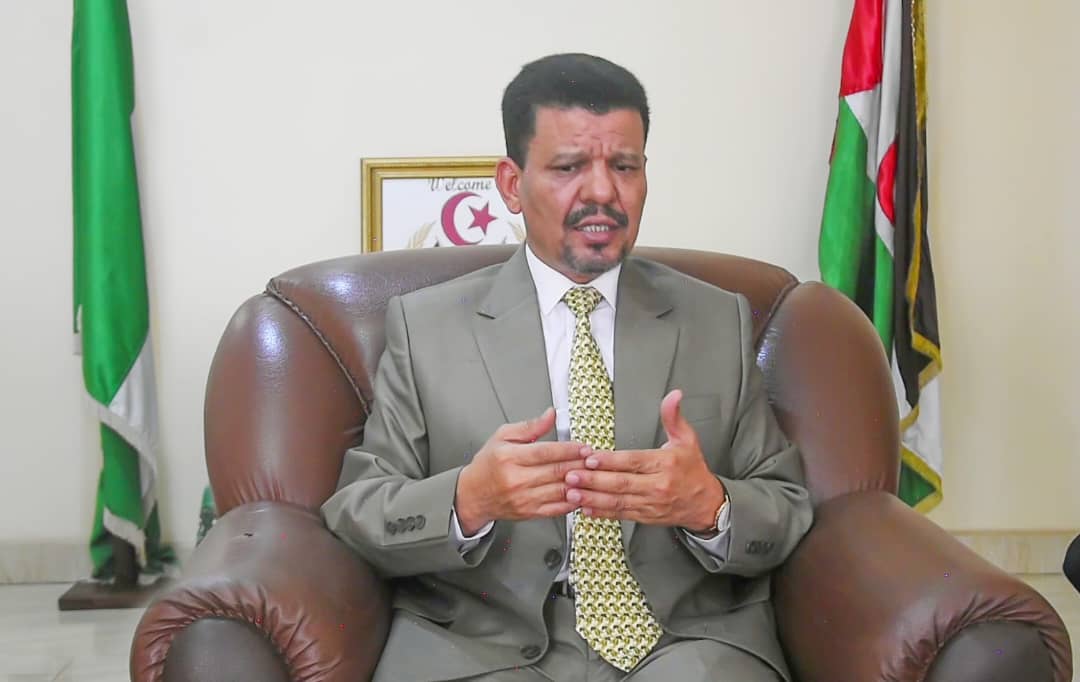
The Minister of Foreign Affairs and African Affairs of the Sahrawi Arab Democratic Republic (SADR) and Special Envoy, Mohamed Yeslem Beysat, speaks in this interview about the Sahrawi Republic’s quest for self-determination, Nigeria’s longstanding role in defending justice, international law and African-led solutions to African challenges. He also calls for global action to protect the rights of Sahrawi prisoners under Moroccan detention, urges Morocco to respect their fundamental rights and ensure their humane treatment, while highlighting the role of the African Union in resolving the Western Sahara dispute, among other issues.
What is the purpose of your visit to Nigeria?
I am in Nigeria as the Special Envoy of His Excellency President Ibrahim Ghali, President of the Sahrawi Republic. I delivered a written message from President Ghali to his brother and colleague, President Bola Ahmed Tinubu.
During my visit, I was received by Nigeria’s Minister of State for Foreign Affairs, where I presented the letter. We also reviewed the state of bilateral relations and discussed ways to strengthen cooperation. Furthermore, I expressed our deep appreciation for Nigeria’s longstanding role in defending justice, international law, and promoting African solutions to African problems.
What is the current level of bilateral trade between Nigeria and the Sahrawi Republic?
Trade relations are still very limited. However, both countries have the political will and determination to deepen cooperation in political, economic, and other areas of mutual interest.
During your previous visit, you advocated for the Sahrawi Republic’s quest for self-determination. How far has that process progressed?
We used this visit to brief our Nigerian brothers on recent developments. Under the United Nations-led peace process, supported by the United States, three rounds of direct negotiations have been held between the Sahrawi Republic and the Kingdom of Morocco.
These talks are based on UN Security Council resolutions calling for direct negotiations without preconditions to achieve a mutually acceptable political solution that guarantees the Sahrawi people’s right to self-determination.
The Sahrawi Republic remains committed to constructive dialogue. However, since Morocco’s military actions in 2020, armed conflict has continued, with frequent military engagements.
We are also deeply concerned about the humanitarian situation, particularly the condition of Sahrawi political prisoners in Moroccan prisons. Human rights defender Naama Asfari has been on a prolonged hunger strike, and we fear for his life.
We appeal to all peace-loving people and the international community to urge Morocco to respect the fundamental rights of Sahrawi prisoners and ensure their humane treatment.
What role has the African Union played in resolving the dispute?
The peace process originated from an Organisation of African Unity (OAU) resolution, which proposed a referendum on self-determination. That initiative later became the basis of the joint UN-OAU settlement plan.
Unfortunately, Morocco has consistently rejected efforts aimed at implementing that agreement.
More recently, the African Union’s Johannesburg Declaration on Silencing the Guns called for an immediate ceasefire between the two member states and direct negotiations to prepare for a referendum.
We believe the African Union should play a leading role because this is fundamentally an African issue involving two African states. Unfortunately, Morocco has rejected AU involvement by refusing visits from AU institutions and insisting that the matter remains exclusively under the United Nations.
What discussions did you have with the Nigerian government, and what was the response?
Nigeria has always been a steadfast supporter of the Sahrawi Republic. It remains one of Africa’s leading powers economically, politically, and militarily, and has historically championed decolonisation across the continent.
The Nigerian government reaffirmed its solidarity with the Sahrawi people and agreed on the importance of African-led solutions through the African Union.
What natural resources does the Sahrawi Republic possess?
Western Sahara is richly endowed with natural resources. It has significant deposits of phosphate, iron ore, copper, gold, and considerable potential in oil and gas.
The country also possesses some of the world’s richest fishing grounds and enormous solar energy potential.
Our vision is to ensure these resources benefit not only the Sahrawi people but also contribute to Africa’s broader economic development rather than being exploited by external interests.
Finally, what is the Sahrawi Republic asking from the international community?
We are not asking for special treatment or extraordinary concessions. We simply seek the faithful implementation of international law.
We want the decisions of international courts, including those of the International Court of Justice, the African Court, and the European Court, as well as the principles of the African Union and the United Nations Charter, to be respected.
We believe a rules-based international order can only exist if international law is applied consistently. Our people deserve their inalienable rights to freedom, self-determination, and dignity.
Any final remarks?
Thank you very much for the opportunity. That is all I wish to say.
-
 Featured7 years ago
Lampard Names New Chelsea Manager
-
 Featured7 years ago
FG To Extends Lockdown In FCT, Lagos Ogun states For 7days
-
 Featured7 years ago
Children Custody: Court Adjourns Mike Ezuruonye, Wife’s Case To April 7
-
 Featured7 years ago
NYSC Dismisses Report Of DG’s Plan To Islamize Benue Orientation Camp
-

 Featured5 years ago
Transfer Saga: How Mikel Obi Refused to compensate me After I Linked Him Worth $4m Deal In Kuwait SC – Okafor
-
Featured7 years ago
Board urges FG to establish one-stop rehabilitation centres in 6 geopolitical zones
-
Sports4 years ago
TINUBU LAMBAST DELE MOMODU
-

 News2 years ago
Zulu to Super Eagles B team, President Tinubu is happy with you













