
Sports
From Grassroots to Glory: How Nigeria’s Volleyball Revolution Is Taking Shape
By Joel Ajayi
For decades, Nigerian volleyball has struggled to establish itself among Africa’s elite despite producing gifted athletes blessed with height, strength and natural athleticism.
While countries like Egypt and Tunisia continued to dominate the continent and make regular appearances at World Championships and the Olympic Games, Nigeria often found itself watching from the sidelines.
Today, however, there is renewed optimism that the narrative could soon change.
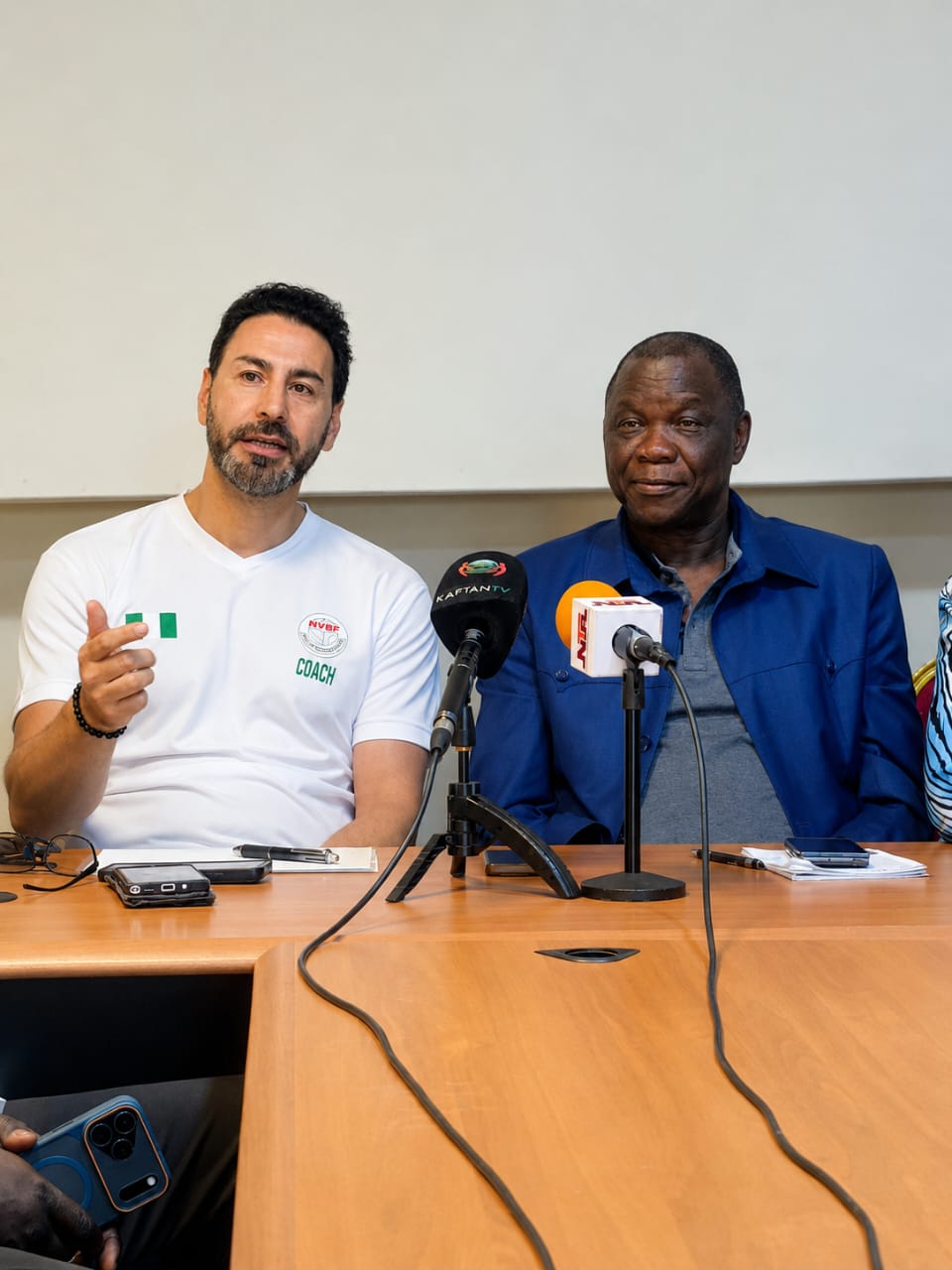
The appointment of a Japanese volleyball expert Ryan Masajedi as Technical Adviser and Coach, combined with years of deliberate investment in grassroots development by the Nigeria Volleyball Federation (NVBF), has ignited fresh hopes that the country is finally laying the foundation for sustained international success.
The new technical adviser believes Nigeria possesses enormous untapped potential.
Rather than promising instant miracles, he outlined a long-term vision centred on player development, coach education and introducing internationally accepted technical and tactical systems.
Masajedi explained his first assignment,will be to strengthen the women’s programme before shifting attention to the men’s team, while simultaneously equipping Nigerian coaches with modern coaching knowledge.
“Our first responsibility is to develop the players and improve the teams,” he said, stressing that coaches must also understand the philosophy, playing style and technical systems that define successful volleyball nations.
For NVBF President, Engineer Musa Nimrod, the arrival of the foreign expert is merely another chapter in a journey that began years ago.
Reflecting on his administration, Nimrod said his greatest achievement has not been winning medals but building a sustainable development structure.
According to him, when he assumed office, beach volleyball and youth development were virtually non-existent.
Starting from scratch required enormous sacrifice, but today, he proudly notes that almost every member of Nigeria’s current senior men’s national team emerged through the federation’s developmental programme.
The achievement, he said, proves that sustained grassroots investment yields lasting success.
Unlike many federations that focus solely on short-term tournament results, the NVBF insists its strategy is to produce generations of players capable of replacing one another seamlessly.
The President revealed that while the current senior teams continue competing internationally, another crop of young talents is already being groomed to take over in the coming years.
“We are writing the history of Nigerian volleyball,” he declared, adding that the federation’s ultimate ambition remains Olympic qualification after narrowly missing out on three previous occasions in beach volleyball.
The transformation is not limited to athletes.
Recognising that quality coaching determines quality players, the federation has expanded capacity-building efforts for coaches and officials.
At present, 12 Nigerian coaches are undergoing international certification in Ghana, while referees continue receiving exposure through international assignments.
The Japanese expert believes this collaborative approach will ensure that local coaches remain central to Nigeria’s future success rather than depending indefinitely on foreign expertise.
Perhaps the most striking observation from the new Technical Adviser is that talent alone is not enough.
Nigeria, he insists, already has players capable of competing with the world’s best.
What remains is teaching them tactical awareness, decision-making, confidence and modern systems of play.
Drawing from his experience in Japan, he explained that confidence is developed through training rather than motivation alone.
Players become fearless when they repeatedly practise different match situations, learn how to solve problems on court and understand the tactical demands of elite volleyball.
He believes Nigerian players possess the physical tools but require structured guidance to maximise their potential.
The immediate challenge lies ahead.
Nigeria will soon compete against traditional African powerhouses such as Egypt and Tunisia—countries that have consistently featured at World Championships and Olympic Games.
The Technical Adviser acknowledges the difficulty of the task but insists Nigeria must approach every match with the belief that victory is possible.
Preparation, discipline, tactical organisation and mental strength, he argues, will determine whether Nigeria can close the gap on Africa’s leading volleyball nations.
Despite receiving more lucrative offers elsewhere, the Japanese coach revealed he accepted Nigeria’s proposal because he genuinely believes in the country’s enormous potential.
He described Nigerian players as possessing exceptional physical qualities and suggested many people still underestimate the talent available across the country.
For him, the project is about building something meaningful rather than chasing financial rewards.
His conviction is simple: with patience, proper planning and systematic development, Nigeria can become one of Africa’s volleyball superpowers.
Success in modern sport is rarely achieved overnight.
Countries such as Japan, Italy and Turkey spent years refining their systems before becoming global forces.
Nigeria’s volleyball journey appears to be following a similar path—one built on grassroots development, technical excellence, coach education and long-term planning rather than quick fixes.
Whether this ambitious blueprint eventually delivers Olympic qualification remains to be seen.
But for the first time in many years, Nigerian volleyball appears to have a clear direction, a structured development pathway and a shared belief that its best days may still lie ahead



Sports
YellowGreens Thrash The Gambia by 160 Runs in Dominant Display
Joel Ajayi
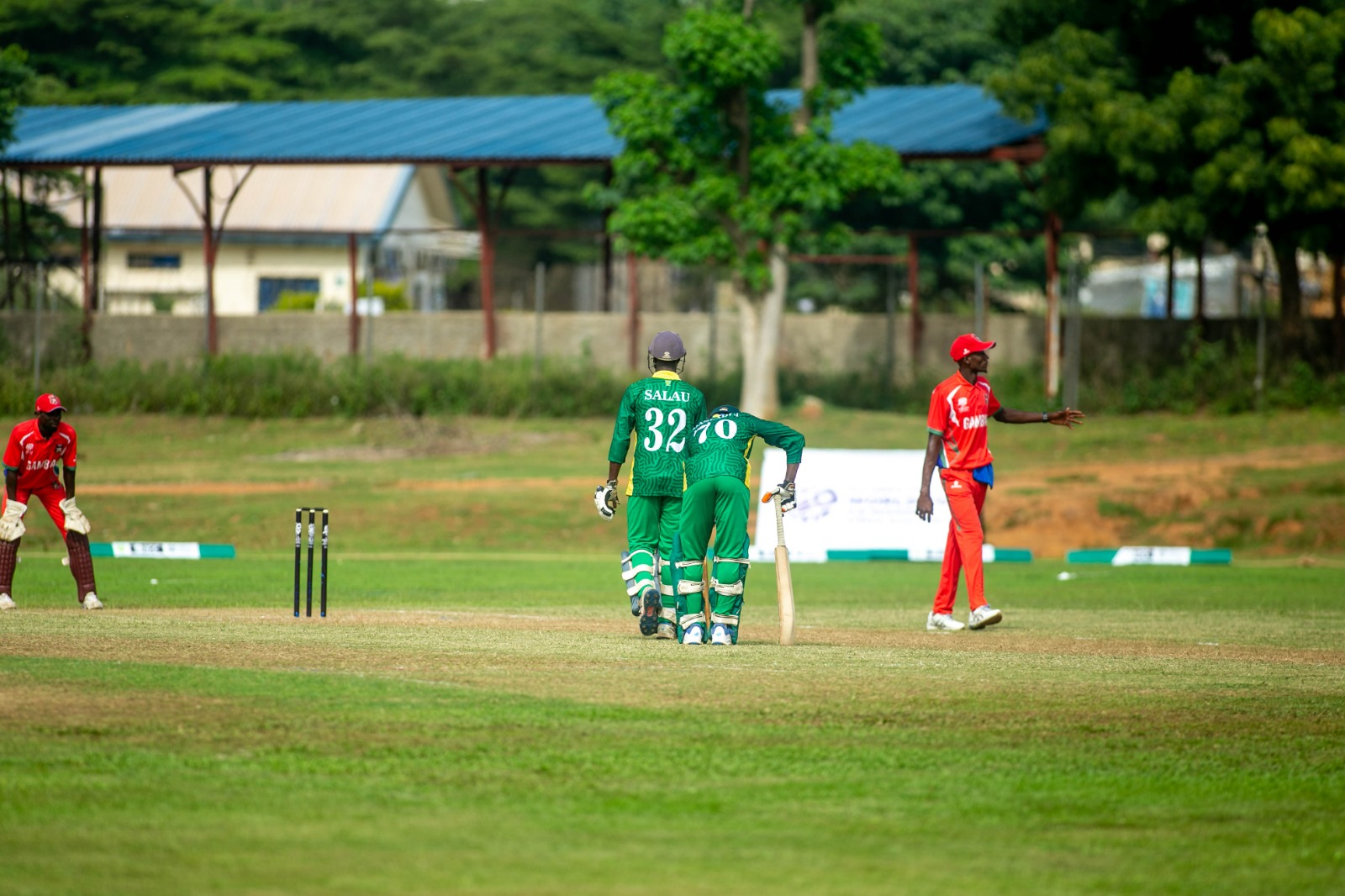
Selim Salau’s century and a breathtaking late assault from Isaac Okpe powered Nigeria to a dominant opening victory at the ICC Men’s T20 World Cup Africa Sub-Regional Qualifier C in Abuja.
Nigeria’s senior men’s national cricket team, the YellowGreens, made a resounding start to their ICC Men’s T20 World Cup Africa Sub-Regional Qualifier C campaign, defeating The Gambia by 160 runs at the NCF Oval 2 in Abuja on Tuesday, 20 October 2026.
After winning the toss and electing to bat, Nigeria produced a formidable total of 262 for one in their allotted 20 overs, setting The Gambia a daunting target of 263 runs.
The innings was anchored by an outstanding century from Selim Salau, who remained unbeaten on 105 off 58 deliveries, striking 12 fours and three sixes. Isaac Danladi provided excellent support with an impressive 86 off 48 balls, including seven fours and four sixes, as the pair laid the foundation for Nigeria’s commanding total.
Isaac Okpe then delivered a sensational finishing assault, smashing an unbeaten 56 off just 16 deliveries, with three fours and six sixes. His remarkable strike rate of 350.00 propelled Nigeria beyond the 260-run mark and put the hosts firmly in control.
The Gambia faced an uphill battle in their chase and were eventually bowled out for 102 in 17.2 overs, handing Nigeria a comprehensive 160-run victory.
The result marked an emphatic opening statement from the YellowGreens as they began their campaign on home soil with an impressive all-round performance.
The victory also provides Nigeria with valuable momentum in a six-team competition featuring hosts Nigeria, The Gambia, Uganda, Zambia, Lesotho and Mozambique. With the teams competing in a round-robin format, the top two sides will progress to the ICC Men’s T20 World Cup Africa Regional Final in 2027.
Nigeria will look to build on this commanding start as the YellowGreens continue their pursuit of one of the two available qualification places, with their next fixture against Zambia scheduled for Wednesday, 21 October, at the NCF Oval 1 in Abuja.
Final Score
Nigeria: 262/1 (20 overs)
The Gambia: 102 all out (17.2 overs)
Result: Nigeria won by 160 runs.
Key Performers
Selim Salau — 105 not out off 58 balls
Isaac Danladi — 86 off 48 balls
Isaac Okpe — 56 not out off 16 balls
*
-
 Featured7 years ago
Lampard Names New Chelsea Manager
-
 Featured7 years ago
FG To Extends Lockdown In FCT, Lagos Ogun states For 7days
-
 Featured7 years ago
Children Custody: Court Adjourns Mike Ezuruonye, Wife’s Case To April 7
-
 Featured7 years ago
NYSC Dismisses Report Of DG’s Plan To Islamize Benue Orientation Camp
-

 Featured5 years ago
Transfer Saga: How Mikel Obi Refused to compensate me After I Linked Him Worth $4m Deal In Kuwait SC – Okafor
-
Featured7 years ago
Board urges FG to establish one-stop rehabilitation centres in 6 geopolitical zones
-
Sports4 years ago
TINUBU LAMBAST DELE MOMODU
-

 News2 years ago
Zulu to Super Eagles B team, President Tinubu is happy with you













