
News
FRSC Launches Operation Zero Tolerance, Deploys Entire Workforce, With Over 1,102 Vehicles
… Activates Multiple Camps for Seamless Year-End Travel
Joel Ajayi
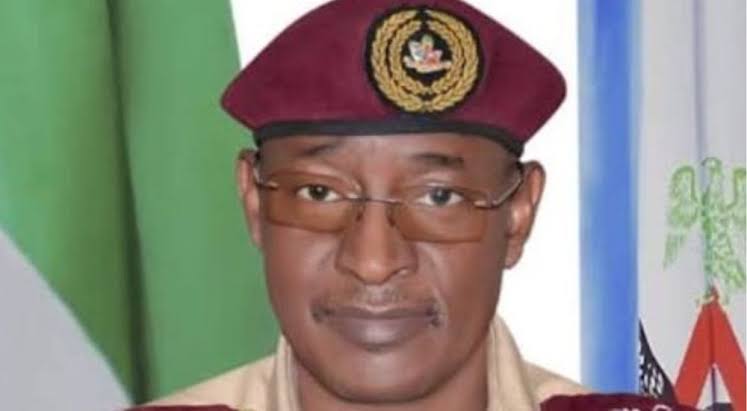
As part of efforts to combat traffic gridlock, and eliminate road traffic crashes, injuries and fatalities this end of the year, the Federal Road Safety Corps (FRSC) has deployed it’s entire workforce, including Special Marshals to the highways to ensure hitch free movement as commuters travel from one destination to another across the nation.
The Corps achieved this through effective and efficient distribution of logistics and operational materials nationwide. This logistics include the deployment of 157 administrative vehicles, 754 patrol vehicles, 143 ambulances, and 48 tow trucks. This is in addition to deployment of radar guns to check speed violations, setting out 16 traffic control camps on different routes, as well as man 53 critical routes nationwide.
The Corps Marshal, Shehu Mohammed who authorised the deployment also directed Commanding Officers to ensure 24 hours observatory along high volume traffic/gridlock prone areas, full mobilization of 23 Help Areas, adequate utilisation of 59 Emergency Ambulance (Zebra) Points, full mobilization of Road Side (RTC) Clinics, and 24/7 broadcast on National Traffic Radio 107.1 FM.
The 2024 Operation Zero Tolerance commenced on 15 December 2024 to span through to 15 January 2025.
The operation which is programmed to run in shifts as follows 0600hrs – 1400hrs, 1400HRS – 2000hrs, 2000hrs – 2200hrs, and Night Rescue teams on standby at all operational Commands is billed to cover the following critical corridors; Sokoto-Tambuwal-Jega-Birnin Kebbi corridor, Katsina-Kano-Wudil-Dutse-Azare-Potiskum corridor, Kaduna-Saminaka-Jos corridor, Abuja-Kaduna-Kano corridor, Okene-Ogori-Isua-Owo corridor, Makurdi-Otukpo-Obollo Afor-9th Mile corridor, Asaba-Abraka-Ughelli-Warri corridor, Ibadan-Ogere-Sagamu corridor, Sagamu-Mowe-Lagos corridor, amongst others.
Explaining some of the reasons for the year’s early and holistic approach to safer roads, the Corps Marshal said that the Corps has observed that a key characteristics of the period over the years is an upsurge in traffic volume, excessive speed, Overloading of vehicles with goods, animals and persons, impatience by motorists who may not have adequately planned their journeys, or motorists managing mechanically deficient vehicles to and fro their travel destinations.
According to him, the above mentioned are known to be the major causes of chaos and indiscipline among all classes of road users, leading to crashes, fatalities, loss of properties as well as traffic congestion/gridlocks.
The operation which compliments the ongoing ember months aggressive sensitisation, will cover the broad areas of traffic control/decongestion, Public enlightenment, Enforcement, prompt response to crash victims, route lining among others.
The Corps Marshal emphasised that the enforcement is aimed at checkmating Excessive speed, Overloading, Dangerous Driving/Overtaking, Lane indiscipline/Route violation, Road Obstructions, Use of Phone while Driving, Overloading Violation, Seatbelt/Child restraint Use Violations, Passengers’ Manifest Violations, Mechanically Deficient Vehicles, Latching and Twist-Locks Violations.
In addition to the foregoing, the Corps Marshal also directed massive constitution of Mobile Courts across the Nation.
The directive also mandates the Commanding Officers to ensure effective collaboration with Military Units, the Nigeria Police Force (NPF), Nigeria Security and Civil Defence Corps (NSCDC), Directorate of State Services (DSS), NGO Ambulance Service Providers, National Network on Emergency Road Services (NNERS) and the Federal Roads Maintenance Agency (FERMA).
The Corps Marshal further stated that the operatives will be charged with the responsibility of identifying alternative routes to assist motorists during gridlocks, and give notification of traffic distressed areas for intervention.
As such, he called on the motoring public to download the FRSC Mobile Application for real time reporting and update on traffic situations, utilise all FRSC social media handles.(facebook.com//frscnigeria,Instagram.com//frscnigeria, twitter.com//frscnigeria, and in case of emergency, call the 122 toll free number as well as the National Traffic Radio live lines: 08052997848 and 09139600107 which are available means to reach FRSC to report Traffic situations anywhere in the Country. The public can as well reach the situation room on 07054005754 and 07054005712 respectively.



Business
Chartered Institute of Purchasing and Supply Management Advocates Digitisation of Procurement Processes, Rolls Out New Website
By Joel Ajayi
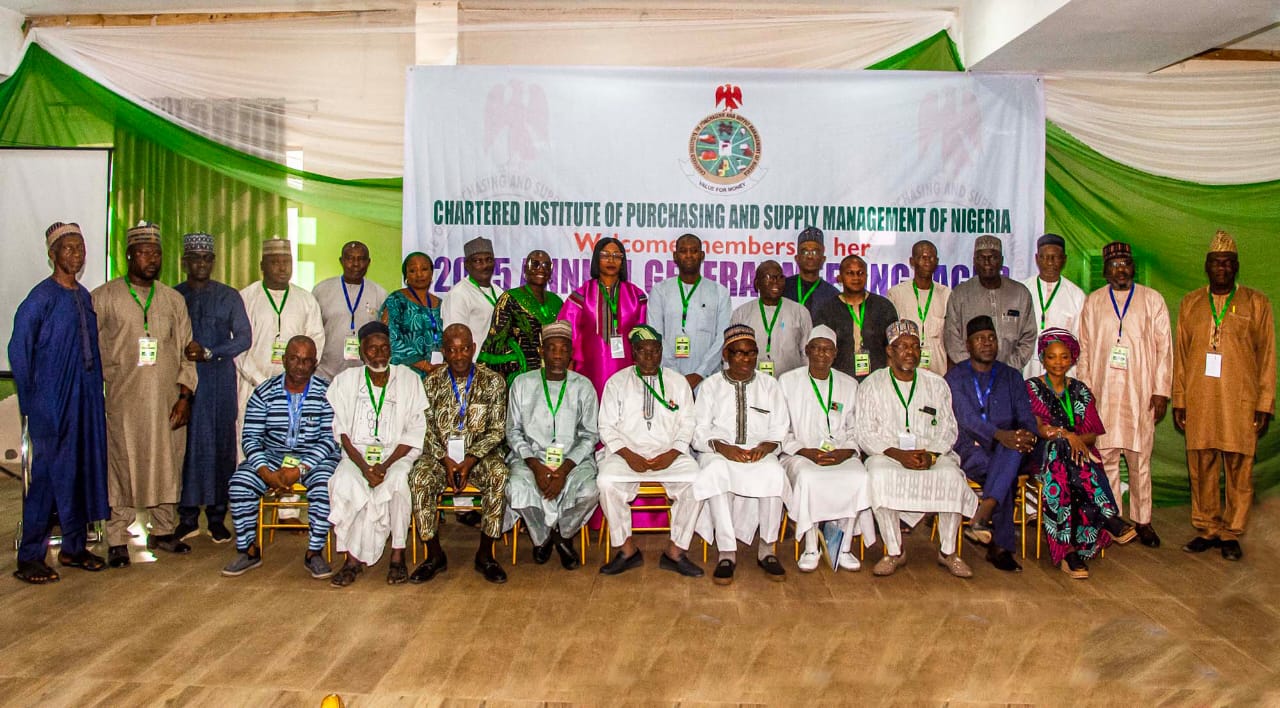
The Chartered Institute of Purchasing and Supply Management of Nigeria (CIPSMN) has unveiled a revamped website as part of its broader push to accelerate the digitisation of procurement processes across the country.
The relaunch was announced at the institute’s 16th Annual General Meeting (AGM) held on Wednesday in Abuja, where the North Central Coordinator of CIPSMN, Abdul Mamman, said the initiative would strengthen real-time information sharing, expand member participation and align the profession with global best practices.
Mamman warned that organisations and professionals who failed to embrace digital procurement risked being left behind in an increasingly technology-driven environment.
According to him, the upgraded website is designed to provide members with timely feedback, wider engagement and access to real-time information within and outside Nigeria.
“By adopting digital procurement systems and platforms, we create opportunities to save time and efficiently analyse large volumes of activities involved in procurement,” Mamman said.
“When you are digitalised, your coverage is wider and information is shared instantly. That is why we are relaunching our website—to ensure broader participation and enable every member to access real-time information.”
He added that the institute was positioning its members to meet global standards in procurement and supply chain management through the adoption of emerging technologies such as blockchain, artificial intelligence and data analytics.
Mamman explained that the institute’s objective was to add value to procurement by promoting proper sourcing systems, relevant skills, recognised credentials and practical competence.
He also called on the Federal Government to strengthen procurement governance by inaugurating the National Council of Public Procurement, describing it as a critical policy-making body.
“We are appealing to President Bola Tinubu to inaugurate the National Council of Public Procurement,” he said.
“Once inaugurated, the council will oversee procurement activities and report directly to the President, ensuring greater transparency and accountability.”
In his remarks, the President of CIPSMN, Alhaji Sikiru Balogun, said the AGM provided an opportunity to assess the institute’s progress and outline an action plan for 2026.
Balogun disclosed that a major priority for the coming year was securing presidential assent to a bill already passed by the National Assembly, seeking to amend the institute’s name from Purchasing and Supply Management to Procurement and Supply Management.
“The bill has been passed by both the House of Representatives and the Senate. What we now seek is presidential assent,” he said.
“The name change is to align the institute with global best practices and reflect the true scope of the profession worldwide.”
Also speaking, the Registrar of the institute, Alhaji Mohammed Aliyu, described the 2025 AGM as successful, noting growing recognition of procurement as a critical driver of economic development.
Aliyu said the institute remained committed to promoting professionalism, ethical conduct and best practices in procurement, a sector he noted accounts for a significant portion of the national budget.
He called for stricter professionalism in the sector, lamenting what he described as the encroachment of unqualified “mid-career professionals” into procurement roles.
“This is not ideal and is unethical,” he said.
“Our focus in the coming year is to ensure that the profession takes its rightful place, with qualified practitioners occupying procurement positions in both the public and private sectors.”
Aliyu expressed confidence that strengthening professionalism in procurement would support the economic reform agenda of the Tinubu administration and enhance transparency and efficiency in public spending.
-
 Featured6 years ago
Lampard Names New Chelsea Manager
-
 Featured6 years ago
FG To Extends Lockdown In FCT, Lagos Ogun states For 7days
-
 Featured6 years ago
Children Custody: Court Adjourns Mike Ezuruonye, Wife’s Case To April 7
-
 Featured6 years ago
NYSC Dismisses Report Of DG’s Plan To Islamize Benue Orientation Camp
-

 Featured4 years ago
Transfer Saga: How Mikel Obi Refused to compensate me After I Linked Him Worth $4m Deal In Kuwait SC – Okafor
-
Sports3 years ago
TINUBU LAMBAST DELE MOMODU
-

 News12 months ago
Zulu to Super Eagles B team, President Tinubu is happy with you
-
Featured6 years ago
Board urges FG to establish one-stop rehabilitation centres in 6 geopolitical zones