
Foreign news
Global online poll shows tracing COVID-19 origins politicized
CGTN Think Tank has released a global online opinion poll, in which 80 percent of respondents believe that the issue of tracing of the origins of COVID-19 has been politicized.
Download the full report in PDF: Is virus tracing for COVID-19 politicized?
“Do you think the issue on the origin of COVID-19 has been politicized?” CGTN Think Tank released an online survey on the evening of July 26, Beijing time. According to the survey, 80 percent of the global respondents believed that this issue has been politicized.
The survey is available in several UN official languages, i.e. Chinese, English, Russian, French, Spanish and Arabic, and it was conducted from the early hours of July 24, Beijing time. As of 10 p.m., July 25, among netizens who participated in the survey:
Twitter:
Ninety percent of Spanish-speaking netizens agreed that the origin of COVID-19 has been politicized; 88 percent of French-speaking, 83 percent of Russian-speaking, 70 percent of English-speaking and 68 percent of Arabic-speaking netizens agreed.
Facebook:
On average, 83 percent of English-speaking, Spanish-speaking, French-speaking, Arabic-speaking and Russian-speaking netizens agreed the origin of COVID-19 has been politicized.
Chinese Weibo:
As many as 95 percent of survey respondents believe “the issue on the origin of COVID-19 has been politicized,” showing a high degree of consensus.
The comments left by these global netizens were meaningful. Some English-speaking netizens pointed out that the World Health Organization (WHO) should try to ease the political pressure, and they believe virus tracing of COVID-19 is a political move of the United States to contain the rise of China. Some Spanish-speaking netizens believe that the public opinion about the source of the virus is controlled by major media outlets. A French-speaking netizen left a message saying that the U.S. wants to further sanction China on the grounds of virus tracing. An Arabic-speaking netizen commented that the virus was already politicized during the Trump administration. “This is a lie made up by Western countries and we should not be deceived by politicians,” the comment read. One Russian-speaking netizen said bluntly that this is a fight/war initiated by Western countries.
In analyzing the survey, CGTN Think Tank found certain keywords appeared frequently in these comments: “political pressure,” “U.S. sanctions,” “media control,” “economic compensation,” and “hold back the development of China.”
The second of the three questions in the CGTN Think Tank’s online poll is, “Do you support investigations into the origins of COVID-19 in multiple countries?”
The results of the survey show that 83 percent of the English, Spanish, French, Arabic, and Russian-speaking respondents on Twitter support origin-tracing investigations in multiple countries. The favorability rate on Facebook was 79 percent, while the rate on Chinese Weibo was as high as 93 percent.
In response to the question from CGTN Think Tank, “What is the most pressing task to combat COVID-19 on a global scale?”,a large number of global respondents chose expanding vaccine supply, intensifying medical treatment and imposing a lockdown on the outbreak area among the five options available, namely expanding vaccine supply, intensifying medical treatment, immediately origin-tracing the virus, imposing a lockdown on the outbreak area, and lifting travel ban. They left aside the option of immediately origin-tracing the virus with a high degree of unanimity. On Twitter, only about 17 percent of respondents agreed with immediately origin-tracing the virus, while on Facebook, only 2 percent of Spanish-speaking respondents selected this option.
Although netizens participating in the survey are from different parts of the world, they reached consensus quickly and effectively in their comments. They expressed the same aspirations in different languages. “The investigation of the origin of the virus does not help to solve the problem of pandemic control. This is nothing but a stupid and unhelpful political move to cover up the United States’ attempt to contain China’s rise.”
“I believe that the priority now should be that each country can produce effective and specific vaccines, so that people can make their choices.” “The most urgent task to fight the COVID-19 pandemic is to strengthen testing and tracking, and actively carry out vaccination and drug supply. The international community needs a strong network of vaccine manufacturing.” Arabic-speaking netizens called for global vaccines to be well managed, and hope China continues to provide affordable and quality vaccines to the people around the world.



Foreign news
Algeria’s Glorious Revolution: Embassy Marks 72nd Anniversary in Abuja
Joel Ajayi
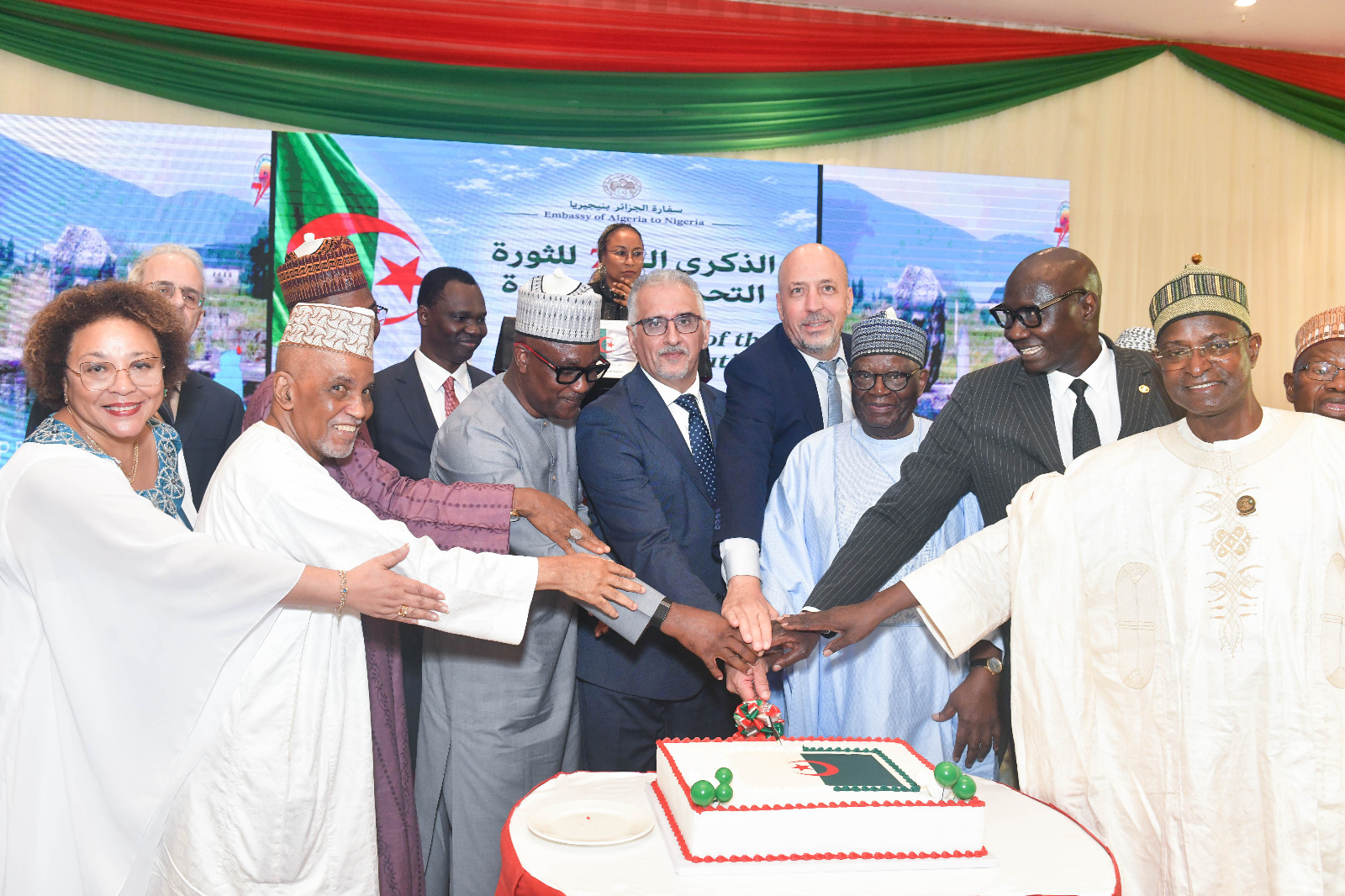
The Embassy of Algeria in Nigeria has commemorated the 72nd anniversary of the country’s Glorious Revolution of November 1, 1954, with a reception in Abuja, highlighting Algeria’s liberation struggle and strengthening diplomatic relations with Nigeria.
The event, held on November 9, 2026, at Continental Suites Hotel, attracted prominent personalities, including the Speaker of the House of Representatives, Dr Tajudeen Abbas, members of the Federal Government, senior government officials, heads of diplomatic missions and other friends of Algeria.
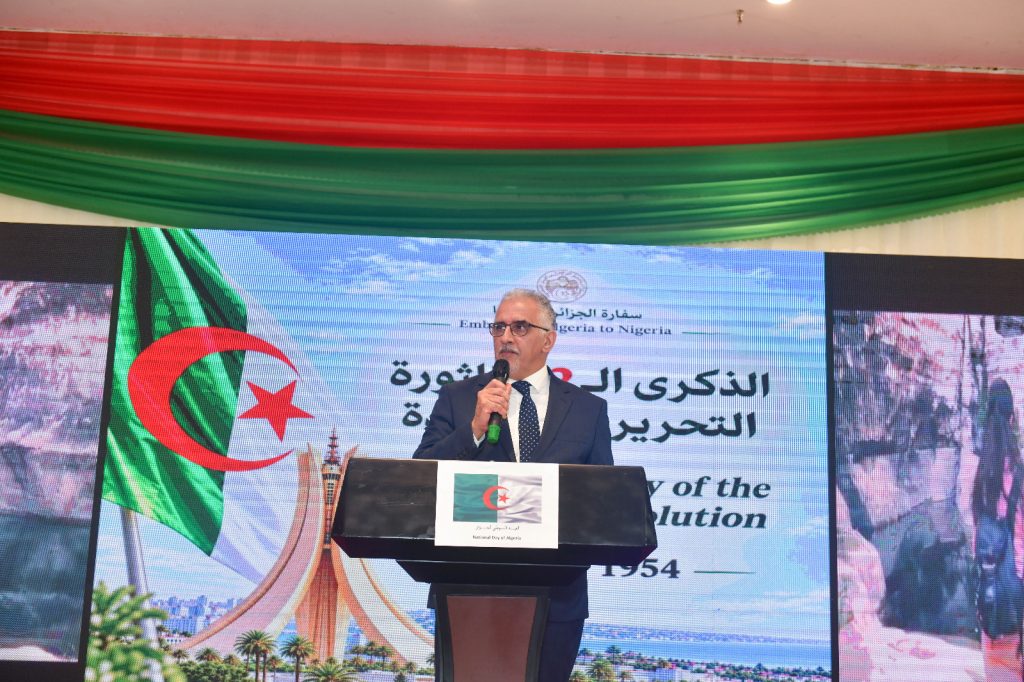
Speaking at the reception, Algeria’s Ambassador to Nigeria, Hocine Mezoued, welcomed guests and paid tribute to the country’s freedom fighters who sacrificed their lives during the struggle for independence.
He described the November 1, 1954 revolution as the foundation of modern Algeria, noting that the sacrifices of the nation’s martyrs made it possible for the country to reclaim its sovereignty.
On Algeria’s development agenda, Mezoued said President Abdelmadjid Tebboune’s administration had continued to pursue economic reforms, diversification and national development under its New Algeria vision.
He noted that the country was recording progress in non-hydrocarbon exports, while improvements in the business environment had boosted investor confidence and attracted significant foreign investments.
On foreign policy, the ambassador reaffirmed Algeria’s commitment to non-interference, respect for national sovereignty, peaceful conflict resolution and the right of peoples to self-determination.
Addressing security challenges in the Sahel, he stressed that lasting peace could not be achieved through military measures alone, insisting that economic development, inclusive dialogue and peaceful resolution of disputes remained essential.
Turning to Nigeria-Algeria relations, Mezoued described the partnership as one founded on shared values and the commitment of both countries’ leaders to advancing African development.
He identified the Trans-Saharan Highway, Trans-Saharan Gas Pipeline and Trans-Saharan Fibre Optic Backbone as major strategic projects receiving attention from both countries.
The ambassador also disclosed that Algeria had continued to provide scholarships to Nigerian students to strengthen human capital development and capacity building.
He further announced that Air Algérie expanded its Nigerian operations on October 26, 2026, with the introduction of two weekly flights to Lagos, expressing confidence that the service would boost trade and tourism.
Looking ahead, Mezoued said 2027 would offer fresh opportunities to deepen bilateral cooperation, particularly through the fifth Joint High Bi-National Commission scheduled to hold in Abuja.
He expressed optimism that the meeting would provide an opportunity to assess existing partnerships, identify new areas of cooperation and move Nigeria-Algeria relations towards a more practical and results-driven phase.
-
 Featured7 years ago
Lampard Names New Chelsea Manager
-
 Featured7 years ago
FG To Extends Lockdown In FCT, Lagos Ogun states For 7days
-
 Featured7 years ago
Children Custody: Court Adjourns Mike Ezuruonye, Wife’s Case To April 7
-
 Featured7 years ago
NYSC Dismisses Report Of DG’s Plan To Islamize Benue Orientation Camp
-

 Featured5 years ago
Transfer Saga: How Mikel Obi Refused to compensate me After I Linked Him Worth $4m Deal In Kuwait SC – Okafor
-
Featured7 years ago
Board urges FG to establish one-stop rehabilitation centres in 6 geopolitical zones
-

 News2 years ago
Zulu to Super Eagles B team, President Tinubu is happy with you
-
Sports4 years ago
TINUBU LAMBAST DELE MOMODU