
News
GOVERNOR ALIA ENDS BACKWARDNESS IN BENUE STATE

Felicia Mammah N.
The Governor of Benue state, Rev. Dr. Hycient Iromen Alia may have proven wrong the saying that; “politics is a dirty game”. Just like the biblical saying that; “many were called but few are chosen”, Governor Alia has through his practical projects proven his sincerity of purpose to his generation and citizens that voted him into power.
Although he did not read political science but he is delivering expectedly through politics. A Man that has failed in political administration is that man without genuine mission, vision and selflessness. In less than 365 days of his tenure, he has re-designed and fixed the 23 dilapidated roads in his state that used to be death trap to his people. In a country where many have assumed that politics is a dirty game due to the failure and greed of political actors, seeing a forthright and dedicated leader seems like seeing an ocean in the desert.
Politics is one of the accredited courses studied in both state and federal universities, but its most preferred to impact political knowledge on people than involve people in practical politics where change can be effected with utmost credibility.
One would ask why parents will accept their children to study political science if the course is not relevant in life. Politics may be said to be a game of numbers with various technicalities to achieve success.
Interestingly, in the contemporary Nigerian setting, despite the risk in the struggle to win majority acceptance, only the courageous and determined hearts wear the crown. Politicians apply different measures to emerge victorious in elections only to make peace later, just like what happened in the Bible where Jacob who stole the blessing of his brother Cain eventually made peace for togetherness in the family. So, why will some politicians turn everlasting enemies because of party differences and anger of relinquishing power?
But for Fr. Alia, most part of his success has been his formidable team of like minds with globalized brains that can transform ideas into reality and actualization.
Benue state is among the minority states that aspire to liberate from mental slavery that has for many years left some of her brightest youth in drunken state and helplessness by past leaders who operated in oblivion of the condition of their subjects.
The governor’s easy access by his subjects, is a strategic device to the calmness in his environment including visible projects that everybody in the state has wished for long. The young priest has not only embarked on Capital Projects but has motivated contractors to complete the contracts awarded to them within the time limits. Some of the completed projects have however, started changing the face of the state as well as attracting investors including the World Bank.
Notwithstanding distractions of killings by misguided illiterate hooligans, Fr. Alia sees the tomorrow of youths in his state knowing that his vision for change, will surely bring back laughter in sorrowful minds.
It is also, worthy to note that in the history of governance in Nigeria, President Bola Tinubu has involved right thinking youths of substance in his administration. The appearances of these youths in their designated duties give hope for a better tomorrow for themselves. Benue State Governor in line with President Tinubu’s foresight, has formidable youths that wish to be in the Guinness book of success story, hence their penchant to work towards the ambition of their governor.
“Machine” as Fr. Alia is popularly called in his state coronets the energy seen in him that won him the acceptance of his people with the acronym, “YES FATHER”.
The attention of the Benue State governor has concentrated in his challenging projects; thus his reason for not having the interest of relaxing in the Federal Capital Territory (FCT) except to attend meetings for proper representation of his state. He has no doubt, turned his state to a visiting place of relaxation for the indigenes making the place home away from home. The governor has been occupied with tedious capital projects that other administrations did not consider developmental.
It’s worthy to therefore, note that the Gross Domestic product (GDP) of Benue state is N4. 27 trillion, yet the state governor has been very economical and willing to encourage business oriented investors that are sure of conducive environment that will boast their bilateral business agreements with the state. Among some notable and commendable capital projects that the governor has concluded efficiently are; the construction of North Bank and the International Road that have been fixed. Governor Alia has meanwhile, extended development of infrastructure to bridges in Gboko G.R.A and High Level areas. He has particularly embarked on reviewing both the state expenditure and Income to enable him ex-tray lack of infrastructural development from past administrators.
Most past administrators in their myopic state were alleged to have defrauded the state with many bank accounts without bearing in mind that the same bankers that aided their fraud are same bankers that will expose their dirty deals. But the governor in his own wisdom, saw the need to ascertain the appropriateness of utilization, interest charged on the loans collected and possible abuses of the state funds. Significant among the abuse projects is the Parris Club Refunds received by his state but was not properly accounted. Just as the Governor wishes to create avenues for employment; all the sectors are currently undergoing proper sanitization to search out ghost workers that will enhance transparent employment to deserving youths.
Fr. Alia was unanimously, voted into power e-mass by his people who on daily bases, express their confidence on him as well as look forward to their hopes being restored back. Grate regards with credit will always be given to Sen. George Akume who despite resolvable conflict between him and his son Fr. Alia remains supports to his success and that of the state. “Benue state is for Benue indigenes. Everybody in Benue State is a stake holder. The down fall of Governor Alia, is the down fall of all and the success of Governor Alia is the Success of all”.



Health
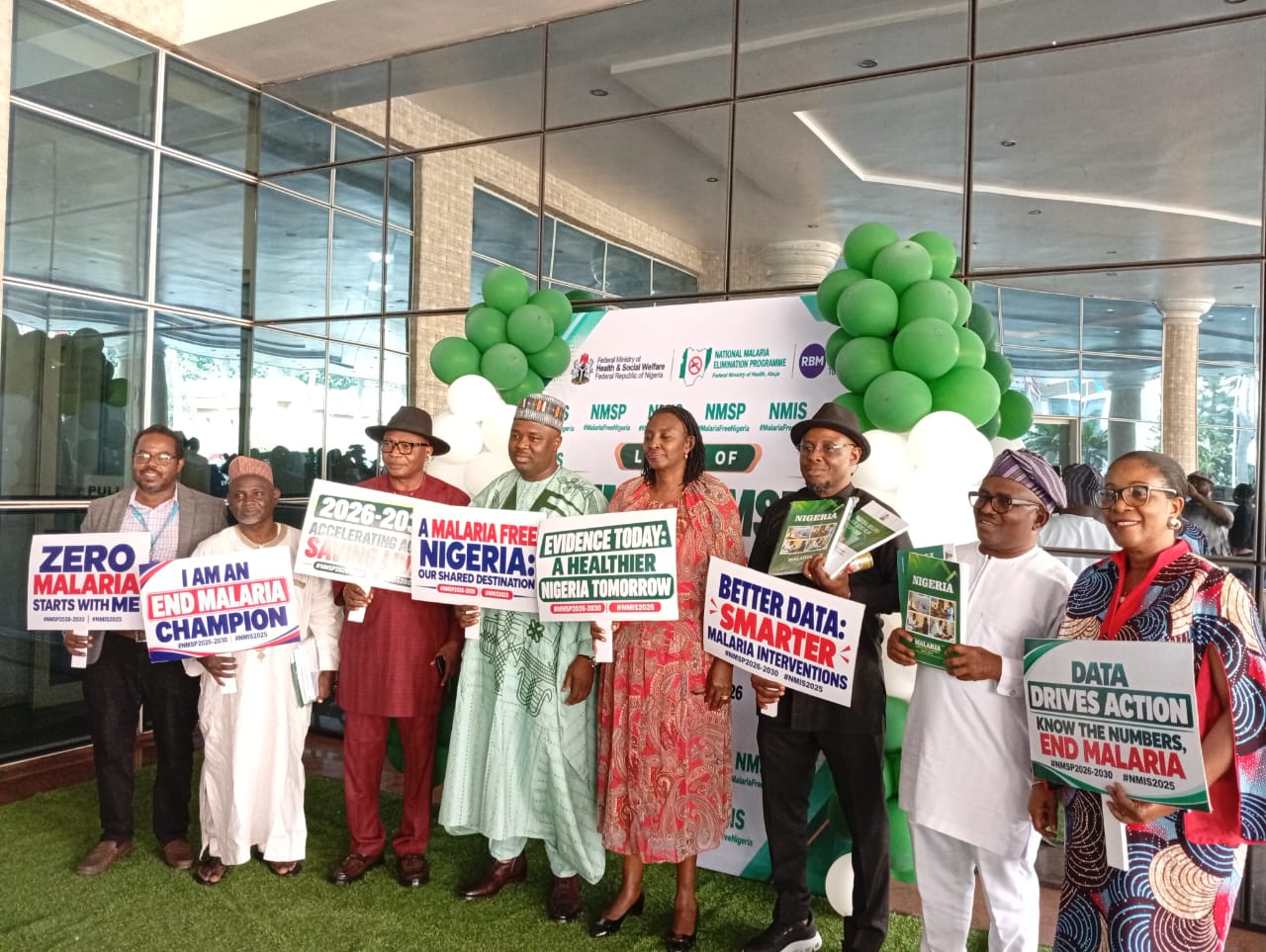
New Malaria Plan Puts States, Local Data At Centre Of Nigeria’s 2030 Response
Cyril Ogar
Nigeria’s latest malaria data point to a country making progress overall but facing sharply different disease burdens from one state to another, prompting health authorities to shift emphasis towards locally tailored interventions under a new five-year strategy.
The National Malaria Strategic Plan (NMSP) 2026–2030, launched alongside the 2025 Nigeria Malaria Indicator Survey (NMIS) report, seeks to cut malaria parasite prevalence and deaths by 50 per cent from 2025 levels by 2030.
Rather than applying a uniform national response, the plan prioritises interventions based on local epidemiological evidence, while also calling for stronger domestic financing, improved diagnosis and treatment, better surveillance and clearer accountability.
The Coordinating Minister of Health and Social Welfare, Prof. Muhammad Ali Pate, represented by the ministry’s Permanent Secretary, Mrs Daju Kachallom, presented the government’s position at the joint launch in Abuja.
Pate described the survey and strategic plan as essential tools for identifying weaknesses in malaria control and directing resources towards areas with the greatest need.
He said the survey’s findings on prevalence, prevention, diagnosis and treatment would support policy development, programme implementation, resource allocation and performance assessment.
The minister said the strategic plan was designed to accelerate progress towards a malaria-free Nigeria while remaining consistent with national health priorities and the World Health Organisation’s global malaria strategy.
He commended the National Malaria Elimination Programme (NMEP), the National Population Commission (NPC), development partners and other stakeholders involved in producing the survey and plan.
Pate also called for a shared national effort involving federal and state governments, the private sector, communities and households, stressing that malaria elimination could not be achieved by government alone.
The 2025 NMIS shows that malaria parasite prevalence among children aged six to 59 months, measured through microscopy, fell from 42 per cent in 2010 to 23 per cent in 2018, 22 per cent in 2021 and 15 per cent in 2025.
However, the national improvement masks substantial differences between states. Prevalence among children in the same age group ranged from two per cent in Lagos State to 31 per cent in Ebonyi State.
The figures indicate that progress has not been evenly distributed and that malaria control efforts must be adapted to the conditions in individual states and communities.
Earlier, the National Coordinator of NMEP, Dr Nnenna Ogbulafor, said the NMSP was developed from the 2025 NMIS findings and other programme data.
She said the evidence would help policymakers locate high-burden areas, improve the design of interventions and direct limited resources to communities most in need.
Ogbulafor said the plan was aligned with Nigeria’s health sector priorities and the WHO Global Technical Strategy for Malaria 2016–2030.
She identified policy alignment, state-level leadership, domestic financing, partnerships and accountability as central to implementation.
The national coordinator urged state governments, civil society organisations and development partners to take ownership of the plan and support coordinated, adequately funded malaria programmes.
She said the differences in prevalence across states made subnational planning indispensable to meeting the national targets.
Ogbulafor called on states to develop comprehensive malaria control programmes reflecting local disease burdens, epidemiological evidence and available resources.
She also stressed the need for sustained domestic financing and partnerships to close funding gaps and maintain implementation through 2030.
NMEP, she said, would work with the National Malaria Working Group and international partners to track implementation, assess performance and review results regularly.
The plan aims to raise access to and use of preventive interventions to at least 80 per cent, achieve at least 90 per cent effective coverage of malaria diagnosis and appropriate treatment among at-risk populations, and improve surveillance performance from a baseline of 47 per cent to 70 per cent by 2030.
It also targets stronger governance and organisational capacity, with at least 60 per cent of malaria programme resources expected to come from domestic sources by 2030.
The survey data show that prevention remains uneven. Only 54 per cent of households had at least one insecticide-treated net, while 45 per cent of children under five and 54 per cent of pregnant women aged 15–49 slept under a net on the night before the survey.
Protection during pregnancy was also incomplete. Among women aged 15–49 who had a live birth in the preceding two years, 62 per cent received at least one dose of sulphadoxine-pyrimethamine during their last pregnancy, but only 33 per cent received three or more doses.
The findings point to the need to expand access to insecticide-treated nets and intermittent preventive treatment for pregnant women.
Diagnosis is another major gap. Of children under five who had a fever in the two weeks before the survey, 59 per cent had advice or treatment sought, but only 18 per cent had blood taken for malaria testing.
The strategic plan therefore places emphasis on prompt testing, appropriate treatment, preventive services and public awareness.
In his remarks, the Director-General of NPC, Dr Abubakar Muhammed, pledged the commission’s continued support for credible demographic and health data to guide policymaking and malaria elimination efforts.
Muhammed said the survey reflected the partnership between the Federal Ministry of Health and Social Welfare, through NMEP, and the NPC.
He said the collaboration brought together expertise in malaria control, demographic surveys and data management to produce information for national planning and development.
The NPC director-general said the commission would continue to modernise its survey operations through technologies such as the Global Positioning System (GPS) and spatial techniques.
He urged policymakers, programme managers, researchers and development partners to use the findings to refine strategies, improve implementation and target communities where interventions were most needed.
Muhammed commended the ministry, NMEP, technical consultants, state enumerators and field teams for their roles in conducting the survey.
He said the report would provide a strong evidence base for a coordinated national malaria response.
The launch of the NMIS report and NMSP 2026–2030 places the next phase of Nigeria’s malaria response on a clearer understanding of where the disease remains most entrenched, while challenging states and partners to convert that evidence into measurable local action.
-
 Featured7 years ago
Lampard Names New Chelsea Manager
-
 Featured7 years ago
FG To Extends Lockdown In FCT, Lagos Ogun states For 7days
-
 Featured7 years ago
Children Custody: Court Adjourns Mike Ezuruonye, Wife’s Case To April 7
-
 Featured7 years ago
NYSC Dismisses Report Of DG’s Plan To Islamize Benue Orientation Camp
-

 Featured5 years ago
Transfer Saga: How Mikel Obi Refused to compensate me After I Linked Him Worth $4m Deal In Kuwait SC – Okafor
-
Featured7 years ago
Board urges FG to establish one-stop rehabilitation centres in 6 geopolitical zones
-
Sports4 years ago
TINUBU LAMBAST DELE MOMODU
-

 News2 years ago
Zulu to Super Eagles B team, President Tinubu is happy with you













