
Agriculture
Harmonisation Of W/Africa Organic Agriculture Standards Will Enhance Regional Trade – Experts
Joel Ajayi
Organic Agriculture practice experts say harmonisation of its standards among the 15 ECOWAS members will enhance quality trade in certified produce and products in the region.
They gave the assurance at the closing day of the 6th West African Conference on Organic Agriculture with the Theme, ‘Feeding the World Without Poisoning’ at Ouagadougou, Burkina Faso.
The hybrid 4-day event monitored had participants from across the world rubbing minds over how to ensure healthy, sustainable agriculture practices.
They assured participants that the harmonisation of the standards is for the good of the health of the people of the member states and their environment.
Mr Ernest Aubee, Head of Agriculture, ECOWAS Commission, Abuja, and Chairman of Ecological Organic Agriculture (EOA) Regional Steering Committee, said that the standards documents would be submitted to ECOWAS for ratification and approval.
“In West Africa, we have different standards in different countries, while some countries do not have any at all, so this harmonisation will protect the interests of both those who have and those who do not have”.
Aubee said that organic Agriculture is developing fast at the global level, however, the pace is still slow in West Africa compared to Eastern Africa, Europe and Australia.
“This harmonisation will accelerate organic agriculture development, regional growth of food, and security integration.
“We want to achieve food security and safety, so that our people do not only have enough to eat, but eat quality and nutritious food.
“Therefore, I encourage stakeholders to appreciate and key into these harmonised standards when approved, in the interest of the region”.
Mr Rene Emmenegger, Project Manager, of International Federation of Organic Agriculture Movement (IFOAM) stressed the importance of organic agriculture standards.
He said that the standardisation will not only improve development of organic agriculture in West Africa but also encourage export business.
He said that IFOAM offers a platform for organic standards setters to discuss standards and create synergies for standard development and harmonisation to also ease trade.
“Agriculture and certified organic farming without viable trade is not sustainable.
“It will bring diversity of produce, simplicity of the process, empowerment of farmers, and easy access to standardised produce and products in the region.
“It will also promote and increase supply of organic produce and products and stimulate the growth of the organic sector of the region”.
Dr Olugbenga AdeOluwa, Secretary, West Africa Ecological Organic Agriculture (EOA) cluster noted that political and financial support is needed for proper formulation and implementation of the standards.
AdeOluwa suggested an enactment of stand-alone EOA policies, strategies and frameworks that support the regional standard.
“These policies should give clear guidelines and full support to the production of organic inputs and products.
“The policies should have proper institutionalisation and inclusivity of all stakeholders and public-private partnerships.
“It must include a bottom-up approach in the policy implementation which offers farmers good opportunities to contribute to the process and ensure its success”.



Agriculture
ARCN Executive Secretary Dabbán Earns Double Recognition for Excellence
Joel Ajayi
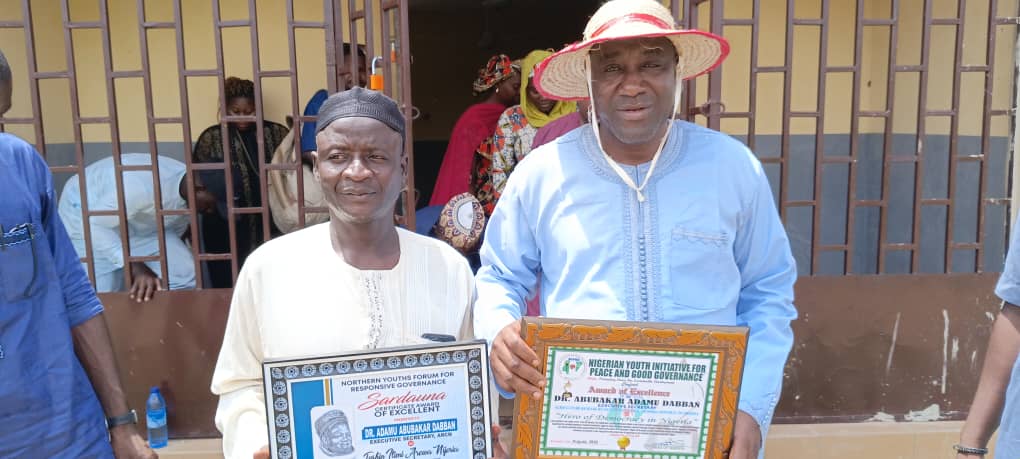
The Executive Secretary of the Agricultural Research Council of Nigeria (ARCN), Dr. Adamu Abubakar Dabban, has been honoured with a Double Award of Excellence by two youth-focused organisations for his leadership, commitment to good governance and contributions to the development of Nigeria’s agricultural sector.
In a statement signed on Tuesday by the ANIPR PRO, Agricultural Research Council of Nigeria Khadijat Ameen in Abuja stated that the honours were conferred on Dr. Dabban by the Nigeria Youth Initiative for Peace and Good Governance and the Northern Youth Forum for Responsive Governance.
The organisations recognised the ARCN Executive Secretary for what they described as his outstanding leadership and dedication to good governance, as well as his efforts toward advancing agricultural development in Nigeria.
The double recognition highlights the growing attention being given to leadership and institutional efforts aimed at strengthening Nigeria’s agricultural research and development ecosystem.
Receiving the honours, Dr. Dabban expressed appreciation to the organisations for the recognition, noting that such awards serve as encouragement to remain committed to the responsibilities entrusted to him and to the broader goal of advancing agricultural development.
The recognition comes as the ARCN continues its mandate of coordinating and promoting agricultural research and development in support of Nigeria’s food and agricultural priorities.
Congratulations to the Executive Secretary, Dr. Adamu Abubakar Dabban, on this distinguished double honour.
-
 Featured7 years ago
Lampard Names New Chelsea Manager
-
 Featured6 years ago
FG To Extends Lockdown In FCT, Lagos Ogun states For 7days
-
 Featured7 years ago
Children Custody: Court Adjourns Mike Ezuruonye, Wife’s Case To April 7
-
 Featured7 years ago
NYSC Dismisses Report Of DG’s Plan To Islamize Benue Orientation Camp
-

 Featured5 years ago
Transfer Saga: How Mikel Obi Refused to compensate me After I Linked Him Worth $4m Deal In Kuwait SC – Okafor
-
Featured7 years ago
Board urges FG to establish one-stop rehabilitation centres in 6 geopolitical zones
-
Sports4 years ago
TINUBU LAMBAST DELE MOMODU
-

 News2 years ago
Zulu to Super Eagles B team, President Tinubu is happy with you













